- Company Articles
- Products and Technology
- Product knowledge
- Free Flow Chain Conveyor for Heavy Machinery Assembly: Load Capacity Insights

Free Flow Chain Conveyor for Heavy Machinery Assembly: Load Capacity Insights
Related Product
Free Flow Chain Conveyor
The free flow conveyor system uses a free flow chain that can increase the speed of the tooling board that supports the products. This can improve the efficiency and quality of the production process, as well as reduce the wear and tear of the system.
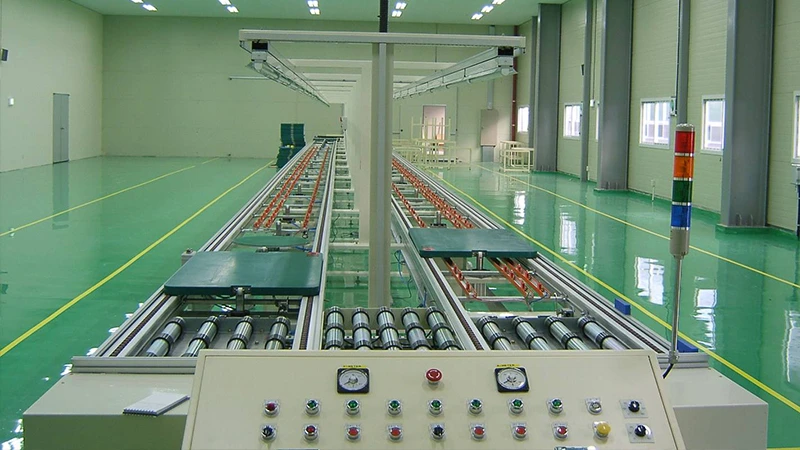
The Unsung Hero of Heavy Machinery Assembly Lines
Walk into any heavy machinery assembly plant, and you'll likely be met with the hum of motors, the clink of metal, and the orchestrated chaos of workers piecing together colossal components—think tractor engines, industrial pumps, or construction equipment frames. In this world, where a single part can weigh hundreds of kilograms, the difference between a smooth, efficient workflow and a bottlenecked disaster often comes down to one critical element: how these heavy parts move from station to station. Enter the free flow chain conveyor—a quiet workhorse that keeps the heartbeat of assembly lines steady, reliable, and, most importantly, capable of handling the heft that defines heavy machinery manufacturing.
But what makes a free flow chain conveyor stand out in a sea of material handling solutions? Unlike traditional belt conveyors that rely on friction or roller conveyors limited by speed, free flow chain conveyors use a series of interconnected chains and rollers to glide parts along a track with minimal resistance. This design isn't just about speed; it's about precision, durability, and, above all, load capacity. For heavy machinery plants, where the average component can range from 200 kg to over 1,000 kg, the conveyor's ability to bear weight without faltering isn't just a specification—it's a lifeline. A conveyor that can't handle the load doesn't just slow production; it risks safety, damages parts, and erodes the trust of workers who depend on it daily.
In this article, we'll dive deep into the world of free flow chain conveyors for heavy machinery assembly, with a laser focus on load capacity—the metric that makes or breaks their utility in these high-stakes environments. We'll explore what load capacity really means, the factors that influence it (from the materials used, like aluminum profile, to the design of roller track systems), and how to choose a conveyor that doesn't just meet your current needs but grows with your production demands. Along the way, we'll also touch on how these conveyors integrate with lean system principles, turning clunky workflows into streamlined processes that save time, reduce waste, and boost your bottom line.
What Is a Free Flow Chain Conveyor, Anyway?
Let's start with the basics: A free flow chain conveyor is a material handling system designed to move heavy, bulky items along a fixed path with minimal manual intervention. At its core, it consists of a metal frame (often built from aluminum profile for lightweight strength), a series of parallel chains mounted on sprockets, and a roller track that supports the load as it glides forward. Unlike powered conveyors that run continuously, free flow systems often use gravity or gentle inclines to move parts, allowing operators to stop, position, or rotate items at each workstation with ease. This "free flow" of movement is where the name comes from—and it's a game-changer for assembly lines where precision positioning is key.
Imagine a tractor engine block weighing 600 kg needing to move from the welding station to the painting booth, then to final assembly. With a free flow chain conveyor, workers don't need to manually lift or push this behemoth; instead, they release a brake, and the block glides smoothly along the roller track, stopping exactly where needed. This not only reduces physical strain on workers but also cuts down on the time spent repositioning parts, turning a 10-minute task into a 2-minute one. For heavy machinery plants, where every second counts, this efficiency adds up quickly—translating to more units produced per shift and lower labor costs over time.
But what sets free flow chain conveyors apart from other heavy-duty conveyors? For one, their modular design. Most systems are built using standardized components, like aluminum profile frames and interchangeable roller track sections, making them easy to customize, expand, or reconfigure as production needs change. Need to add a new workstation? Simply bolt on an extra length of roller track. Switching from assembling engines to transmissions? Adjust the conveyor's height or add side guides to accommodate different part sizes. This flexibility is a cornerstone of modern lean system practices, where adaptability is just as important as efficiency.
Another key advantage is their low maintenance requirements. Unlike belt conveyors that need frequent belt replacements or chain conveyors with complex drive systems, free flow chain conveyors have fewer moving parts. The chains and rollers are sealed to prevent dust and debris buildup, and the aluminum profile frame resists corrosion—even in harsh factory environments where oil, grease, and chemicals are part of the daily grind. This means less downtime for repairs and more time for what matters: production.
Load Capacity: The Metric That Matters Most
Defining Load Capacity: Static vs. Dynamic
When manufacturers talk about a conveyor's "load capacity," they're referring to the maximum weight it can safely carry without deforming, breaking, or compromising performance. But here's the catch: load capacity isn't a one-size-fits-all number. There are two critical types to consider: static load and dynamic load.
Static load is the weight a conveyor can support when the system is at rest. For example, if a tractor frame sits on the conveyor overnight during maintenance, the static load capacity ensures the frame won't bend the roller track or warp the aluminum profile frame. Dynamic load , on the other hand, is the weight the conveyor can handle while parts are in motion. This is often lower than static load because movement introduces additional forces—like vibration, sudden stops, or uneven weight distribution—that stress the system. For heavy machinery assembly, dynamic load is usually the more critical metric, as parts are constantly moving between stations.
Let's put this in perspective: A conveyor with a static load capacity of 2,000 kg might only have a dynamic capacity of 1,500 kg. Why the difference? When a 1,000 kg part starts moving, it creates inertia that pushes against the chains and roller track. If the conveyor isn't built to handle this extra force, the chains could stretch, the roller bearings could seize, or the aluminum profile frame could flex—leading to misalignment, jams, or even catastrophic failure. For plant managers, understanding this distinction is crucial: choosing a conveyor based solely on static load might save money upfront, but it could cost thousands in repairs (or worse, accidents) down the line.
Factors That Shape Load Capacity
So, what determines a free flow chain conveyor's load capacity? It's a mix of materials, design choices, and component quality. Let's break down the key players:
1. Frame Material: The Backbone of Strength
The conveyor's frame is its skeleton, and the material used here has a huge impact on load capacity. While steel frames are known for raw strength, many modern conveyors use aluminum profile instead. Why? Aluminum offers an unbeatable combination of lightness and rigidity—critical for reducing the conveyor's own weight (which makes installation and reconfiguration easier) while still supporting heavy loads. High-grade aluminum profiles, like those made from 6061-T6 alloy, have a tensile strength of around 310 MPa, making them strong enough to handle dynamic loads of up to 1,500 kg per meter. Plus, aluminum resists rust and corrosion, a must in factories where oil and coolant spills are common.
2. Roller Track Design: The Glide Path to Success
The roller track is where the rubber meets the road (or, more accurately, where the part meets the conveyor). Roller tracks consist of a series of small, rotating cylinders (rollers) mounted along the conveyor's length. The size, spacing, and material of these rollers directly affect load capacity. For heavy machinery, larger rollers (typically 25–50 mm in diameter) with steel or hardened plastic cores are preferred, as they distribute weight more evenly and reduce pressure on individual rollers. Spacing is also key: rollers placed 100–150 mm apart prevent parts from sagging between them, which can strain the track and reduce load capacity. A well-designed roller track doesn't just support weight—it minimizes friction, letting parts glide smoothly even at maximum load.
3. Chain Quality: The Hidden Workhorse
While the roller track supports the part, the chains provide the pulling force (or, in gravity-fed systems, the guidance) to keep it moving. Free flow chain conveyors use roller chains (similar to those in bicycles but heavier duty) made from high-carbon steel, often heat-treated for extra durability. The chain's pitch (the distance between links) and tensile strength are critical specs here. For heavy loads, a chain with a pitch of 19.05 mm (3/4 inch) or more and a tensile strength of 10,000 N or higher is standard. Weak or worn chains stretch over time, leading to uneven movement and reduced load capacity—so investing in high-quality, pre-lubricated chains pays off in longer lifespan and fewer breakdowns.
4. Joints and Connections: The Weakest Link
Even the strongest frame and chain mean nothing if the joints holding them together fail. Aluminum profile frames are typically connected using brackets, bolts, and corner joints. For heavy load applications, these connections need to be reinforced—think gusset plates, locknuts, and welds (for permanent installations). A loose joint can cause the frame to twist under load, misaligning the roller track and chains. Over time, this leads to uneven wear, increased friction, and a drop in effective load capacity. Smart manufacturers design their conveyors with redundant connections, ensuring that even if one bolt loosens, others pick up the slack.
Load Capacity in Action: A Comparison Table
To put these factors into perspective, let's look at a real-world example: three different free flow chain conveyor models designed for heavy machinery assembly, each with varying load capacities. The table below compares their key specs, including frame material, roller track design, and dynamic load capacity, to show how design choices translate to performance.
| Conveyor Model | Frame Material | Roller Track Specs | Chain Type | Dynamic Load Capacity (per meter) | Ideal Application |
|---|---|---|---|---|---|
| BasicLine 500 | Standard aluminum profile (1.5mm wall) | 30mm plastic rollers, 150mm spacing | 12.7mm pitch roller chain (tensile strength: 6,000 N) | 500 kg | Small engine parts (e.g., 200kg gearboxes) |
| ProLine 1000 | Heavy-duty aluminum profile (3mm wall, 6061-T6 alloy) | 40mm steel-core rollers, 100mm spacing | 19.05mm pitch roller chain (tensile strength: 12,000 N) | 1,000 kg | Mid-size machinery (e.g., 800kg tractor axles) |
| UltraLine 1500 | Reinforced aluminum profile + steel cross-braces | 50mm hardened steel rollers, 75mm spacing | 25.4mm pitch roller chain (tensile strength: 18,000 N) | 1,500 kg | Heavy machinery (e.g., 1,200kg excavator frames) |
As the table shows, upgrading from the BasicLine to the UltraLine more than triples the dynamic load capacity—thanks to thicker aluminum profile walls, larger steel rollers, and stronger chains. For a plant assembling 1,000 kg tractor frames, the UltraLine isn't just a better choice; it's the only choice. The ProLine, while impressive, would hit its limits with consistent use, leading to premature wear and potential downtime. This highlights a key point: load capacity isn't just about picking the biggest numbers—it's about matching the conveyor to your specific parts and production volume.
Integrating with Lean Systems: More Than Just Moving Parts
In today's manufacturing world, efficiency isn't just about speed—it's about eliminating waste, and that's where lean system principles come into play. Free flow chain conveyors aren't just material handlers; they're lean tools that help reduce waste in three key ways: motion waste (less manual lifting), waiting waste (faster part transfer), and defect waste (precise positioning reduces errors). When paired with other lean tools like workbenches and kanban systems, they become the backbone of a workflow that's both efficient and adaptable.
Take workbenches, for example. A well-designed assembly line places workbenches alongside the free flow conveyor, so workers can access tools, parts, and documentation without leaving their station. When a part arrives, it stops at the bench, and the worker assembles components (like adding hoses to an engine block) before sending it down the line. Because the conveyor handles the heavy lifting, the worker can focus on precision, not brute force—reducing mistakes and improving quality. In lean terms, this is "value-added time" at its best: every second spent assembling is a second that brings the product closer to completion, with no wasted effort.
But lean integration goes beyond physical layout. Free flow conveyors also support just-in-time (JIT) production, a cornerstone of lean systems. JIT relies on parts arriving at each station exactly when they're needed, minimizing inventory and storage costs. With a free flow conveyor, parts move in small batches (or even one at a time), so there's no of work-in-progress (WIP) cluttering the floor. For example, if the painting station can only handle two tractor frames per hour, the conveyor ensures only two frames arrive each hour—no more, no less. This prevents overproduction, a common waste in traditional assembly lines, and keeps cash flow healthy by reducing inventory holding costs.
Perhaps the biggest lean benefit, though, is flexibility. Free flow chain conveyors, with their modular aluminum profile frames and adjustable roller tracks, can be reconfigured in hours, not days. If a plant switches from assembling tractors to backhoes, the conveyor can be extended, shortened, or redirected to fit the new workflow. This agility is critical in today's manufacturing landscape, where customer demands shift quickly and product lifecycles grow shorter. A conveyor that locks you into a single layout is a liability; one that adapts with your needs is an asset.
Real-World Success: How Load Capacity Translates to Results
Let's step into the shoes of a plant manager at a mid-sized heavy machinery manufacturer to see how load capacity impacts real-world outcomes. Meet Maria, who runs a tractor assembly plant in the Midwest. Two years ago, her line was struggling: the old steel roller conveyor could barely handle the 800 kg engine blocks, leading to frequent jams and a production rate of 10 tractors per day. Workers were complaining about back strain, and the maintenance team was spending 15 hours a week fixing bent rollers and loose chains.
Maria's team started researching alternatives and settled on a ProLine 1000 free flow chain conveyor with aluminum profile frame and steel roller track. The key selling point? Its 1,000 kg dynamic load capacity—well above the 800 kg engine blocks. Within a month of installation, the results were clear: jams dropped by 90%, maintenance time fell to 2 hours a week, and production jumped to 14 tractors per day. Workers reported less fatigue, and quality checks showed a 15% reduction in assembly errors (thanks to the conveyor's precise stopping mechanism). Today, Maria's plant is on track to hit 5,000 tractors this year—up from 3,600 before the upgrade. "The conveyor didn't just carry parts," she says. "It carried our entire operation to the next level."
Maria's story isn't unique. Across industries, from construction equipment to mining machinery, free flow chain conveyors with robust load capacities are transforming assembly lines. They're not just tools—they're partners in productivity, safety, and growth. And as manufacturers push to produce more with less, their role will only become more critical.
Maintenance: Keeping Load Capacity Consistent Over Time
Even the best conveyor won't maintain its load capacity forever without proper care. Like a car, it needs regular check-ups to stay in top shape. Here are a few maintenance tips to ensure your free flow chain conveyor keeps carrying heavy loads for years:
1. Inspect Rollers and Chains Weekly
Rollers should spin freely—if you feel resistance, it's a sign the bearings are wearing out. replace worn rollers immediately to prevent uneven weight distribution. Chains should be checked for stretch (a 2% stretch means it's time for replacement) and lubricated every 200 hours of operation with a high-temp grease to reduce friction.
2. Tighten Connections Monthly
Vibration from heavy loads can loosen bolts on the aluminum profile frame and roller track. A quick monthly check with a torque wrench ensures joints stay tight, preventing frame flex and misalignment.
3. Clean the Track Regularly
Dust, debris, and oil buildup on the roller track can increase friction and strain the conveyor. Use a stiff brush and degreaser to clean the track weekly, focusing on roller crevices where gunk likes to hide.
4. Train Your Team to Spot Issues
Your frontline workers are the first to notice problems: a strange noise, a part that jams, or a roller that feels "sticky." Train them to report these issues immediately—early detection can save you from costly repairs.
Choosing the Right Conveyor: Beyond the Spec Sheet
When it comes to selecting a free flow chain conveyor for heavy machinery assembly, load capacity is king—but it's not the only card in the deck. Here are a few questions to ask before making a decision:
• What's the heaviest part you'll ever move? Always size up: if your current max load is 1,000 kg, choose a conveyor with a dynamic capacity of 1,200–1,500 kg to account for future growth.
• How fast do parts need to move? Faster speeds increase inertia, which can reduce effective load capacity. If you need high-speed transfer, opt for a conveyor with reinforced chains and larger rollers.
• Will you need to reconfigure the line? If yes, prioritize modular designs with aluminum profile frames and quick-connect roller tracks—they'll save time and money during reconfigurations.
• What's your budget for maintenance? Cheaper conveyors often skimp on component quality, leading to higher long-term costs. Invest in a reputable brand with a track record of durability—your maintenance team will thank you.
Conclusion: Building the Future of Heavy Machinery Assembly
In the world of heavy machinery manufacturing, where parts are heavy, deadlines are tight, and safety is non-negotiable, the free flow chain conveyor stands out as a silent giant. Its ability to handle massive loads with precision and efficiency isn't just a convenience—it's a competitive advantage. By understanding load capacity, choosing the right materials (like aluminum profile and robust roller track systems), and integrating with lean system principles, manufacturers can transform their assembly lines from bottlenecked operations into models of productivity.
As technology advances, we can expect even more innovations: smarter sensors that monitor load in real time, self-lubricating chains that reduce maintenance, and aluminum profiles with even higher strength-to-weight ratios. But for now, the basics remain the same: a well-designed free flow chain conveyor, chosen with load capacity in mind, is the foundation on which successful heavy machinery assembly lines are built.
So, the next time you see a tractor rolling off the lot or a construction crane towering over a job site, take a moment to appreciate the unsung hero that helped build it: the free flow chain conveyor, quietly carrying the weight of manufacturing's heaviest dreams.