- Company Articles
- Products and Technology
- Product knowledge
- Free Flow Chain Conveyor for Printed Circuit Board (PCB) Assembly Lines

Free Flow Chain Conveyor for Printed Circuit Board (PCB) Assembly Lines
Related Product
Free Flow Chain Conveyor
The free flow conveyor system uses a free flow chain that can increase the speed of the tooling board that supports the products. This can improve the efficiency and quality of the production process, as well as reduce the wear and tear of the system.
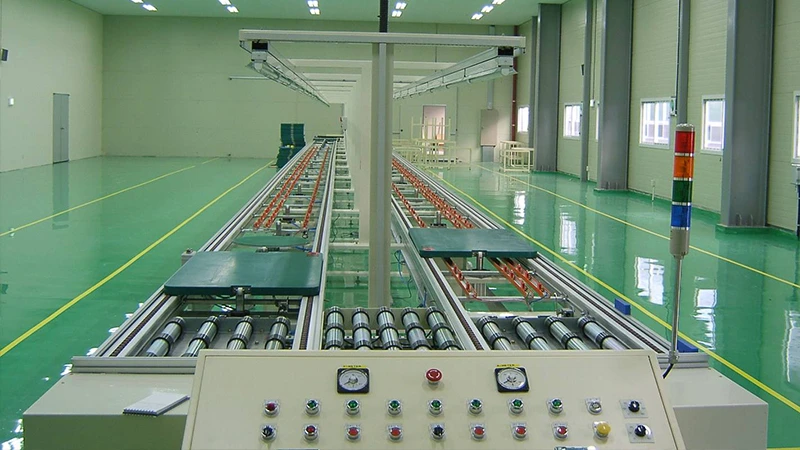
Walk into any electronics manufacturing facility, and you'll likely hear the soft hum of machines, the clink of tools, and the steady rhythm of PCBs gliding from one workstation to the next. These small, intricate boards power everything from your smartphone to medical devices, and their assembly is a dance of precision, speed, and care. But behind that dance is a silent hero: the conveyor system. Not just any conveyor, though—for PCB assembly lines, where even the smallest jolt can damage components or disrupt delicate soldering, the free flow chain conveyor has become the backbone of efficient production. Let's dive into why this unassuming piece of equipment matters, how it works, and the difference it makes for the teams building the technology we rely on.
What Makes PCB Assembly Lines So Demanding?
Before we talk about conveyors, let's appreciate the complexity of PCB assembly. A single PCB might have hundreds of tiny components—resistors, capacitors, IC chips—each no larger than a grain of rice. These components are placed using automated pick-and-place machines, soldered in reflow ovens, inspected under microscopes, and tested for connectivity. At every step, the PCB needs to move smoothly, stop precisely, and avoid vibrations that could shift components or crack solder joints.
Traditional conveyors, like belt or roller conveyors, often struggle here. Belt conveyors can generate static electricity (a disaster for sensitive electronics), while basic roller conveyors might not offer the control needed to pause a PCB exactly at an inspection station. That's where free flow chain conveyors step in—designed to handle the unique demands of PCB assembly with a focus on flexibility, precision, and gentle handling.
Understanding Free Flow Chain Conveyors: More Than Just a "Mover"
At first glance, a free flow chain conveyor looks simple: a series of interconnected chains with small rollers, mounted on a frame. But its magic lies in how it moves PCBs. Unlike rigid belt conveyors that drag items along, the free flow chain uses gravity and low-friction rollers to let PCBs "glide" at controlled speeds. Operators can easily stop, start, or redirect a PCB manually or via sensors, making it ideal for assembly lines where workstations need to process boards at their own pace.
The frame itself is often built with aluminum profile —lightweight, strong, and resistant to corrosion. Aluminum profiles are modular, too, meaning manufacturers can adjust the conveyor's length, height, or angle as production needs change. Need to add a new inspection station? Just bolt on an extra section of aluminum profile. Moving the line to a different part of the facility? Disassemble and reassemble the conveyor in hours, not days. This flexibility is a game-changer in an industry where product designs and production volumes shift constantly.
Key Features That Matter for PCBs
- Gentle Handling: The small, evenly spaced rollers on the chain reduce friction, so PCBs move without jostling. This is critical for surface-mount technology (SMT) lines, where components are glued or soldered onto the board's surface—no room for slippage here.
- Precision Stopping: Most free flow chain conveyors include "stop pins" or pneumatic brakes that can halt a PCB exactly at a workstation. Imagine a technician waiting for a board to arrive at their workbench ; with precise stopping, they don't waste time adjusting the PCB's position—they can start inspecting immediately.
- Static Dissipation: Many free flow chain conveyors are designed with anti-static materials or grounding features to prevent static buildup. For PCBs, where static can fry sensitive microchips, this isn't just a nice-to-have—it's a safety requirement.
- Modularity: Thanks to aluminum profile frames and standardized components, these conveyors can be customized to fit tight spaces or unique line layouts. A facility assembling large PCBs for industrial equipment might need a wider conveyor, while a mobile phone manufacturer could opt for a compact, z-shaped line—both achievable with the same basic free flow chain system.
Why Free Flow Chain Conveyors Align with Lean Systems
In manufacturing, "lean" isn't just a buzzword—it's a philosophy centered on reducing waste, improving flow, and empowering teams to work smarter. Lean systems aim to eliminate bottlenecks, cut down on excess inventory, and ensure every step adds value. Free flow chain conveyors fit this vision perfectly, and here's how:
1. Reducing Waiting Time: In a lean setup, idle time is the enemy. Free flow chain conveyors allow PCBs to move as soon as a workstation finishes, rather than waiting for a rigid conveyor belt to cycle. For example, if the soldering station finishes 10 seconds early, the next PCB can immediately start moving to inspection—no more "batching" boards or letting them pile up.
2. Adapting to Variable Demand: Lean systems thrive on flexibility. Aluminum profile frames make it easy to extend or reconfigure the conveyor line during peak production (like before the holiday season) or shrink it when demand slows. Unlike fixed steel conveyors, which require welding or heavy tools to modify, aluminum profiles can be adjusted with basic hand tools—saving time and money.
3. Minimizing Material Waste: By moving PCBs gently and precisely, free flow chain conveyors reduce the risk of damaged boards. A single damaged PCB might cost $50 to replace, but multiply that by 100 boards a day, and the savings add up fast. One plant manager I spoke with noted, "After switching to free flow chain, our PCB scrap rate dropped by 25%. That's not just money—it's hours of work we're not wasting on rework."
Components That Make It Work: From Aluminum Profiles to Roller Tracks
A free flow chain conveyor isn't a standalone piece of equipment—it's a system, built from durable, standardized parts that work together seamlessly. Let's break down the key components, many of which you might recognize from the world of industrial hardware:
- Aluminum Profile Frames: The "backbone" of the conveyor. Lightweight yet strong, aluminum profiles (like 2020 or 4040 series) are easy to cut, drill, and bolt together. They also resist rust, which is crucial in cleanrooms or facilities with strict hygiene standards.
- Free Flow Chain & Rollers: The chain itself is usually made of stainless steel or plastic (for anti-static needs), with small rollers spaced every 2–3 inches. These rollers reduce friction, letting PCBs glide with minimal effort.
- Roller Tracks: While the chain moves the PCBs, roller tracks guide them, ensuring they stay aligned and don't drift off course. These tracks are often made of plastic or aluminum and can be adjusted to fit different PCB sizes.
- Stop Mechanisms: Pneumatic or mechanical stop pins that halt PCBs at workstations. These are programmable, so operators can set exact stopping positions for inspection, testing, or manual component placement.
- Workbench Integration: Many conveyors are paired with workbenches on either side, where technicians can add components by hand, repair minor defects, or label finished PCBs. The conveyor's height is often adjustable to match the workbench, reducing strain on operators' backs and shoulders.
How Free Flow Chain Conveyors Support Every Stage of PCB Assembly
Let's walk through a typical PCB assembly line and see where the free flow chain conveyor shines:
1. SMT (Surface Mount Technology) Line
The first stop for a bare PCB is the SMT line, where automated machines place tiny components. Here, the conveyor needs to move PCBs quickly but smoothly to keep up with the pick-and-place machine's speed (which can place 100,000+ components per hour). Free flow chain conveyors excel here—their low friction allows for fast, consistent movement, and their modular design fits easily under the machines.
2. Reflow Soldering
After components are placed, PCBs enter a reflow oven, where solder paste melts and bonds components to the board. The conveyor must move the PCBs through the oven's temperature zones (preheat, soak, reflow, cool) at a steady rate—too fast, and the solder won't melt; too slow, and components might overheat. Free flow chain conveyors are programmable, so operators can set exact speeds to match the oven's requirements.
3. Inspection & Testing
Post-soldering, PCBs go through AOI (Automated Optical Inspection) machines or manual inspection stations. Here, precision stopping is critical—if the PCB shifts even 1mm, the AOI camera might miss a solder bridge or a missing component. Free flow chain conveyors use sensors to stop PCBs exactly under the camera or at a technician's workstation, ensuring no defects slip through.
4. Final Assembly & Packaging
Once inspected, PCBs might move to final assembly, where connectors or larger components are added by hand. The conveyor's gentle movement means technicians can easily reach across and work on the PCB without worrying about it sliding away. After assembly, finished PCBs glide to packaging, ready to be shipped to customers.
Free Flow Chain vs. Other Conveyors: A Quick Comparison
Not all conveyors are created equal. Let's compare the free flow chain conveyor with two common alternatives to see why it's the top choice for PCBs:
| Conveyor Type | Key Features | Best For | Pros for PCB Assembly | Cons for PCB Assembly |
|---|---|---|---|---|
| Free Flow Chain Conveyor | Low-friction rollers, gravity-assisted movement, precision stopping | High-precision, sensitive components (PCBs, semiconductors) | Gentle handling, anti-static options, modular design, integrates with lean systems | Higher initial cost than basic roller conveyors |
| Belt Conveyor | Continuous belt (rubber, plastic, or metal) driven by motors | Heavy, non-sensitive items (boxes, large parts) | Simple design, low maintenance | Static buildup risk, hard to stop precisely, can scratch PCBs |
| Basic Roller Conveyor | Fixed or gravity-fed rollers on a frame | General material handling (pallets, crates) | Low cost, easy to install | Limited control over speed/stopping, rollers can jam with small PCBs |
The Human Side: How Free Flow Chain Conveyors Make Operators' Lives Easier
At the end of the day, manufacturing is about people. And while we've talked about speed, precision, and lean systems, the biggest impact of a good conveyor might be on the technicians and operators who work with it daily.
Maria, a PCB inspector with 10 years of experience, put it this way: "Before we switched to free flow chain, our old roller conveyor would sometimes jolt the PCBs when it started moving. I'd have to reposition the board under my microscope, which added 2–3 minutes per board. Multiply that by 50 boards a day, and I was always rushing to meet quotas. Now, the conveyor stops exactly where I need it, and the PCBs glide so smoothly—I can focus on inspecting, not wrestling with the equipment."
Another operator, Raj, who works on the SMT line, noted the safety benefits: "Static is a big fear for us. With the old belt conveyor, I'd get little shocks every time I touched a PCB. Now, the free flow chain's anti-static rollers mean no more shocks, and I worry less about frying a $200 chip with a static discharge."
Maintenance Tips to Keep Your Conveyor Running Smoothly
Like any equipment, free flow chain conveyors need regular care to stay reliable. Here are a few tips from maintenance technicians:
- Clean the Rollers Weekly: Dust, solder splatter, or adhesive residue can build up on rollers, causing PCBs to stick. A quick wipe with a lint-free cloth and isopropyl alcohol keeps them gliding smoothly.
- Lubricate Chains Sparingly: Over-lubricating can attract dust. Use a light, anti-static lubricant on chain joints every month (or as recommended by the manufacturer).
- Check Aluminum Profile Connections: Tighten bolts on the aluminum frame quarterly—vibration from daily use can loosen them, leading to misalignment.
- Test Stop Mechanisms: Daily, trigger the stop pins/pneumatic brakes to ensure they engage and release smoothly. A stuck stop can cause PCBs to pile up and get damaged.
Final Thoughts: The Conveyor That Empowers Teams
Free flow chain conveyors might not get the same attention as the latest pick-and-place machine or AI-powered inspection system, but they're the unsung heroes of PCB assembly lines. They turn chaotic workflows into streamlined processes, reduce frustration for operators, and ensure that the PCBs powering our world are built with the care and precision they deserve.
For manufacturers investing in lean systems, upgrading to a free flow chain conveyor isn't just about buying equipment—it's about investing in their team's efficiency, safety, and pride in their work. After all, when the conveyor runs smoothly, everyone does too.
So the next time you pick up your phone, remember: behind that sleek device is a line of hardworking people, and a quiet, reliable conveyor, working together to build something extraordinary.