- Company Articles
- Products and Technology
- Product knowledge
- Free Flow Chain Conveyor for Small-Part Handling in 3C Manufacturing

Free Flow Chain Conveyor for Small-Part Handling in 3C Manufacturing
Related Product
Free Flow Chain Conveyor
The free flow conveyor system uses a free flow chain that can increase the speed of the tooling board that supports the products. This can improve the efficiency and quality of the production process, as well as reduce the wear and tear of the system.
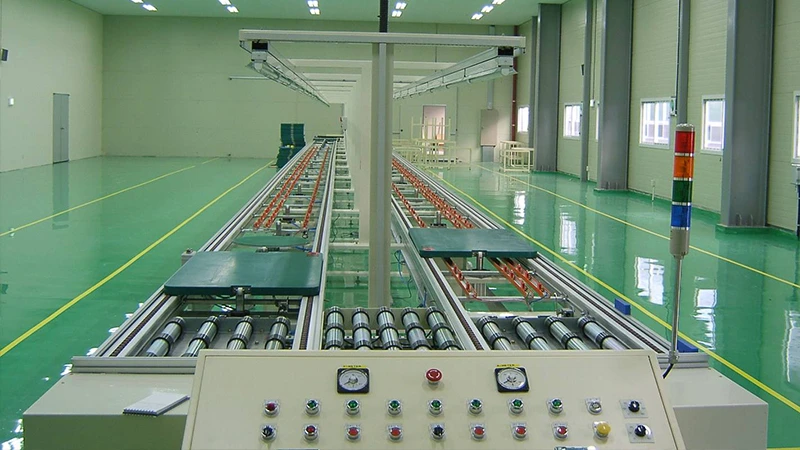
Walk into any 3C manufacturing facility—where smartphones, laptops, smartwatches, and other electronics come to life—and you'll witness a symphony of precision. Tiny capacitors the size of a grain of rice, delicate circuit boards, and minuscule screws move from station to station, each step dependent on the one before it. But amid this complexity, there's often a hidden bottleneck: material flow . When small parts get stuck in transit, when manual handling leads to delays, or when misalignment causes costly errors, the entire production line feels the strain. That's where the free flow chain conveyor steps in—not just as a piece of equipment, but as a quiet problem-solver, keeping the heartbeat of 3C manufacturing steady and strong.
In this article, we'll explore how free flow chain conveyors are transforming small-part handling in 3C factories. We'll break down their design, why they're a game-changer for delicate components, and how they integrate with tools like roller tracks, workbenches, and aluminum profiles to create lean, efficient workflows. Whether you're a plant manager looking to cut lead times or an operations specialist seeking to reduce errors, this is your guide to the unsung hero of modern 3C production.
What Is a Free Flow Chain Conveyor, Anyway?
Let's start with the basics. A free flow chain conveyor is a material handling system designed to move small, lightweight parts with minimal friction and maximum control. Unlike traditional belt conveyors that drag items along a surface or heavy roller conveyors built for bulk goods, free flow systems use a series of linked chains with small, smooth-rolling rollers. These chains glide along tracks—often made from durable aluminum profile—allowing parts to "flow" freely, even when stopped mid-transit (no more jamming or backlogs when a workstation pauses!).
Picture this: a line of tiny smartphone camera modules, each no bigger than a postage stamp, needing to move from the inspection station to the assembly workbench. A free flow chain conveyor carries them gently, with each module resting in a custom fixture. If the assembly team needs a 2-minute pause to adjust their tools, the conveyor stops—but the modules stay in place, no sliding, no shifting. When production resumes, the chain starts again, and the modules glide forward as if they'd never stopped. That's the "free flow" promise: precision, flexibility, and reliability, all in one.
But what makes these conveyors ideal for 3C manufacturing? Let's dive into their key features:
- Low friction, high precision: The chain-and-roller design reduces contact with parts, minimizing scratches or damage to delicate components like microchips or glass screens.
- Modular by design: Built with aluminum profiles and standardized parts, they're easy to customize. Need to add a curve? Extend a section? Swap out a track? It's as simple as adjusting the aluminum profile frames and reconfiguring the roller tracks.
- Quiet operation: No loud motors or clanking belts—just the soft hum of rollers, making them perfect for noise-sensitive 3C environments where concentration is key.
- Energy efficiency: They use minimal power, especially compared to bulkier conveyor systems, which adds up to significant cost savings over time.
Think of it as the difference between a crowded sidewalk (manual handling) and a dedicated bike lane (free flow conveyor): same destination, but faster, smoother, and far less likely to cause collisions.
Why 3C Manufacturing Can't Afford to Ignore Them
3C products are getting smaller, more complex, and more valuable by the day. A single smartphone might contain over 1,000 individual parts, many of which are smaller than a grain of sand. Handling these parts manually or with outdated conveyors isn't just inefficient—it's risky. Here's why free flow chain conveyors are non-negotiable for modern 3C factories:
1. Delicate Parts Demand Gentle Handling
drop a resistor or bend a flex cable, and you've ruined a $5 part—but that $5 mistake can derail a $500 phone. Free flow chain conveyors use soft, smooth rollers (often made from plastic or rubber) that cradle parts rather than scraping them. Compare that to a metal roller track without proper cushioning, which might scratch a camera lens or misalign a tiny connector. In 3C, "gentle" isn't a luxury; it's a requirement.
2. Speed Without Sacrificing Control
3C production lines run at breakneck speeds—think hundreds of units per hour. A delay of even 5 minutes can back up an entire shift. Free flow chain conveyors move parts at consistent, adjustable speeds (often 1–3 meters per second) with zero slippage. Unlike belt conveyors, which can stretch or slip under light loads, the chain-driven system ensures parts arrive exactly when and where they're needed. No more "hurry up and wait" for assembly workers.
3. Flexibility for Rapidly Changing Products
3C manufacturers rarely stick to one product for long. Today, they're assembling the X12 smartphone; tomorrow, it's the X12 Pro with a new camera module. Free flow chain conveyors, with their modular aluminum profile frames and interchangeable roller tracks, adapt in hours, not weeks. Swap out the fixtures, adjust the track height, or add a side guide—and suddenly, you're ready for the next product. Rigid, one-size-fits-all conveyors? They become obsolete the second your product line changes.
4. Lean Systems Start with Lean Flow
Lean manufacturing isn't just a buzzword in 3C—it's a survival strategy. At its core, lean is about eliminating waste: wasted time, wasted motion, wasted materials. Free flow chain conveyors are lean by design. They deliver parts directly to the workbench, cutting out the need for workers to walk to a storage area or fetch bins. They reduce overproduction by ensuring only the right parts arrive at the right workstation. And they minimize defects by keeping parts stable during transit. In short, they turn "chaotic flow" into "lean flow."
The Anatomy of a Free Flow Chain Conveyor: What Makes It Tick?
To truly appreciate why these conveyors work, let's peek under the hood. A well-designed free flow chain conveyor isn't just a "chain on a track"—it's a symphony of components, each playing a role in smooth, reliable part movement. Here's the breakdown:
Aluminum Profile Frames: The Backbone of Durability
The frame is the conveyor's skeleton, and in 3C factories, aluminum profile is the material of choice. Why? Aluminum is lightweight (so it's easy to install and reconfigure), corrosion-resistant (critical in clean, humidity-controlled 3C environments), and strong enough to support the conveyor's weight without bending. Most systems use T-slot aluminum profiles, which let you attach accessories like side guides, sensors, or workbench extensions with just a few bolts. No welding, no drilling—just quick, tool-free adjustments.
Pro tip: Look for suppliers that offer aluminum profile accessories like end caps (to prevent sharp edges) or rubber strips (to dampen noise). These small touches make a big difference in day-to-day use.
Chain and Rollers: The Heart of the System
The chain itself is a series of linked plastic or metal plates, each with small rollers attached. When the chain moves, the rollers spin, carrying parts forward with minimal friction. For 3C parts, plastic chains with nylon rollers are often preferred—they're quieter, lighter, and less likely to conduct static electricity (a must for electronics). Metal chains are reserved for heavier loads, but in most 3C applications, plastic does the job better.
Roller size matters too. Small parts (like 0.5-inch capacitors) need smaller rollers (0.5-inch swivel roller balls) to stay stable, while larger parts (like battery packs) might use 1-inch rollers. Mismatched roller size is a common mistake—too big, and parts slide; too small, and they get stuck. A good supplier will help you match roller size to your specific parts.
Guides and Fixtures: Keeping Parts on Track
Imagine a conveyor without side guides: parts would veer off, crash into each other, and create a mess. Free flow chain conveyors use plastic or aluminum guides (like plastic roller track guide rails in yellow or grey) to keep parts aligned. For irregularly shaped parts (like phone cases), custom fixtures attach to the chain, holding parts securely during transit. It's like adding lane dividers to a highway—suddenly, everyone stays in their lane.
Drive System: The Quiet Powerhouse
At one end of the conveyor, a small motor (usually electric) drives the chain. Unlike the loud motors in bulk conveyors, these are often gear-driven and nearly silent. They're also energy-efficient—many use variable speed controls, so you can slow down for delicate operations (like inspection) and speed up for simple transport. In 3C factories where noise pollution is a constant battle, a quiet drive system isn't just nice; it's a morale booster for workers on the line.
Free Flow vs. the Alternatives: When to Choose What
Free flow chain conveyors aren't the only game in town. So when should you pick them over roller conveyors, belt conveyors, or manual trolleys? Let's break it down with a quick comparison:
| Conveyor Type | Best For | Worst For | Why It Matters in 3C |
|---|---|---|---|
| Free Flow Chain Conveyor | Small, lightweight, delicate parts (resistors, connectors, camera modules) | Heavy loads (>10kg), irregularly shaped parts without fixtures | Gentle handling, precise speed control, easy reconfiguration |
| Roller Conveyor | Medium-weight, flat-bottomed parts (PCBs, battery packs) | Tiny parts that might slip between rollers | Good for heavier 3C components, but too rough for micro-parts |
| Belt Conveyor | Bulk materials (screws, washers in bulk bins) | Delicate parts that might get caught in belt seams | Useful for feeding raw materials, but not for final assembly |
| Manual Trolleys | Low-volume, custom orders | High-volume, time-sensitive production | Prone to human error and delays in fast-paced 3C lines |
For most 3C assembly lines—where small, high-value parts dominate—free flow chain conveyors are the clear winner. They bridge the gap between speed, precision, and care, which is exactly what 3C manufacturing demands.
From Conveyor to Workbench: Building a Seamless Workflow
A free flow chain conveyor doesn't work in isolation. To truly transform your production line, it needs to play well with other tools—like workbenches, roller tracks, and lean systems. Here's how to create a workflow that feels almost magical:
Step 1: Conveyor to Roller Track: The Handover
Imagine parts flowing off the free flow conveyor and onto a roller track that feeds directly into a workbench. Roller tracks (like the plastic roller track guide rail in yellow) act as a "buffer zone," letting workers pull parts from the track as needed without stopping the conveyor. For example, after inspection, a camera module might exit the conveyor, roll onto a roller track, and wait at the assembly workbench until the operator is ready. No more rushing, no more backlogs—just a steady stream of parts, right where they're needed.
Step 2: Roller Track to Workbench: The Final Stretch
Workbenches are where the magic happens—the actual assembly of parts into finished products. To make the handoff from roller track to workbench seamless, look for workbenches with built-in roller track mounts (like the roller track placon mount for aluminum profile flat). These mounts let you attach the roller track directly to the workbench, so parts glide from track to bench with zero lifting. It's like having a conveyor belt that delivers parts straight to the operator's fingertips.
Pro tip: Opt for workbenches with ESD (electrostatic discharge) protection, like ESD workstations. In 3C manufacturing, static electricity can fry sensitive electronics, so an ESD workbench with grounded surfaces and anti-static mats is a must. Pair it with a free flow chain conveyor that has anti-static rollers, and you've eliminated a major source of defects.
Step 3: Lean Systems: The Big Picture
At the end of the day, free flow chain conveyors are part of a larger lean system—one that prioritizes "just-in-time" production, minimizes waste, and keeps workflows tight. When your conveyor feeds parts to the workbench exactly when they're needed, you reduce inventory (no more piles of parts waiting to be used), cut down on storage space, and eliminate the risk of parts getting lost or damaged in stock. It's lean manufacturing in action, and it starts with how you move materials.
Real-World Impact: How One 3C Factory Cut Lead Times by 30%
Let's put this all into perspective with a real example (names changed for privacy). Meet "TechPro," a mid-sized 3C manufacturer producing smartwatch components. Before 2023, their assembly line for watch batteries was a bottleneck: parts moved via manual trolleys from inspection to assembly, leading to delays, misplaced parts, and a 15% defect rate from rough handling.
TechPro's solution? A free flow chain conveyor system with aluminum profile frames, plastic roller track guide rails (grey, to match their factory aesthetic), and ESD workbenches at each station. Here's what happened:
- Lead times dropped by 30%: Parts now flow directly from inspection to assembly in 5 minutes instead of 15. Workers no longer waste time fetching trolleys.
- Defect rates fell to 2%: The gentle roller system eliminated scratches and misalignment, saving $100,000 annually in scrap costs.
- Worker satisfaction spiked: With less time spent on manual handling, operators could focus on skilled assembly, reducing fatigue and boosting morale.
TechPro's plant manager summed it up: "We didn't just buy a conveyor—we bought peace of mind. The line runs smoother, the parts arrive on time, and we're finally keeping up with demand without cutting corners."
Keeping It Running: Maintenance Tips for Longevity
Like any tool, a free flow chain conveyor needs a little TLC to stay in top shape. Here's how to keep yours running smoothly for years:
1. Clean the Rollers Regularly
Dust, oil, and tiny plastic shavings (from parts) can gunk up the rollers, slowing them down or causing jams. Wipe rollers weekly with a lint-free cloth and mild detergent. For hard-to-reach spots, use a small brush (like a toothbrush) to dislodge debris.
2. Lubricate the Chain (Sparingly)
The chain needs lubrication to reduce friction, but too much oil can attract dust. Use a lightweight, food-grade lubricant (yes, food-grade—3C factories need to avoid contaminants) and apply it sparingly with a brush. Do this monthly, or more often if the conveyor runs 24/7.
3. Check Tension and Alignment
A loose chain will slip; a tight chain will wear out faster. Every month, check the chain tension—you should be able to lift the chain about 1–2cm from the track. If it's too loose or tight, adjust the motor mount. Also, ensure the aluminum profile frame is level; a wobbly frame can cause the chain to derail.
4. replace Worn Parts Proactively
Rollers, guides, and chain links wear out over time. Inspect them monthly for cracks, chips, or uneven wear. replace any damaged parts immediately—waiting until they fail can cause bigger breakdowns. Most suppliers offer replacement parts (like swivel roller balls or plastic guide rails) at reasonable prices, so stock up on spares.
Choosing the Right Supplier: What to Look For
Not all free flow chain conveyors are created equal. To get a system that works for your 3C factory, you need a supplier who understands your unique needs. Here's what to ask before you buy:
1. Do They Specialize in 3C Manufacturing?
3C is a niche industry with unique challenges. A supplier who mostly works with automotive or heavy machinery might not understand the need for ESD protection or gentle handling. Look for suppliers with case studies or testimonials from 3C clients—they'll know the ins and outs of your workflow.
2. Can They Customize the System?
Your factory isn't "one-size-fits-all," so your conveyor shouldn't be either. Ask if the supplier can design custom fixtures, adjust track heights, or integrate ESD features. Avoid suppliers who push pre-made systems—they'll never fit as well as a tailored solution.
3. What's Their Support Like?
After-sales support is critical. If your conveyor breaks down at 2 a.m., you need a supplier who answers the phone and sends a technician quickly. Ask about their response time, warranty (look for at least 1 year), and whether they offer training for your team on maintenance and operation.
4. Do They Offer a Full Range of Accessories?
Remember, your conveyor needs roller tracks, workbenches, aluminum profiles, and more to work seamlessly. A supplier who sells the conveyor but can't provide matching roller track connectors or ESD workbench accessories will leave you scrambling to piece together a system. Look for one-stop shops that offer everything from the conveyor chain to the caster wheels on your workbench.
What's Next? The Future of Free Flow Chain Conveyors in 3C
As 3C manufacturing evolves, so will the tools that power it. Here are two trends to watch for in free flow chain conveyors:
1. Smart Conveyors with IoT Integration
Imagine a conveyor that "talks" to your production management system—alerting you when a roller is wearing out, tracking part flow in real time, or automatically adjusting speed based on workbench demand. IoT-enabled sensors on the conveyor can collect data on throughput, downtime, and error rates, helping you optimize your line even further. It's not science fiction; some suppliers are already testing these systems in pilot 3C factories.
2. Sustainable Materials
With pressure to reduce carbon footprints, suppliers are moving toward eco-friendly materials. Expect to see more conveyors made from recycled aluminum profiles, biodegradable plastic rollers, and energy-efficient motors. In 3C, where sustainability is becoming a selling point for consumers, green conveyors will be a competitive advantage.
Final Thoughts: More Than a Conveyor—A Partner in Production
Small parts are the building blocks of 3C products, and how you move them shapes everything from your bottom line to your team's morale. Free flow chain conveyors aren't just about moving parts—they're about creating a workflow that's lean, reliable, and ready for whatever the next generation of 3C products throws at it.
Whether you're upgrading an existing line or building a new factory, remember: the best conveyor is the one that fits your unique needs. Pair it with roller tracks, ESD workbenches, and aluminum profiles, and you'll have a system that doesn't just keep up with demand—it sets the pace.
So, take a walk through your production line today. Watch how parts move (or don't move). Then ask: Could a free flow chain conveyor turn those bottlenecks into smooth, steady streams? The answer, for most 3C factories, is a resounding yes. Your parts deserve better handling. Your team deserves a better workflow. And your bottom line? It deserves the boost.