- Company Articles
- Products and Technology
- Application Cases
- Free Flow Chain Conveyor in Aerospace Component Manufacturing: Precision Requirements

Free Flow Chain Conveyor in Aerospace Component Manufacturing: Precision Requirements
Related Product
Free Flow Chain Conveyor
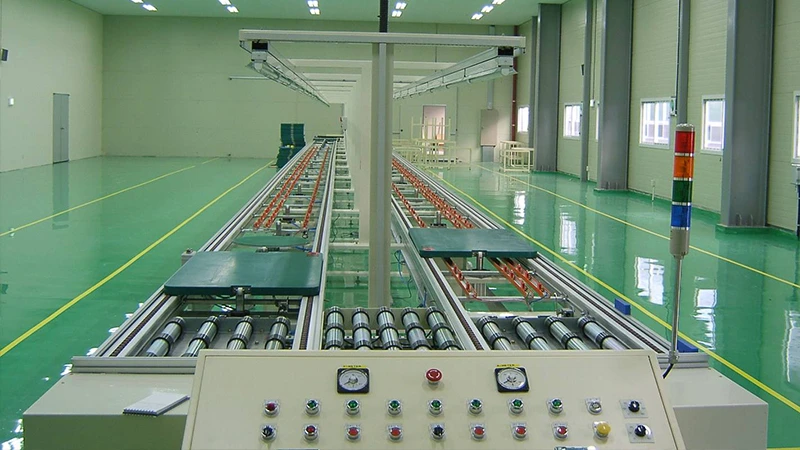
The free flow conveyor system uses a free flow chain that can increase the speed of the tooling board that supports the products. This can improve the efficiency and quality of the production process, as well as reduce the wear and tear of the system.
Introduction: The Backbone of Aerospace Manufacturing
Aerospace manufacturing is a realm where precision isn't just a goal—it's a non-negotiable necessity. Every component, from a tiny avionic sensor to a massive turbine blade, must adhere to tolerances measured in microns. A single miscalculation or misalignment can compromise safety, performance, and even human lives. In this high-stakes environment, the tools and systems that move these components through the production line play a role as critical as the components themselves. Enter the free flow chain conveyor: a workhorse of modern manufacturing that, when engineered correctly, becomes an unsung hero in maintaining the precision aerospace demands.
But what exactly is a free flow chain conveyor, and why does it matter in aerospace? Unlike traditional belt or roller conveyors, free flow chain systems use a series of interconnected chains mounted on tracks, allowing products to move smoothly, stop precisely, and resume motion without jolts. This level of control is indispensable when handling delicate aerospace parts—think carbon fiber wings, titanium engine casings, or circuit boards for flight control systems. In this article, we'll dive into how free flow chain conveyors meet the rigorous precision requirements of aerospace manufacturing, explore their integration with broader lean systems, and highlight why even the smallest design details (like the choice of aluminum profile or roller track components) can make or break production success.
Why Precision Matters in Aerospace: Beyond the Numbers
In automotive manufacturing, a tolerance of 0.1mm might be acceptable for certain parts. In aerospace, that number often shrinks to 0.01mm—or less. Why the extreme precision? Consider a commercial airliner's jet engine: each fan blade must spin in perfect harmony with its neighbors, with gaps so consistent that even a hair's-width deviation could cause vibration, overheating, or catastrophic failure at 35,000 feet. Similarly, avionic components like gyroscopes or navigation systems rely on microscale accuracy to ensure flight paths are true and instruments don't falter.
This is where the free flow chain conveyor steps in. Unlike manual handling, which introduces variability (a worker might place a part slightly off-center), or rigid conveyors that can jostle components, free flow systems are designed for repeatability. They move parts at steady speeds, position them with sub-millimeter accuracy at workstations, and minimize contact with sensitive surfaces. For example, when transporting a composite material panel for a satellite, the conveyor must avoid applying uneven pressure that could warp the material. Free flow chains distribute weight evenly, using low-friction roller tracks to glide parts along without drag—critical for maintaining the material's structural integrity.
Regulatory bodies like the FAA (Federal Aviation Administration) and EASA (European union Aviation Safety Agency) enforce these precision standards through rigorous audits and certifications. A single non-conforming part can lead to production halts, costly rework, or even grounded fleets. For manufacturers, this means conveyor systems aren't just equipment—they're compliance tools. Free flow chain conveyors, with their ability to log movement data, integrate with quality control sensors, and maintain consistent performance, become essential in proving adherence to these strict regulations.
The Anatomy of Precision: Key Components of Free Flow Chain Conveyors
A free flow chain conveyor is more than just a set of moving chains. It's a symphony of components working together to deliver the precision aerospace demands. Let's break down the critical elements, including a few that might sound familiar from your keyword list: aluminum profile, roller track, and lean system integration.
Aluminum Profile: Lightweight Strength for Rigid Frames
The frame of a free flow conveyor is its backbone, and in aerospace manufacturing, that backbone needs to be both strong and lightweight. Enter aluminum profile—a material chosen for its high strength-to-weight ratio, corrosion resistance, and ease of customization. Unlike steel, which can add unnecessary weight and flex under heavy loads, aluminum profiles (often extruded into T-slot designs) provide the rigidity needed to keep the conveyor track perfectly aligned. Even a 0.5mm bend in the frame could throw off part positioning, so manufacturers rely on precision-cut aluminum profiles to maintain straight, level tracks over the conveyor's entire length—whether it's 10 meters or 100 meters long.
Aluminum's versatility also shines here. T-slot profiles allow for easy attachment of accessories like side guides, sensor mounts, or adjustable stops. For example, if a production line switches from manufacturing wing spars to smaller engine brackets, workers can reconfigure the conveyor's aluminum frame in hours, not days—supporting the lean system principle of adaptability. This flexibility is key in aerospace, where production runs often involve low volumes of highly customized parts.
Roller Track: The Glide Path to Smooth Movement
Beneath the free flow chain lies the roller track—a series of small, rotating wheels that reduce friction between the chain and the conveyor bed. In aerospace applications, these tracks are often made from high-grade plastics or stainless steel, chosen for their durability and low coefficient of friction. But it's not just about materials; the spacing and alignment of the rollers matter, too. If rollers are spaced unevenly, a part might wobble as it moves, leading to misalignment at the next workstation. Precision-machined roller tracks ensure each wheel is positioned exactly 25mm apart (a common standard), creating a smooth, consistent glide path.
Some aerospace conveyors take this a step further with "smart" roller tracks equipped with sensors. These sensors monitor roller speed, detect jams, or even measure the weight of parts as they pass—alerting operators if a component is outside acceptable weight tolerances (a red flag for possible defects). For example, a turbine blade that's too heavy might indicate excess material, which could unbalance the engine. The conveyor becomes part of the quality control process, not just a transport tool.
Integration with Lean Systems: Efficiency Meets Precision
Aerospace manufacturing isn't just about making precise parts—it's about making them efficiently. That's where lean systems come into play. Lean manufacturing, with its focus on eliminating waste (whether time, materials, or motion), aligns perfectly with the capabilities of free flow chain conveyors. Together, they create a production line that's both precise and agile.
Consider the concept of "just-in-time" (JIT) production, a cornerstone of lean systems. In JIT, parts arrive at each workstation exactly when they're needed—not too early (cluttering the area) or too late (slowing production). Free flow conveyors enable this by allowing for "zoned" movement: parts can be held at a staging area until a workstation is ready, then released with a signal. For example, a workbench where technicians assemble avionic circuit boards might only need one batch of resistors at a time. The conveyor holds the next batch just upstream, releasing it the moment the workbench is clear. This reduces inventory waste and keeps the production floor organized—a critical factor in avoiding errors (cluttered workspaces are a common source of mistakes in precision manufacturing).
Another lean principle is "continuous flow," which minimizes stops and starts in production. Free flow chain conveyors excel here, as they can maintain a steady pace without the need for manual pushing or pulling. For instance, in the assembly of a drone's fuselage, components like the shell, battery compartment, and camera mount must be added in sequence. The conveyor moves the fuselage from station to station at exactly 0.5 meters per minute—slow enough for workers to install parts with care, but fast enough to keep the line moving. This balance between speed and precision is the sweet spot lean systems aim for, and free flow conveyors deliver it.
Comparing Conveyor Systems: Why Free Flow Chain Stands Out in Aerospace
Not all conveyors are created equal, especially in aerospace. Let's compare free flow chain conveyors with two common alternatives—roller conveyors and belt conveyors—to see why the former often becomes the go-to choice for precision applications.
| Feature | Free Flow Chain Conveyor | Roller Conveyor | Belt Conveyor |
|---|---|---|---|
| Precision Positioning | ±0.05mm at workstations; stops with minimal overshoot | ±0.5mm (rollers can cause slight bouncing) | ±1.0mm (belt stretch leads to positional drift) |
| Load Capacity | Up to 500kg per meter (even weight distribution) | Up to 1,000kg per meter (but uneven loads may jam) | Up to 300kg per meter (belts can sag under heavy loads) |
| Suitability for Delicate Parts | High (low friction, minimal contact with parts) | Medium (risk of parts shifting on rollers) | Low (belts can leave marks or generate static) |
| Integration with Lean Systems | Excellent (zoned control, JIT compatibility) | Good (but less flexible for stop/start operations) | Fair (continuous motion limits JIT staging) |
| Aerospace Application Example | Jet engine component assembly lines | Heavy airframe part transport (e.g., landing gear) | Non-critical parts (e.g., interior panel packaging) |
As the table shows, free flow chain conveyors outperform alternatives in precision positioning and delicate part handling—two areas where aerospace can't compromise. Roller conveyors, while robust, lack the fine control needed for micro-tolerance parts, and belt conveyors introduce risks like static electricity (a hazard for electronic components) or surface damage. For aerospace manufacturers, the choice is clear: when precision is non-negotiable, free flow chain conveyors deliver.
Case Study: How Free Flow Conveyors Transformed an Aerospace Supplier's Production Line
To put these concepts into context, let's look at a hypothetical (but realistic) case study of an aerospace component supplier. Company X manufactures precision fuel injectors for military fighter jets—a part with tolerances as tight as 0.005mm. Before implementing free flow chain conveyors, the company relied on manual carts to move parts between workstations. This led to two major issues: variability in part positioning (workers often placed injectors slightly off-center in fixtures) and production bottlenecks (carts would pile up at busy stations, causing delays).
The solution? A custom free flow chain conveyor system built with aluminum profile frames and stainless steel roller tracks. The conveyor was designed with three key features: 1) Adjustable stops at each workstation, programmed to position injectors within 0.01mm of the fixture center; 2) A sensor system that detected if a part was misaligned, triggering an automatic halt; and 3) Integration with the company's lean system software, which synchronized conveyor speed with worker productivity (slowing down during complex assembly steps, speeding up during simpler tasks).
The results were striking: Defect rates dropped by 40%, production time per injector decreased by 25%, and workers reported less fatigue (no more pushing heavy carts). Perhaps most importantly, the company passed its next FAA audit with zero findings related to part handling—a testament to the conveyor's role in maintaining precision. Today, the free flow system is the backbone of their production line, with plans to expand it to other component lines.
Maintaining Precision: The Role of Regular Maintenance
Even the best free flow chain conveyor won't stay precise forever without proper care. In aerospace manufacturing, maintenance isn't an afterthought—it's a scheduled, data-driven process. Here's what keeps these systems performing at peak precision:
- Lubrication: Chain links and roller tracks require specialized lubricants (often food-grade or low-VOC, to avoid contaminating parts) applied every 500 hours of operation. Too little lubrication causes friction and wear; too much can attract dust, which acts like sandpaper on moving parts.
- Alignment Checks: Monthly laser alignment tests ensure the conveyor track remains straight. Even a 0.1mm bend over 10 meters can accumulate, leading to parts drifting off course. Technicians use precision levels and digital gauges to adjust aluminum profile frames as needed.
- Roller Replacement: Over time, roller track wheels can wear unevenly, causing parts to wobble. Manufacturers typically replace rollers every 2,000 hours, but sensors (mentioned earlier) can flag early wear, preventing unexpected failures.
- Software Updates: For conveyors with smart features (like programmable stops or speed control), regular software updates ensure synchronization with other lean system tools (e.g., inventory management software or quality control databases).
In aerospace, downtime is costly—so maintenance is often scheduled during off-hours, with backup conveyors or manual workarounds ready if needed. The goal? 99.9% uptime, ensuring production stays on track and parts never sit idle (a risk factor for contamination or damage).
The Future of Free Flow Conveyors in Aerospace: Innovation on the Horizon
As aerospace manufacturing evolves—with trends like additive manufacturing (3D printing), electric aircraft, and AI-driven quality control—free flow chain conveyors are evolving too. Here are three innovations to watch:
1. IoT-Enabled Predictive Maintenance
Imagine a conveyor that "tells" operators when a roller is about to fail, or when lubrication levels are low. IoT sensors embedded in chain links, roller tracks, and aluminum profile frames can monitor vibration, temperature, and wear in real time, sending alerts to maintenance teams before issues escalate. For example, a sudden spike in vibration might indicate a misaligned roller—fixing it now prevents a jam that could halt production tomorrow.
2. Lightweight, High-Strength Materials
Aluminum profile is already a staple, but new alloys (like aluminum-lithium) offer even better strength-to-weight ratios, allowing conveyors to handle heavier parts without adding bulk. Similarly, carbon fiber roller tracks could reduce weight further while increasing durability—ideal for mobile conveyor systems used in flexible manufacturing cells.
3. AI-Driven Adaptive Speed Control
Machine learning algorithms could soon adjust conveyor speed based on real-time production data. For example, if a workbench operator is faster than average, the conveyor speeds up to deliver the next part sooner; if they're slower, it slows down to avoid backups. This "adaptive flow" would take lean system efficiency to new heights, minimizing waste and maximizing throughput.
Conclusion: Precision in Motion, Trust in Flight
In the world of aerospace manufacturing, every component, every process, and every piece of equipment must earn its place through precision. The free flow chain conveyor does more than earn its place—it becomes a partner in upholding the industry's uncompromising standards. From its aluminum profile frame that stays rigid under pressure to its roller tracks that glide parts with sub-millimeter accuracy, it's a system built for the demands of flight.
As aerospace pushes into new frontiers—supersonic travel, reusable rockets, electric aviation—the need for precise material handling will only grow. Free flow chain conveyors, integrated with lean systems and powered by innovations like IoT and AI, are poised to meet these challenges. They're not just moving parts; they're moving the industry forward, one precise step at a time. And in aerospace, that's the difference between a smooth flight and a catastrophic failure. For manufacturers, operators, and passengers alike, that's a difference worth investing in.