- Company Articles
- Products and Technology
- Solution
- Free Flow Chain Conveyor in Automotive Aftermarket Parts Distribution

Free Flow Chain Conveyor in Automotive Aftermarket Parts Distribution
Related Product
Free Flow Chain Conveyor
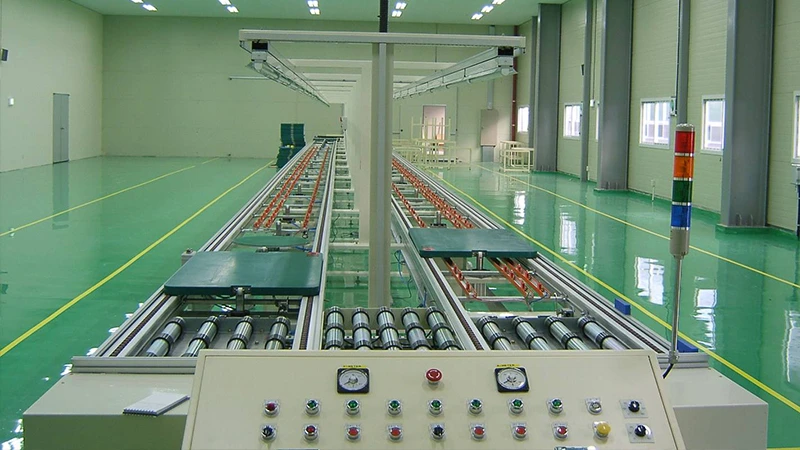
The free flow conveyor system uses a free flow chain that can increase the speed of the tooling board that supports the products. This can improve the efficiency and quality of the production process, as well as reduce the wear and tear of the system.
The automotive aftermarket is the unsung hero of the automotive industry, keeping millions of vehicles on the road long after they leave the factory floor. From brake pads to alternators, filters to windshields, the aftermarket thrives on delivering the right part, to the right place, at the right time. But behind that seamless customer experience lies a complex web of logistics—one where material handling systems, like the free flow chain conveyor, play a starring role in turning chaos into efficiency.
In a sector where customer loyalty hinges on speed and accuracy, parts distributors can't afford bottlenecks. A single delayed order or misplaced component can mean a mechanic waiting, a customer's car idle, and a business reputation on the line. That's why forward-thinking distributors are turning to advanced material handling solutions, designed to keep parts moving as smoothly as the vehicles they service. Among these solutions, the free flow chain conveyor stands out as a workhorse, uniquely suited to the demands of automotive aftermarket parts distribution.
The Backbone of Aftermarket Efficiency: Why Material Handling Matters
Before diving into the specifics of free flow chain conveyors, let's take a step back. The automotive aftermarket is a fast-paced environment, with parts ranging from tiny screws to bulky bumpers, and order volumes that spike during peak seasons (think winter for batteries, summer for air conditioning parts). Traditional warehousing methods—manual picking, static shelving, and basic roller conveyors—often struggle to keep up. They're slow, prone to human error, and rigid, making it hard to adapt to changing demand.
Material handling systems are the backbone of this operation. They're not just about moving parts from Point A to Point B; they're about creating a lean system where every step adds value, waste is minimized, and efficiency is baked into the process. For aftermarket distributors, this translates to faster order fulfillment, lower operational costs, and happier customers. And at the heart of many such systems? The free flow chain conveyor.
What Is a Free Flow Chain Conveyor, Anyway?
If you've ever walked through a busy warehouse, you've probably seen conveyors in action—belts, rollers, or chains moving boxes and packages along a fixed path. But free flow chain conveyors are a breed apart. Unlike traditional belt conveyors that move at a constant speed, or roller conveyors that rely on gravity, free flow chain conveyors use a series of interconnected chains with attached rollers to move items. The "free flow" comes from their ability to let products glide smoothly, even when stopping or starting, without jamming or damaging fragile parts.
At first glance, they might look similar to other conveyors, but their design is where the magic happens. The chain runs along a track—often made from durable aluminum profile for lightweight strength—with evenly spaced rollers that reduce friction. This setup allows for precise control: parts can be stopped at specific workstations for sorting, labeling, or packing, then released to continue their journey. It's like a highway with dedicated lanes and traffic lights, ensuring every "car" (or part) reaches its destination on time.
But what makes them ideal for automotive aftermarket parts? Let's break it down.
Why Free Flow Chain Conveyors Are a Game-Changer for Aftermarket Parts
Automotive aftermarket parts are a diverse bunch. You've got small, lightweight items like fuses and gaskets; medium-sized parts like alternators and starters; and heavy, irregularly shaped items like transmissions and doors. A one-size-fits-all conveyor system just won't cut it. Free flow chain conveyors, however, are built for this diversity—and that's just the start of their benefits.
1. Flexibility to Handle Diverse Parts
Imagine a conveyor that can carry a 5-pound oil filter and a 50-pound brake caliper with equal ease. That's the reality with free flow chain conveyors. Their robust chain and roller design distribute weight evenly, preventing sagging or jamming, even with heavy loads. For smaller parts, adjustable roller track guides can be added to keep items centered, while larger parts ride securely on the chain itself. This flexibility means distributors don't need separate systems for different part types—saving space and simplifying operations.
2. Speed Without Sacrificing Accuracy
In the aftermarket, speed is non-negotiable. Customers expect same-day or next-day delivery, and distributors need to process hundreds (if not thousands) of orders daily. Free flow chain conveyors are built for speed, with variable speed controls that let operators adjust the flow based on demand. During peak hours, the conveyor can ramp up to move parts faster; during lulls, it can slow down to save energy. And because the chain and rollers minimize friction, parts glide smoothly, reducing the risk of jams that cause costly delays.
But speed without accuracy is useless. Aftermarket parts often have similar SKUs—think two oil filters that differ by a single digit in their part number. A misstep here could lead to a customer receiving the wrong filter, a return, and a frustrated mechanic. Free flow chain conveyors mitigate this risk by integrating with barcode scanners and sorting stations. As parts move along the conveyor, they're scanned, verified, and directed to the correct packing station—all without human intervention. It's speed with a safety net.
3. Durability for the Long Haul
Automotive parts are tough, and the systems handling them need to be too. Free flow chain conveyors are built to withstand the daily grind of a busy warehouse. The chains are often made from hardened steel, resistant to rust and wear, while the frame—frequently constructed from aluminum profile —is lightweight yet strong enough to support heavy loads. Even the rollers, often made from high-impact plastic or metal, are designed to handle repeated use without cracking or deforming.
This durability translates to lower maintenance costs. Unlike belt conveyors that require frequent belt replacements, or roller conveyors with bearings that seize up, free flow chain conveyors have fewer moving parts and simpler maintenance. A quick lubrication of the chain, a check of the roller alignment, and they're good to go—minimizing downtime and keeping parts moving.
4. Adaptability to Changing Needs
The automotive aftermarket isn't static. New vehicle models mean new parts, seasonal demand shifts, and evolving customer expectations (hello, same-day delivery). A rigid material handling system can quickly become obsolete, but free flow chain conveyors are designed to adapt. Need to add a new sorting station? The modular design allows for easy expansion—simply bolt on additional aluminum profile sections and extend the chain. Want to reconfigure the layout to accommodate a new storage rack? The conveyor can be disassembled and reassembled with minimal hassle.
This adaptability is a lifesaver for distributors looking to scale. As the business grows, the conveyor system grows with it—no need for costly overhauls or replacements.
Traditional vs. Free Flow Chain Conveyors: A Side-by-Side Comparison
Still on the fence about whether free flow chain conveyors are right for your aftermarket operation? Let's compare them to two common alternatives: gravity roller conveyors and belt conveyors. The table below breaks down how they stack up in key areas like efficiency, maintenance, and cost.
| Feature | Free Flow Chain Conveyor | Gravity Roller Conveyor | Belt Conveyor |
|---|---|---|---|
| Speed Control | Variable speed (adjustable to demand) | Fixed speed (relies on gravity slope) | Constant speed (hard to adjust) |
| Load Capacity | High (handles small to heavy parts) | Medium (limited by roller spacing) | Medium (risk of belt stretching with heavy loads) |
| Maintenance | Low (minimal moving parts; chain lubrication only) | Medium (rollers can jam; bearings need replacement) | High (belts wear, stretch, or tear; motor upkeep) |
| Flexibility | High (easily reconfigured; modular design) | Low (fixed slope; hard to reposition) | Low (fixed path; difficult to modify) |
| Cost (Long-Term) | Moderate upfront, low ongoing (energy-efficient; minimal repairs) | Low upfront, high ongoing (frequent maintenance; limited utility) | Low upfront, very high ongoing (belt replacements; motor repairs) |
| Best For | Diverse parts, high-volume orders, lean systems | Light, uniform parts; short distances | Light to medium parts; straight-line transport |
As the table shows, free flow chain conveyors excel in the areas that matter most to aftermarket distributors: flexibility, durability, and long-term cost savings. They're not just a conveyor—they're an investment in a system that grows with your business.
Integrating Free Flow Chain Conveyors with Workbenches and Lean Systems
A free flow chain conveyor doesn't operate in a vacuum. To truly maximize efficiency, it needs to work hand-in-hand with other warehouse components—like workbenches and lean management principles. Let's explore how these integrations turn a good system into a great one.
From Conveyor to Workbench: The Picking and Packing Dance
At the end of the conveyor line, you'll find the heart of order fulfillment: the packing station. Here, workers take parts from the conveyor, verify them against the order, and pack them for shipping. A well-designed workbench makes this process seamless. Imagine a workbench positioned directly alongside the conveyor, with adjustable height to reduce worker fatigue, built-in storage bins for packing materials, and a barcode scanner integrated into the surface. As parts arrive on the conveyor, they glide to a stop at the bench, where the worker can quickly scan, pack, and send them on their way.
Some distributors take this a step further, using "pick-to-light" systems integrated with the conveyor. When an order comes in, lights on the workbench illuminate, indicating which parts to pick from the conveyor. Once picked, the conveyor automatically advances to the next part. This reduces errors and speeds up the packing process—turning minutes into seconds per order.
Lean Systems: Minimizing Waste, Maximizing Value
The term "lean system" gets thrown around a lot, but in practice, it's about one thing: eliminating waste. In the context of aftermarket distribution, waste can be anything from excess inventory to unnecessary movement of parts or workers. Free flow chain conveyors align perfectly with lean principles by creating a continuous flow of parts, reducing the need for manual handling, and minimizing storage space.
For example, instead of storing parts in remote warehouses and transporting them to the packing area via forklift (a form of "transportation waste"), a free flow chain conveyor brings parts directly to the workbench . This cuts down on travel time and reduces the risk of damage. Similarly, by using variable speed controls, the conveyor only runs when there are parts to move—saving energy and reducing "waiting waste."
Over time, this lean approach adds up. Lower energy bills, fewer damaged parts, and faster order times all contribute to a healthier bottom line—proof that efficiency and profitability go hand in hand.
A Day in the Life: How Free Flow Chain Conveyors Transform Operations
Let's paint a picture of a typical day at an automotive aftermarket distributor that's embraced free flow chain conveyors. Meet "AutoParts Express," a mid-sized distributor serving mechanics and body shops across the Midwest. Before installing their free flow system, they struggled with order backlogs, especially during peak seasons. Workers spent hours manually picking parts from shelves, and mislabeled packages were a weekly headache.
Today, things are different. At 7 a.m., the warehouse lights come on, and the free flow chain conveyor rumbles to life. Parts start arriving from the storage area, where they've been sorted overnight by a automated retrieval system. Small parts—like spark plugs and fuses—ride on the roller track guides, while larger items—like radiators and starters—sit securely on the main chain. The conveyor moves at a steady clip, but operators can speed it up as orders pour in.
At the packing stations, workers stand at ergonomic workbenches , scanning parts as they arrive. A quick check against the order slip, a few packing peanuts, and the box is sealed and labeled—all in under a minute. By 10 a.m., the first wave of orders is on its way to customers, and the conveyor is already handling the next batch. There are no bottlenecks, no lost parts, and no frustrated mechanics waiting on hold.
By the end of the day, AutoParts Express has processed 30% more orders than before, with a 50% reduction in errors. Their workers are less stressed, their customers are happier, and their profits are growing. And it all started with a simple decision: to invest in a material handling system that works as hard as they do.
Technical Considerations: Choosing the Right Free Flow Chain Conveyor
Not all free flow chain conveyors are created equal. To get the most out of your investment, you'll need to consider a few key technical factors. Here's what to keep in mind:
1. Load Capacity
Start by assessing the weight of the parts you'll be moving. Most free flow chain conveyors can handle loads from 5 pounds to 500 pounds, but if you regularly move heavier items (like engines or transmissions), you'll need a heavy-duty model with reinforced chains and aluminum profile frames.
2. Speed Requirements
How many orders do you process daily? A conveyor with variable speed controls (ranging from 10 to 50 feet per minute) gives you the flexibility to adjust to demand. For high-volume operations, look for models with higher maximum speeds and smooth acceleration/deceleration to avoid damaging parts.
3. Layout and Space
Measure your warehouse space carefully. Free flow chain conveyors can be configured in straight lines, curves, or even vertical lifts, but you'll need to ensure there's enough room for the conveyor itself, as well as clearance for workers and maintenance. Modular aluminum profile systems are ideal here, as they can be customized to fit your space.
4. Maintenance and Support
Even the most durable conveyor needs occasional upkeep. Look for a supplier that offers easy access to replacement parts (like chains, rollers, and roller track guides) and responsive customer support. Some suppliers even provide training for your team on basic maintenance, ensuring the system stays in top shape.
The Future of Aftermarket Distribution: Where Free Flow Conveyors Meet Innovation
As the automotive industry evolves—with electric vehicles, autonomous driving, and on-demand delivery reshaping the landscape—the aftermarket will need to keep pace. Free flow chain conveyors are poised to play a key role in this future, thanks to ongoing innovations in automation and connectivity.
Imagine a conveyor system that "talks" to your inventory management software, automatically flagging low stock levels and triggering reorders. Or one that uses sensors to detect damaged parts mid-conveyor, diverting them to a quality control station before they reach the customer. These aren't pipe dreams—they're already being tested in forward-thinking warehouses.
Sustainability is another area of growth. Many free flow chain conveyors now use energy-efficient motors and recyclable aluminum profile frames, aligning with the industry's push toward greener operations. As customers become more eco-conscious, distributors that prioritize sustainability will have a competitive edge—and the conveyor system will be a big part of that story.
Conclusion: More Than a Conveyor—A Partner in Success
At the end of the day, the free flow chain conveyor is more than just a piece of equipment. It's a partner in the success of your automotive aftermarket business. It's the silent force that keeps parts moving, orders flowing, and customers smiling. It's the difference between meeting deadlines and missing them, between growing your business and watching competitors pass you by.
For automotive aftermarket distributors, the message is clear: in a world where speed, accuracy, and flexibility are non-negotiable, the free flow chain conveyor isn't just an upgrade—it's a necessity. So why wait? Invest in a system that works as hard as you do, and watch your operation transform from good to great.
After all, when your parts move freely, your business does too.