- Company Articles
- Products and Technology
- Product knowledge
- Free Flow Chain Conveyor in Cold Storage Warehouses: Low-Temperature Performance

Free Flow Chain Conveyor in Cold Storage Warehouses: Low-Temperature Performance
Related Product
Free Flow Chain Conveyor
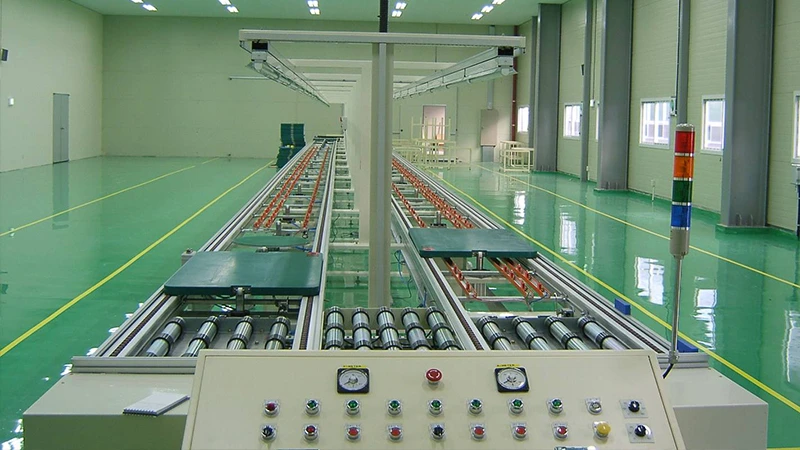
The free flow conveyor system uses a free flow chain that can increase the speed of the tooling board that supports the products. This can improve the efficiency and quality of the production process, as well as reduce the wear and tear of the system.
Walk into a cold storage warehouse, and the first thing that hits you isn't just the bone-chilling air—it's the quiet pressure of a system that can't afford to slow down. Whether it's frozen produce, pharmaceuticals, or meat products, every item in that space has a shelf life, a deadline, and a customer counting on its freshness. In these environments, where temperatures can drop as low as -30°C, the difference between a smooth operation and a costly disaster often comes down to the equipment keeping things moving. Enter the free flow chain conveyor —a workhorse designed to thrive where other systems falter. But what makes these conveyors stand out in the harsh cold? How do they maintain performance when metal contracts, lubricants thicken, and every mechanical part is pushed to its limit? Let's dive into the world of low-temperature conveyor systems, exploring why free flow chain conveyors are becoming the backbone of modern cold storage, and how components like roller track and aluminum profile make all the difference.
The Cold Storage Challenge: More Than Just Staying Frost-Free
Cold storage isn't just about keeping things cold—it's about keeping things consistently cold while moving them efficiently. Traditional warehouses deal with heat, dust, and wear, but cold storage adds a layer of complexity that turns minor issues into major headaches. Metal components shrink in the cold, rubber parts become brittle, and even the smallest ice buildup can jam a conveyor belt. For workers, the environment is equally unforgiving: gloves slow down manual handling, frostbite is a constant risk, and the cold saps energy, making every task feel heavier. All of this adds up to a simple truth: in cold storage, equipment failure isn't just an inconvenience—it's a threat to product quality, worker safety, and the bottom line.
Consider this: A frozen food distributor loses just 1% of its daily throughput due to conveyor downtime. At scale, that's thousands of units delayed, potentially leading to spoiled inventory or missed deliveries. In the pharmaceutical industry, where vaccines and biologics require strict temperature control, a conveyor jam could mean life-saving products are exposed to unsafe conditions. And for workers, struggling with a finicky conveyor system in sub-zero temperatures isn't just frustrating—it's a safety hazard. Slipping on ice near a stuck conveyor, or straining to manually move a load that should have been automated, increases the risk of accidents.
This is where the right conveyor system becomes critical. Not all conveyors are built for the cold. Belt conveyors, for example, often use rubber belts that harden and crack in low temperatures, while chain conveyors with standard lubricants can seize up when the oil thickens. Free flow chain conveyors, however, are engineered with these challenges in mind. By combining lightweight, durable materials with precision design, they're able to maintain smooth operation even when the mercury plummets. But to understand why, we first need to unpack what makes a free flow chain conveyor different.
What Is a Free Flow Chain Conveyor? Breaking Down the Basics
At its core, a free flow chain conveyor is a system designed to move products with minimal friction and maximum control. Unlike traditional belt conveyors that rely on a continuous loop of material, or gravity conveyors that depend on slope, free flow chain conveyors use a series of interconnected chains or rollers to "float" products along a track. The "free flow" part comes from their ability to let products move independently—meaning if one item stops (to be sorted, scanned, or inspected), the rest can keep flowing without backup. This modularity is a game-changer in warehouses, but in cold storage, it's a lifesaver.
Here's how it works: The conveyor consists of a frame (often made from aluminum profile for strength and corrosion resistance), a track (typically roller track for smooth movement), and a chain or roller system that propels items forward. In cold storage models, the chain is often made from stainless steel to resist rust, while the rollers are precision-engineered to reduce friction. What sets free flow chain conveyors apart is their reliance on gravity or low-power motors to move products, minimizing the number of moving parts that can fail in the cold. This simplicity is key—fewer parts mean fewer opportunities for ice buildup, jamming, or wear.
But don't mistake "simple" for "basic." Modern free flow chain conveyors are highly customizable. They can be configured to handle different product sizes, from small packages to large pallets, and integrated with sorting systems, scanners, or workstations. In cold storage, this adaptability is crucial. A facility storing frozen pizzas will have different needs than one handling vials of insulin, and a free flow system can be tailored to both. For example, a roller track with smaller, closer-set rollers might be used for lightweight packages, while larger, spaced rollers work better for heavier loads. The frame, built from aluminum profile, can be adjusted for height, width, or slope, ensuring the conveyor fits seamlessly into existing cold storage layouts.
Low-Temperature Performance: The Make-or-Break Features
So, what exactly makes a free flow chain conveyor perform well in low temperatures? It's not just one feature—it's a combination of materials, design, and engineering that addresses the unique challenges of the cold. Let's break down the key factors:
Material Matters: Why Aluminum Profile and Stainless Steel Lead the Way
In cold storage, the materials used in conveyor construction are non-negotiable. Standard steel, for example, is prone to rust in the moist, cold air of a freezer, leading to corrosion that weakens the frame over time. Rubber components, as mentioned earlier, become brittle and crack. This is where aluminum profile shines. Aluminum is naturally resistant to corrosion, even in high-moisture environments, and it maintains its structural integrity in extreme cold. Unlike steel, it doesn't shrink significantly at low temperatures, meaning the frame stays stable, and alignment remains precise—critical for preventing jams.
But aluminum isn't just about resistance; it's also lightweight. In cold storage, where every pound of equipment adds to the energy needed to maintain low temperatures, a lighter conveyor system reduces the load on cooling units. It also makes installation and reconfiguration easier—no need for heavy machinery to move sections, which is a boon in tight freezer spaces. When paired with stainless steel components (like chain links or roller axles), aluminum profile creates a system that's both strong and resilient. Stainless steel resists rust and can handle the thermal expansion and contraction of the cold, ensuring that moving parts don't seize up.
Roller Track: The Unsung Hero of Smooth Movement
If the frame is the skeleton of the conveyor, the roller track is its muscles. In cold storage, rollers can't afford to stick or bind, even when dusted with frost. Free flow chain conveyors use precision-machined roller tracks with bearings designed for low-temperature operation. These bearings are often sealed to prevent moisture and ice from entering, and lubricated with special low-temperature grease that stays fluid even at -30°C. The result? Rollers that spin freely, even when the air is thick with frost.
But it's not just about the rollers themselves—it's how they're spaced and aligned. In cold storage, uneven floors or misaligned tracks can lead to product jams, which in turn create ice buildup as condensation forms on stopped items. Free flow chain conveyors with adjustable roller tracks allow operators to fine-tune alignment, even in facilities where the floor might shift slightly due to temperature changes. This adjustability is a small detail that makes a big difference in preventing downtime.
Minimal Power, Maximum Reliability
Many free flow chain conveyors are gravity-driven or use low-power motors, which is a huge advantage in cold storage. High-power motors generate heat, which can create condensation (and thus ice) around the conveyor—a problem that compounds over time. Low-power motors, on the other hand, produce minimal heat, reducing the risk of frost buildup. Gravity-driven systems take this a step further: by using the natural slope of the track, they eliminate the need for motors entirely, cutting down on moving parts and energy use. For facilities looking to reduce their carbon footprint (and energy bills), this is a major plus.
Beyond the Conveyor: Integrating with Cold Storage Workflows
A free flow chain conveyor doesn't exist in a vacuum—it's part of a larger ecosystem of tools and workspaces that keep cold storage running. To truly maximize efficiency, these conveyors need to integrate seamlessly with other equipment, from workbench stations where products are sorted to mobile carts for last-mile transport. Let's explore how this integration works and why it matters.
Workbenches: Where Conveyor Meets Human Expertise
In many cold storage facilities, conveyors feed directly into workbenches where workers inspect, label, or repack products. These workbenches need to be as durable and cold-resistant as the conveyors themselves. Enter workbenches built with the same aluminum profile as the conveyor frames. These workbenches are lightweight, easy to clean (a must in food-grade facilities), and resistant to the dents and scratches that come with daily use. They can also be customized with accessories like tool hooks, shelves, or anti-fatigue mats—small touches that make a big difference for workers standing in the cold for hours.
The key here is alignment: the conveyor should feed products directly onto the workbench surface at a comfortable height, reducing the need for workers to bend or reach. In cold storage, where every movement is more strenuous, this ergonomic design isn't just about comfort—it's about preventing injuries and keeping productivity high. For example, a pharmaceutical cold storage facility might use a free flow chain conveyor to move vials to an aluminum profile workbench, where a technician can scan and sort them without ever lifting the containers off the track.
Mobility with Purpose: Casters and Adaptable Design
Not all cold storage workflows are static. Sometimes, a conveyor section needs to be moved to accommodate a new product line, or a workbench needs to shift to make space for a pallet jack. This is where mobility comes in—and it's not just about adding wheels. Free flow chain conveyors and workbenches can be fitted with heavy-duty casters designed for low-temperature use. These casters (often made with polyurethane wheels that stay flexible in the cold) allow sections to be repositioned with minimal effort, even on icy floors. For facilities that need to adapt quickly to changing inventory, this flexibility is invaluable.
The Proof in Performance: A Cold Storage Case Study
Talk is cheap—let's look at a real-world example of how free flow chain conveyors transformed a cold storage operation. Meet FrozenHarvest, a mid-sized distributor of frozen fruits and vegetables with a 50,000-square-foot cold storage facility in the northern U.S. Before upgrading their conveyor system, they were struggling with frequent downtime: their old belt conveyors would jam in the -25°C temperatures, and the rubber belts needed replacing every 3 months. Workers were spending hours each week manually unjamming the system, and product throughput was 20% below target.
In 2023, FrozenHarvest invested in a free flow chain conveyor system with aluminum profile frames, stainless steel roller tracks, and integrated aluminum workbenches. The results were striking:
- Downtime dropped by 85%: The roller track system rarely jammed, even during peak frost conditions, and the aluminum profile frame required no maintenance beyond occasional cleaning.
- Throughput increased by 25%: With smoother flow, more products moved through the facility each day, reducing the backlog of orders.
- Worker satisfaction scores rose by 30%: Employees reported less fatigue and fewer aches, thanks to the ergonomic workbenches and reduced manual handling.
Perhaps most telling? The system paid for itself in under a year, thanks to reduced labor costs, lower maintenance expenses, and fewer product losses from delays. "We used to dread winter because the conveyors would act up every time the temperature dropped," said Maria Gonzalez, FrozenHarvest's operations manager. "Now, even on the coldest days, the system just… works. It's like night and day."
Maintenance in the Cold: Keeping the Flow Free
Even the most durable conveyor system needs care, especially in cold storage. The good news? Free flow chain conveyors are designed to be low-maintenance, but a little proactive upkeep goes a long way. Here's what facility managers need to know:
Regular Inspections: Catching Issues Before They Freeze
In cold storage, small problems can escalate quickly. A loose roller track connector, for example, might start as a minor wobble but, in the cold, could lead to a jam by the end of the shift. That's why daily inspections are critical. Workers should check for:
- Ice or frost buildup on roller tracks (use a soft brush to clear, never a sharp tool that could damage the rollers).
- Loose bolts or connectors on the aluminum profile frame (tighten with cold-resistant tools—standard wrenches can become brittle in the cold).
- Unusual noises (grinding or squeaking often signals a roller or bearing issue).
Lubrication: The Cold-Weather Lifeline
Standard lubricants thicken in the cold, turning from a smooth fluid into a sticky mess that gums up moving parts. Free flow chain conveyors require low-temperature grease —a specialized lubricant designed to stay fluid at -40°C. This grease should be applied every 2-4 weeks, depending on usage, and any old grease should be wiped away before reapplying to prevent buildup. For food-grade facilities, it's also crucial to use FDA-approved lubricants to avoid contamination risks.
Cleaning: More Than Just Shine
Cold storage might seem "clean" because of the low temperatures, but dust, ice crystals, and even product residue can accumulate on conveyor components. A weekly cleaning with a damp cloth (never a pressure washer, which can force water into bearings) keeps the system running smoothly. For aluminum profile frames, a mild detergent and soft brush will remove grime without scratching the surface. In food storage, this cleaning is often mandated by health regulations, but even in non-food facilities, it's a simple way to extend the conveyor's lifespan.
Choosing the Right System: What to Look for in a Free Flow Chain Conveyor
Not all free flow chain conveyors are created equal, and choosing the right one for your cold storage facility requires careful consideration. Here's a checklist to guide your decision:
It's also worth asking for references from other cold storage facilities. A supplier might claim their conveyor works in the cold, but hearing from a peer who's dealt with the same temperature challenges is invaluable. For example, a meat processing plant might prioritize washdown capabilities, while a pharmaceutical facility might focus on cleanroom compatibility—both factors that a reputable supplier should address.
The Future of Cold Storage: Smarter, Colder, and More Efficient
As cold storage demands grow—driven by the rise of e-commerce, global supply chains, and stricter food safety regulations—the role of free flow chain conveyors will only expand. We're already seeing innovations like IoT-enabled sensors that monitor conveyor performance in real time, alerting managers to potential issues before they cause downtime. Imagine a system that sends a notification to your phone when a roller track bearing starts to wear, or when ice buildup is detected on a section of the conveyor. This predictive maintenance could revolutionize cold storage operations, making them even more reliable and cost-effective.
Another trend is the move toward modular, scalable systems. As facilities need to adapt to seasonal demand (think holiday spikes in frozen food orders), conveyors that can be easily expanded or reconfigured will become essential. Aluminum profile's lightweight, bolt-together design makes this possible, allowing facilities to add sections or reposition tracks without major construction.
At the end of the day, though, the most important innovation will always be the focus on the people behind the system. Cold storage workers deserve equipment that makes their jobs safer, easier, and more efficient. Free flow chain conveyors, with their focus on low-temperature performance, ergonomic integration, and reliability, are a step in that direction. They're not just machines—they're partners in keeping our food fresh, our medicines safe, and our supply chains moving, even when the world outside is frozen solid.
Conclusion: The Cold Storage Workhorse We Can't Ignore
In the unforgiving world of cold storage, where every degree and every second counts, the free flow chain conveyor stands out as a quiet hero. Its ability to perform in extreme temperatures, thanks to components like aluminum profile and roller track , transforms chaotic workflows into models of efficiency. It reduces downtime, keeps products safe, and makes life better for the workers who keep our cold supply chains running.
So, the next time you bite into a frozen pizza or receive a package of fresh seafood, take a moment to appreciate the technology that made it possible. Behind that product is a cold storage facility, and behind that facility is likely a free flow chain conveyor—silently, steadily, and reliably doing its job, no matter how low the temperature drops. In the end, that's the true measure of performance: not just working in the cold, but thriving in it.