- Company Articles
- Products and Technology
- Application Cases
- Free Flow Chain Conveyor in Communication Equipment Production: Reliability Insights

Free Flow Chain Conveyor in Communication Equipment Production: Reliability Insights
Related Product
Free Flow Chain Conveyor
The free flow conveyor system uses a free flow chain that can increase the speed of the tooling board that supports the products. This can improve the efficiency and quality of the production process, as well as reduce the wear and tear of the system.
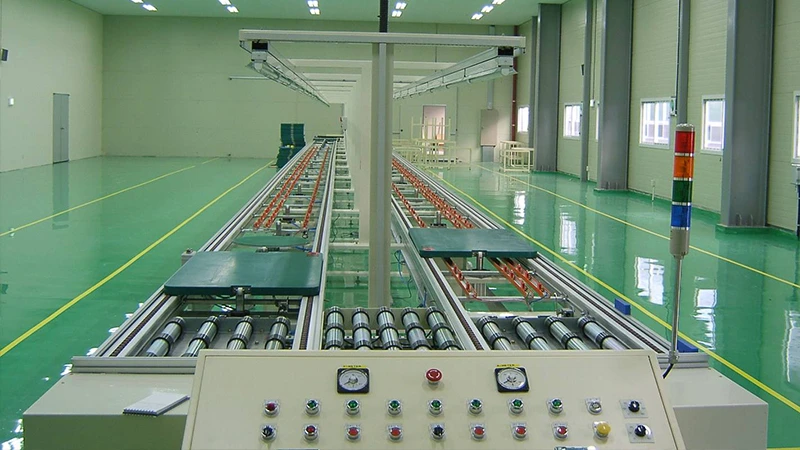
How the backbone of modern assembly lines keeps precision manufacturing on track
The Unsung Hero of Communication Production Lines
Walk into any communication equipment factory today, and you'll see a symphony of motion: circuit boards gliding past workers, tiny semiconductors moving from station to station, and finished routers and modems lining up for quality checks. Behind this harmony is a critical component that often goes unnoticed—the conveyor system. Among these, the free flow chain conveyor stands out as a quiet workhorse, especially in environments where precision and reliability are non-negotiable.
Communication equipment production isn't just about speed; it's about consistency . A single misaligned part or a delayed transfer can throw off an entire batch of sensitive electronics. That's where free flow chain conveyors shine. Unlike bulkier systems, they're designed to handle lightweight, delicate components with minimal friction, ensuring each part arrives at the next workstation exactly when and where it's needed. But what makes them so indispensable in this high-stakes industry? Let's dive in.
Breaking Down the Basics: What Sets Free Flow Chain Conveyors Apart
At first glance, a free flow chain conveyor might look similar to other conveyors, but its design is tailored for the unique demands of communication equipment manufacturing. Picture a series of interconnected chains mounted on a frame, with small, evenly spaced rollers that allow products to slide forward with minimal effort. This low-friction design is a game-changer for handling items like printed circuit boards (PCBs) or small plastic enclosures—items that can easily sustain damage if jostled or dropped.
One of the key advantages is their adaptability. Communication factories often reconfigure production lines to accommodate new device models, and free flow chain conveyors can be adjusted or extended with relative ease. This flexibility isn't just convenient; it's essential in an industry where product lifecycles grow shorter by the year. Whether you're assembling 5G routers or compact IoT sensors, the conveyor can adapt to different part sizes and weights without major overhauls.
Another standout feature is their quiet operation. In a factory filled with the hum of machinery, reducing noise pollution isn't just about worker comfort—it's about focus. When conveyors run smoothly and silently, operators can concentrate on intricate tasks like soldering or quality inspection, reducing the risk of errors. It's a small detail, but in an industry where a 0.1mm misalignment can render a component useless, every bit of focus counts.
Components That Count: Why Material Matters
Reliability in conveyors starts with the parts that make them up. Many modern free flow chain conveyors rely on aluminum profile frames for a simple reason: aluminum strikes the perfect balance between strength and weight. Unlike steel, it doesn't rust, which is crucial in cleanroom environments where corrosion could contaminate sensitive electronics. It's also lightweight enough to allow for easy reconfiguration, yet sturdy enough to support continuous operation.
The chain itself is another critical component. Most free flow chain conveyors use hardened steel chains with precision-machined links to minimize wear. Over time, cheaper chains can stretch or develop kinks, leading to jerky movement that risks damaging components. Investing in high-quality chains might cost more upfront, but it pays off in fewer breakdowns and longer service life—especially in 24/7 production environments common in the communication sector.
Then there are the rollers. Small but mighty, these cylindrical pieces are often made from high-density plastic or rubber to cushion delicate items. In some cases, manufacturers opt for specialized rollers with anti-static properties to protect sensitive electronics from electrostatic discharge (ESD)—a silent killer in circuit board production. It's these small, intentional design choices that make free flow chain conveyors a trusted choice for communication equipment makers.
Free Flow Chain vs. Roller Conveyors: Which Fits Your Line?
While free flow chain conveyors are stars in communication production, they're not the only option. Roller conveyors —another common system—have their own strengths, and understanding the difference can help factories optimize their workflows. Let's break down how they stack up in key areas:
| Feature | Free Flow Chain Conveyor | Roller Conveyor |
|---|---|---|
| Load Capacity | Ideal for lightweight to medium loads (up to 50 lbs per linear foot) | Handles heavier loads (often 100+ lbs per linear foot) |
| Speed Control | Precise, variable speed options for delicate components | Faster overall, but less control at low speeds |
| Friction Level | Low friction; gentle on fragile items like PCBs | Higher friction; better for stable, rigid products |
| Maintenance Needs | Moderate; requires regular chain lubrication | Lower; rollers need occasional cleaning and bearing checks |
| Best For | Lightweight, delicate communication components | Heavier items like fully assembled routers or server units |
In communication production, the choice often comes down to the stage of manufacturing. For early stages—where PCBs, antennas, and small modules are being assembled—free flow chain conveyors are usually the better fit. Their gentle handling reduces the risk of damaging sensitive parts. Later, when fully assembled devices (like Wi-Fi routers or satellite receivers) need to be moved, roller conveyors might take over, thanks to their higher load capacity.
Some factories even combine both systems, creating a hybrid line that leverages the strengths of each. For example, a free flow chain might feed components to a workbench where workers assemble submodules, then a roller conveyor transports the heavier submodules to the final assembly area. This kind of flexibility is key to building efficient, adaptable production lines.
Integrating with Lean Systems : Streamlining Every Step
In today's competitive communication market, efficiency isn't just a goal—it's survival. That's why many factories have adopted lean systems to eliminate waste, reduce costs, and speed up production. Free flow chain conveyors play a pivotal role in making these lean principles a reality.
Lean manufacturing is all about "just-in-time" production—ensuring materials arrive exactly when they're needed, no sooner, no later. Free flow chain conveyors excel here because they allow for precise control over the flow of parts. Unlike manual transport (where workers might carry batches of components back and forth), conveyors deliver items one at a time, minimizing inventory buildup at each workstation. This reduces storage costs and cuts down on the risk of parts becoming obsolete or damaged while waiting in queues.
Take, for example, a factory producing smart home hubs. Each hub requires a PCB, a plastic casing, and a set of antennas. With a free flow chain conveyor integrated into a lean system, the PCB arrives at the soldering station just as the operator finishes the previous one. The casing follows immediately after, and so on. There's no waiting, no overstocking, and no wasted motion—exactly what lean manufacturing aims for.
Another lean principle is "continuous improvement," and free flow chain conveyors make this easier to implement. By tracking how parts move through the line, managers can identify bottlenecks—like a workstation where components often pile up—and adjust the conveyor speed or reconfigure the layout to fix the issue. Over time, these small tweaks add up to significant gains in efficiency. One communication equipment manufacturer reported a 22% reduction in production time after optimizing their free flow chain conveyor layout using lean analytics.
Workbench Integration: Where Conveyors Meet Human Expertise
Conveyors don't work in isolation—they're part of a larger ecosystem that includes workers, tools, and workbenches . In communication production, the interface between conveyor and workbench is where the magic happens. A well-designed setup ensures workers can focus on their tasks without wasting time reaching for parts or adjusting positions.
Imagine a typical workbench in a smartphone component factory. On one side, a free flow chain conveyor delivers small camera modules. The conveyor is positioned at waist height, so the worker doesn't have to bend or stretch to pick up each module. The modules glide smoothly to a stop at a designated point, thanks to a soft-touch brake system that prevents jostling. On the other side of the workbench, another conveyor carries away the assembled components, ready for the next step. This seamless flow reduces fatigue and keeps the worker's hands free to focus on precise assembly—critical when attaching tiny lenses to camera PCBs.
Ergonomics play a big role here. Free flow chain conveyors can be customized to match the height and angle of workbenches, ensuring workers maintain comfortable postures throughout their shifts. Some systems even include tilting sections or adjustable speed controls to accommodate different tasks. For example, a worker inspecting microchips might need parts to move slower, while a packaging station could run at higher speeds. This level of customization isn't just about comfort; it's about reducing errors and improving overall productivity.
Another trend is integrating smart features into the conveyor-workbench setup. Sensors along the conveyor can detect when a part is missing or misaligned, alerting the worker with a gentle beep or light. This real-time feedback prevents defective components from moving down the line, saving time and resources. In one case, a 5G equipment manufacturer used this technology to reduce quality control rejections by 35%—a huge win in an industry where even minor defects can lead to field failures.
Keeping the Flow Going: Maintenance Tips for Long-Term Reliability
Even the best free flow chain conveyors need regular care to stay reliable. In communication production, where downtime can cost thousands of dollars per hour, proactive maintenance is non-negotiable. Here are some key practices to keep your conveyor running smoothly:
1. Regular Lubrication : The chain is the heart of the system, and dry or dirty chains are a common cause of breakdowns. Aim to lubricate chains every 200 hours of operation (or more frequently in dusty environments). Use a high-quality, food-grade lubricant if your facility handles components that might come into contact with consumer products—this prevents contamination from grease residues.
2. Tension Checks : Over time, chains can stretch, leading to slack that causes jerky movement.,()().,.
3. Roller Inspections : Rollers can accumulate dust, debris, or even small parts (like loose screws from assemblies).,.—.
4. Frame Alignment :,.,.,.
5. Clean the Work Environment : Communication factories are generally clean, but conveyor tracks can still collect dust or coolant from nearby machinery.,, buildup.
By sticking to these habits, factories can extend the life of their free flow chain conveyors by years. One manufacturer in Taiwan, for instance, reported their conveyors operating reliably for over a decade with consistent maintenance—far exceeding the typical 5-7 year lifespan of poorly maintained systems.
Future Trends: What's Next for Conveyors in Communication Production
As communication technology evolves, so too will the conveyors that build it. Here are a few innovations on the horizon that could reshape how free flow chain conveyors operate:
Smart Conveyors with IoT Integration : Imagine a conveyor that "talks" to other machines on the line. Sensors embedded in the chain or rollers could collect data on speed, temperature, and vibration, sending real-time alerts to maintenance teams when issues arise. This predictive maintenance could reduce unplanned downtime by up to 40%, according to industry studies.
Modular Design for Rapid Reconfiguration : With product cycles getting shorter, factories need conveyors that can be rearranged in hours, not days. Future systems might use magnetic or snap-on components that allow workers to reconfigure layouts without tools—perfect for prototyping new devices or scaling up production of hot-selling items.
Eco-Friendly Materials : As sustainability becomes a priority, manufacturers are exploring greener options for conveyor components. Biodegradable lubricants, recycled aluminum profiles, and energy-efficient motors could become standard, aligning with the communication industry's push for carbon-neutral production.
AI-Powered Speed Optimization : Artificial intelligence could analyze production data to adjust conveyor speeds dynamically. For example, if a workbench is running behind, the conveyor could slow down to give the operator more time, then speed up once they catch up. This "adaptive flow" would maximize efficiency while reducing stress on workers.
These innovations won't just make conveyors more reliable—they'll make them active partners in production, working alongside humans and machines to create smarter, more efficient factories.
Final Thoughts: Why Reliability Starts with the Right Conveyor
In the fast-paced world of communication equipment production, every component matters. From the tiniest semiconductor to the largest assembly line, each piece plays a role in delivering the devices that keep us connected. Free flow chain conveyors might not grab headlines, but they're the unsung heroes ensuring that this complex dance of parts and people stays in rhythm.
Whether you're integrating them with lean systems , pairing them with ergonomic workbenches , or choosing between them and roller conveyors , the key is to prioritize reliability. A conveyor that works seamlessly today and adapts to tomorrow's needs isn't just a tool—it's an investment in your factory's future.
So the next time you pick up a smartphone, a router, or a smart speaker, take a moment to appreciate the journey it took to reach your hands. Behind that device is a free flow chain conveyor, quietly and reliably keeping the world connected—one precise movement at a time.