- Company Articles
- Products and Technology
- Product knowledge
- Free Flow Chain Conveyor in Mechanical Manufacturing: Handling Heavy Components

Free Flow Chain Conveyor in Mechanical Manufacturing: Handling Heavy Components
Related Product
Free Flow Chain Conveyor
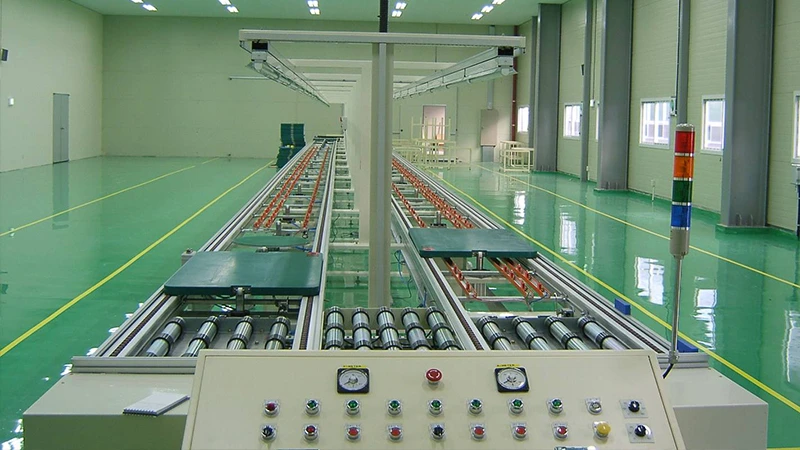
The free flow conveyor system uses a free flow chain that can increase the speed of the tooling board that supports the products. This can improve the efficiency and quality of the production process, as well as reduce the wear and tear of the system.
Picture this: It's a busy Tuesday morning on the mechanical manufacturing floor. Juan, a assembly technician, bends to grip the handle of a steel-reinforced cart loaded with a 350-pound engine block. The cart's wheels squeak as he pushes, and halfway to his workstation, one wheel catches on a small crack in the concrete. He strains, his back muscles tensing, and the cart lurches forward—nearly causing the engine block to shift. By the time he reaches his station, he's out of breath, and the delay has already rippled down the line. "If only there was a better way to move these heavy parts," he mutters, wiping sweat from his brow. Sound familiar? For countless manufacturers, handling heavy components isn't just a daily chore—it's a silent productivity killer, a source of worker fatigue, and a barrier to scaling operations.
Enter the free flow chain conveyor : a workhorse of material handling that's quietly transforming how factories move heavy loads. Unlike clunky manual carts or rigid belt conveyors, this system is designed to glide heavy components smoothly, precisely, and with minimal effort—turning once-frustrating tasks into seamless, almost invisible parts of the production process. In this article, we'll dive into how free flow chain conveyors solve the unique challenges of heavy component handling, why they're a cornerstone of modern lean system integration, and how they stack up against other solutions like roller conveyor systems. Whether you're running a small precision parts shop or a large-scale automotive plant, understanding this technology could be the key to unlocking safer, faster, and more efficient operations.
What Is a Free Flow Chain Conveyor, Anyway? Let's Break It Down
At first glance, a free flow chain conveyor might look like just another piece of factory equipment—rows of metal chains looping over sprockets, with rollers or plates mounted on top. But its simplicity is deceptive. This system is engineered to handle heavy loads (think 500+ pounds per linear foot) with a level of control and flexibility that other conveyors can't match. Here's how it works: A continuous chain, often made of hardened steel or high-strength plastic, runs along a track, powered by a motorized drive unit. Attached to the chain are "slats" or "rollers" that create a flat, moving surface. When a heavy component—like a gearbox, hydraulic pump, or large casting—is placed on this surface, the chain moves it forward at a steady, adjustable speed. Unlike belt conveyors, which can stretch or slip under heavy loads, the chain's rigid structure ensures consistent movement, even with unevenly distributed weight.
What makes "free flow" stand out? Unlike traditional chain conveyors that move at a fixed speed, free flow systems use a lean system -friendly design: components can accumulate (pause) at specific stations without stopping the entire line. For example, if a workstation is temporarily busy, the conveyor can hold a component in place using friction brakes or sensor-based stops, then release it once the station is free. This "no-pressure accumulation" prevents jams, reduces product damage, and lets workers focus on assembly rather than rushing to keep up with the line. It's like having a traffic light system for your materials—only smarter.
Why Heavy Components Need More Than Just "Any Conveyor"
Heavy components—those weighing 200 pounds or more—aren't just "bigger" versions of lighter parts. They demand specialized handling. A flimsy belt conveyor might sag under the weight, causing misalignment. A manual cart risks worker injury or product damage. Even some roller conveyors, while useful for medium loads, can struggle with unevenly weighted items, leading to jams or slowdowns. So why does a free flow chain conveyor excel here?
First, load capacity . These conveyors are built tough: reinforced steel frames, heat-treated chains, and high-torque motors that laugh at heavy loads. Take a typical automotive parts plant, where engine blocks (300–450 pounds) and transmission housings (250–350 pounds) are common. A free flow chain conveyor with a 6-inch pitch chain (the distance between chain links) can easily carry these, even when stacked or irregularly shaped. Compare that to a standard roller conveyor , which might top out at 200 pounds per roller—great for boxes or small parts, but risky for a 400-pound casting that could crack a roller or derail.
Second, precision control . Heavy components often need to arrive at workstations with pinpoint accuracy—within an inch or two—for assembly. Free flow systems use variable speed drives and encoder feedback to adjust movement down to fractions of a foot per minute. Imagine aligning a 500-pound hydraulic manifold with bolt holes on a chassis: a conveyor that lurches or overshoots could mean hours of rework. With free flow, the manifold glides to a stop exactly where it needs to be, every time.
Third, durability in harsh environments . Mechanical manufacturing floors are tough: oil spills, metal shavings, extreme temperatures. Free flow chain conveyors are built to withstand this chaos. Sealed bearings keep out debris, corrosion-resistant coatings protect against oil and chemicals, and heavy-duty motors shrug off dust. Unlike belt conveyors, which can fray or absorb liquids, chain systems are easy to clean—just hose off excess oil or wipe away shavings. When you're dealing with expensive, heavy components, you can't afford a conveyor that breaks down mid-shift.
Integrating Free Flow Conveyors into Your Lean System: It's About More Than Moving Parts
Lean manufacturing isn't just a buzzword—it's a mindset: eliminate waste, optimize flow, and empower workers. And at the heart of any lean system is the smooth movement of materials. That's where free flow chain conveyors shine. They don't just move parts—they connect every step of the production assemble process, turning isolated workstations into a synchronized ecosystem.
Consider a typical scenario: Components start at the flow rack —a storage system where parts are organized by use, so workers can grab what they need without hunting. From there, a free flow conveyor carries the component to the first assembly station, where workers bolt on brackets. Then, it moves to the next station for wiring, then to quality control, and finally to packaging. At each step, the conveyor's speed matches the station's pace, preventing bottlenecks. If a station falls behind, the conveyor holds the next component until the worker is ready—no more rushing, no more idle time. This "just-in-time" delivery cuts down on inventory (no piles of parts waiting to be processed) and reduces the risk of damage from parts sitting unused.
But the lean benefits go deeper. Free flow conveyors generate data: How long does a component spend at each station? Where are delays most common? By integrating sensors, managers can spot inefficiencies—like a workstation that consistently takes 2 minutes longer than average—and adjust workflows accordingly. For example, if the data shows the hydraulic assembly station is a bottleneck, adding a second conveyor lane or reallocating staff could shave hours off the daily production time. It's lean manufacturing in action: using real-time insights to make small, continuous improvements that add up to big results.
Free Flow Chain Conveyor vs. Roller Conveyor: Which One Fits Your Floor?
You might be thinking, "We already use a roller conveyor —why switch?" Roller conveyors are great for many tasks: moving boxes, light to medium parts, or items with flat, stable bottoms. But when it comes to heavy, irregularly shaped components, the two systems diverge. Let's break down the key differences with a quick comparison:
| Feature | Free Flow Chain Conveyor | Roller Conveyor |
|---|---|---|
| Load Capacity | Up to 1,000+ pounds per linear foot (ideal for heavy, dense components like engine blocks or steel castings) | Typically 50–200 pounds per roller (better for lighter items like plastic parts or small metal components) |
| Handling of Irregular Shapes | Excels: Slats/rollers provide stable support, even for unevenly weighted parts (e.g., gearboxes with protruding shafts) | Challenges: Uneven weight can cause tipping or jamming if rollers aren't perfectly aligned |
| Speed Control & Accumulation | Precise variable speed; no-pressure accumulation (components pause without stopping the entire line) | Fixed or limited speed; accumulation often requires manual stops (risk of collisions or jams with heavy loads) |
| Maintenance Needs | Moderate: Regular chain lubrication and tension checks; durable design reduces breakdowns | Lower upfront, but higher long-term: Rollers can seize if debris builds up; bearings need frequent replacement under heavy loads |
| Best For | Heavy, high-value components in lean, high-throughput environments (automotive, aerospace, industrial machinery) | Light to medium loads, simple transport (warehousing, packaging, light assembly lines) |
The bottom line? If your factory moves heavy, irregularly shaped components and relies on lean principles to stay competitive, a free flow chain conveyor is likely the better investment. Roller conveyors have their place, but they're not built to handle the demands of heavy mechanical manufacturing.
Real-World Impact: How One Plant Transformed Production Assemble
Let's step into the shoes of a mid-sized manufacturer of industrial pumps. Before implementing free flow chain conveyors, their production assemble line was a patchwork of manual carts and roller conveyors. Workers like Maria and Juan spent 20% of their day moving 400-pound pump housings—time that could have been spent assembling. Delays were common, and the plant struggled to meet monthly quotas. Then, they invested in a free flow chain conveyor system.
The results were striking: Within six months, production output increased by 18%. Worker fatigue dropped (reports of back pain fell by 40%), and the number of damaged components plummeted—from 5 per week to less than 1. "It's like night and day," said the plant manager. "Now, the conveyors handle the heavy lifting, and our team focuses on what they do best: building high-quality pumps." The secret? The conveyor's ability to sync with their flow rack system, delivering parts exactly when needed, and its no-pressure accumulation, which eliminated the "hurry up and wait" cycle. What's more, the data from the conveyor's sensors revealed that two stations were consistently slower than others—prompting the plant to add a third worker to those stations, further boosting efficiency.
Maintaining Your Free Flow Chain Conveyor: Simple Steps for Longevity
Like any hardworking piece of equipment, a free flow chain conveyor needs a little TLC to stay in top shape. The good news? Maintenance is straightforward, and a little preventive care goes a long way. Here are a few tips to keep your system running smoothly:
- Lubricate regularly : Chains and sprockets need fresh lubricant to reduce friction. Use a high-quality, industrial-grade lubricant (avoid cheap oils that attract dust) and follow the manufacturer's schedule—typically every 200 hours of operation.
- Clean debris : Metal shavings, oil spills, or loose bolts can jam the chain or damage rollers. Assign a weekly "clean sweep" where workers wipe down the conveyor track and check for foreign objects.
- Check tension : Over time, chains can stretch. A loose chain may slip or skip, causing uneven movement. Use a tension gauge to ensure it's within the manufacturer's specs—usually 1/2 inch of vertical play at the midpoint between sprockets.
- Inspect for wear : Look for signs of damage: cracked slats, worn sprocket teeth, or frayed chains. Catching these early prevents costly breakdowns. For example, a worn roller might seem minor, but it could cause a component to tilt—leading to scratches or misalignment.
Remember: A well-maintained conveyor isn't just a machine—it's an investment in your team's productivity and safety. Skipping maintenance might save a few minutes today, but it could cost hours of downtime tomorrow.
The Future of Heavy Component Handling: What's Next?
As manufacturing evolves, so too will free flow chain conveyors. The next generation of systems will likely integrate even deeper with smart factories: AI-powered speed adjustments that learn from production patterns, IoT sensors that predict maintenance needs (e.g., "This chain will need lubrication in 48 hours"), and eco-friendly designs (energy-efficient motors, recyclable materials). Imagine a conveyor that automatically slows down during peak energy hours to reduce costs, or one that sends alerts to your phone if a component is at risk of jamming. The goal? To make heavy component handling not just efficient, but invisible—so your team can focus on innovation, not transportation.
Conclusion: Investing in the Backbone of Your Factory
Heavy components don't have to be a headache. With a free flow chain conveyor, you're not just buying a piece of equipment—you're investing in a smoother, safer, and more efficient production line. Whether you're looking to reduce worker fatigue, boost output, or align with lean system principles, this technology delivers. It's the difference between a factory that struggles to keep up and one that thrives—where workers are empowered, components move seamlessly, and every day brings you closer to your production goals.
So, the next time you see a worker straining to move a heavy part, ask yourself: Is this the best we can do? With a free flow chain conveyor, the answer is a resounding "No." It's time to let the conveyors handle the heavy lifting—so your team can handle what matters most: building the future of mechanical manufacturing.