- Company Articles
- Products and Technology
- Application Cases
- Free Flow Chain Conveyor in Medical Device Manufacturing: Compliance & Efficiency

Free Flow Chain Conveyor in Medical Device Manufacturing: Compliance & Efficiency
Related Product
Free Flow Chain Conveyor
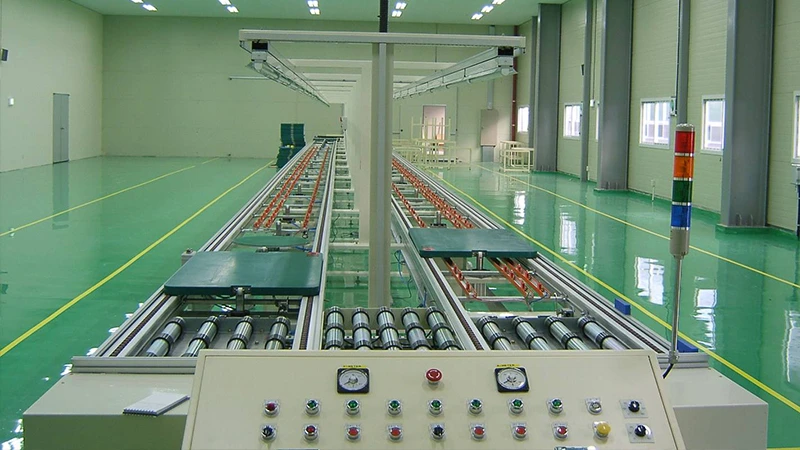
The free flow conveyor system uses a free flow chain that can increase the speed of the tooling board that supports the products. This can improve the efficiency and quality of the production process, as well as reduce the wear and tear of the system.
Free Flow Chain Conveyor in Medical Device Manufacturing: Compliance & Efficiency
Walk into any medical device manufacturing facility, and you'll feel it immediately—the quiet hum of precision. Every component, from a tiny surgical screw to a sophisticated diagnostic tool, carries the weight of human lives. In this world, there's no room for error, no margin for delay. The pressure to deliver products that meet rigorous regulatory standards while keeping up with skyrocketing demand is relentless. Yet, behind the scenes, a silent hero often makes this balancing act possible: the free flow chain conveyor. More than just a piece of machinery, it's the backbone of a system that marries compliance and efficiency, turning chaos into clarity for manufacturers worldwide.
The Stakes: Why Compliance & Efficiency Can't Be Compromised
Medical device manufacturing isn't just about building products—it's about building trust. Regulatory bodies like the FDA (Food and Drug Administration) and ISO (International Organization for Standardization) with standards like ISO 13485 set the bar sky-high, and for good reason. A single contaminated component or a misaligned assembly could lead to product recalls, patient harm, or even loss of life. Compliance isn't optional here; it's the foundation of the industry.
But compliance alone isn't enough. With an aging global population and advances in healthcare driving demand, manufacturers face the dual challenge of meeting strict regulations and increasing production volumes. Inefficiencies—bottlenecks in material handling, manual errors, or downtime—don't just eat into profits; they delay life-saving devices reaching the patients who need them. This is where the right material handling system becomes critical. It's not just about moving parts from Point A to Point B; it's about creating a workflow that's both airtight (for compliance) and agile (for efficiency).
Free Flow Chain Conveyors: More Than Just a Conveyor Belt
At first glance, a free flow chain conveyor might look similar to other material handling systems, but its design tells a different story. Unlike traditional belt conveyors that rely on friction or chain conveyors with fixed speeds, free flow chain conveyors use a series of precision-engineered rollers mounted on a chain, allowing products to glide smoothly with minimal resistance. The "free flow" isn't just a marketing term—it's a promise of uninterrupted movement, where items can accumulate, stop, or start without jamming, even at varying speeds.
What makes this design so valuable in medical manufacturing? For starters, adaptability. Medical devices come in all shapes and sizes, from delicate catheters to heavy imaging equipment. A free flow chain conveyor can be customized with adjustable guides, variable speed controls, and specialized surfaces to handle everything from tiny components in trays to bulkier assemblies. But its true power lies in how it addresses the twin pillars of compliance and efficiency, often in ways that other systems can't.
Compliance: Building Trust in Every Movement
Compliance in medical manufacturing is a multi-layered puzzle, and the free flow chain conveyor is designed to solve several pieces at once. Let's break it down:
Material Matters: Choosing the Right Building Blocks
Regulations demand that all equipment in contact with medical devices is non-reactive, easy to clean, and resistant to corrosion. Free flow chain conveyors rise to this challenge by leveraging high-quality materials like stainless steel and aluminum extrusion profiles. Stainless steel, with its smooth, non-porous surface, resists bacterial growth and stands up to frequent sanitization—critical in environments where contamination risks are ever-present. Aluminum, lightweight yet durable, offers similar benefits with the added advantage of being easy to customize with aluminum profile accessories, making it simple to adapt the conveyor to specific product needs.
For sensitive electronic components, like those used in pacemakers or diagnostic devices, static electricity is a hidden enemy. Even a small electrostatic discharge (ESD) can damage microchips, rendering a device useless. Here, the integration of ESD workstations and ESD-safe conveyor components—such as black ESD wheels on roller tracks—becomes essential. These features channel static away from products, ensuring that even the most delicate parts arrive at their destination unharmed.
Cleanability: A Non-Negotiable for Contamination Control
The FDA's Current Good Manufacturing Practices (cGMP) mandate that equipment is "designed to facilitate cleaning, sanitization, and maintenance." Free flow chain conveyors excel here. Unlike belt conveyors, which can trap debris in crevices, their open design—with minimal nooks and crannies—makes thorough cleaning a breeze. Quick-disconnect joints and removable roller tracks mean technicians can disassemble parts for deep cleaning without lengthy downtime. For facilities manufacturing sterile devices, this isn't just a convenience; it's a regulatory requirement.
Traceability: Knowing Every Step of the Journey
In the event of a recall, manufacturers must trace every component's path through the production process. Free flow chain conveyors, when integrated with smart sensors and tracking software, provide a digital breadcrumb trail. Each product's movement—from the moment it enters the conveyor to when it exits for assembly—is logged, creating a transparent record that regulators demand. This traceability isn't just about avoiding penalties; it's about pinpointing issues quickly, minimizing the scope of recalls, and protecting patients.
Efficiency: Creating a Lean Ecosystem That Delivers
While compliance keeps regulators happy, efficiency keeps businesses thriving. Free flow chain conveyors don't just meet regulatory standards—they redefine what's possible in terms of productivity, all while aligning with lean system principles that focus on eliminating waste and maximizing value.
Continuous Flow: Say Goodbye to Bottlenecks
Lean manufacturing teaches us that interruptions in workflow are the enemy of efficiency. Traditional conveyors often create bottlenecks when products pile up at assembly stations or require manual intervention to redirect. Free flow chain conveyors, with their gravity-assisted or motorized roller tracks, enable continuous flow. Products move at a steady pace, pausing only when they reach a workstation where an operator is ready to process them. This "just-in-time" delivery reduces idle time, cuts down on work-in-progress inventory, and ensures that every minute on the production floor counts.
Reduced Labor, Increased Accuracy
Manual material handling is not only time-consuming but also error-prone. Workers tasked with moving heavy trays or delicate components between stations risk fatigue, injury, or accidental damage. Free flow chain conveyors automate this process, freeing up staff to focus on higher-value tasks like quality inspection or assembly. For example, a workbench positioned alongside the conveyor allows operators to access parts without leaving their station, streamlining the workflow and reducing the risk of human error.
Scalability: Growing Without Growing Pains
As demand for medical devices rises, manufacturers need systems that can scale without overhauls. Free flow chain conveyors, built with modular aluminum pipe and aluminum lean pipe accessories, are inherently adaptable. Need to add a new workstation? Simply extend the conveyor with additional roller track sections and aluminum guide rails. Want to reconfigure the layout to accommodate a new product line? The conveyor's lightweight aluminum frame and easy-to-use joints make rearranging a breeze. This flexibility ensures that the conveyor grows with the business, avoiding the need for costly replacements down the line.
Traditional vs. Free Flow Chain Conveyors: A Closer Look
To truly appreciate the impact of free flow chain conveyors, let's compare them to traditional material handling systems across key metrics that matter in medical manufacturing:
| Metric | Traditional Belt Conveyors | Free Flow Chain Conveyors |
|---|---|---|
| Compliance Readiness | Harder to clean (traps debris); limited material options | Stainless steel/aluminum construction; open design for easy sanitization; ESD-safe options |
| Throughput | Fixed speed; prone to bottlenecks | Variable speed; continuous flow reduces idle time |
| Maintenance | Frequent belt replacements; complex cleaning | Minimal moving parts; quick-disconnect components for easy upkeep |
| Scalability | Rigid design; difficult to reconfigure | Modular with aluminum pipe accessories; easy to extend or rearrange |
| Product Safety | Risk of product damage from belt friction; static buildup | Gentle roller movement; ESD workbench compatibility; reduced handling |
The Ecosystem: How Free Flow Conveyors Play Well with Others
A free flow chain conveyor doesn't work in isolation—it's part of a larger ecosystem of tools and systems that together create a seamless production line. Let's explore some key partners in this ecosystem:
Roller Tracks & Accessories: The Unsung Heroes of Flow
At the heart of the free flow conveyor are roller tracks, which come in a variety of configurations to suit different products. For example, 38 aluminum roller track with yellow wheels might be used for lightweight trays, while heavy-duty 60 steel roller track handles bulkier items. Accessories like roller track placon mounts and end supports ensure that tracks connect securely, even in high-traffic areas. These components aren't just add-ons; they're what make the conveyor's "free flow" possible, ensuring products move smoothly without jams or misalignment.
Workbenches & ESD Workstations: Where Precision Meets Productivity
Positioned along the conveyor, workbenches and ESD workstations are where the magic happens. A workbench E (single deck, without casters) provides a stable surface for assembly, while an ESD workstation with static-dissipative materials protects sensitive electronics. By integrating these workstations with the conveyor, manufacturers create a "cell" where parts arrive exactly when needed, and finished components are seamlessly sent to the next stage. It's a dance of efficiency, where every movement is intentional.
Turnover Trolleys & Racks: Extending the Flow Beyond the Conveyor
Not every part stays on the conveyor from start to finish. Turnover trolleys, built with the same durable aluminum pipe and caster wheels as the conveyor, transport materials between storage and the production line. Material rack B (3 row, 3 floor) keeps components organized and accessible, ensuring that the conveyor never runs out of supplies. Together, these tools create a closed-loop system where materials flow in, products flow out, and nothing is left to chance.
Real-World Impact: Stories from the Factory Floor
Numbers and specs tell part of the story, but it's the people on the ground who truly feel the difference. Take, for example, a mid-sized manufacturer of orthopedic implants. Before switching to a free flow chain conveyor, their production line was a patchwork of manual carts and traditional belt conveyors. Bottlenecks were common, and cleaning the belt conveyors took hours, eating into production time. Compliance audits were stressful, with inspectors flagging hard-to-reach areas as potential contamination risks.
After installing a free flow chain conveyor with stainless steel components and ESD workstations, the transformation was dramatic. Sanitization time dropped by 40%, freeing up technicians to focus on quality checks. Throughput increased by 25% as continuous flow eliminated bottlenecks. Most importantly, the next FDA audit was a breeze—the conveyor's open design and traceability features left no questions unanswered. "It's like night and day," one production manager noted. "We're not just making more implants; we're making them better, with more confidence."
Another example: a manufacturer of diagnostic test kits struggling with static damage to sensitive electronic components. By integrating an ESD workstation with black ESD wheels on their free flow conveyor, they reduced component failures by 90%. "We used to lose hundreds of dollars in damaged parts each week," said their quality control lead. "Now, we barely see a single failure. That's not just savings—it's peace of mind."
Choosing the Right Partner: Why Supplier Matters
A free flow chain conveyor is only as good as the supplier behind it. Medical device manufacturers need partners who understand the unique demands of the industry—suppliers who don't just sell products but offer expertise in compliance, customization, and after-sales support. Look for a lean pipe supplier with a track record in medical manufacturing, one that offers not just conveyors but a full suite of accessories: aluminum pipe, roller tracks, ESD workstations, and more. A supplier who can customize the system to your specific needs—whether that's adding stainless steel swivel roller balls for delicate parts or designing a layout that fits your existing space—will be an invaluable ally in your quest for compliance and efficiency.
Wholesale options can also make a difference, especially for larger facilities. Buying lean pipe workbench wholesale or conveyor wholesale reduces costs without compromising quality, ensuring that even tight budgets can accommodate a top-tier system. And when issues arise (because no system is perfect), a responsive supplier with readily available parts and technical support will keep downtime to a minimum.
The Future: Where Compliance & Efficiency Go Next
As medical manufacturing evolves, so too will the tools that power it. Free flow chain conveyors are poised to play a starring role in the next chapter, thanks to advances in automation and connectivity. Imagine a conveyor system that uses sensors to detect jams in real time, alerting maintenance before downtime occurs. Or one that integrates with AI-driven inventory management, automatically triggering restocks when supplies run low. With Industry 4.0 knocking at the door, the free flow chain conveyor isn't just a tool for today—it's a foundation for tomorrow.
Sustainability is another growing focus. Manufacturers are increasingly seeking eco-friendly options, and free flow chain conveyors deliver here too. Aluminum, a highly recyclable material, reduces environmental impact, while energy-efficient motors cut down on power usage. As regulatory bodies start to emphasize sustainability alongside safety, these features will become even more critical.
Conclusion: More Than a Conveyor—A Commitment to Excellence
In the high-stakes world of medical device manufacturing, compliance and efficiency aren't competing goals—they're two sides of the same coin. Free flow chain conveyors understand this, serving as more than just material handlers. They're guardians of compliance, ensuring that every product meets the strictest standards. They're engines of efficiency, turning waste into value and delay into delivery. And they're partners to the people on the factory floor, making their jobs safer, easier, and more meaningful.
As the demand for life-saving medical devices continues to grow, the free flow chain conveyor will remain a silent but vital force, bridging the gap between what's required and what's possible. It's not just about moving parts—it's about moving forward, one precise, compliant, and efficient step at a time.