- Company Articles
- Products and Technology
- Application Cases
- Free Flow Chain Conveyor in Medical Logistics: Ensuring Sterile Material Transport

Free Flow Chain Conveyor in Medical Logistics: Ensuring Sterile Material Transport
Related Product
Free Flow Chain Conveyor
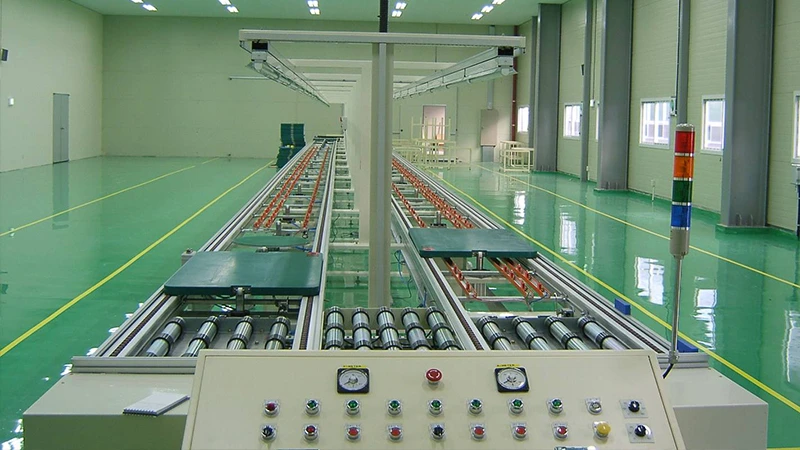
The free flow conveyor system uses a free flow chain that can increase the speed of the tooling board that supports the products. This can improve the efficiency and quality of the production process, as well as reduce the wear and tear of the system.
In the fast-paced world of healthcare, where every decision can mean the difference between life and death, the behind-the-scenes logistics of material transport often go unnoticed—until something goes wrong. From surgical instruments and medication doses to lab samples and PPE, the need to move these items quickly, accurately, and sterilely is non-negotiable. Yet for decades, many medical facilities relied on manual transport: staff pushing carts, carrying trays, or even rushing down hallways with critical supplies. This approach, while well-intentioned, is fraught with risks: human error, contamination from handling, delays, and the ever-present threat of cross-contamination. Enter the free flow chain conveyor—a technology that's quietly revolutionizing medical logistics by turning chaos into precision, and uncertainty into reliability.
The Hidden Risks of Traditional Transport Methods
To understand why free flow chain conveyors have become indispensable in modern healthcare, it's important to first acknowledge the flaws in traditional systems. Consider a typical scenario in a large hospital: a nurse is tasked with delivering a tray of sterilized surgical tools from the central sterile processing department (CSPD) to Operating Room 3. Along the way, she must navigate crowded corridors, wait for elevators, and pause to answer a colleague's question about a patient's medication. By the time she arrives, 15 minutes have passed—time the surgical team could have spent preparing for the next procedure. Worse, the tray, which sat uncovered on her cart, may have been exposed to airborne particles or accidental contact with a contaminated surface. In a worst-case scenario, this delay or contamination could compromise patient safety.
Manual transport also introduces variability. One staff member might move quickly, another more slowly; one might prioritize proper hand hygiene, another might cut corners during a busy shift. A 2019 study in the Journal of Healthcare Engineering found that manual transport of sterile supplies resulted in a 12% higher rate of bacterial contamination compared to automated systems, with 3% of samples testing positive for pathogens like Staphylococcus aureus —a leading cause of hospital-acquired infections (HAIs). These aren't just statistics; they represent patients who develop preventable complications, longer hospital stays, and increased healthcare costs.
What Is a Free Flow Chain Conveyor, and How Does It Work?
At its core, a free flow chain conveyor is a mechanical system designed to move materials smoothly, continuously, and with minimal human intervention. Unlike traditional belt conveyors, which use a single looped belt, free flow chain conveyors rely on a series of interconnected chains or roller tracks that glide along a fixed path. The "free flow" refers to their ability to move items without stopping or jamming, even when handling varying load sizes—from small vials to large instrument trays.
In medical settings, these conveyors are often customized to meet strict sterile standards. They may be enclosed in stainless steel or aluminum profile casings to prevent dust accumulation, with smooth, crevice-free surfaces that resist bacterial growth. Some are gravity-fed, using inclined tracks to move items via natural force, while others are motorized with variable speed controls to ensure gentle handling of fragile items like blood samples or glass vials. The key innovation? These systems minimize human contact. Once a item is placed on the conveyor, it moves directly to its destination—no hands, no detours, no delays.
Ensuring Sterility: The Role of Materials and Design
Sterility isn't just about keeping items clean—it's about designing systems that prevent contamination in the first place. This is where material choice becomes critical, and why aluminum profile has emerged as a preferred material for medical-grade conveyors. Unlike traditional steel, aluminum is lightweight, corrosion-resistant, and inherently non-porous. Its smooth surface doesn't trap bacteria or moisture, making it easy to sanitize with harsh disinfectants like hydrogen peroxide or quaternary ammonium compounds—chemicals that might degrade plastic or cause rust in uncoated steel.
Aluminum profile also offers flexibility in design. Manufacturers can extrude it into custom shapes—narrow tracks for small items, wider beds for large trays, or curved sections to navigate around corners in hospital corridors. This adaptability ensures that the conveyor fits seamlessly into existing layouts, rather than requiring facilities to overhaul their infrastructure. For example, a children's hospital in Texas recently retrofitted its CSPD with an aluminum profile conveyor system that winds through walls and ceilings, delivering supplies directly to ORs via overhead chutes—eliminating the need for carts to block hallways entirely.
Another critical component is the roller track. In free flow chain conveyors, roller tracks consist of small, rotating wheels (often made of medical-grade plastic or stainless steel) that reduce friction, allowing items to glide forward with minimal effort. These wheels are spaced evenly to support even the heaviest loads, and their surfaces are treated to resist scratches—scratches that could harbor bacteria. Some roller tracks are even designed with "dead zones" where items can pause temporarily (e.g., at a nurses' station) before resuming their journey, ensuring staff have time to retrieve supplies without disrupting the entire flow.
Integrating with Lean Systems: Efficiency Without Compromise
Healthcare facilities are under constant pressure to do more with less—to reduce costs, improve patient outcomes, and streamline workflows. This is where the principles of lean system thinking come into play, and free flow chain conveyors are a natural fit. Lean system, which originated in manufacturing, focuses on eliminating waste (time, resources, effort) while maximizing value. In healthcare, "value" translates to patient care—and anything that takes staff away from the bedside is considered waste.
Free flow chain conveyors align with lean system goals in several ways. First, they eliminate the need for dedicated transport staff, freeing nurses, technicians, and other clinicians to focus on patient care rather than logistics. A 2022 survey by the Association for Healthcare Resource & Materials Management (AHRMM) found that hospitals using automated conveyor systems reduced non-clinical staff hours by an average of 12 hours per day—time that could be redirected to patient assessments, family communication, or professional development.
Second, conveyors reduce "waiting waste"—the time staff spend idle, waiting for supplies to arrive. With a free flow system, materials move continuously, so OR teams, lab technicians, and pharmacy staff know exactly when to expect deliveries. For example, in a busy emergency department, a trauma cart can be restocked automatically via conveyor as soon as it's used, ensuring it's ready for the next critical patient. This predictability reduces stress and improves team morale, as staff no longer have to "hunt" for supplies during high-pressure situations.
Finally, conveyors improve "flow" — a core lean principle. In traditional systems, materials might take a circuitous route (CSPD → storage room → cart → elevator → OR). With a free flow chain conveyor, the path is direct: CSPD → conveyor → OR. This not only saves time but also reduces the number of touchpoints, lowering contamination risk. It's lean system in action: every step has a purpose, and nothing is superfluous.
Compatibility with ESD Workstations: Protecting Sensitive Equipment
Not all medical materials are created equal. While surgical tools and medications require sterility, sensitive electronic equipment—like MRI machine components, patient monitors, or lab analyzers—requires protection from electrostatic discharge (ESD). Even a small static charge can damage delicate circuits, rendering expensive equipment useless and delaying patient care. This is where ESD workstations and conveyor systems work hand in hand.
Free flow chain conveyors can be integrated with ESD workstations by using conductive materials (like aluminum profile with specialized coatings) and grounding mechanisms that dissipate static electricity. When transporting electronic components, items are placed on ESD-safe trays, which then glide along the conveyor's roller track. The conveyor's aluminum profile frame is grounded, ensuring any static charge is safely redirected away from the equipment. This seamless integration means that even the most sensitive devices can be transported without risk, from the repair shop to the patient floor.
Consider a hospital's biomedical engineering department, which maintains hundreds of electronic devices. In the past, technicians would carry ESD-sensitive parts by hand, wearing grounding wristbands and working at ESD workstations. With a free flow chain conveyor, parts can be sent directly from the storage room to the workstation via a dedicated ESD-safe track, reducing handling time by 40% and eliminating the risk of accidental static damage during transport.
A Comparison: Traditional vs. Free Flow Chain Conveyor Systems
| Feature | Traditional Manual Transport | Free Flow Chain Conveyor |
|---|---|---|
| Contamination Risk | High (human contact, exposure to air/ surfaces) | Low (enclosed design, minimal handling, easy cleaning) |
| Speed | Variable (depends on staff availability, corridor traffic) | Consistent (24/7 operation, direct routing) |
| Staff Impact | Requires dedicated transport staff; distracts clinicians | Eliminates transport roles; frees staff for patient care |
| Cost Over Time | Higher (labor costs, HAIs, equipment damage) | Lower (one-time investment, reduced waste, fewer errors) |
| Scalability | Limited (depends on staff size) | High (easily expandable with additional tracks/ roller tracks) |
Real-World Impact: Case Studies in Healthcare
The benefits of free flow chain conveyors aren't just theoretical—they're proven in hospitals and labs around the world. Take, for example, Mayo Clinic's Rochester campus, which installed a 1.2-mile free flow chain conveyor system in 2020 to connect its CSPD with 32 operating rooms. Prior to the upgrade, staff spent 1,200 hours per month transporting sterile supplies. After implementation, that number dropped to 300 hours, and the rate of OR delays due to missing equipment fell by 75%. Most importantly, HAIs related to surgical tool contamination decreased by 42% in the first year—a statistic that translates to hundreds of patients avoiding preventable infections.
Another example is a large pharmaceutical manufacturing plant in Germany that produces injectable medications. The plant needed a way to transport vials from the filling line to the packaging area while maintaining sterility. A free flow chain conveyor with aluminum profile tracks and enclosed channels was installed, reducing manual handling to zero. Within six months, the plant saw a 90% reduction in vial breakage and a 15% increase in production output, as the conveyor could operate 24/7 without fatigue.
Future Trends: Innovations in Sterile Transport
As healthcare continues to evolve, so too will the technology that supports it. Free flow chain conveyors are no exception, with several emerging trends poised to enhance their functionality:
- IoT Integration: Sensors embedded in conveyor tracks will allow real-time monitoring of item location, temperature, and humidity—critical for transporting vaccines or blood products that require strict climate control. Alerts can be sent to staff if a deviation is detected, preventing spoilage.
- Antimicrobial Coatings: Aluminum profile and roller track surfaces may soon be treated with permanent antimicrobial coatings, like silver ions, which actively kill bacteria on contact—adding an extra layer of protection against contamination.
- AI-Powered Maintenance: Machine learning algorithms will predict when conveyor components (like roller tracks or chains) need repair, reducing downtime and preventing unexpected failures.
- Modular Design: Conveyors will become even more adaptable, with snap-on aluminum profile sections that can be reconfigured quickly to meet changing needs—ideal for temporary facilities during pandemics or disaster response.
Conclusion: More Than a Conveyor—A Commitment to Patient Safety
Free flow chain conveyors are often described as "workhorses" of medical logistics, but they're more than that—they're a testament to healthcare's commitment to patient safety. In a field where every detail matters, these systems ensure that the tools, medications, and supplies that keep patients alive arrive exactly when needed, in perfect condition, and free from contamination. They allow clinicians to focus on what they do best: caring for people. They reduce waste, cut costs, and minimize risk. And perhaps most importantly, they turn the chaos of logistics into a symphony of precision—one that plays out quietly, behind the scenes, every day in hospitals and labs around the world.
As we look to the future, it's clear that free flow chain conveyors will only grow in importance. With advancements in materials like aluminum profile, integration with lean systems, and compatibility with ESD workstations, they're not just keeping up with the demands of modern healthcare—they're helping to shape it. And in the end, that's what matters most: ensuring that when a patient enters a hospital, they can trust that every aspect of their care, right down to the transport of a single instrument, is handled with the utmost precision and care.