- Company Articles
- Products and Technology
- Application Cases
- Free Flow Chain Conveyor in Textile Industry: Handling Fabric Rolls Smoothly

Free Flow Chain Conveyor in Textile Industry: Handling Fabric Rolls Smoothly
Related Product
Free Flow Chain Conveyor
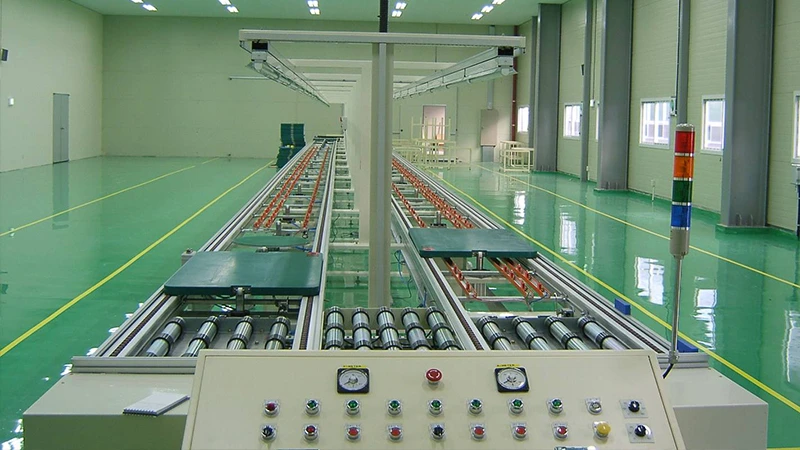
The free flow conveyor system uses a free flow chain that can increase the speed of the tooling board that supports the products. This can improve the efficiency and quality of the production process, as well as reduce the wear and tear of the system.
Introduction: The Pulse of Textile Production
In the heart of every textile mill, where threads weave into fabrics and fabrics transform into products, there's an unsung hero: material flow. The speed at which raw materials move from warehouses to production lines, and finished goods from lines to shipping, can make or break a factory's efficiency. Nowhere is this more critical than in handling fabric rolls—bulky, often delicate, and essential to keeping the entire operation running. For decades, textile plants have grappled with the challenge of moving these rolls smoothly, safely, and without delay. Enter the free flow chain conveyor: a technology that's quietly revolutionizing how textile factories handle one of their most vital assets.
This article dives into the world of free flow chain conveyors, exploring how they're tailored to meet the unique demands of the textile industry. From reducing manual labor strain to minimizing fabric damage, we'll uncover why more textile managers are turning to this solution as part of their broader lean system strategy. We'll also touch on the importance of partnering with a reliable lean system supplier to ensure these conveyors integrate seamlessly into existing workflows—because in textiles, every second (and every inch of fabric) counts.
The Challenge of Fabric Roll Handling: A Daily Struggle
Walk into any textile plant that hasn't yet optimized its material handling, and you'll likely witness a familiar scene: workers maneuvering heavy fabric rolls with hand trucks, forklifts navigating tight aisles, and occasional bottlenecks as rolls wait to be moved. It's a process fraught with inefficiencies and risks, and it starts the moment a fabric roll arrives from the supplier.
Consider the numbers: A standard fabric roll in the textile industry can weigh anywhere from 20kg to over 100kg, depending on the material (cotton, polyester, or heavy-duty denim) and width (up to 2.5 meters). Manually moving these rolls isn't just time-consuming—it's a recipe for workplace injuries. The Bureau of Labor Statistics reports that material handling accidents account for nearly 20% of all workplace injuries in manufacturing, with strains and sprains topping the list. For textile plants, this translates to lost workdays, increased insurance costs, and a demoralized workforce.
Then there's the issue of damage. Fabric rolls are sensitive: a rough bump or a drop can crease the material, cause snags, or even tear the fabric entirely. A single damaged roll might mean scrapping meters of material, leading to wasted resources and delayed orders. "We once had a shipment of silk rolls delayed because a forklift operator misjudged a corner," recalls Rajesh Patel, operations manager at a Gujarat-based textile mill. "The tear cost us 500 meters of fabric and a week of production time. That's when we knew we needed a better way."
Beyond injuries and damage, there's the problem of uneven flow. In traditional setups, fabric rolls often sit idle waiting for transport, creating bottlenecks at cutting tables or sewing stations. This stop-and-start rhythm disrupts production schedules, making it hard to meet tight deadlines. For a industry that thrives on speed—especially with fast fashion trends demanding quick turnarounds—these delays can mean lost contracts and shrinking profit margins.
What is a Free Flow Chain Conveyor? Breaking Down the Basics
At its core, a free flow chain conveyor is a material handling system designed to move goods continuously and smoothly along a fixed path—no manual pushing or pulling required. Unlike traditional belt conveyors, which rely on friction between a belt and the product, free flow chain conveyors use a series of interconnected chains (or sometimes roller track components) mounted on a frame. These chains move in a loop, carrying products forward at a steady, adjustable speed.
For textile applications, the design is adapted to handle fabric rolls specifically. The chains are often paired with roller track segments to cradle the rolls gently, preventing slippage or tilting. Some models include side guides to keep rolls aligned, while others feature variable speed controls to match the pace of downstream processes (e.g., slowing down as rolls approach a cutting station). "Think of it as a conveyor belt that's 'smarter' about how it interacts with heavy, cylindrical objects," explains Priya Sharma, an industrial engineer specializing in textile automation. "The chain provides consistent motion, while the rollers reduce friction, making it easy to move even the heaviest rolls with minimal energy."
One of the key advantages of free flow chain conveyors is their modularity. They can be customized to fit the layout of any textile plant—curving around corners, ascending small inclines, or integrating with existing workbench setups where rolls are processed. This flexibility makes them ideal for both large factories and smaller workshops, as they can be scaled up or down as production needs change.
Key Features Tailored for Textile Fabric Rolls
Not all conveyors are created equal, and free flow chain conveyors designed for textiles come with specific features to address the industry's unique challenges. Let's break down the most critical ones:
Gentle Handling to Protect Delicate Fabrics
Fabric rolls—especially those made of silk, lace, or lightweight synthetics—can't withstand rough treatment. Free flow chain conveyors solve this with soft-touch components: rubberized or plastic-coated rollers that grip the rolls without leaving marks, and low-tension chains that minimize vibration. Some models even include "buffer zones" where the speed slows temporarily, allowing workers to safely load or unload rolls without jostling the material.
Adjustable Speed for Seamless Workflow
Textile production isn't a one-speed process. Cutting stations might need rolls to arrive slowly for precision, while warehouse-to-line transport requires faster movement. Free flow chain conveyors let operators adjust speed (typically between 0.5 to 3 meters per second) to sync with each stage of production. This ensures rolls arrive exactly when needed, reducing idle time and bottlenecks.
Durable Construction for Heavy-Duty Use
Textile plants are harsh environments: dust, lint, and occasional spills are par for the course. That's why free flow chain conveyors for textiles are built with durability in mind. Many use stainless steel frames and corrosion-resistant chain links to withstand wear and tear, while sealed motors prevent lint buildup (a common cause of conveyor breakdowns in fabric-heavy settings).
Compatibility with Various Roll Sizes
From narrow 50cm rolls used for trim to wide 2.5m rolls for bed linens, textile factories handle a range of diameters and widths. Free flow chain conveyors can be fitted with adjustable cradles or variable roller spacing to accommodate different roll sizes. This versatility eliminates the need for multiple conveyors, saving floor space and simplifying operations.
The Benefits: Why Textile Mills Are Making the Switch
The decision to invest in a free flow chain conveyor isn't just about upgrading equipment—it's about transforming how a textile plant operates. Here's how these systems deliver tangible results:
1. Faster, More Consistent Material Flow
By automating roll transport, free flow chain conveyors eliminate the delays caused by manual handling. Rolls move from the warehouse to the production line (or from line to shipping) in a steady stream, ensuring downstream processes never run out of materials. At a Tamil Nadu-based garment factory, implementing a free flow chain conveyor reduced the time to move rolls from the warehouse to cutting tables by 40%, according to factory manager Anand Kumar. "We used to have workers making 15-20 trips a day with hand trucks," he says. "Now, the conveyor handles 100 rolls an hour—no breaks, no delays."
2. Reduced Labor Costs and Worker Strain
With the conveyor taking over transport duties, workers can focus on higher-value tasks: inspecting fabric quality, operating cutting machines, or troubleshooting production issues. This not only boosts productivity but also reduces the risk of injuries. "We've seen a 60% drop in workplace strains since installing the conveyor," notes Kumar. "Our workers are happier, and turnover has decreased—something that's hard to put a price on, but invaluable for a factory."
3. Minimized Fabric Damage
The gentle handling of free flow chain conveyors directly translates to fewer damaged rolls. At Patel's Gujarat mill, post-conveyor installation, fabric waste from handling dropped by 25%. "We used to write off 2-3 rolls a week due to tears or creases," he says. "Now, it's maybe one roll a month. That's saved us nearly $10,000 annually in material costs alone."
4. Improved Safety and Compliance
Manual material handling is a leading cause of OSHA violations in manufacturing. Free flow chain conveyors reduce the need for workers to lift heavy objects, lowering the risk of non-compliance and associated fines. Additionally, many models include safety features like emergency stop buttons and sensors that halt the conveyor if an obstacle is detected—further protecting both workers and materials.
Synergy with Lean Systems: Eliminating Waste, Boosting Efficiency
For forward-thinking textile plants, free flow chain conveyors aren't just standalone tools—they're integral to a broader lean system strategy. Lean manufacturing, which focuses on eliminating waste (or "muda") and optimizing workflows, aligns perfectly with the goals of textile production: speed, quality, and cost-effectiveness.
"Lean is about making every action add value," says Sharma, the industrial engineer. "When workers spend 2 hours a day moving rolls instead of operating machines, that's waste. A free flow chain conveyor eliminates that waste by streamlining transport, which is a core lean principle." By integrating the conveyor into a lean system, textile plants can achieve even greater gains: for example, using data from the conveyor's speed and throughput to identify bottlenecks, or combining it with kanban systems to ensure just-in-time delivery of rolls to production lines.
One textile mill in Bangladesh took this a step further, pairing their free flow chain conveyor with a lean system that included real-time tracking of roll movement. "We used to have rolls 'disappear' in the warehouse—someone would misplace a label, and we'd spend hours searching," says factory owner Farah Khan. "Now, each roll has a barcode that's scanned as it enters the conveyor. We can track its location in seconds, which has cut down on inventory errors by 70%."
Real-World Impact: A Case Study
To understand the transformative power of free flow chain conveyors, look no further than Alok Textiles, a mid-sized mill in Maharashtra producing cotton and polyester fabrics. Prior to 2023, Alok relied on a fleet of forklifts and manual hand trucks to move fabric rolls. The result: frequent delays, high labor costs, and a 5% defect rate due to handling errors.
In early 2023, Alok partnered with a lean system supplier to install a custom free flow chain conveyor system. The setup included a main line running from the warehouse to the cutting department, with feeding into sewing and packaging workbench areas. The conveyor was fitted with roller track segments to cradle rolls and variable speed controls to match production rhythms.
The results were striking: Within six months, Alok's fabric roll handling time decreased by 35%, labor costs for transport dropped by 28%, and the defect rate fell to 1.5%. "We used to struggle to meet 10,000 meters of production daily," says mill manager Suresh Mehta. "Now, we're consistently hitting 13,000 meters—and our workers are less stressed. It's been a game-changer."
Choosing the Right Lean System Supplier: What to Look For
Investing in a free flow chain conveyor is only as effective as the supplier behind it. Textile plants need a lean system supplier who understands their unique needs—not just a generic conveyor manufacturer. Here are key factors to consider:
1. Experience in Textiles
Not all conveyors are suited for fabric rolls. A supplier with textile industry experience will know to recommend features like soft-grip rollers, corrosion-resistant materials, and adjustable cradles. "We initially talked to a supplier who mostly worked with automotive parts," recalls Mehta of Alok Textiles. "They tried to sell us a heavy-duty conveyor that would have crushed our delicate polyester rolls. We switched to a supplier who specialized in textiles, and they got it right the first time."
2. Customization Capabilities
Every textile plant has a unique layout and production flow. A good supplier will conduct an on-site assessment, then design a conveyor system tailored to your space, roll sizes, and throughput needs. "Our factory has a narrow aisle between the warehouse and cutting area," says Patel. "Our supplier designed a curved conveyor that fit perfectly—something off-the-shelf couldn't do."
3. After-Sales Support
Conveyors need regular maintenance—lubricating chains, replacing worn rollers, troubleshooting electrical issues. Choose a supplier that offers prompt service, training for your maintenance team, and easy access to spare parts. "When a chain link broke during a night shift, our supplier sent a technician within two hours," says Kumar. "Downtime was minimal, which kept our production on track."
Traditional vs. Free Flow: A Comparison
| Feature | Traditional Handling (Forklifts/Hand Trucks) | Free Flow Chain Conveyor |
|---|---|---|
| Handling Speed | Slow (dependent on worker/forklift availability) | Steady, adjustable (up to 3 meters/second) |
| Fabric Damage Risk | High (drops, bumps, uneven loading) | Low (gentle roller/chain cradle design) |
| Labor Requirement | High (1-2 workers per 10 rolls) | Low (1 worker to monitor, no manual transport) |
| Space Efficiency | Poor (requires wide aisles for forklifts) | Excellent (modular design fits tight spaces) |
| Maintenance Cost | High (forklift repairs, worker injuries) | Low (regular chain lubrication, occasional roller replacement) |
Conclusion: The Future of Textile Material Handling
In an industry where speed, quality, and cost-efficiency are paramount, free flow chain conveyors are more than a luxury—they're a necessity. By automating the handling of fabric rolls, these systems reduce waste, boost productivity, and create safer, more sustainable workplaces. When integrated into a broader lean system and supported by a knowledgeable lean system supplier, they become a cornerstone of operational excellence.
For textile plant managers still on the fence, consider this: Every minute wasted moving rolls manually is a minute that could be spent producing, innovating, or growing your business. As Mehta of Alok Textiles puts it: "Investing in a free flow chain conveyor isn't just about moving rolls—it's about moving your entire factory forward."