- Company Articles
- Products and Technology
- Product knowledge
- Free Flow Chain Conveyor Safety Features: Protecting Operators and Products

Free Flow Chain Conveyor Safety Features: Protecting Operators and Products
Related Product
Free Flow Chain Conveyor
The free flow conveyor system uses a free flow chain that can increase the speed of the tooling board that supports the products. This can improve the efficiency and quality of the production process, as well as reduce the wear and tear of the system.
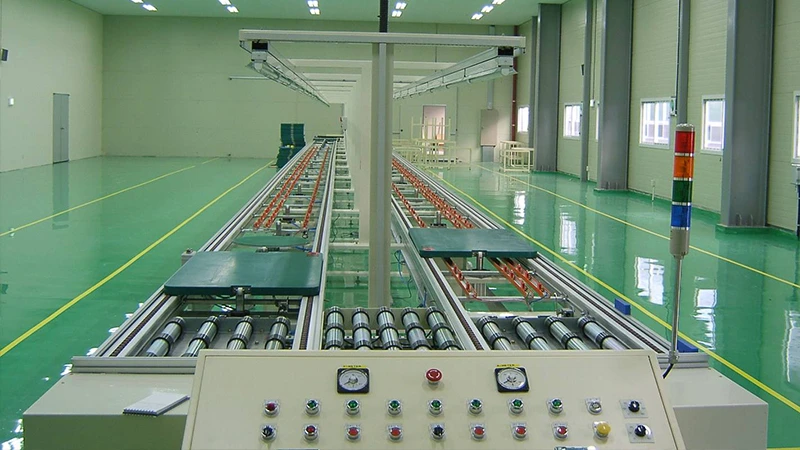
The hum of machinery fills the air as operators move swiftly along the production floor, loading components onto a free flow chain conveyor. Boxes glide smoothly along the roller track, destined for assembly stations where they'll be transformed into finished products. In this bustling environment, efficiency is key—but so is safety. Every component of the conveyor, from the caster wheels that stabilize its frame to the emergency stop buttons within arm's reach, plays a role in keeping people and products out of harm's way. In this article, we'll explore the critical safety features that make free flow chain conveyors indispensable in modern manufacturing and warehousing, and how they integrate with broader lean system principles to create safer, more productive workspaces.
Why Safety Matters: Beyond Compliance
Safety in material handling isn't just about meeting regulatory standards—it's about protecting the people who power your operations and the products that drive your business. A single accident can lead to lost workdays, damaged inventory, and shattered employee trust, while non-compliance can result in fines or shutdowns. But the benefits of prioritizing safety go further: safer workplaces see higher employee morale, lower turnover, and smoother workflows. When operators trust that their equipment is designed to protect them, they can focus on their tasks with confidence, reducing errors and boosting productivity. For products, gentle, controlled movement on a well-designed conveyor minimizes damage, ensuring that goods reach customers in pristine condition. In short, safety isn't a cost—it's an investment in your team and your bottom line.
Key Safety Features of Free Flow Chain Conveyors
Free flow chain conveyors are engineered with safety at their core, combining innovative design with practical features that address common hazards in material handling. Let's break down the most critical ones:
1. Emergency Stop Systems: Instant Control in Critical Moments
When seconds count, emergency stop systems are a lifeline. Strategically placed along the length of the conveyor, emergency stop buttons and pull cords allow any operator within reach to halt the system immediately if a hazard is detected—whether it's a loose product, a jam, or a colleague in harm's way. These controls are designed to be highly visible, often in bright red, and require minimal force to activate, ensuring quick response in critical situations. Unlike traditional conveyors, where stopping the system might require reaching a central control panel, free flow chain conveyors put this power directly in the hands of those on the floor, reducing reaction time from minutes to seconds.
2. Guarding and Enclosures: Eliminating Pinch Points and Falls
The roller track of free flow chain conveyors is a masterclass in safety design. Unlike open conveyor belts, the roller track minimizes gaps between moving parts, preventing small components from falling through and reducing the risk of trips or falls. Side guards, typically made from durable plastic or aluminum, line the edges of the track, acting as barriers to keep products centered and prevent them from sliding off during transport. For moving parts like chains and gears, protective covers eliminate pinch points—those dangerous spaces where fingers, clothing, or hair could get caught. Even the edges of the roller track are rounded and smooth, reducing the chance of cuts or abrasions, even during rushed shifts when operators are moving quickly.
3. Anti-Jam Mechanisms: Preventing Chaos Before It Starts
A jammed conveyor isn't just a productivity killer—it's a safety hazard.,,.,,,.,,.,,,,.,——"".
4. Load Capacity Indicators and Overload Protection
,.,,.:.,——.,:,,.,.
5. Caster Wheel Stability: Keeping Mobile Conveyors Secure
,.,,.,,.,.,,,.,,.
6. Ergonomic Design and Workbench Integration
——,.,.,,——.,,,.,,,,,.,,.
Safety Features in Action: A Real-World Example
,.,,.:,15%,5.
,.,,,.,.12,,3%,1.,, output 12%.:"——."
,.,,,.,.12,,3%,1.,, output 12%.:"——."
Maintaining Safety Features: A Proactive Approach
.,——.:
: ,,.,,,.
: ,.. capacity ,.
: ,,,..
,.
: ,,.,,,.
: ,.. capacity ,.
: ,,,..
,.
Safety and Lean Systems: A Perfect Partnership
,.,,..,;;.
,""——.,,.,.,,.
,""——.,,.,.,,.
Safety Features at a Glance: A Quick Reference Table
| Safety Feature | Function | Benefit |
|---|---|---|
| Emergency Stop Systems | Allow instant shutdown via buttons or pull cords | Prevents injuries by stopping hazards in seconds |
| Roller Track Guarding | Side guards and covers for moving parts | Eliminates pinch points and prevents product falls |
| Anti-Jam Sensors | Detect product buildup and trigger alerts/stops | Reduces downtime and prevents blockages |
| Overload Protection | Labels and sensors monitor weight limits | Prevents conveyor failure and product damage |
| Caster Wheel Brakes | Lock wheels during operation for stability | Prevents tipping or unintended movement |
Conclusion: Safety as a Foundation for Success
——.,,.,,,.
,.,,.,——,.
,.,,.,——,.