- Company Articles
- Products and Technology
- Product knowledge
- Free Flow Chain Conveyor Speed Control: Balancing Precision and Throughput

Free Flow Chain Conveyor Speed Control: Balancing Precision and Throughput
Related Product
Free Flow Chain Conveyor
The free flow conveyor system uses a free flow chain that can increase the speed of the tooling board that supports the products. This can improve the efficiency and quality of the production process, as well as reduce the wear and tear of the system.
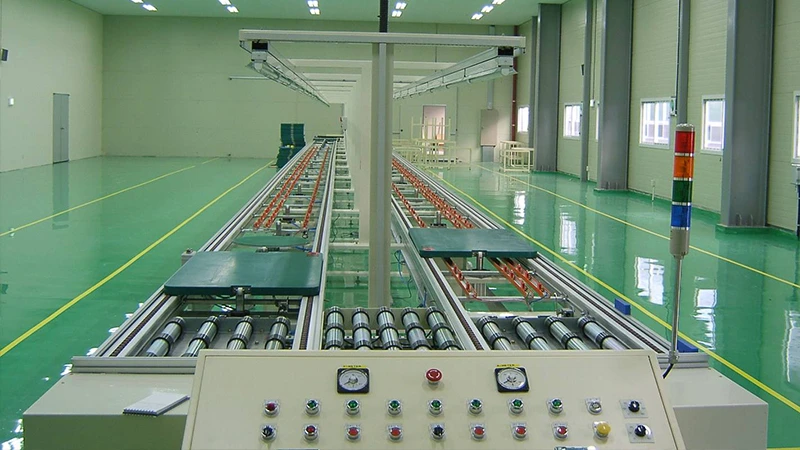
In the heart of every thriving manufacturing facility, there's a silent workhorse that keeps operations moving—literally. The free flow chain conveyor, with its rhythmic hum and steady motion, is the backbone of assembly lines, distribution centers, and production floors worldwide. But behind that seamless movement lies a critical challenge: how to control speed so that products glide through the line with both precision and throughput. Too fast, and items might misalign, jam, or sustain damage; too slow, and bottlenecks form, deadlines slip, and costs rise. This delicate balance isn't just about mechanics—it's the pulse of a lean system, where every second and every millimeter counts.
Understanding Free Flow Chain Conveyors: More Than Just a Moving Belt
Before diving into speed control, let's demystify the star of the show: the free flow chain conveyor. Unlike traditional belt conveyors that rely on friction to pull items, free flow chain systems use a series of interconnected chains and rollers to "float" products along a track. Picture a series of tiny wheels—each mounted on a chain link—turning in unison to carry everything from small electronic components to heavy automotive parts. What makes them "free flow"? The chains are typically mounted on a track with minimal resistance, allowing products to move smoothly, even when stopped temporarily at workstations. This design is a favorite in lean environments because it reduces wait times, minimizes manual handling, and adapts easily to changing production needs.
But here's the catch: that freedom of movement is a double-edged sword. Without careful speed management, the same system that boosts efficiency can become a source of chaos. Imagine a pharmaceutical packaging line where vials must align perfectly with labeling machines. If the conveyor speeds up unexpectedly, a vial might shift, resulting in a mislabeled product—or worse, a shattered container. On the flip side, a sluggish line might leave workers idle, wasting valuable labor hours. So, how do operators strike the right balance?
The Lean System Perspective: Speed as a Tool, Not a Goal
In a lean system, speed isn't about going as fast as possible—it's about going as efficiently as possible. Lean manufacturing, rooted in principles like eliminating waste and continuous improvement, views conveyor speed as a lever to optimize flow, reduce bottlenecks, and enhance overall productivity. A well-tuned free flow chain conveyor doesn't just move products; it synchronizes with every step of the production process, from assembly to quality control to shipping.
Consider a typical day at a food processing plant. Cartons of cereal need to move from filling stations to sealing machines, then to boxing, and finally to palletizing. If the conveyor between filling and sealing runs faster than the sealing machine can handle, cartons pile up, creating a logjam. If it runs slower, the sealing machine sits idle, wasting energy and labor. In a lean system, speed control ensures each workstation receives materials just in time —no more, no less. This harmony reduces overproduction (a key lean waste), cuts down on inventory, and keeps the entire line humming without interruptions.
Key Components: How Roller Tracks and Design Shape Speed
Speed control isn't just about adjusting a motor dial; it's a dance between the conveyor's mechanical components. One of the most critical players? The roller track. The type of roller track, its materials, and even its color can influence how products move—and how easily speed can be controlled.
| Roller Track Type | Friction Level | Typical Speed Range | Best For | Impact on Speed Control |
|---|---|---|---|---|
| Plastic Roller Track Guide Rail (Yellow/Grey) | Medium-Low | 0.5–2 m/s | Lightweight items (e.g., electronics, small boxes) | Plastic rollers absorb shocks, reducing sudden speed spikes; color-coding helps operators identify zones for speed adjustments. |
| Aluminum Roller Track | Low | 1–3 m/s | Medium-weight loads (e.g., automotive parts, appliances) | Aluminum's smooth surface minimizes friction, allowing for consistent speed; compatible with variable speed drives for precise adjustments. |
| Steel Roller Track (Yellow/Black ESD Wheels) | High-Low (depending on wheel material) | 0.8–4 m/s | Heavy loads (e.g., machinery, large pallets) | Steel frames add stability at high speeds; ESD wheels prevent static damage in sensitive industries (e.g., electronics), while color-coded wheels signal speed zones. |
Beyond the roller track itself, other components play supporting roles. Chain tension, for example, directly affects speed consistency. A loose chain might skip or jerk, causing products to lurch forward; an overly tight chain increases friction, slowing the system and wearing down parts. Then there are the roller track connectors —the small but mighty pieces that link track sections together. Misaligned connectors create bumps, which can disrupt speed and even damage products. Imagine driving a car over a pothole: the same jolt happens to items on a conveyor with poorly connected roller tracks.
Even the casters and accessories matter. If a conveyor is mounted on swivel casters, slight movements (from floor vibrations or operator traffic) can alter its alignment, leading to uneven speed. Fixed casters, or those with locking mechanisms, keep the track stable, ensuring speed remains consistent across the line.
Challenges in Balancing Precision and Throughput: Real-World Hurdles
If speed control were easy, every factory would run like a well-oiled machine. But real-world variables throw curveballs. Let's walk through a few common challenges and how they test even the most seasoned operators.
Variable Loads: One Size Doesn't Fit All
A single conveyor line might handle products of varying weights and sizes. A cosmetics plant, for instance, could move small lipstick tubes in the morning and larger perfume bottles in the afternoon. Heavier items require more power to start moving, but once in motion, they gain momentum and are harder to slow down. If the conveyor speed is set for lipstick tubes, perfume bottles might lag; set for bottles, tubes might zip along too quickly, colliding at the next station.
Environmental Factors: Temperature, Debris, and Wear
Conveyors don't operate in a vacuum. In a bakery, flour dust can coat roller tracks, increasing friction and slowing speeds. In a cold storage facility, ice buildup on chains can cause jerky movements. Even normal wear and tear—like worn roller bearings or stretched chains—alters how the system responds to speed settings. Over time, a conveyor that once maintained 1.5 m/s might drift to 1.3 m/s, throwing off the entire line's timing.
Human Error: The "Set It and Forget It" Myth
Operators are the eyes and ears of the line, but even the most attentive team can miss subtle changes. A new employee might not realize that a slightly bent roller track is causing speed fluctuations. Or a veteran might adjust the motor speed to meet a quota, forgetting that downstream workstations can't keep up. In lean systems, speed control is a team effort, but human variables add another layer of complexity.
Strategies for Balancing Precision and Throughput: From Design to Deployment
So, how do manufacturers master the art of speed control? It starts with intentional design and ends with ongoing monitoring. Here are actionable strategies to keep the line flowing smoothly:
1. Zone-Based Speed Control: Tailor Speed to the Task
Not every section of the conveyor needs to move at the same speed. By dividing the line into zones—each with its own speed settings—operators can match the pace to the workstation's needs. For example, a labeling station might require a slow, steady 0.8 m/s to ensure labels align perfectly, while a stretch between stations could run at 2 m/s to reduce travel time. Modern free flow chain conveyors often use sensors to detect when a product enters a zone, automatically adjusting the speed. This "smart zoning" is a cornerstone of lean systems, ensuring no time is wasted and no precision is sacrificed.
2. Invest in High-Quality Roller Tracks and Components
You can't control speed with subpar parts. Choosing durable roller tracks—like aluminum or steel—reduces friction and wear over time, keeping speed consistent. For example, aluminum roller track with precision bearings minimizes vibration, so products glide without sudden shifts. Similarly, using standardized roller track connectors ensures sections align perfectly, eliminating bumps that disrupt flow. It's an upfront investment, but one that pays off in fewer breakdowns and easier speed management.
3. Integrate Sensors and Feedback Loops
In the age of Industry 4.0, sensors are game-changers for speed control. Photoelectric sensors can detect product gaps, slowing the line if items bunch up or speeding it up if there's space. Load cells measure weight, adjusting motor power to prevent strain. Even simple devices like tachometers—used to monitor roller speed—provide real-time data to operators. By pairing sensors with a central control system, teams can spot trends (e.g., "speed drops by 10% every Tuesday afternoon") and address issues before they escalate.
4. Train Teams to Think Like Lean Operators
Speed control isn't just a technical task—it's a mindset. Training programs should teach operators to recognize the signs of poor speed balance: a pileup at a workstation, products sliding on the track, or workers rushing to keep up. Role-playing exercises, like simulating a speed-related jam and walking through troubleshooting steps, build confidence. Cross-training employees to understand how their station affects upstream and downstream processes also fosters empathy—no one wants to be the reason the line slows down.
Case Study: How a Furniture Manufacturer Tamed Speed to Boost Quality and Output
Let's put these strategies into context with a real-world example. A mid-sized furniture manufacturer in the Midwest was struggling with its free flow chain conveyor line, which carried wooden table tops through sanding, staining, and assembly stations. The team had set the conveyor speed to 2 m/s to meet daily production targets, but they were seeing a 15% defect rate: table tops were scratching when they slid on the plastic roller track, and stains were uneven because the line moved too fast for the staining machines to apply coats evenly.
The solution? A three-pronged approach rooted in lean principles:
1. Zone-Based Speed Adjustment:
The line was split into three zones: sanding (1 m/s), staining (0.7 m/s), and assembly (1.5 m/s). This gave sanders more time to smooth edges, stainers to apply even coats, and assemblers to work without rushing.
2. Upgraded Roller Tracks:
The plastic roller track was replaced with aluminum roller track with rubberized wheels, reducing friction and preventing scratches. The team also added aluminum guide rails to keep table tops centered, eliminating misalignment.
3. Sensor Integration:
Photoelectric sensors were installed at the start of each zone to detect table top size and weight, automatically adjusting the motor speed to match. For example, a large oak table top triggered a slower speed in the staining zone, while a small pine top moved faster.
The results? Defects dropped to 3%, throughput increased by 10% (thanks to fewer reworks), and employee satisfaction rose—no more rushing to keep up with a relentless line. It was a win for precision, throughput, and the bottom line.
Maintenance: Keeping Speed Consistent Over Time
Speed control isn't a one-and-done task; it requires ongoing maintenance to keep components in top shape. Here's a checklist to prevent speed drift:
-
** Daily Checks:**
- Inspect roller tracks for debris (dust, loose screws, product residue) and clean with a soft brush or compressed air.
- Check for misaligned roller track connectors—tighten or replace any that are loose.
- Test sensor functionality by passing a sample product through each zone; ensure speed adjusts as expected. ** Weekly Checks:**
- Lubricate chains and roller bearings with a manufacturer-recommended lubricant (avoid over-lubricating, which attracts dust).
- Measure chain tension—adjust if it's too loose (sags more than 2 cm) or too tight (no give when pressed).
- Inspect caster wheels (if the conveyor is mobile) for wear; replace any that wobble or don't roll smoothly.** Monthly Checks:**
- Calibrate speed settings using a tachometer; compare actual speed to target speed and adjust motors if needed.
- Check roller track alignment with a straightedge—bends or warps can cause speed inconsistencies.
- Review sensor data logs for trends (e.g., frequent speed adjustments in a specific zone) and investigate root causes.
Future Trends: Where Speed Control is Headed
As manufacturing grows more connected, speed control is evolving too. Here are trends to watch:
AI-Powered Predictive Control
Artificial intelligence (AI) will soon analyze real-time data—from roller track vibrations to product weight to operator actions—to predict speed fluctuations before they happen. Imagine a system that notices a roller bearing is wearing down and automatically adjusts the speed in that zone to prevent jams, while alerting maintenance to replace the bearing during the next shift.
Sustainable Speed: Energy Efficiency Meets Throughput
Future conveyors will balance speed with energy use. Motors will adjust not just for product needs, but also for electricity costs (e.g., slowing down during peak rate hours) or renewable energy availability (e.g., speeding up when solar panels generate excess power). This aligns with lean systems' focus on reducing waste—including energy waste.
Human-Machine Collaboration (HMC)
Operators won't just monitor speed—they'll collaborate with smart systems. Augmented reality (AR) glasses could highlight speed-related issues in real time (e.g., a glowing alert on a misaligned roller track), while voice commands let operators adjust speeds hands-free. This merges human intuition with machine precision.
Conclusion: Speed as a Language of Lean
Free flow chain conveyor speed control isn't about finding the "perfect" speed—it's about speaking the language of your lean system. It's understanding that precision and throughput aren't enemies, but partners in efficiency. Whether you're adjusting a roller track, installing sensors, or training a new operator, every action should ask: "Does this make the line flow better, with less waste and more value?"
In the end, the goal isn't just to move products faster or more accurately. It's to create a line where workers feel empowered, defects are minimized, and customers get quality products on time. That's the true power of balancing precision and throughput—and it all starts with a conveyor that moves at just the right speed.