- Company Articles
- Products and Technology
- Technology Sharing
- Free Flow Chain Conveyor Upgrades: Retrofitting Old Lines for Modern Efficiency

Free Flow Chain Conveyor Upgrades: Retrofitting Old Lines for Modern Efficiency
Related Product
Free Flow Chain Conveyor
The free flow conveyor system uses a free flow chain that can increase the speed of the tooling board that supports the products. This can improve the efficiency and quality of the production process, as well as reduce the wear and tear of the system.
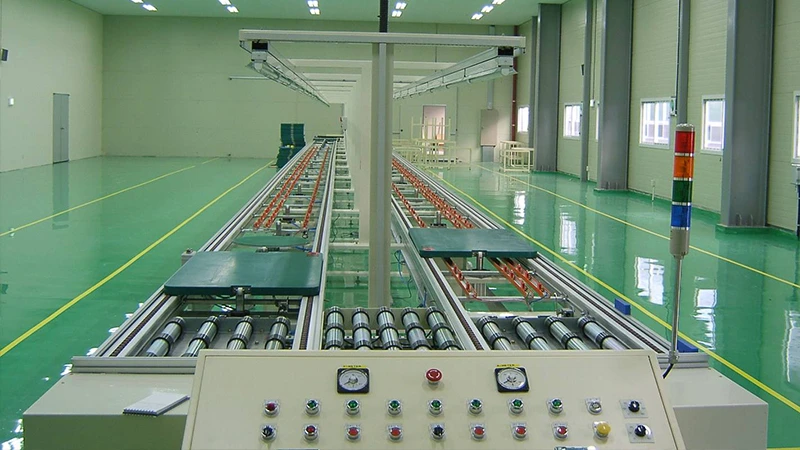
Imagine walking into a manufacturing facility where the air hums with purpose—not the clatter of jamming machinery or the frustrated sighs of workers waiting for a conveyor to restart. For many plant managers, this scene feels more like a distant dream than daily reality. Old conveyor systems, once the backbone of production lines, often become bottlenecks as they age: slow, unreliable, and stubbornly resistant to the flexibility modern manufacturing demands. But what if there was a way to breathe new life into those tired lines without tearing everything down and starting over? Enter the retrofitting revolution, led by one unsung hero: the free flow chain conveyor. In this article, we'll explore how upgrading to free flow chain conveyors—paired with smart components like roller track and aluminum profile—can transform outdated production lines into lean, efficient powerhouses, all while keeping costs in check and downtime to a minimum.
The Hidden Costs of Sticking with Aging Conveyor Systems
Let's start with the obvious: old conveyors break. A lot. But the true cost of clinging to outdated systems goes far beyond the price of replacement parts. Consider a mid-sized electronics manufacturer I worked with last year. Their 15-year-old belt conveyor line for circuit board assembly was costing them more than just money—it was costing them opportunities. Every week, the line would grind to a halt at least twice: once when a belt misaligned, spilling components onto the floor, and again when a motor overheated, requiring a two-hour cool-down. By the time we audited their operations, they'd logged 127 hours of unplanned downtime in six months alone. That's over five full days of lost production—days that could have been spent fulfilling rush orders or expanding their client base.
Then there's the maintenance drain. The plant's maintenance team was spending 12 hours a week just on conveyor upkeep: tightening loose bolts, replacing worn-out rollers, and patching frayed belts. "It's like putting Band-Aids on a broken leg," the maintenance supervisor told me. "We're not fixing the problem—we're just delaying the inevitable." And let's not forget the impact on workers. When conveyors lag, assembly line staff are forced to slow their pace, leading to frustration and, eventually, disengagement. "I used to take pride in hitting my daily quota," one assembler shared. "Now I just cross my fingers the line stays up long enough to finish half."
A Day in the Life: The $10,000 Hour
Last quarter, a food packaging plant in Ohio faced a crisis that illustrates the stakes. Their 20-year-old roller conveyor, used to transport frozen pizza boxes to the sealing station, seized up during a morning rush. The culprit? A rusted roller track connector that had been wobbling for weeks. By the time a technician arrived, two hours had passed. In that time, 5,000 pizza boxes sat idle, and the plant missed a critical delivery window to a major retailer. The result? A $10,000 penalty for late delivery, plus $3,000 in overtime to reroute the backlog. All because of a $15 part that could have been replaced during a retrofit.
Why Retrofitting Beats Replacing (Most of the Time)
When production lines sputter, the first thought for many managers is: "Let's replace the whole thing." But new conveyor systems come with sticker shock—easily $100,000 or more for a mid-sized line—and months of installation downtime. Retrofitting, by contrast, is like giving your old car a new engine instead of buying a brand-new vehicle. It preserves the parts that still work (like the frame or support structures) while upgrading the components that matter most: the free flow chain conveyor itself, the roller track that guides materials, and the aluminum profile frames that add stability without the weight of steel.
Take the example of a automotive parts supplier in Michigan. They'd been quoted $140,000 for a new conveyor line to transport brake calipers. Instead, they opted to retrofit with free flow chain conveyors, replacing only the worn roller track and outdated drive mechanisms. Total cost? $45,000. Installation time? Just five days, done in off-hours to avoid disrupting production. "We kept 70% of our existing infrastructure," the plant manager told me. "Why throw away something that's still solid?"
| Metric | Replacing with a New Conveyor Line | Retrofitting with Free Flow Chain Conveyors |
|---|---|---|
| Upfront Cost | $100,000–$300,000+ | $30,000–$80,000 (50–70% savings) |
| Installation Downtime | 4–8 weeks | 3–7 days (often done during off-hours) |
| Flexibility for Future Changes | Fixed design (hard to reconfigure) | Modular components (easily adjust with aluminum profile accessories) |
| Environmental Impact | High (scraps old materials) | Low (reuses existing infrastructure) |
What Makes Free Flow Chain Conveyors a Game-Changer?
At the heart of any successful retrofit is the free flow chain conveyor itself. Unlike traditional belt or roller conveyors, which rely on friction to move materials, free flow chain systems use a series of interconnected plastic or metal chains mounted on precision-engineered tracks. This design eliminates slippage, reduces jams, and allows for variable speed control—so heavy loads move slowly and delicate items glide gently. But the real magic lies in how they integrate with other components, like roller track and aluminum profile, to create a system that adapts to your needs.
Smooth, Uninterrupted Flow (Goodbye, Jams)
Old conveyors often jam because materials shift or get caught on uneven surfaces. Free flow chain conveyors solve this with their low-friction design. The chains move in a continuous loop, guided by smooth roller track that keeps items aligned. A pharmaceutical manufacturer in North Carolina, for example, struggled with glass vials tipping over on their old belt conveyor. After retrofitting with free flow chain conveyors and plastic roller track guide rails (yellow, to match their safety protocols), vial breakage dropped by 92%. "We used to lose $2,000 a month in broken inventory," the production lead said. "Now it's less than $200."
Lean System Alignment: Waste Less, Produce More
Modern manufacturing thrives on lean principles—eliminating waste, streamlining processes, and empowering workers. Free flow chain conveyors fit this ethos perfectly. Their modular design means you can add or remove sections as production needs change (no more paying for unused space). The aluminum profile frames, lightweight and easy to assemble, let workers reconfigure workstations in minutes, not days. And because the conveyors move materials exactly when needed (thanks to sensors and variable speed drives), there's no more overproduction or bottlenecks—key tenets of a lean system.
Durability That Stands the Test of Time
Aluminum profile isn't just lightweight—it's tough. Unlike steel, it doesn't rust, so it's ideal for humid or food-grade environments. The plastic roller track guide rails (grey, in this case) resist wear and tear, even when transporting sharp or heavy items. A beverage distributor in Texas retrofitted their can-handling line with aluminum profile frames and free flow chain conveyors five years ago. Today, those components still look new, with only minor adjustments needed. "We used to replace steel rollers every six months," the maintenance manager noted. "Now we check the aluminum ones once a year—and they're still rolling strong."
The Retrofitting Journey: From Audit to Operation
Retrofitting isn't just about swapping out old parts for new ones—it's a strategic process that starts with understanding your pain points and ends with a system that feels tailor-made. Let's walk through the steps with a case study: a medical device manufacturer in California that retrofitted their catheter assembly line.
Step 1: Audit the Current System (What's Broken? What's Not?)
The first step is to map out your existing conveyor line. For the medical device company, we started by tracking downtime logs for three weeks. We discovered their old conveyor slowed down when transporting heavier catheter trays, and the steel frame was warping, causing misalignment. But the support beams and electrical wiring were still in great shape. "We didn't need to reinvent the wheel," the project engineer told me. "Just fix the parts that were holding us back."
Step 2: Design the Upgrade (Free Flow Chain + Roller Track + Aluminum Profile)
Next, we designed a custom retrofit plan. The key upgrades: replacing the steel frame with aluminum profile (3030 EU standard, lightweight but strong), swapping the old belt conveyor for a free flow chain conveyor (40 steel roller track, black ESD wheels to prevent static damage to sensitive catheters), and adding plastic roller track guide rails (grey, to blend with their cleanroom aesthetic). We also included swivel roller balls (1 inch) at transfer points to ensure smooth movement between conveyor sections.
Step 3: Install with Minimal Disruption
Installation happened over a long weekend. The team worked 12-hour shifts, first removing the old belt and steel rollers, then mounting the aluminum profile frames (using internal rotary aluminum joints for easy adjustments). By Monday morning, the line was up and running—with workers reporting "zero learning curve" on the new system. "We expected chaos," the plant manager laughed. "Instead, the first shift started on time and hit their quota by lunch."
Step 4: Test, Tweak, and Train
Even the best designs need. For the medical device line, we noticed the catheter trays were sliding slightly on the free flow chain. A quick adjustment to the roller track placon mount (center support bracket) fixed the issue. We also trained the maintenance team on basic upkeep: how to lubricate the chain, tighten aluminum profile connections, and replace roller track guide rails if needed. "Empowering the team to handle small fixes means less waiting for external technicians," the trainer emphasized.
Keeping Your Retrofitted System Running Strong
A retrofitted conveyor line is an investment—one that pays dividends only if you take care of it. Here are three maintenance habits that will extend its life:
1. Clean the Free Flow Chain Regularly (But Don't Overdo It)
Dust and debris can gunk up the chain links, slowing movement. Wipe it down weekly with a dry cloth (avoid harsh chemicals—they can degrade the plastic components). For food-grade lines, use a mild soap and water solution, then dry thoroughly. The medical device manufacturer we mentioned earlier does this during their nightly cleanup, and it takes just 15 minutes per line.
2. Inspect Roller Track and Joints Monthly
Check for loose aluminum profile connections (tighten with a hex key if needed) and worn roller track guide rails. If a rail is cracked or the wheels are sticking, replace it immediately—small issues become big problems fast. A automotive parts plant in Indiana once ignored a wobbly roller track connector; three weeks later, the entire section jammed, costing $8,000 in downtime.
3. Train Your Team to Spot Issues Early
Your frontline workers see the conveyor every day—they'll notice if something feels "off" before the metrics do. Host monthly 10-minute training sessions: show them what a loose aluminum joint looks like, how to identify a worn swivel roller ball (0.5 inch, in this case), and who to notify. At the electronics manufacturer I worked with, a line operator spotted a frayed chain link during a routine check—saving the plant from a potential 4-hour shutdown.
Ready to Upgrade? Start Small, Think Big
Retrofitting with free flow chain conveyors isn't just about fixing a broken system—it's about future-proofing your production line. It's about giving your team the tools they need to work smarter, not harder. It's about turning those frustrating sighs of downtime into the quiet hum of efficiency.
You don't have to tackle your entire facility at once. Start with your most problematic line—the one that causes the most headaches. Audit it, design a retrofit plan that includes free flow chain conveyors, roller track, and aluminum profile, and watch the transformation happen. Then, take those wins and apply them elsewhere. As one plant manager put it: "We started with one line, and within a year, we'd retrofitted three more. The ROI spoke for itself."
So, what's holding you back? Your old conveyor line has served you well—but it's time to let it evolve. With a retrofit, you're not just upgrading machinery. You're upgrading your ability to compete, adapt, and thrive in a manufacturing world that waits for no one.