- Company Articles
- Products and Technology
- Product knowledge
- Free Flow Chain Conveyor vs. Belt Conveyor: Cost and Performance Analysis

Free Flow Chain Conveyor vs. Belt Conveyor: Cost and Performance Analysis
Related Product
Free Flow Chain Conveyor
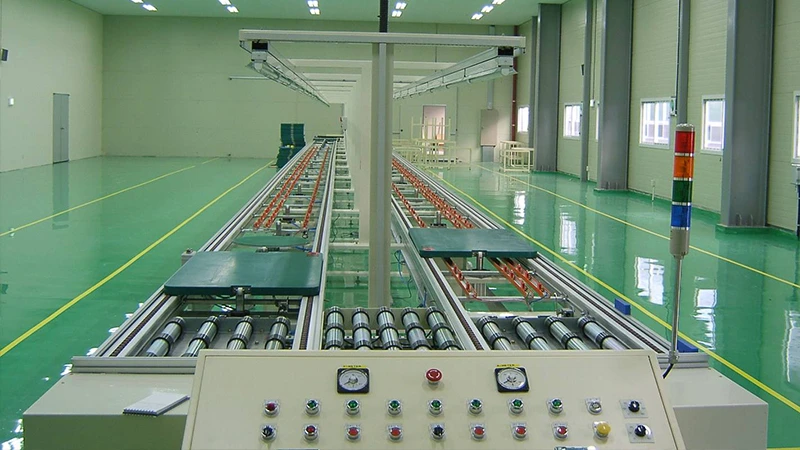
The free flow conveyor system uses a free flow chain that can increase the speed of the tooling board that supports the products. This can improve the efficiency and quality of the production process, as well as reduce the wear and tear of the system.
conveyor-container">
conveyor-section">
conveyor-section">
conveyor-section">
conveyor-section">
conveyor-section">
conveyor-table">
conveyor-section">
conveyor-section">
conveyor-section">
conveyor-section">
conveyor-subtitle"> Introduction: The Backbone of Modern Material Handling
conveyor-text"> In the bustling world of manufacturing, distribution, and logistics, the smooth movement of materials isn't just a convenience—it's the lifeblood of efficiency. Every second a component sits idle, every misstep in a production line, or every delayed package in a warehouse chips away at profitability. That's where conveyors come in: silent workhorses that turn chaos into order, ensuring that parts, products, and parcels flow seamlessly from point A to point B. Among the many types of conveyors available, two stand out for their versatility and widespread use: the free flow chain conveyor and the belt conveyor. But how do you choose between them? Is one better suited for your facility than the other? This article dives deep into their performance, costs, and real-world applications to help you make an informed decision—because when it comes to material handling, the right choice can transform your operations from good to great.
conveyor-subtitle"> Understanding Free Flow Chain Conveyors: Precision in Motion
conveyor-text"> Imagine walking into a high-tech electronics assembly plant. Rows of workbenches hum with activity as technicians assemble circuit boards, and alongside these workbenches, a series of sleek, metallic tracks carry small component trays from one station to the next. These tracks are likely free flow chain conveyors—systems designed for precision, flexibility, and low friction. Unlike bulkier conveyors, free flow chain systems rely on a network of interconnected chains or roller tracks (a key component in their design) that allow products to glide smoothly, often with minimal power or even gravity assistance.
conveyor-subheading"> How They Work: The Mechanics Behind the Flow
conveyor-text"> At their core, free flow chain conveyors consist of two main parts: the chain (or roller track) and the supporting framework. The chain itself is made up of small, interconnected links with rollers that reduce friction, allowing loads to move with little resistance. Some systems are motorized, using a drive unit to propel the chain at a steady speed, while others are gravity-fed, sloped slightly to let products slide naturally. This simplicity is part of their charm—fewer moving parts mean less to break down, and their modular design makes them easy to adjust or expand as production needs change.
conveyor-subheading"> Key Components: Building Blocks of Reliability
conveyor-text"> While the chain or roller track is the star, free flow conveyors rely on several supporting components to perform at their best. These include brackets to secure the track to the framework, connectors to join track segments, and end stops to prevent products from sliding off. Many systems also integrate with workbenches, creating seamless "cells" where assembly and material transport happen in tandem—a setup that aligns perfectly with lean system principles, where minimizing waste and maximizing flow are top priorities.
conveyor-subtitle"> Understanding Belt Conveyors: Power for Bulk and Beyond
conveyor-text"> Now, picture a busy e-commerce fulfillment center. Tons of packages—from small envelopes to large boxes—zoom through the facility, sorted and routed to their destinations by a maze of rubberized belts. These are belt conveyors: the workhorses of bulk material handling. Unlike free flow chain conveyors, which excel at small, uniform loads, belt conveyors are built to handle a wide range of sizes, weights, and materials, from grain in a food processing plant to heavy automotive parts in a factory.
conveyor-subheading"> How They Work: The Drive to Deliver
conveyor-text"> Belt conveyors operate on a simpler principle: a continuous loop of belt (made of rubber, PVC, or even metal) stretched over two or more pulleys. One pulley, the drive pulley, is powered by a motor, which moves the belt and pulls the load along. The other pulleys, called idlers, keep the belt taut and aligned. This design allows for long distances—some belt conveyors stretch for miles in mining operations—and high speeds, making them ideal for moving large volumes of material quickly.
conveyor-subheading"> Key Components: Durability in Design
conveyor-text"> The belt itself is the most critical component, and its material is chosen based on the application. For example, rubber belts are used for heavy loads, while PVC belts are preferred for lighter, cleaner products like packaged foods. Other components include tensioners to keep the belt from slipping, guides to keep loads centered, and brakes for emergency stops. Unlike free flow chain conveyors, belt systems often require more structural support, especially for long distances or heavy loads, which can make them bulkier but also more robust.
conveyor-subtitle"> Performance Analysis: How They Stack Up
conveyor-text"> Choosing between a free flow chain conveyor and a belt conveyor isn't just about cost—it's about performance. How fast do they move? How much weight can they carry? How flexible are they for changing production needs? Let's break down the key metrics.
conveyor-subheading"> Speed: From a Crawl to a Sprint
conveyor-text"> When it comes to speed, belt conveyors have the edge—especially for long distances. Motorized belt systems can reach speeds of 500 feet per minute or more, making them ideal for high-throughput operations like package sorting. Free flow chain conveyors, on the other hand, are typically slower, with speeds ranging from 10 to 50 feet per minute. But this isn't a flaw; their slower pace is intentional. In assembly lines, for example, technicians need time to work on products as they arrive, so a steady, predictable speed prevents bottlenecks. Think of it this way: belt conveyors are sprinters, while free flow chain conveyors are marathon runners—each excels in their own race.
conveyor-subheading"> Load Capacity: Light vs. Heavy
conveyor-text"> Belt conveyors are the heavyweights here. A standard belt conveyor can carry loads from a few ounces to several tons, depending on the belt width and material. This makes them perfect for industries like mining (hauling coal), agriculture (transporting grain), or logistics (moving pallets). Free flow chain conveyors, by contrast, are designed for lighter loads—usually up to 500 pounds per linear foot. They shine when moving small, uniform items like component trays, toolboxes, or small parts, where precision matters more than brute strength.
conveyor-subheading"> Flexibility: Adapting to Change
conveyor-text"> In today's fast-paced manufacturing world, flexibility is key. Free flow chain conveyors excel here thanks to their modular design. Need to add a new workstation? Simply extend the roller track and connect it with a few brackets. Want to reroute the flow around a new machine? Disassemble the existing track and rebuild it in a new configuration. Belt conveyors, while adaptable, are less flexible. Their long, continuous belts and fixed pulleys make them harder to reconfigure, and changing the belt's path often requires significant structural modifications. For facilities with frequent layout changes, free flow chain systems are often the better bet.
conveyor-subheading"> Precision and Control: Stopping on a Dime
conveyor-text"> In applications where products need to stop exactly at a workstation (like an automotive assembly line where a robot picks up a part), precision is non-negotiable. Free flow chain conveyors deliver here. Many systems include built-in stops or sensors that halt the flow when a product reaches a specific point, ensuring consistent positioning. Belt conveyors, by contrast, are better for continuous flow. While they can be equipped with brakes or diverters, their momentum makes precise stopping harder—especially for lightweight or irregularly shaped loads. If your operation requires "stop-and-go" precision, free flow chain is the way to go.
conveyor-subtitle"> Cost Analysis: Beyond the Initial Price Tag
conveyor-text"> Cost is often the first factor considered when choosing a conveyor, but it's important to look beyond the initial purchase price. Lifecycle costs—including installation, maintenance, energy use, and replacement—can have a bigger impact on your bottom line over time.
conveyor-subheading"> Initial Cost: Getting Started
conveyor-text"> Free flow chain conveyors generally have lower upfront costs. Their modular design means you can start small (with just a few roller tracks and workbenches) and expand later, and their simpler components (rollers, brackets, basic aluminum tube) are less expensive than the motors, belts, and structural steel needed for belt conveyors. Belt conveyors, especially large, motorized ones, require more materials and labor to install, driving up the initial price tag. For small to medium-sized operations with limited budgets, free flow chain systems often offer a more accessible entry point.
conveyor-subheading"> Operational Costs: Keeping the Flow Going
conveyor-text"> When it comes to day-to-day costs, the tables start to turn. Belt conveyors, with their motorized drives and moving belts, consume more energy—especially for long distances or heavy loads. Over time, these energy costs can add up. They also require more maintenance: belts wear out and need replacement, pulleys need lubrication, and tensioners need adjustment. Free flow chain conveyors, with their fewer moving parts and often gravity-fed design, have lower energy use (or none at all for gravity systems) and minimal maintenance. A quick inspection of the roller track and joints every few months is usually enough to keep them running smoothly. For facilities looking to cut long-term operational expenses, free flow chain systems often come out ahead.
conveyor-subheading"> Lifecycle Costs: The Big Picture
conveyor-text"> To truly compare costs, let's consider a hypothetical scenario: a small electronics plant needing a 50-foot conveyor system to move component trays between workbenches. A free flow chain setup might cost $10,000 initially, with annual maintenance of $500 and energy costs of $200 (for a motorized version). A belt conveyor for the same application might cost $15,000 upfront, with annual maintenance of $1,200 and energy costs of $800. Over 10 years, the free flow chain system would cost around $17,000 total, while the belt conveyor would cost $35,000—more than double. Of course, this varies by application (belt conveyors are cheaper per ton for bulk materials), but for small, precise loads, free flow chain often offers better long-term value.
| Cost Factor | Free Flow Chain Conveyor | Belt Conveyor |
|---|---|---|
| Initial Purchase & Installation | Lower ($50–$200 per linear foot) | Higher ($150–$500+ per linear foot) |
| Annual Energy Use | Low (or zero for gravity systems) | High (motorized drives) |
| Annual Maintenance | Minimal ($200–$800/year) | Moderate to High ($800–$2,000/year) |
| Expected Lifespan | 10–15 years (with part replacements) | 10–20 years (with belt replacements every 3–5 years) |
conveyor-subtitle"> Applications in Lean Systems: Aligning with Efficiency Goals
conveyor-text"> In today's manufacturing landscape, lean system principles—focused on eliminating waste, improving flow, and maximizing value—are more important than ever. Both free flow chain and belt conveyors can support these goals, but in different ways.
conveyor-subheading"> Free Flow Chain Conveyors: Supporting "Kaizen" and Continuous Improvement
conveyor-text"> Lean systems thrive on continuous improvement, and free flow chain conveyors are built for this. Their modularity allows teams to experiment with new layouts (a key part of "kaizen," or continuous improvement) without major investments. For example, a team might rearrange roller tracks to reduce the distance between two workbenches, cutting down on walking time and wasted motion. Additionally, their precision flow helps eliminate "waiting" waste—products arrive exactly when needed at each workstation, reducing idle time. In short, free flow chain systems are like the "Swiss Army knife" of lean material handling: adaptable, efficient, and always ready to evolve.
conveyor-subheading"> Belt Conveyors: Streamlining Bulk Flow
conveyor-text"> While free flow chain excels in small-scale, precise operations, belt conveyors play a vital role in lean systems for bulk handling. In a warehouse using lean principles to reduce inventory waste, a belt conveyor can move large quantities of goods quickly, ensuring that stock is replenished just in time (JIT) without overstocking. For example, a food distribution center might use a belt conveyor to move pallets of produce from the receiving dock to the refrigerated storage area, minimizing the time products spend in transit and reducing spoilage. In these cases, belt conveyors help eliminate "transportation" waste by making bulk movement faster and more efficient.
conveyor-subtitle"> Pros and Cons: A Quick Recap
conveyor-subheading"> Free Flow Chain Conveyors
conveyor-text"> Pros: Low initial cost, flexible/modular design, precise stopping, low maintenance, energy-efficient, ideal for small/light loads, integrates well with workbenches and lean systems.
conveyor-text"> Cons: Limited load capacity, slower speeds, not suitable for bulk materials, gravity systems require slope (which may limit layout options).
conveyor-subheading"> Belt Conveyors
conveyor-text"> Pros: High load capacity, fast speeds, handles bulk/irregular materials, continuous flow, suitable for long distances.
conveyor-text"> Cons: Higher initial cost, less flexible, higher maintenance/energy costs, harder to reconfigure, less precise stopping.
conveyor-subtitle"> Choosing the Right Conveyor: A Decision Framework
conveyor-text"> Still unsure which conveyor is right for you? Start by asking these key questions:
- conveyor-text">
- What are you moving? Small, uniform parts (free flow chain) or bulk/heavy materials (belt conveyor)?
- How fast do you need it to move? Slow, precise flow (free flow chain) or high-speed continuous movement (belt conveyor)?
- Will your layout change? Frequent changes (free flow chain) or stable, long-term layout (belt conveyor)?
- What's your budget? Limited upfront funds (free flow chain) or willing to invest more for bulk capacity (belt conveyor)?
- Are you using lean principles? If yes, consider how the conveyor will reduce waste—free flow chain for small-scale cells, belt for bulk JIT flow.
conveyor-text"> For most small to medium-sized manufacturing or assembly operations—especially those focused on electronics, medical devices, or precision parts—free flow chain conveyors offer the best balance of cost, flexibility, and performance. For warehouses, mines, or facilities handling bulk materials like grain, coal, or large packages, belt conveyors are often the smarter choice.
conveyor-subtitle"> Conclusion: Flow That Fits Your Needs
conveyor-text"> At the end of the day, there's no "one-size-fits-all" conveyor. Free flow chain conveyors and belt conveyors each have unique strengths, and the right choice depends on your specific needs: the materials you move, the speed you require, the flexibility you need, and the budget you have. Whether you're setting up a new assembly line with workbenches and roller tracks or upgrading a warehouse with miles of belt conveyors, the goal is the same: to create a flow that's efficient, reliable, and aligned with your operational goals. By weighing performance, cost, and application, you can choose a conveyor system that doesn't just move materials—but moves your business forward.