- Company Articles
- Products and Technology
- Product knowledge
- Free Flow Chain Conveyor vs. Gravity Flow Conveyor: When to Use Each

Free Flow Chain Conveyor vs. Gravity Flow Conveyor: When to Use Each
Related Product
Free Flow Chain Conveyor
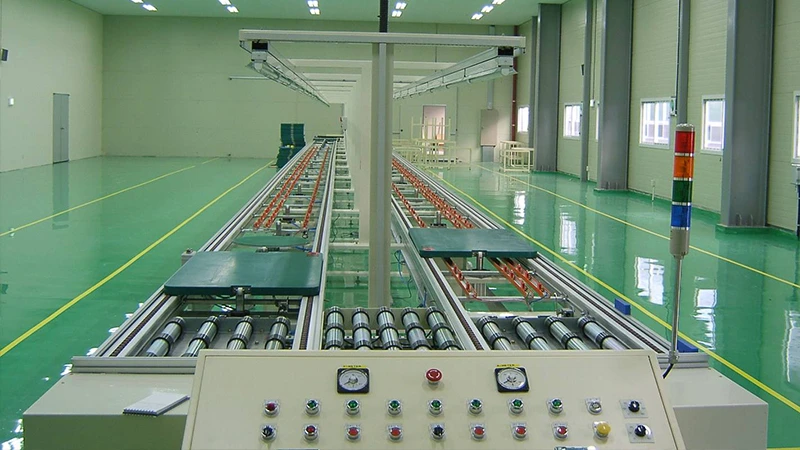
The free flow conveyor system uses a free flow chain that can increase the speed of the tooling board that supports the products. This can improve the efficiency and quality of the production process, as well as reduce the wear and tear of the system.
In the bustling world of manufacturing, warehousing, and production, the unsung heroes keeping operations moving are often the conveyors. These systems quietly transport materials, components, and finished goods from one point to another, ensuring that workflows stay efficient, bottlenecks are minimized, and teams can focus on more skilled tasks. But not all conveyors are created equal. Two common types that often spark debate among facility managers and operations teams are free flow chain conveyors and gravity flow conveyors . Each has its own strengths, weaknesses, and ideal use cases, and choosing between them can make a significant difference in productivity, cost, and even workplace satisfaction.
If you've ever walked through a busy factory floor or a large distribution center, you've likely seen both in action—though you might not have realized it. Maybe you noticed a steady stream of heavy engine parts gliding along a metal track powered by a quiet motor (that's a free flow chain conveyor), or perhaps you saw boxes gently rolling down a sloped rack toward a packing station, no electricity in sight (that's a gravity flow conveyor). The question is, when should you opt for one over the other? Let's dive in.
Understanding the Basics: How Each Conveyor Works
Before we compare their pros and cons, let's get clear on what each system actually is and how it operates. Knowing the mechanics will help you see why they excel in certain scenarios.
Free Flow Chain Conveyors: Power-Driven Precision
A free flow chain conveyor (sometimes called a "powered chain conveyor") is exactly what it sounds like: a conveyor system that uses a motor-driven chain to move items along a track. The chain is typically made of metal links (often steel or stainless steel) that loop around sprockets at either end of the conveyor. As the motor turns the sprockets, the chain moves, and items placed on top of the chain (or on attachments like slats or plates connected to the chain) are carried forward at a consistent speed.
These conveyors are designed for control and reliability. The motor allows operators to adjust the speed—from slow and steady for delicate assembly work to faster rates for high-volume transport. They can handle straight paths, curves, and even inclines or declines (with the right gearing), making them versatile for complex layouts. Some models also include features like brakes or clutches to stop items at specific stations, ensuring precise positioning for tasks like labeling, quality checks, or assembly.
You'll often find free flow chain conveyors in industries where consistency and power are key, such as automotive manufacturing (moving car frames or engines), heavy machinery production, or large-scale distribution centers handling pallets of goods.
Gravity Flow Conveyors: Simple, Efficient, and Electricity-Free
Gravity flow conveyors, on the other hand, rely on a much simpler principle: gravity. Instead of a motor, these systems use a slight incline in the track to let items move on their own. The track itself is usually made up of roller track —rows of small, free-spinning rollers (often plastic, steel, or aluminum) that reduce friction, allowing items to glide smoothly downhill.
The magic here is in the slope. The conveyor is tilted at a gentle angle (usually between 3° and 7°, depending on the weight and size of the items being moved), so gravity does all the work. No motors, no electrical wiring, no complex controls—just a simple, mechanical system that gets the job done. Some gravity flow conveyors also include brakes or speed controllers (like friction pads) to prevent items from rolling too fast, especially if they're fragile or heavy.
These are the workhorses of environments where simplicity and cost-efficiency matter most. Think of a warehouse's order-picking area, where boxes of products roll down a flow rack (a type of gravity conveyor system) to a picker, or a small workshop where lightweight parts move from a storage shelf to an assembly table. They're also common in retail backrooms, where staff unload trucks and send boxes to stocking stations without lifting a finger.
Design Deep Dive: What Sets Them Apart?
At first glance, both conveyors might look similar—they're both tracks with moving parts, after all. But a closer look reveals key design differences that impact their performance, maintenance, and suitability for different tasks.
Structure and Components
Free flow chain conveyors are built around their power source. The motor (usually electric) is the heart of the system, connected to a gearbox that controls speed. The chain runs along a metal track, which is often reinforced to handle heavy loads. Depending on the application, the chain might be topped with slats, plates, or even specialized attachments (like grippers for irregularly shaped items). The track can be straight, curved, or even spiral, allowing for flexible routing around obstacles on the factory floor.
Because they're motorized, these conveyors require a power supply (typically 110V or 220V) and may need wiring, control panels, and safety features like emergency stop buttons. They're also heavier and more rigid in their installation—you can't easily move a free flow chain conveyor from one area to another without professional help.
Gravity flow conveyors , by contrast, are all about simplicity. The core component is the roller track —a series of parallel rollers mounted on a frame. The frame is tilted at a slight angle (as little as 1° for very lightweight items, up to 10° for heavier ones) to harness gravity. The rollers are usually made of plastic, steel, or aluminum, and they spin freely on axles, so there's no need for motors, gears, or chains.
Many gravity conveyors are modular, meaning you can connect sections of roller track to create longer systems or adjust the angle as needed. Some are even portable—think of a folding gravity conveyor that a delivery driver might use to unload a truck into a warehouse. They're lightweight, easy to assemble, and require minimal tools to set up.
Speed and Control
One of the biggest differences between the two is in how speed is managed. With free flow chain conveyors, speed is controlled by the motor. Operators can adjust it via a control panel—slowing it down for tasks that require precision (like attaching small components) or speeding it up for bulk transport. This consistency is a huge advantage in assembly lines, where each step must happen in sync. For example, in a car factory, the chassis might move along a free flow chain conveyor at exactly 2 feet per minute, ensuring that workers have enough time to install wiring harnesses before it moves to the next station.
Gravity flow conveyors, on the other hand, rely on the laws of physics. The speed of an item depends on the incline of the track, the weight of the item, and the friction between the item and the rollers. Heavier items will roll faster than lighter ones, and a steeper incline will increase speed. This can be a double-edged sword: while it means no electricity costs, it also means less control. For instance, a box of books will roll down a gravity conveyor faster than a box of feathers, which could lead to jams if items pile up at the bottom. To mitigate this, many gravity systems include speed bumps or brake rollers that slow items down as they near the end of the track.
Pros and Cons: Weighing Your Options
Now that we understand how they work, let's break down the advantages and disadvantages of each system. This will help you see which one aligns with your needs.
Free Flow Chain Conveyors: The Power Players
Pros:
- Handles heavy loads: These conveyors are built for power. They can easily move items weighing hundreds (or even thousands) of pounds, making them ideal for industries like automotive, aerospace, or construction.
- Consistent speed: Since speed is motor-controlled, items move at a steady pace, which is critical for assembly lines where timing is everything. No more waiting for a slow-moving box or rushing to keep up with a fast one.
- Versatile routing: With motors and gears, free flow chain conveyors can navigate curves, inclines, and declines. This makes them perfect for large facilities where the conveyor needs to weave around machinery or storage areas.
- Works in any orientation: Unlike gravity conveyors, they don't need to be sloped. They can move items horizontally, uphill, or downhill, giving you more flexibility in facility layout.
Cons:
- Costly upfront and to operate: The motor, control panel, and installation add up. You'll also have ongoing electricity costs, which can be significant for long conveyors running 24/7.
- More maintenance: Moving parts (motors, chains, sprockets) mean more wear and tear. You'll need to regularly lubricate the chain, check the motor for overheating, and replace worn sprockets—all of which take time and money.
- Less portable: Once installed, these conveyors are hard to move. If you need to rearrange your facility, you'll likely need to hire a professional to disassemble and reinstall the system.
- Noise: While modern motors are quieter than older models, free flow chain conveyors still produce some noise from the chain moving over sprockets. This might be a concern in environments where noise levels need to be low (like offices adjacent to warehouses).
Gravity Flow Conveyors: The Simple Solutions
Pros:
- Low cost: No motor, no wiring, no control panel—gravity conveyors are much cheaper to buy and install. This makes them a great choice for small businesses or startups on a budget.
- Minimal maintenance: With fewer moving parts, there's less to break. You might need to clean the rollers occasionally or replace a worn roller, but that's about it. No expensive motor repairs here.
- Energy-efficient: They run on gravity, so no electricity costs. This is not only good for your wallet but also for the environment—a win for sustainability goals.
- Portable and modular: Many gravity conveyors are lightweight and foldable, so you can move them around as needed. Modular roller track sections let you extend or shorten the conveyor quickly.
- Quiet operation: The only sound is the gentle roll of items over the rollers, making them ideal for settings where noise is a concern (like retail stores or small workshops).
Cons:
- Limited to lightweight items: While they can handle moderate loads (a few hundred pounds), gravity conveyors aren't built for heavyweights. A car engine would simply sit on the track and not move.
- Requires a slope: To work, the track must be inclined, which limits where you can place it. You can't have a gravity conveyor moving uphill, and you need enough vertical space for the slope.
- Less control over speed: As mentioned earlier, speed depends on item weight and track angle. This can lead to jams if items pile up or damage if fragile items roll too fast.
- Straight paths only (mostly): While some gravity conveyors can handle gentle curves, sharp turns are difficult. They work best in straight lines, which can limit layout flexibility.
Ideal Applications: When to Choose Which
The best conveyor for you depends on your specific use case. Let's look at scenarios where each system shines.
Choose Free Flow Chain Conveyors When…
You're moving heavy or bulky items: If your operation involves transporting engines, steel beams, or large machinery, a free flow chain conveyor is the way to go. For example, an automotive plant might use one to move car bodies from the welding station to the painting station—items that weigh over a ton and need precise positioning.
You need consistent speed for assembly: In electronics manufacturing, where workers attach tiny components to circuit boards, timing is critical. A free flow chain conveyor ensures each circuit board moves past workers at the same speed, so no one is rushed or waiting.
Your facility has a complex layout: If your conveyor needs to go around corners, up a small hill, or through multiple rooms, a motorized system can handle the routing. A distribution center with a mezzanine level, for instance, might use a free flow chain conveyor to move pallets from the ground floor to the upper level for storage.
Choose Gravity Flow Conveyors When…
You're handling lightweight, uniform items: For small parts, boxes, or packages, gravity conveyors work great. A flow rack in a warehouse, where identical boxes of snacks roll down to a picker, is a classic example. The boxes are all the same weight, so they roll at a consistent speed, and the slope is gentle enough to prevent jams.
You need a temporary or portable solution: Delivery trucks often use folding gravity conveyors to unload boxes quickly. Since they're lightweight and don't need power, drivers can set them up in minutes and fold them away when done.
Cost and energy efficiency are priorities: Small businesses or startups might not have the budget for a motorized system. A gravity conveyor lets them automate material transport without breaking the bank. Schools, for example, use gravity conveyors in their mailrooms to move letters and packages between offices—no need for a fancy motor when gravity does the job.
You want a quiet workspace: In settings like libraries, offices, or small workshops, noise is a concern. Gravity conveyors operate silently, so they won't disrupt the peace.
Cost Comparison: Short-Term vs. Long-Term
Cost is often the deciding factor, so let's break down the numbers. Remember, the cheapest upfront option might not be the most cost-effective in the long run.
Initial Costs
Gravity flow conveyors win here, hands down. A basic 10-foot roller track section might cost as little as $200–$500, depending on the material (plastic rollers are cheaper than steel). A larger, modular system with multiple sections could run $1,000–$3,000. Installation is also simple—you might even be able to do it yourself with a few tools and a level to set the slope.
Free flow chain conveyors, on the other hand, are a bigger investment. A small, basic motorized conveyor might start at $5,000, but larger systems with custom routing can cost $20,000 or more. Installation adds to the cost, as you'll need an electrician to wire the motor and a professional to align the track and sprockets.
Operating Costs
Here's where gravity conveyors really shine: they have almost no operating costs. No electricity, no fuel—just the occasional roller replacement. Over time, this adds up. For example, a free flow chain conveyor running 8 hours a day, 5 days a week, could cost hundreds of dollars a month in electricity, depending on local rates. Multiply that by years of operation, and the savings with gravity become significant.
Maintenance costs also favor gravity. A gravity conveyor might need a new roller every few months ($10–$50 per roller), while a free flow chain conveyor could require chain lubrication, motor tune-ups, or sprocket replacements ($200–$1,000 per service). If the motor burns out, replacing it could cost $1,000 or more—something you'll never face with a gravity system.
Real-World Examples: Seeing Them in Action
Sometimes, real stories help clarify the decision. Let's look at two businesses that chose each type of conveyor and why it worked for them.
Example 1: Automotive Plant Chooses Free Flow Chain Conveyor
A mid-sized automotive manufacturer in Michigan needed to move car doors from the welding department to the painting department. The doors weighed about 80 pounds each, and the path between departments required a 90-degree turn and a small incline to reach the painting booth on a raised platform. A gravity conveyor was out of the question—too heavy, and the incline would have required a steep slope that wasn't feasible in their layout.
They installed a free flow chain conveyor with a variable-speed motor. The conveyor moved the doors at 3 feet per minute, slow enough for workers to inspect them before painting but fast enough to keep up with production demands. The motor easily handled the incline and the turn, and the consistent speed ensured that the painting booth never had to wait for doors or deal with a backlog. While the initial cost was $15,000, the efficiency gains and reduced labor costs (no more workers manually moving doors) paid off in less than a year.
Example 2: E-Commerce Warehouse Uses Gravity Flow Racks
An e-commerce company in Texas runs a fulfillment center that ships small electronics (phones, chargers, headphones). Their pickers needed a way to access products quickly, and the warehouse had limited space for large machinery. They opted for flow racks —gravity conveyors built into shelving units. Each shelf has a slight slope, and boxes of products are loaded from the back (the higher end) and roll forward to the picking side as items are removed.
The system was cheap to install (about $8,000 for 10 racks), required no electricity, and was quiet enough that pickers could communicate easily. Since the products are all lightweight (most boxes weigh less than 10 pounds), they roll at a steady pace, and the gentle slope prevents jams. The company estimates that the flow racks reduced picking time by 30%, as workers no longer had to reach to the back of shelves—products came to them.
Making Your Decision: A Quick Checklist
Still on the fence? Use this checklist to narrow it down:
| Consideration | Choose Free Flow Chain Conveyor If… | Choose Gravity Flow Conveyor If… |
|---|---|---|
| Item weight | Over 50 pounds | Under 50 pounds (or uniform lightweight items) |
| Speed control | You need consistent, adjustable speed | You can tolerate variable speed (or use brakes) |
| Layout | Complex (curves, inclines, multiple levels) | Simple (straight, downhill only) |
| Budget | You can afford higher upfront costs for long-term power needs | You need a low-cost, energy-efficient solution |
| Portability | You need a permanent installation | You need to move the conveyor occasionally |
Final Thoughts: It's All About Your Needs
At the end of the day, there's no "better" conveyor—only the one that fits your operation. Free flow chain conveyors are the workhorses for heavy, complex, or high-precision tasks, while gravity flow conveyors are the budget-friendly, low-maintenance option for lightweight, simple workflows.
If you're still unsure, start small. Rent or borrow a short section of each type and test them with your actual items. See how they handle your products, how your team interacts with them, and whether they fit into your space. You might even find that a hybrid approach works best—using a free flow chain conveyor for heavy items in one area and gravity conveyors for lightweight items in another.
Whichever you choose, remember that the goal is to make your team's work easier, faster, and more efficient. A well-chosen conveyor system won't just move items—it will move your business forward.