- Company Articles
- Products and Technology
- Product knowledge
- Free Flow Chain Conveyor vs. Pneumatic Conveyor: Application Scenarios Compared

Free Flow Chain Conveyor vs. Pneumatic Conveyor: Application Scenarios Compared
Related Product
Free Flow Chain Conveyor
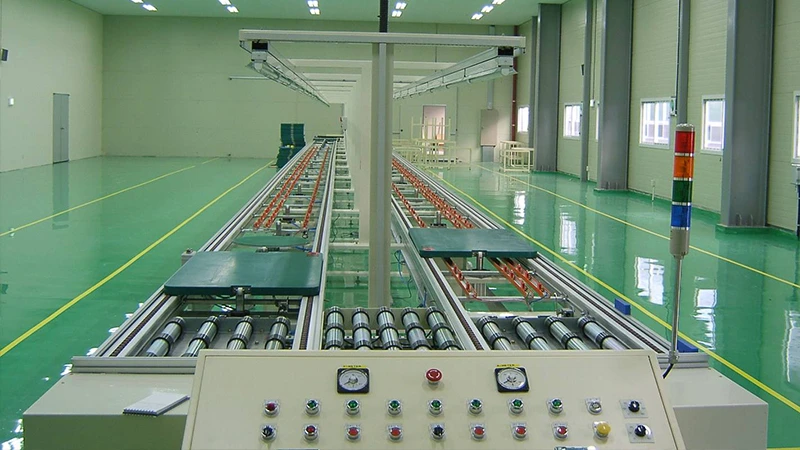
The free flow conveyor system uses a free flow chain that can increase the speed of the tooling board that supports the products. This can improve the efficiency and quality of the production process, as well as reduce the wear and tear of the system.
Introduction: The Backbone of Efficient Material Movement
In the bustling world of manufacturing plants, warehouses, and distribution centers, the smooth flow of materials isn't just a convenience—it's the lifeblood of productivity. Every minute wasted on slow, disjointed material handling can ripple through operations, delaying production, increasing costs, and eroding customer satisfaction. That's where conveyors come in: silent workhorses that turn chaos into order, ensuring goods, parts, and products move from point A to point B with minimal friction. But not all conveyors are created equal. Two systems that often stand out in industrial settings are the free flow chain conveyor and the pneumatic conveyor. Each brings unique strengths to the table, but choosing between them depends on a host of factors—from the type of materials you're moving to the layout of your facility and even your long-term efficiency goals. In this article, we'll dive deep into how these two conveyors work, their key differences, and which scenarios they're best suited for. Along the way, we'll touch on real-world applications, lean system principles, and how components like roller tracks and workbenches play into their effectiveness. By the end, you'll have a clear roadmap to select the conveyor that aligns with your operational needs, whether you're managing a high-speed assembly line or handling delicate bulk materials.
Understanding Free Flow Chain Conveyors: Gravity-Powered Simplicity
Let's start with the free flow chain conveyor—a system beloved for its simplicity, reliability, and ability to keep materials moving with minimal energy input. At its core, a free flow chain conveyor is a mechanical system designed to transport goods along a predefined path using gravity or low-power drives. Unlike some bulkier conveyors, it's built for precision, making it a staple in environments where consistency and predictability matter most.
So, what makes up a free flow chain conveyor? Picture a series of interconnected chains or rollers (often part of a roller track system) mounted on a frame, slightly inclined to allow items to glide forward under their own weight. The chains are typically made of durable materials like steel or plastic, and they're connected via joints that ensure smooth, continuous movement. In some setups, a small motor might provide a gentle push to keep things moving, but many systems rely purely on gravity—making them energy-efficient and easy to maintain.
One of the biggest advantages of free flow chain conveyors is their versatility with solid, uniform items. Think cardboard boxes, plastic totes, or even small assemblies—items that have a flat base and can sit securely on the conveyor surface. In manufacturing plants, for example, you might find them moving partially assembled products from one workbench to the next, ensuring that each station receives parts exactly when needed. This alignment with lean system principles—eliminating waste, streamlining flow, and reducing idle time—is a big reason they're so popular in industries like automotive, electronics, and logistics.
Real-World Example: A mid-sized electronics manufacturer uses a free flow chain conveyor to transport circuit board components between soldering, testing, and packaging workbenches. The conveyor, equipped with a gentle slope and plastic roller tracks, ensures that each component tray glides smoothly to the next station without jamming. Since the system requires no external power (it relies on gravity), the plant saves on energy costs, and maintenance is as simple as lubricating the chain joints occasionally. This setup has reduced material handling time by 30%, allowing workers to focus on assembly rather than moving parts manually.
Another key benefit is scalability. Free flow chain conveyors can be customized to fit almost any facility layout—curving around corners, ascending small inclines, or integrating with other systems like material racks for temporary storage. Their modular design means you can add or remove sections as your needs change, making them a flexible choice for growing businesses. And because they operate with few moving parts, the risk of breakdowns is low, translating to less downtime and higher overall equipment effectiveness (OEE).
Pneumatic Conveyors: Harnessing Air Power for Bulk and Delicate Materials
If free flow chain conveyors are the workhorses of solid material transport, pneumatic conveyors are the specialists for bulk, fine, or hard-to-handle substances. These systems use air pressure (or vacuum) to move materials through enclosed tubes or pipes, making them ideal for powders, granules, pellets, or even small, fragile items that might get damaged on a mechanical conveyor. Imagine a system that can transport flour, plastic resin, or pharmaceutical powders from a storage silo to a mixing tank without a single human touch—that's the power of pneumatic conveying.
How does it work? Pneumatic conveyors come in two main types: pressure systems and vacuum systems. In pressure systems, a blower or compressor pushes air through the tube, creating a high-velocity stream that carries materials forward. Vacuum systems, on the other hand, use a pump to create negative pressure at the destination end, sucking materials through the tube from the source. Both setups are enclosed, which means materials stay contained—no spills, no contamination, and no exposure to dust or debris. This makes pneumatic conveyors a top choice for industries with strict hygiene standards, like food processing, pharmaceuticals, and chemicals.
Unlike free flow chain conveyors, which are visible and easy to inspect, pneumatic systems are often hidden behind walls or ceilings, saving valuable floor space. This compact design is a game-changer in facilities where every square foot counts, allowing for more efficient use of area for production or storage. However, this hidden nature also means maintenance can be trickier—you might need specialized tools to diagnose blockages or leaks in the tubes. Still, for materials that are messy, toxic, or prone to degradation when exposed to air, the benefits far outweigh the maintenance challenges.
Real-World Example: A large bakery uses a pneumatic conveyor system to transport flour from a central storage silo to its mixing room. The system consists of a network of stainless steel tubes, a high-pressure blower, and automated valves that direct flour to different mixers based on production needs. Because the flour is enclosed in the tubes, there's no risk of contamination from dust or pests, and the bakery has reduced waste by 15% (no more spilled flour on the factory floor). The system also integrates with the bakery's inventory management software, automatically triggering refills when flour levels run low—another nod to lean system efficiency.
Pneumatic conveyors also excel at handling materials over long distances or complex routes. Need to move plastic pellets from a truck unloading area to a third-floor production line? A pneumatic system can do that with minimal fuss, as the air pressure can push materials upward or around tight bends. This makes them a favorite in facilities with limited floor space or multi-level layouts, where mechanical conveyors would require expensive structural modifications.
Key Differences: Design, Operation, and Efficiency
Now that we understand how each conveyor works, let's break down their differences across critical factors like design, operation, and efficiency. This comparison will help you see why one might be better suited for your needs than the other.
| Factor | Free Flow Chain Conveyor | Pneumatic Conveyor |
|---|---|---|
| Material Type | Ideal for solid, flat-bottomed items (boxes, totes, assemblies) | Best for bulk materials (powders, granules, pellets) or fragile items |
| Power Source | Often gravity-powered; may use low-voltage motors for heavy loads | Requires air compressors or vacuum pumps (higher energy consumption) |
| Design | Open or semi-open frame with chains/roller tracks; visible path | Enclosed tubes/pipes; hidden from view, minimal footprint |
| Maintenance Needs | Low: lubricate chains/rollers, clean debris from tracks | Higher: inspect for air leaks, clean tubes to prevent blockages, service compressors |
| Speed & Throughput | Moderate speed; high throughput for uniform items | Variable speed (adjustable via air pressure); throughput depends on material density |
| Energy Efficiency | Very efficient (gravity-powered models use no energy) | Less efficient (air compressors/vacuum pumps consume significant energy) |
| Cost | Lower upfront cost; affordable to install and expand | Higher upfront cost (tubes, compressors, controls); higher long-term energy costs |
| Space Requirements | Needs floor space for tracks/frames; can be customized for layouts | Minimal floor space (tubes can be mounted overhead); ideal for tight spaces |
One of the most striking differences is in material compatibility. Free flow chain conveyors struggle with bulk or irregularly shaped materials—imagine trying to move a pile of sand on a roller track; it would spill everywhere. Pneumatic conveyors, with their enclosed tubes, handle this easily. Conversely, pneumatic systems aren't great for large, solid items—you can't send a cardboard box through a tube! This makes material type the first and most critical factor in choosing between them.
Energy use is another key differentiator. A gravity-powered free flow chain conveyor might cost almost nothing to operate, while a pneumatic system with a large air compressor could add hundreds to your monthly utility bill. For facilities focused on sustainability or cost-cutting, this can be a dealbreaker. On the flip side, pneumatic conveyors offer unmatched flexibility in routing, which might save money in the long run if you'd otherwise need to redesign your facility for a mechanical conveyor.
Application Scenarios: When to Choose Which?
Let's get practical. Here are specific scenarios where one conveyor shines over the other, based on industry, material type, and operational goals.
1. Manufacturing Assembly Lines: Free Flow Chain Conveyors
In manufacturing, especially automotive or electronics, assembly lines rely on moving parts between workbenches with precision. Free flow chain conveyors are perfect here because they can transport solid, uniform items (like car door panels or circuit boards) at a steady pace. Workers at each station can easily access parts as they glide by, and the conveyor can be integrated with material racks for storing extra components nearby. Since most assembly line items are flat and sturdy, the risk of jamming is low, and the gravity-powered design keeps energy costs down. For example, a car parts manufacturer might use a free flow chain conveyor to move engine components from the machining area to the assembly workbench, ensuring that each part arrives exactly when the assembler is ready for it—no delays, no backlogs.
2. Food and Pharmaceutical Processing: Pneumatic Conveyors
When hygiene and contamination control are non-negotiable, pneumatic conveyors take the lead. In food processing, imagine transporting sugar, spices, or cereal flakes—these fine, powdery materials would spill or get contaminated on an open conveyor. Pneumatic systems, with their enclosed tubes, keep materials sterile and contained, meeting strict FDA or EU food safety standards. Similarly, pharmaceutical companies use pneumatic conveyors to move active ingredients or pill granules, ensuring no cross-contamination between batches. The ability to clean the tubes easily (often with CIP—Clean-In-Place—systems) adds another layer of safety, making them indispensable in these industries.
3. Warehousing and Order Fulfillment: Free Flow Chain Conveyors
In warehouses, where speed and accuracy are key, free flow chain conveyors excel at moving packages and totes during order picking and shipping. Imagine a large e-commerce fulfillment center: orders come in, and workers pick items into totes, which then need to be transported to a packing station. A free flow chain conveyor system, with its roller tracks and gentle slopes, can move these totes quickly and efficiently, even sorting them into different lanes using diverters. Since the totes are uniform and sturdy, the conveyor rarely jams, and the system can handle high volumes during peak seasons (like Black Friday). Plus, integrating the conveyor with material racks allows for temporary storage of totes waiting to be processed, keeping the warehouse floor clear and organized.
4. Chemical and Mining Industries: Pneumatic Conveyors
Chemical plants and mines deal with abrasive, toxic, or heavy bulk materials—think coal, cement, or industrial chemicals. These materials would damage mechanical conveyors over time, but pneumatic systems can handle them with ease. The enclosed tubes protect workers from exposure to harmful substances, and the air pressure can push materials over long distances (even uphill) without degradation. For example, a coal mine might use a pneumatic conveyor to transport coal dust from the mining face to a processing plant miles away, reducing the need for trucks and minimizing environmental impact. In chemical plants, corrosive materials like sulfuric acid can be transported safely in specialized, acid-resistant tubes, preventing leaks and ensuring worker safety.
Choosing the Right Conveyor: Factors to Consider
Now that you've seen how these conveyors perform in different scenarios, how do you decide which one is right for your operation? Here are the key factors to weigh:
1. Material Characteristics: Start by looking at what you're transporting. Is it a solid, flat item (box, tote) or a bulk material (powder, granule)? If it's solid and uniform, go with free flow chain. If it's fine, messy, or fragile, pneumatic is better.
2. Volume and Speed: How much material do you need to move, and how fast? Free flow chain conveyors handle high volumes of solid items quickly, while pneumatic systems can adjust speed via air pressure but may have lower throughput for very large volumes of bulk materials.
3. Space and Layout: Do you have limited floor space? Pneumatic conveyors, with their overhead tubes, save space. If you have a simple, single-level layout, a free flow chain conveyor might be more cost-effective.
4. Budget: Free flow chain conveyors have lower upfront and operating costs (especially gravity-powered models). Pneumatic systems cost more initially and use more energy, but they may save money in the long run for specialized materials.
5. Maintenance and Downtime: If you have limited maintenance staff, a free flow chain conveyor is easier to care for (just lubricate and clean). Pneumatic systems require regular checks for leaks and compressor maintenance, which can add downtime if not managed.
6. Regulatory Requirements: In industries like food, pharma, or chemicals, compliance with safety and hygiene standards may mandate a pneumatic conveyor (enclosed design) to prevent contamination.
Conclusion: Matching Conveyor to Mission
At the end of the day, there's no "better" conveyor—only the right one for your specific needs. Free flow chain conveyors are the workhorses of solid material transport, offering simplicity, energy efficiency, and compatibility with lean systems and workbenches. They thrive in manufacturing, warehousing, and any scenario where uniform, sturdy items need to move quickly and predictably.
Pneumatic conveyors, on the other hand, are the specialists, handling bulk, fine, or fragile materials with precision and hygiene. They're indispensable in food processing, pharmaceuticals, and mining, where containment, safety, and versatility are non-negotiable.
By understanding your materials, layout, and operational goals, you can choose the conveyor that turns material movement from a bottleneck into a competitive advantage. Whether you're integrating a roller track system into your assembly line or installing pneumatic tubes to transport flour, the right conveyor will keep your operations flowing smoothly—saving time, reducing waste, and boosting your bottom line.