- Company Articles
- Products and Technology
- Solution
- From Concept to Production: Four Way Straight Lean Pipe Joint in Turnkey Lean Solutions

From Concept to Production: Four Way Straight Lean Pipe Joint in Turnkey Lean Solutions
Related Product
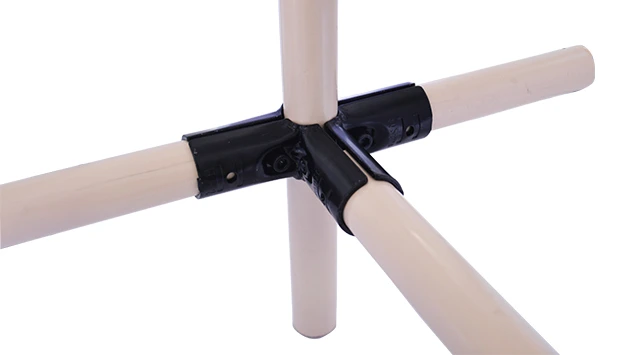
Four Way Straight Lean Pipe Joint
Four way lean pipe joint for 4 pcs 28MM lean pipe connection in straight angle, which used widely in workbench, flow rack, hand trolley frame connection.
The Hidden Backbone of Efficient Manufacturing: Understanding Lean Systems
Walk into any modern manufacturing facility, and you'll likely notice a rhythm—a seamless flow of materials, workers moving with purpose, and stations that seem to "click" together like pieces of a well-designed puzzle. This isn't just luck; it's the result of a lean system at work. Lean manufacturing, born from the Toyota Production System decades ago, is all about eliminating waste, streamlining processes, and creating value for customers. But here's the thing: behind every smooth lean operation is a network of unassuming components that hold it all together. Today, we're shining a spotlight on one such unsung hero: the four way straight lean pipe joint. This small but mighty piece is the glue that turns simple pipes into complex, flexible structures—think workbenches, material racks, and flow racks—that keep production lines humming. Let's dive into how this component goes from a concept on a drawing board to a critical part of turnkey lean solutions, and why it matters for manufacturers aiming to stay competitive in a fast-paced world.
First, let's clarify what a "lean system" really means. At its core, it's a philosophy that prioritizes efficiency by minimizing non-value-added activities—things like excess inventory, unnecessary movement, or waiting time. But to put this philosophy into action, you need tangible tools. Enter lean pipe systems: modular setups built from pipes, joints, and accessories that can be customized to fit any workspace. Unlike rigid, one-size-fits-all equipment, these systems are adaptable. Need to reconfigure a workbench for a new product? Swap out a few pipes. Expand a material rack to handle more inventory? Add an extra section. And at the heart of this adaptability lies the joints that connect the pipes. Among the many types of joints—three way, two way, 90° crossing—one stands out for its versatility: the four way straight lean pipe joint. As the name suggests, it connects four pipes in a straight line, allowing for the creation of multi-level structures or parallel tracks. But why does this matter? Because in manufacturing, space is precious, and the ability to build upwards or outwards without rebuilding from scratch can save both time and money.
Meet the Star: The Four Way Straight Lean Pipe Joint
Let's get up close with the four way straight lean pipe joint. Picture a small, cylindrical component with four openings—one at each end of a horizontal axis and two more along a vertical axis—all designed to snugly fit lean pipes. Its job? To hold pipes together securely while maintaining the flexibility to adjust or reconfigure the structure later. For example, in a typical workbench setup, a four way joint might connect the vertical legs to horizontal supports, while also adding a side rail for tools or a shelf for materials. In a flow rack, it could link multiple levels of roller tracks, ensuring materials glide smoothly from one station to the next. What makes this joint special is its balance of strength and simplicity. Unlike welded connections, which are permanent and hard to modify, the four way straight joint uses a clamping mechanism (often with bolts or set screws) to hold pipes in place. This means if your production needs change—say, you need to raise a workbench by six inches or add a new section to a material rack—you can loosen the joint, adjust the pipes, and tighten it back up. No welding, no cutting, no downtime.
But not all four way joints are created equal. The market offers variations, including the four way straight lean pipe joint chrome, which features a chrome plating for added corrosion resistance—a must in environments like food processing or pharmaceutical manufacturing where cleanliness is critical. There's also the standard four way straight lean pipe joint, often made from steel or aluminum, which balances durability and cost for general manufacturing use. The key is choosing the right material and finish based on the application. For instance, an automotive plant with high humidity might opt for chrome-plated joints to prevent rust, while a electronics assembly line might prefer aluminum joints for their lighter weight and compatibility with aluminum profile components.

From Idea to Design: Engineering the Perfect Joint
Every great product starts with a problem to solve. For lean system engineers, the problem was clear: how to create a joint that could connect multiple pipes in a straight line without sacrificing strength or flexibility. The solution? The four way straight lean pipe joint. But getting from concept to a functional design required careful engineering. Let's walk through the design process step by step.
Step 1: Defining Requirements
Before putting pen to paper (or cursor to CAD screen), engineers start by asking: What will this joint be used for? What loads does it need to support? What environmental conditions will it face? For example, a joint used in a heavy-duty material rack might need to support 500 pounds or more, while one in a lightweight assembly workbench might only need to handle 100 pounds. Environmental factors like temperature, moisture, and chemical exposure also play a role. A joint destined for a cold storage facility, for instance, must withstand freezing temperatures without becoming brittle, while one in a factory with oil or coolant spills needs a finish that resists degradation.
Step 2: Material Selection
Once the requirements are clear, the next step is choosing the right material. Steel is strong and affordable, making it a popular choice for general use. But steel is heavy, and in applications where weight matters—like mobile trolleys—aluminum might be better. Aluminum is lighter, resistant to corrosion, and pairs well with aluminum profile components, which are increasingly popular in lean systems for their sleek look and modularity. For the four way straight lean pipe joint chrome, the base material is often steel, which is then electroplated with chrome to add a protective layer. This not only prevents rust but also gives the joint a smooth, easy-to-clean surface—ideal for industries with strict hygiene standards.
Step 3: CAD Modeling and Prototyping
With materials selected, engineers turn to computer-aided design (CAD) software to create 3D models of the joint. This allows them to test different designs virtually, checking for stress points, fit with standard lean pipes, and ease of assembly. For example, they might tweak the angle of the openings to ensure pipes insert smoothly, or adjust the thickness of the joint walls to balance strength and weight. Once the digital design is finalized, it's time to build a prototype. Using 3D printing or CNC machining, engineers create a physical version of the joint to test in real-world conditions. Does it clamp onto pipes securely? Can it withstand repeated adjustments without wearing out? Does it fit with common accessories like caster wheels or roller tracks? These tests are crucial—they reveal flaws the digital model might have missed, like a clamping mechanism that's too hard to tighten or a joint that flexes under load.
Step 4: Iteration and Improvement
Prototyping almost always leads to improvements. Maybe the initial design uses a single set screw to clamp the pipe, but testing shows it slips under heavy loads. The solution? Adding a second set screw for extra security. Or perhaps the chrome plating chips easily during assembly; engineers might then adjust the plating process, using a thicker layer or a different pretreatment to improve adhesion. This cycle of design-test-iterate continues until the joint meets all requirements: strength, flexibility, durability, and ease of use. Only then is it ready for mass production.

Manufacturing the Joint: From Raw Materials to Finished Product
Once the design is locked in, the next phase is manufacturing. Let's take a behind-the-scenes look at how a four way straight lean pipe joint goes from raw materials to a finished component ready for use in lean systems.
Raw Material Preparation
The process starts with selecting high-quality raw materials. For steel joints, this might mean cold-rolled steel sheets or bars, which offer better strength and surface finish than hot-rolled steel. For aluminum joints, engineers might choose aluminum profile cutoffs or extruded aluminum billets, which are lightweight and easy to machine. The raw materials are inspected for defects—like cracks or uneven thickness—before moving to the next step.
Machining: Shaping the Joint
Next, the raw materials are shaped into the joint's form. This typically involves CNC (Computer Numerical Control) machining, where automated tools cut, drill, and mill the material to precise specifications. For example, a steel bar might be placed in a CNC lathe to create the cylindrical body of the joint, then moved to a CNC mill to drill the four pipe openings. The openings are sized to match standard lean pipe diameters—often 28mm or 30mm—with a slight tolerance to ensure pipes fit snugly. Machining also creates threads for set screws or bolts, which are critical for clamping the pipes in place. Throughout this process, quality control technicians measure dimensions with calipers and gauges to ensure each joint meets the design's tight tolerances (often within 0.1mm).
Surface Treatment: Chrome Plating and More
After machining, the joints undergo surface treatment. For the four way straight lean pipe joint chrome, this involves electroplating—a process where a thin layer of chromium is deposited onto the steel surface. First, the joint is cleaned to remove oil, dirt, and machining residues. Then, it's dipped in an electrolytic bath containing chromium ions. When an electric current is applied, the ions bond to the steel, forming a hard, shiny layer. Chrome plating not only improves corrosion resistance but also makes the joint easier to clean and more durable against wear and tear. For non-chrome joints, surface treatments might include powder coating (for color and protection) or anodizing (for aluminum joints, which adds a protective oxide layer).
Assembly and Quality Control
Finally, the joints are assembled with any additional components, like set screws or washers. Each joint is then tested to ensure it can withstand the specified load—for example, a 500-pound vertical load or a 200-pound horizontal shear force. Joints that pass testing are packaged and sent to lean pipe suppliers, who integrate them into turnkey solutions or sell them as standalone components. Those that fail are either reworked or scrapped, ensuring only high-quality joints reach customers.
Turnkey Lean Solutions: How the Four Way Joint Fits into the Big Picture
A single four way straight lean pipe joint is useful, but its true power shines when it's part of a turnkey lean solution. Turnkey solutions are complete, ready-to-use systems designed and built by lean pipe suppliers to meet a manufacturer's specific needs. Instead of buying individual components and assembling them in-house, manufacturers can partner with a supplier to get a fully customized setup—think workbenches, flow racks, conveyors, and material trolleys—delivered and installed. And the four way joint is often the unsung hero that makes these solutions possible.
Let's take a real-world example: a consumer electronics manufacturer that needed to streamline its smartphone assembly line. The old setup used fixed wooden workbenches and static shelving, which made it hard to adjust for new phone models. The lean pipe supplier proposed a turnkey solution centered around aluminum profile workbenches and flow racks, all connected with four way straight lean pipe joints. Here's how it worked:
- Workbenches: Each workbench featured a frame built with aluminum pipes and four way joints, allowing for adjustable height and width. The top was a (ESD) surface to protect sensitive electronics, and side rails (connected via four way joints) held tools and small parts bins.
- Flow Racks: Above the workbenches, flow racks with roller tracks (supported by four way joints) delivered components—screens, batteries, circuit boards—directly to workers, eliminating the need to walk to a storage area.
- Mobile Trolleys: Trolleys with four way joint frames transported finished phones to the testing station, with adjustable shelves to accommodate different box sizes.
The result? The manufacturer reduced assembly time by 25%, cut down on worker movement by 40%, and could reconfigure the line for new phone models in hours instead of days. And at the center of it all was the four way straight lean pipe joint, holding the system together while keeping it flexible.
Comparing Lean Pipe Joints: When to Choose Four Way Straight
| Joint Type | Design | Primary Use Case | Max Load Capacity (Vertical) | Material Options |
|---|---|---|---|---|
| Four Way Straight | Four openings in straight axes (two horizontal, two vertical) | Multi-level structures, parallel tracks, workbench frames | Up to 800 lbs | Steel (chrome-plated), aluminum |
| Three Way | Three openings (e.g., two horizontal, one vertical) | Corner connections, simple shelves | Up to 600 lbs | Steel, aluminum, plastic |
| Two Way | Two openings (straight line) | Extending pipes, linear structures | Up to 500 lbs | Steel, aluminum |
| 90° Crossing | Two perpendicular openings (cross shape) | Overhead racks, crossing tracks | Up to 700 lbs | Steel (chrome-plated) |
Choosing the Right Lean Pipe Supplier: What to Look For
A high-quality four way straight lean pipe joint is only as good as the supplier who makes it. When selecting a lean pipe supplier for your turnkey solution, there are a few key factors to consider:
1. Customization Capabilities
Every manufacturing facility is unique, so your supplier should offer customized solutions. Can they design a workbench with specific dimensions? Modify a flow rack to fit your space constraints? A good supplier will work with you to understand your needs and create a system tailored to your operation, not just sell you off-the-shelf components.
2. Quality Certifications
Look for suppliers with quality certifications like ISO 9001, which ensures they follow strict quality management standards. This is especially important for critical components like the four way straight lean pipe joint, where a failure could disrupt production or even cause safety issues.
3. Material Expertise
The best suppliers understand the nuances of materials like steel, aluminum, and chrome plating. They can advise you on whether a four way straight lean pipe joint chrome is better for your environment than a standard steel joint, or if aluminum profile components would save weight without sacrificing strength.
4. After-Sales Support
Even the best systems need adjustments. A reliable supplier offers after-sales support, including help with reconfiguration, replacement parts, and troubleshooting. For example, if you need to add a new section to your flow rack six months after installation, they should be able to provide the right joints and pipes quickly.
Future Trends: Where Lean Pipe Systems Are Headed
As manufacturing evolves, so do lean pipe systems. Here are a few trends shaping the future of components like the four way straight lean pipe joint:
Lightweight Materials
Aluminum is becoming increasingly popular, thanks to its lightweight and corrosion-resistant properties. We're seeing more four way joints made from high-strength aluminum alloys, which offer the same load capacity as steel but with 30% less weight—ideal for mobile systems like trolleys or temporary workstations.
Smart Joints
Imagine a four way joint with built-in sensors that monitor load, temperature, or vibration. If a joint is overloaded, it could send an alert to maintenance staff, preventing failure. While still in the prototype stage, smart joints could revolutionize predictive maintenance in lean systems.
Sustainability
Manufacturers are increasingly focused on sustainability, and lean pipe suppliers are following suit. Look for joints made from recycled materials or designed for easy disassembly and recycling at the end of their life. Chrome plating, while durable, is being replaced in some applications with eco-friendly alternatives like zinc-nickel plating, which is less toxic.
Conclusion: The Small Joint That Drives Big Efficiency
From concept to production, the four way straight lean pipe joint may seem like a small component, but its impact on lean systems is huge. It's the reason manufacturers can build flexible, durable workbenches, flow racks, and material handling systems that adapt to changing needs. It's the key to reducing waste, streamlining processes, and staying competitive in a world where efficiency is everything. And when paired with a trusted lean pipe supplier who understands your needs, it becomes part of a turnkey solution that transforms your facility from a collection of disconnected tools into a well-oiled, efficient machine.
So the next time you walk through a manufacturing plant and admire the smooth flow of production, take a moment to look down at the structures holding it all together. Chances are, you'll spot a four way straight lean pipe joint—quietly doing its job, proving that sometimes the smallest parts make the biggest difference.