- Company Articles
- Products and Technology
- Product knowledge
- From Design to Assembly: Complete Workflow with T-Groove Aluminum Pipe Systems

From Design to Assembly: Complete Workflow with T-Groove Aluminum Pipe Systems
Related Product
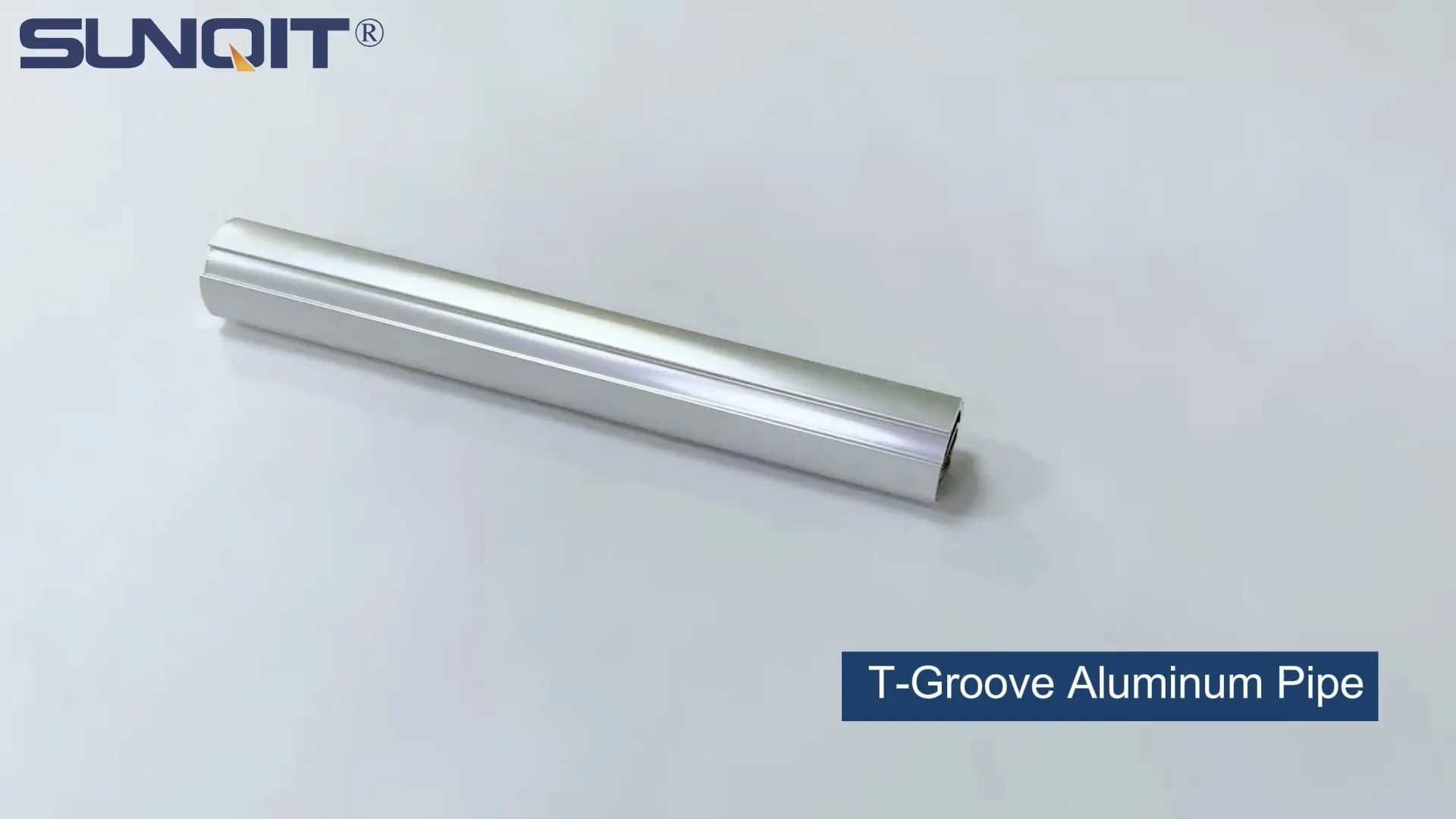
T-Groove Aluminum Pipe
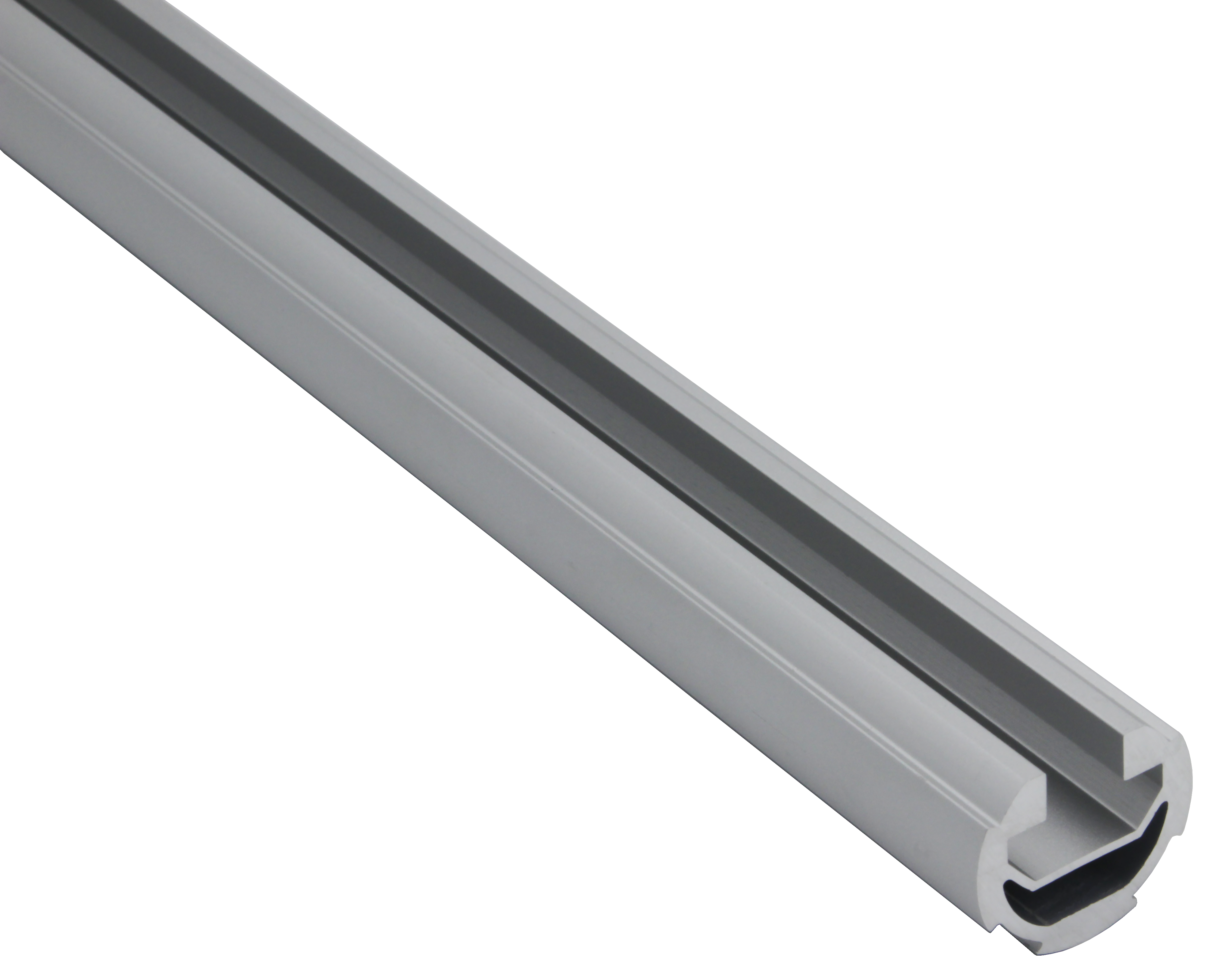
The aluminum pipe opening 10mm is installed into the T-shaped slider, which can be installed with casters or other matching functional parts. The groove can be used for positioning and is used for the track of the roller.
Introduction: The Backbone of Modern Modular Manufacturing
In today's fast-paced industrial landscape, where production lines evolve overnight and workspace needs shift with new projects, flexibility isn't just a luxury—it's a necessity. Enter T-Groove Aluminum Pipe Systems: the unsung heroes of modular design that have revolutionized how factories, workshops, and warehouses approach everything from workbench construction to material handling. Unlike rigid, one-size-fits-all solutions of the past, these systems thrive on adaptability, allowing teams to build, modify, and repurpose structures with minimal effort and maximum efficiency.
At their core, T-Groove Aluminum Pipe Systems are built around aluminum extrusion profiles —precision-engineered lengths of aluminum with continuous T-shaped slots running along their length. These slots act as built-in channels for attaching accessories, making it possible to connect profiles, mount components, and adjust configurations without welding, drilling, or specialized tools. Whether you're assembling a lightweight workbench for electronics assembly, a robust material rack for heavy parts, or a smooth roller track for seamless product flow, these systems deliver the versatility modern operations demand.
But what truly sets T-Groove systems apart is their workflow—from the initial design sketch to the final assembly. It's a process that marries engineering precision with hands-on practicality, ensuring that every structure isn't just functional, but optimized for the people who use it. In this article, we'll walk through that workflow step by step, exploring how T-slot aluminum pipe and its accompanying aluminum profile accessories transform ideas into tangible, high-performance solutions.
Phase 1: Design – Where Ideas Meet Engineering Reality
The journey of any T-Groove Aluminum Pipe System begins long before a single profile is cut or a connector is tightened: it starts in the design phase. This is where abstract needs—"We need a workstation that can hold 50kg of tools" or "Our assembly line needs a 3m-long material feeder"—transform into detailed, actionable plans. The goal here isn't just to create a structure that "works," but one that's efficient, safe, and adaptable to future changes.
### Collaborating Across Teams
Designing a T-Groove system is rarely a one-person job. It requires input from production managers who understand workflow bottlenecks, ergonomists who ensure operator comfort, and engineers who calculate load capacities and structural integrity. For example, a logistics team might request a roller track to move packages between stations, but the design must account for the weight of the packages (say, 20kg each), the speed of movement, and the available floor space. By involving all stakeholders early, the design avoids costly revisions later.
### Leveraging CAD Tools for Precision
Modern design relies heavily on computer-aided design (CAD) software, which allows teams to model the entire system in 3D before any materials are ordered. Tools like AutoCAD, SolidWorks, or even free platforms like SketchUp let designers test different configurations: What if we use 4040 profiles instead of 3030 for the workbench legs? Will adding a second shelf to the material rack affect its stability? CAD also helps simulate stress points—critical for ensuring the structure can handle its intended load. For instance, a workbench used for heavy machinery assembly might require thicker profiles (like 4080 aluminum extrusion) to prevent bending, while a lightweight cart for office supplies could use smaller 2020 profiles to save weight.
### Key Design Considerations
Several factors shape the design process:
- Load Capacity: Every component, from the aluminum profiles to the connectors, must support the intended weight. A roller track designed for small electronic components (5kg max) will use different materials than one for automotive parts (50kg+).
- Space Constraints: Factories and warehouses are often tight on space, so designs must maximize vertical storage or fit into odd corners. Modular T-Groove systems excel here—for example, a foldable workbench can be tucked away when not in use, or a material rack can be built to hug a wall.
- Ergonomics: A workbench that's too low forces operators to hunch; one that's too high causes shoulder strain. CAD tools help model operator reach zones, ensuring that tools, materials, and controls are within easy arm's reach (typically 50-70cm from the operator's body).
- Future Adaptability: The best designs anticipate change. Maybe next quarter, the production line will expand, or the team will need to add a new tool to the workbench. T-Groove systems make this easy by using standardized components—adding a shelf or extending a roller track often requires just a few extra profiles and connectors.
### Comparing Aluminum Profiles: A Quick Reference
Not all aluminum extrusion profiles are created equal. Choosing the right one depends on the application. The table below compares common profiles used in T-Groove systems:
| Profile Type | Dimensions (mm) | Max Load Capacity (kg/m) | Typical Applications | Key Advantage |
|---|---|---|---|---|
| 2020 | 20x20 | 30-50 | Light carts, small shelves, display racks | Lightweight, ideal for low-load, space-saving setups |
| 3030 | 30x30 | 80-120 | Workbenches, tool holders, medium-duty racks | Balances strength and weight; versatile for most workshop needs |
| 4040 | 40x40 | 150-200 | Heavy-duty workbenches, material racks, conveyor frames | High load capacity; commonly used in industrial settings |
| 4080 | 40x80 | 250-300 | Machine bases, large storage racks, industrial conveyors | Extra strength for extreme loads; wide surface for mounting equipment |
By the end of the design phase, the team should have a bill of materials (BOM) listing every component: lengths of T-slot aluminum pipe , types of connectors (like 90° angle brackets or swivel joints), and accessories (end caps, T-slot nuts, and bolts). This BOM becomes the roadmap for the next phase: material selection.
Phase 2: Material Selection – Choosing the Right Building Blocks
With the design finalized, it's time to select the materials that will bring the project to life. For T-Groove Aluminum Pipe Systems, this means choosing the right aluminum extrusion profiles, accessories, and complementary components. The choices here directly impact the system's strength, durability, and cost—so it's critical to pick wisely.
### The Star: T-Slot Aluminum Pipe
At the heart of every T-Groove system is the T-slot aluminum pipe (also called aluminum extrusion profile). Aluminum is the material of choice for several reasons: it's lightweight (about 1/3 the weight of steel), corrosion-resistant (thanks to its natural oxide layer), and infinitely recyclable. Unlike steel, it doesn't rust, making it suitable for humid environments like food processing plants or outdoor warehouses. It's also easy to machine—profiles can be cut to length with standard saws, and their surfaces can be anodized, painted, or left natural for a clean, modern look.
But what truly makes T-slot aluminum pipe unique is its T-shaped groove. Running along one or more sides of the profile, this groove allows accessories to be attached anywhere along the length, not just at pre-drilled holes. This modularity is why a single length of pipe can be reused in multiple projects: today, it's part of a workbench; tomorrow, it's a shelf on a material rack. The groove width varies by profile size—for example, 2020 profiles typically have a 6mm groove, while 4040 profiles have an 8mm groove—so it's important to match accessories (like T-slot nuts) to the groove size.
### Aluminum Profile Accessories: The Glue That Holds It All Together
A T-slot aluminum pipe is only as useful as the aluminum profile accessories that connect it. These small but mighty components turn individual profiles into functional systems. Here are some must-know accessories:
#### Connectors
Connectors are the "joints" of the T-Groove system. They come in dozens of shapes to fit every angle and purpose:
- 90° Angle Brackets: For joining two profiles at a right angle (e.g., workbench legs to the tabletop frame).
- Swivel Joints: Allow rotation between profiles, perfect for adjustable components like tiltable workbench shelves.
- Straight Connectors: Join two profiles end-to-end to create longer lengths (e.g., extending a roller track from 2m to 5m).
- Flange Connectors: Mount profiles to walls or floors for added stability (critical for tall material racks).
Most connectors are made from aluminum or steel (for heavier loads) and are secured using hex bolts and T-slot nuts. Some even feature plastic or rubber gaskets to reduce vibration—a nice touch for sensitive equipment like electronics assembly workbenches.
#### End Caps and Covers
Aluminum extrusion profiles have open ends, which can be sharp or collect dust. End caps—plastic or aluminum covers that snap or screw into the profile ends—solve both issues. They also give the system a polished, professional look. For T-slots that aren't in use, T-slot rubber seal covers can be inserted to prevent debris from clogging the groove, ensuring accessories can still be added later.
#### Fasteners: T-Slot Nuts and Bolts
To attach accessories to the T-slot, you'll need T-slot nuts (also called "slider nuts") and bolts. T-slot nuts fit into the groove and slide along it, allowing accessories to be positioned anywhere. Once in place, tightening the bolt pulls the nut against the groove, locking it securely. Most systems use metric bolts (M5, M6, or M8) depending on the profile size—larger profiles require thicker bolts for added strength.
### Complementary Components: Adding Functionality
Beyond profiles and accessories, T-Groove systems often integrate other components to add specific functions:
- Roller Tracks: As mentioned earlier, roller track systems use small wheels or balls to let materials glide smoothly. They're often mounted to aluminum profiles to create gravity-fed conveyors or workbench feeders. For example, a electronics manufacturer might use a roller track to move PCBs from one assembly station to the next, reducing manual lifting.
- Casters: Adding wheels to a T-Groove frame turns it into a mobile cart. Casters come in fixed or swivel designs, with locking brakes for stability when in use. Heavy-duty casters (rated for 100kg+) are ideal for material carts, while lightweight casters work for tool trolleys.
- Panels and Shelves: Plywood, acrylic, or aluminum panels can be mounted to the frame to create workbench tops, cabinet doors, or tool storage. Some panels are even perforated for hanging tools with hooks.
### Sourcing Materials: Choosing a Reliable Supplier
Not all aluminum profiles are created equal. To ensure quality, it's best to source from reputable suppliers who specialize in T-slot systems. Look for suppliers who offer:
- Consistent Quality: Profiles should have smooth, uniform grooves and straight edges to ensure accessories fit properly.
- Custom Cutting: Many suppliers will cut profiles to your exact length, saving time on-site.
- Technical Support: A good supplier can help you select the right profiles and accessories for your project, especially if you're new to T-Groove systems.
With materials sourced and delivered, the next step is the most hands-on part of the workflow: assembly.

Phase 3: Assembly – Building the System, One Connection at a Time
Assembly is where the design and materials finally come together—and where the modularity of T-Groove systems truly shines. Unlike traditional construction, which often requires welding, drilling, or specialized tools, T-Groove assembly is accessible to anyone with basic hand tools. In fact, many teams can assemble a simple workbench in under an hour with no prior experience.
### Pre-Assembly Prep: Getting Ready to Build
Before diving in, it's important to prepare the workspace and materials:
- Clear the Area: Set up a clean, flat surface (like a large table or the factory floor) to lay out components. This prevents small parts (like T-slot nuts) from getting lost.
- Sort Materials: Lay out profiles, accessories, and fasteners according to the BOM. Labeling components (e.g., "Workbench Legs – 4040 x 800mm") can save time.
- Tools Needed: Basic tools include a tape measure, pencil, hacksaw or miter saw (for cutting profiles to length), deburring tool (to smooth sharp edges), hex keys (to tighten bolts), and a level (to ensure frames are straight).
### Step-by-Step Assembly: From Frames to Finished Product
While every project is unique, most T-Groove assemblies follow these general steps:
#### 1. Cutting and Deburring Profiles
If profiles aren't pre-cut by the supplier, use a hacksaw or miter saw to cut them to the lengths specified in the design. For clean cuts, mark the length with a pencil and use a guide (like a speed square) to ensure straight lines. After cutting, use a deburring tool to remove sharp edges—this prevents cuts during handling and ensures accessories fit smoothly.
#### 2. Building the Frame
Start with the main structural frame. For a workbench, this might involve connecting four vertical legs (4040 profiles) to horizontal rails (also 4040 profiles) using 90° angle brackets. Here's how:
- Slide T-slot nuts into the grooves of the horizontal rails, positioning them where the brackets will attach.
- Align the vertical legs with the horizontal rails, placing the angle brackets over the nuts.
- insert bolts through the brackets and into the T-slot nuts, then tighten with a hex key until snug (don't overtighten—this can strip the threads).
- Use a level to check that the frame is square and vertical. Adjust as needed by loosening the bolts, realigning, and retightening.
#### 3. Adding Accessories and Components
With the frame built, add accessories like shelves, roller tracks, or panels. For example, to install a roller track on a workbench:
- Mount L-shaped brackets to the workbench frame using T-slot nuts and bolts.
- Attach the roller track to the brackets, ensuring it's level (a slight downward slope helps materials glide by gravity).
- Test the track by sliding a sample material (like a box or PCB) along it—adjust the slope if movement is too slow or too fast.
#### 4. Final Checks
Once all components are installed, give the system a thorough inspection: Are all bolts tight? Does the structure wobble when pushed? Do moving parts (like roller tracks or casters) operate smoothly? Make any necessary adjustments, then clean up the workspace—you're ready to put the system to use.

Phase 4: Real-World Applications – Bringing T-Groove Systems to Life
To truly appreciate the power of T-Groove Aluminum Pipe Systems, it helps to see them in action. From small workshops to large factories, these systems solve a wide range of challenges. Here are a few real-world examples:
### Electronics Assembly Workbench
A contract manufacturer specializing in smartphone repair needed a flexible workspace for technicians. Using 3030 aluminum extrusion profiles, they built workbenches with adjustable shelves (to hold tools and spare parts), integrated LED lighting (mounted via T-slot brackets), and a small roller track to feed phones from the intake area to the repair station. The workbenches were also mounted on casters, allowing the team to reconfigure the layout when taking on large orders. When a new client required additional testing equipment, the team simply added a new shelf to the workbench—no welding or new materials needed.
### Warehouse Material Rack
A logistics company needed a way to store and organize small parts (screws, washers, etc.) in their warehouse. They designed a 2m-tall material rack using 4040 profiles and adjustable shelves. Each shelf was lined with dividers (made from 2020 profiles) to create bins, and the rack was mounted on casters for easy movement. When the company expanded its product line, they added more shelves and dividers—costing a fraction of what a new steel rack would have cost.
### Automotive Parts Conveyor
An auto parts supplier needed a way to move engine components from the machining department to assembly. They installed a 10m-long roller track system using 4080 aluminum profiles, with a slight slope to use gravity. The track was divided into zones with stop-and-go sensors, ensuring parts didn't pile up at the assembly station. When the company introduced a new, heavier component, they simply replaced the lightweight roller track with a heavy-duty version (using steel wheels instead of plastic)—the aluminum frame itself didn't need modification.
Conclusion: The Future of Modular Manufacturing
From the initial design sketch to the final bolt tightened, the workflow of T-Groove Aluminum Pipe Systems is a masterclass in efficiency and adaptability. By combining collaborative design, smart material selection, and simple assembly, these systems empower teams to build structures that grow with their needs—without the cost or hassle of traditional construction.
The key to their success lies in their modularity. T-slot aluminum pipe , aluminum extrusion profiles , and aluminum profile accessories work together to create systems that are as flexible as they are strong. Whether you're building a workbench , a roller track , or a custom material rack, the workflow remains the same: design with purpose, choose materials wisely, assemble with care, and adapt as needed.
As manufacturing continues to evolve—with trends like automation, small-batch production, and sustainability taking center stage—T-Groove Aluminum Pipe Systems will only grow in importance. They're not just tools for building structures; they're tools for building resilient, future-ready operations. So the next time you walk through a factory or workshop, take a closer look at the workbenches, racks, and conveyors around you. Chances are, they're built with T-Groove systems—and for good reason: they're the backbone of modern modular manufacturing.