- Company Articles
- Products and Technology
- Solution
- From Design to Deployment: End Support for Roller Track Placon Mount with Stop in Lean Projects

From Design to Deployment: End Support for Roller Track Placon Mount with Stop in Lean Projects
Related Product
End Support for Roller Track Placon Mount with Stop
Roller track placon mount work as a connector for roller track and pipe or aluminum profile in rack syetem, it is a necessary parts in rack system which widely used in industrial plant and logistic,warehouse storage.
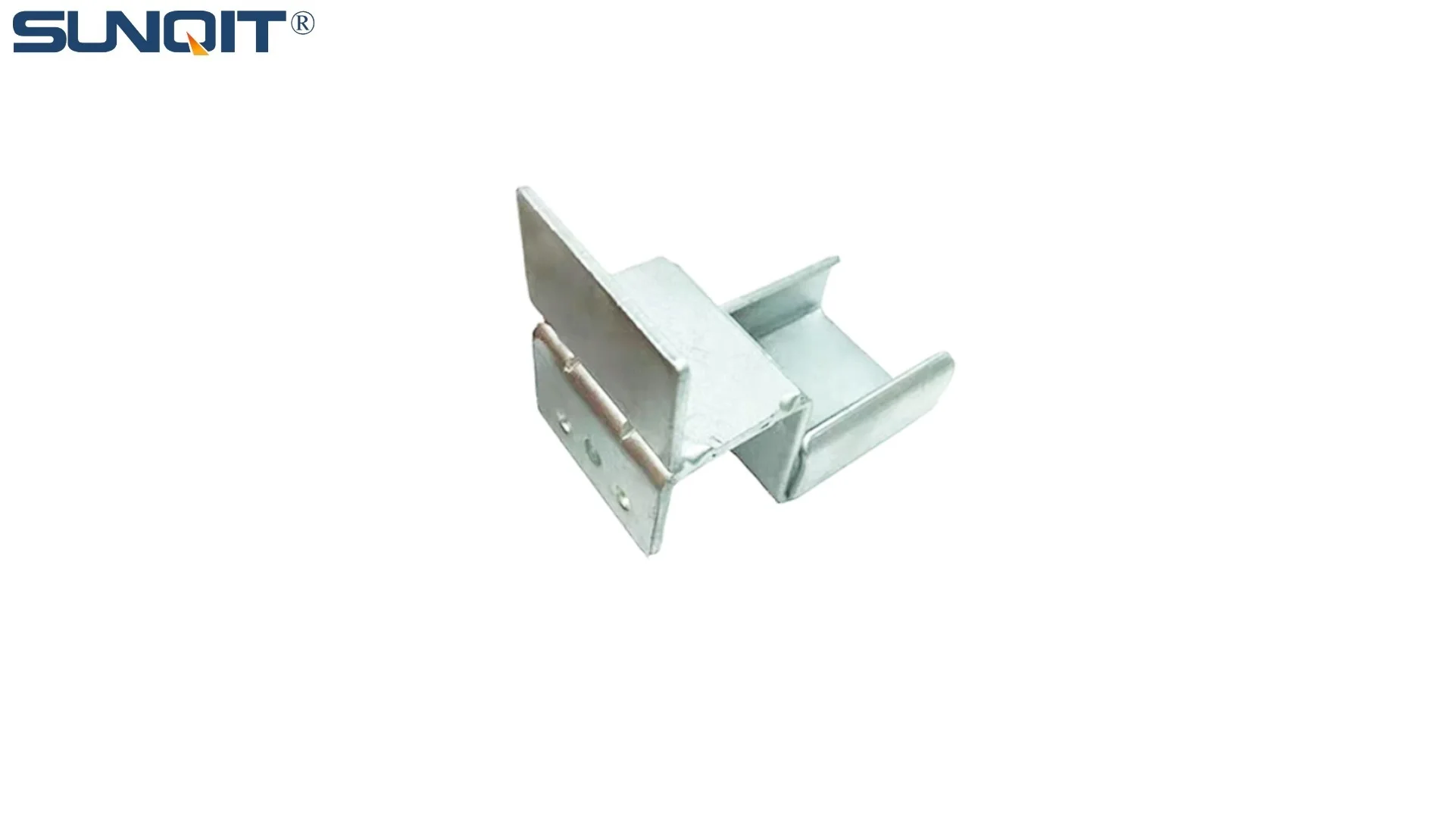
The Unsung Hero of Smooth Material Flow in Modern Manufacturing
In the world of lean manufacturing, where every second counts and efficiency is the ultimate goal, it's often the smallest components that make the biggest difference. While large-scale systems like flexible production lines or automated conveyors grab the spotlight, the success of these systems hinges on the precision and reliability of their individual parts. Today, we're shining a light on one such unsung hero: the End Support for Roller Track Placon Mount with Stop . This seemingly modest component plays a critical role in ensuring seamless material flow, preventing disruptions, and upholding the core principles of lean project—eliminating waste, optimizing processes, and driving continuous improvement.
Whether you're managing a high-speed 3C assembly line, a medical device production facility, or a busy warehouse logistics center, the way materials move through your workspace directly impacts productivity. Roller tracks, a staple in lean systems, are designed to let goods glide smoothly from one workstation to the next, reducing manual handling and cutting down on idle time. But without proper end support, even the best roller track setup can falter—materials might slip off track, alignment could go off-kilter, or the entire system might wear down prematurely. That's where the End Support for Roller Track Placon Mount with Stop steps in: it's the steady hand that keeps everything in place, the silent guardian of uninterrupted workflow.
In this article, we'll take you on a journey from the drawing board to the factory floor, exploring how this critical component is designed, manufactured, and deployed in real-world lean projects. We'll dive into the engineering considerations that go into its creation, the challenges it solves, and the tangible benefits it brings to industries ranging from consumer electronics to healthcare. Along the way, we'll also see how it collaborates with other key components like flow racks, conveyors, and aluminum profiles to form a cohesive, high-performance lean system. Because in lean manufacturing, every part matters—and the End Support for Roller Track Placon Mount with Stop is proof that great efficiency starts with great details.
The Design Philosophy: Balancing Functionality and Flexibility
Designing a component like the End Support for Roller Track Placon Mount with Stop isn't just about creating something that "works"—it's about creating something that works in harmony with the entire lean ecosystem. Engineers at Sunqit approach this process with a clear mantra: "Form follows function, but flexibility follows need." Let's break down the key design principles that shape this essential part.
First and foremost is material selection. In lean projects, durability and sustainability are non-negotiable. That's why the End Support is typically crafted from high-grade aluminum alloy—chosen for its unbeatable combination of strength, lightweight properties, and resistance to corrosion. Unlike heavier materials like solid steel, aluminum reduces the overall load on the roller track system, making installation easier and reducing wear on connected components. For environments with specific requirements, such as cleanrooms in the medical industry or ESD-sensitive areas in electronics manufacturing, variants with stainless steel reinforcements or ESD-safe coatings are also available, ensuring compatibility with specialized workbenches and workstations.
Why Aluminum? The Material Advantage:
- Weight Efficiency: 30% lighter than steel, reducing strain on roller tracks and simplifying manual adjustments.
- Corrosion Resistance: Naturally forms a protective oxide layer, ideal for humid production environments or cold storage logistics.
- Recyclability: Aligns with lean's "sustainable improvement" ethos, as aluminum is 100% recyclable without loss of quality.
- Machinability: Allows for precise threading and mounting holes, ensuring a snug fit with placon mounts and roller track connectors.
- Weight Efficiency: 30% lighter than steel, reducing strain on roller tracks and simplifying manual adjustments.
- Corrosion Resistance: Naturally forms a protective oxide layer, ideal for humid production environments or cold storage logistics.
- Recyclability: Aligns with lean's "sustainable improvement" ethos, as aluminum is 100% recyclable without loss of quality.
- Machinability: Allows for precise threading and mounting holes, ensuring a snug fit with placon mounts and roller track connectors.
Next comes compatibility—a make-or-break factor in lean systems, where modularity is key. The End Support is engineered to integrate seamlessly with a wide range of roller track components, from the placon mounts (like the roller track placon mount for aluminum profile flat or high) to the connectors and guide rails. This means it can be paired with different roller track types: whether you're using a 40 steel roller track with yellow wheels for heavy-duty applications or a mini aluminum roller track for lightweight electronics, the End Support adapts without requiring custom modifications. This level of compatibility is a game-changer for manufacturers who often need to reconfigure their workflows—a core tenet of lean solution implementation.
Load capacity is another critical design consideration. The End Support isn't just holding up the end of a roller track; it's absorbing the impact of materials sliding into place, supporting the weight of stacked goods, and maintaining stability even during rapid material flow. Engineers calculate load requirements based on industry standards and real-world use cases: a medical device assembly line might handle small, delicate parts weighing 5-10 kg per unit, while an automotive parts warehouse could see loads upwards of 50 kg. The End Support's design—from the thickness of its mounting plate to the reinforcement ribs on its structure—is tailored to these varying demands, ensuring it never becomes the weak link in the chain.
Last but far from least is the "stop" feature itself. This small yet vital detail prevents materials from sliding off the end of the roller track, eliminating the risk of damage, loss, or workplace accidents. The stop is positioned at a precise height and angle to gently halt items without causing jams or bouncing, ensuring a smooth transition from roller track to workstation. For applications where materials need to be redirected (e.g., merging onto a conveyor), the stop can be paired with swivel roller balls or angled guide rails, turning a potential bottleneck into a fluid handoff point.
Manufacturing & Quality Control: Building for Reliability
Great design is only the first step—turning that design into a reliable, consistent product requires rigorous manufacturing processes and uncompromising quality control. At Sunqit, the production of the End Support for Roller Track Placon Mount with Stop is a masterclass in precision engineering, where every step is optimized to meet the demands of lean projects.
The journey begins with raw material inspection. Aluminum alloys are tested for composition and strength to ensure they meet the specified standards (typically 6063-T5 for structural components, known for its excellent formability and weldability). This step is non-negotiable: using subpar material here would undermine the component's durability, leading to premature failure and costly downtime in the field. Once approved, the aluminum is cut into blanks using CNC saws, ensuring uniform length and clean edges—critical for consistent mounting later in the process.
Next, the blanks undergo precision machining. Using multi-axis CNC mills, the mounting holes, threads, and stop plates are carved with tolerances as tight as ±0.1mm. This level of precision ensures that when the End Support is bolted to a placon mount (like the roller track placon mount center support bracket), there's no play or wobble that could throw the roller track out of alignment. For the stop feature, the angle of the stop plate is machined to 90 degrees (or a custom angle for specialized applications) to ensure it makes full contact with materials, preventing slippage even under high-speed flow.
| Manufacturing Step | Process Details | Quality Checkpoints |
|---|---|---|
| Raw Material Inspection | Aluminum alloy composition testing, hardness verification | Material certification review, ultrasonic flaw detection |
| CNC Machining | Multi-axis milling for holes, threads, and stop plate | Coordinate measuring machine (CMM) for dimensional accuracy |
| Surface Treatment | Anodizing (clear or colored) for corrosion resistance | Adhesion test, thickness measurement (8-12μm typical) |
| Assembly (if applicable) | Attaching rubber stop pads or ESD gaskets | Pull-out force testing for bonded components |
| Final Load Testing | Static load test (1.5x rated capacity for 24 hours) | Deflection measurement, structural integrity check |
Surface treatment is the next step, and it's more than just aesthetics. Most End Supports undergo anodizing—a process that creates a protective oxide layer on the aluminum surface, enhancing corrosion resistance and wear resistance. For ESD-sensitive environments (such as those using ESD workbenches or ESD workstations), the anodizing process can be modified to include conductive additives, ensuring the component dissipates static charges safely. Some variants also receive a powder coating in colors like yellow or grey, matching plastic roller track guide rails and creating a cohesive look in the production line.
Once manufactured, each End Support undergoes a battery of tests. Static load testing is standard: components are subjected to 1.5 times their rated load for 24 hours to check for deformation. For dynamic applications (like roller tracks paired with conveyors), impact testing simulates the force of materials sliding into the stop at full speed, ensuring the structure holds up without cracking. Thread integrity is verified using torque testing, where bolts are tightened to specification and checked for stripping. Only components that pass all these tests make it to the packaging stage, where they're grouped with compatible placon mounts and connectors for easy ordering—whether as part of a custom lean solution or a bulk lean pipe wholesale order.

Real-World Deployment: Case Studies in Lean Excellence
Theory and design are important, but the true measure of a component's value lies in how it performs on the factory floor. Let's explore two case studies where the End Support for Roller Track Placon Mount with Stop transformed material flow, solved critical challenges, and became an integral part of successful lean projects.
Case Study 1: 3C Assembly Line Upgrade for a Leading Electronics Manufacturer
A major consumer electronics company specializing in smartphone assembly was facing a recurring issue: in their final testing station, components frequently slid off the end of their roller track system, causing delays and occasional damage to delicate circuit boards. Their existing setup used generic end caps that offered minimal stopping power, and with production targets ramping up to 500 units per hour, the problem was only getting worse.
The company turned to Sunqit for a lean solution. After analyzing their workflow, the team recommended integrating the End Support for Roller Track Placon Mount with Stop into their existing 38 aluminum roller track black ESD system (paired with ESD workbench setups to maintain static control). The key challenges here were: (1) ensuring compatibility with their current placon mounts (roller track placon mount for aluminum profile flat), (2) maintaining ESD safety, and (3) handling the lightweight but high-volume flow of components (each circuit board assembly weighed ~0.8 kg, but moved at speeds of 0.5 m/s).
The results were striking. Within two weeks of deployment, the number of off-track incidents dropped from 12 per shift to zero. The precision-machined stop plate gently halted each assembly, while the anodized aluminum construction maintained ESD compliance. Perhaps most importantly, the modular design allowed the manufacturer to retrofit the End Supports without replacing their entire roller track system—a cost-saving move that aligned with lean's waste-reduction principles. "We were worried we'd have to shut down the line for a full upgrade," noted the plant manager. "Instead, we installed the End Supports during a weekend maintenance window, and production has been smoother than ever since."
Case Study 2: Warehouse Logistics Optimization for Medical Device Distribution
A medical device distributor was struggling with inefficiencies in their picking and packing area. Their flow rack system, used to store and dispense sterile kits (syringes, bandages, etc.), suffered from inconsistent material flow: heavier kits would slide too quickly and crash into the end of the rack, while lighter ones sometimes got stuck. This not only slowed down order fulfillment but also risked damaging sterile packaging—a critical concern in the healthcare industry.
Sunqit's solution centered on upgrading their flow racks with 85 staggered roller tracks and pairing them with End Supports for Roller Track Placon Mount with Stop. The End Supports were customized with rubberized stop pads to cushion the impact of heavier kits, while the angle of the stop plate was adjusted to 85 degrees to help guide lighter kits into place. The distributor also opted for aluminum guide rail B to further stabilize the kits as they slid down the track.
Post-deployment, order picking time decreased by 18%, and packaging damage fell by 92%. The warehouse manager highlighted the unexpected benefit of scalability: "We've since expanded the system to handle larger equipment, like portable ultrasound machines. The End Supports' load capacity (rated for up to 30 kg) meant we didn't need to redesign the racks—we just swapped out the roller tracks and kept the same End Supports. That kind of flexibility is exactly what we need in healthcare logistics, where demand can change overnight."
These case studies underscore a key point: the End Support for Roller Track Placon Mount with Stop isn't just a "part"—it's a solution enabler . By addressing specific pain points in material flow, it empowers lean projects to deliver on their promise of efficiency, reliability, and adaptability. Whether in high-speed electronics assembly or precision-critical medical logistics, its impact is clear: when the small things are done right, the big goals become achievable.

Synergy with Other Lean Components: Building a Cohesive System
In lean manufacturing, no component works in isolation. The End Support for Roller Track Placon Mount with Stop is at its best when integrated with other key elements of a lean system, creating a seamless ecosystem where material flow is optimized from start to finish. Let's explore how it collaborates with some of these essential components.
First and foremost is its partnership with flow racks . Flow racks (or gravity-fed racks) rely on inclined roller tracks to move materials from the loading end to the picking end, minimizing manual handling. The End Support is critical here, as it anchors the lower end of the track, ensuring the incline remains consistent and materials stop precisely at the picking position. Without it, the track could sag over time, leading to uneven flow speeds or materials getting stuck. For example, in a 3-row, 3-floor Material Rack B setup (a popular configuration for high-density storage), each roller track lane requires its own End Support, tailored to the rack's height and load requirements. This ensures that even when the rack is fully loaded, each lane operates independently and reliably.
Next is the conveyor system. In automated or semi-automated lines, roller tracks often feed into conveyors that transport materials to the next workstation. The End Support plays a dual role here: it stops materials at the transfer point, allowing the conveyor to index and take over, and it aligns the roller track with the conveyor's height and angle. For instance, in a 40 steel roller track yellow wheel setup feeding into a belt conveyor, the End Support's height is adjusted to match the conveyor's bed, ensuring a smooth transition without gaps that could catch or damage materials. This level of coordination is essential for maintaining the "flow" in lean production assemble lines.
Pro Tip: Ensuring Optimal Synergy Between Components
- Always check the compatibility of End Support mounting holes with your placon mounts (e.g., M6 vs. M8 threads).
- For conveyor transfers, use a laser level to align the End Support's stop plate with the conveyor's edge—misalignment by just 2mm can cause jams.
- In flow rack systems, pair the End Support with swivel roller balls (1 inch or 0.5 inch) at the loading end to reduce friction during material insertion.
- For heavy loads, combine the End Support with heavy-duty split foot seats to distribute weight and prevent floor damage.
- Always check the compatibility of End Support mounting holes with your placon mounts (e.g., M6 vs. M8 threads).
- For conveyor transfers, use a laser level to align the End Support's stop plate with the conveyor's edge—misalignment by just 2mm can cause jams.
- In flow rack systems, pair the End Support with swivel roller balls (1 inch or 0.5 inch) at the loading end to reduce friction during material insertion.
- For heavy loads, combine the End Support with heavy-duty split foot seats to distribute weight and prevent floor damage.
The End Support also works hand-in-hand with lean pipe and aluminum profile structures. Many lean workstations and flow racks are built using aluminum lean pipe (or basic aluminum tube) and aluminum profile accessories, creating modular frames that can be reconfigured as needs change. The End Support's mounting plate is designed to bolt directly to these profiles, using standard aluminum profile fixings like T-slot nuts and bolts. This means when a manufacturer decides to reposition a roller track (e.g., shifting it from one side of a workbench to another), the End Support can be easily unbolted and reinstalled—no welding or custom fabrication required. This flexibility is a cornerstone of lean system design, where adaptability is key to responding to market changes.
Finally, we can't overlook its role in ESD-safe environments . In industries like electronics manufacturing, where static electricity can destroy sensitive components, the End Support (when specified with ESD coatings or paired with ESD workstations) becomes part of the static control chain. The anodized aluminum surface, combined with conductive placon mounts and ESD caster wheels (if used on mobile setups), ensures that any static charge is safely grounded, protecting both products and workers. This integration is why many ESD workbench wholesale orders include End Supports as standard components—they're not just structural; they're safety-critical.

Continuous Improvement: Feedback-Driven Innovation
Lean manufacturing isn't a one-and-done process—it's a journey of continuous improvement. The same principle applies to the components that power lean systems, including the End Support for Roller Track Placon Mount with Stop. At Sunqit, customer feedback is the driving force behind iterative design enhancements, ensuring the component evolves to meet new challenges and industry demands.
One common request from automotive manufacturers was for increased load capacity. While the standard End Support handles up to 30 kg per unit, some automotive lines needed to transport heavier components like engine parts (up to 50 kg). In response, the engineering team developed a reinforced version with thicker mounting plates (6mm vs. the standard 4mm) and ribbed side structures for added strength. This variant, now part of the "heavy-duty" series, has become a staple in automotive lean system wholesale orders, proving that adaptability is key to staying ahead in lean manufacturing.
Another feedback-driven innovation came from the food and beverage industry, where hygiene standards are paramount. Customers needed an End Support that could withstand frequent washdowns with harsh chemicals. The solution? A stainless steel version (paired with stainless steel swivel roller balls) that resists corrosion and meets FDA food contact requirements. "We never thought we'd see the End Support in a food packaging plant," joked one product designer. "But it just goes to show—lean principles apply everywhere, and components need to adapt."
Perhaps the most impactful improvement came from a suggestion by a medical device manufacturer: adding a replaceable rubber stop pad. In their facility, the constant impact of metal components was causing the stop plate to wear down over time, requiring full End Support replacement. By designing a simple, bolt-on rubber pad (available in durometers from 60 Shore A for soft stops to 90 Shore A for heavy loads), Sunqit extended the component's lifespan by 300% and reduced maintenance costs. Today, this feature is standard on all End Supports, a testament to the power of customer collaboration.
Conclusion: Small Component, Big Impact
As we've journeyed from design to deployment, one thing has become clear: the End Support for Roller Track Placon Mount with Stop is far more than just a "support bracket." It's a testament to the lean philosophy that excellence lies in the details—a component that turns good systems into great ones, and great systems into ones. From its precision-engineered design and rigorous manufacturing process to its real-world impact in 3C assembly lines, medical logistics, and beyond, it embodies the principles of reliability, flexibility, and continuous improvement that define modern lean projects.
For manufacturers and facility managers looking to optimize their material flow, the message is simple: don't overlook the small stuff. Investing in high-quality, purpose-built components like the End Support isn't just about avoiding downtime—it's about unlocking new levels of efficiency, scalability, and safety. Whether you're building a new lean system from scratch, upgrading an existing setup, or exploring lean pipe wholesale options to expand your operations, this unsung hero deserves a spot on your list of critical components.
In the end, lean manufacturing is about creating systems that work with your team, not against them. And when every component—from the largest conveyor to the smallest end support—works in harmony, that's when true lean excellence is achieved. So the next time you walk through a smoothly running production line or a warehouse, take a moment to look down at the roller tracks. Chances are, there's an End Support keeping things on track—and keeping your lean project moving forward.