- Company Articles
- Products and Technology
- Product knowledge
- From Prototype to Production: Testing Two Way Aluminum Pipe Joints for Reliability

From Prototype to Production: Testing Two Way Aluminum Pipe Joints for Reliability
Related Product
Two Way Aluminum Pipe Joint
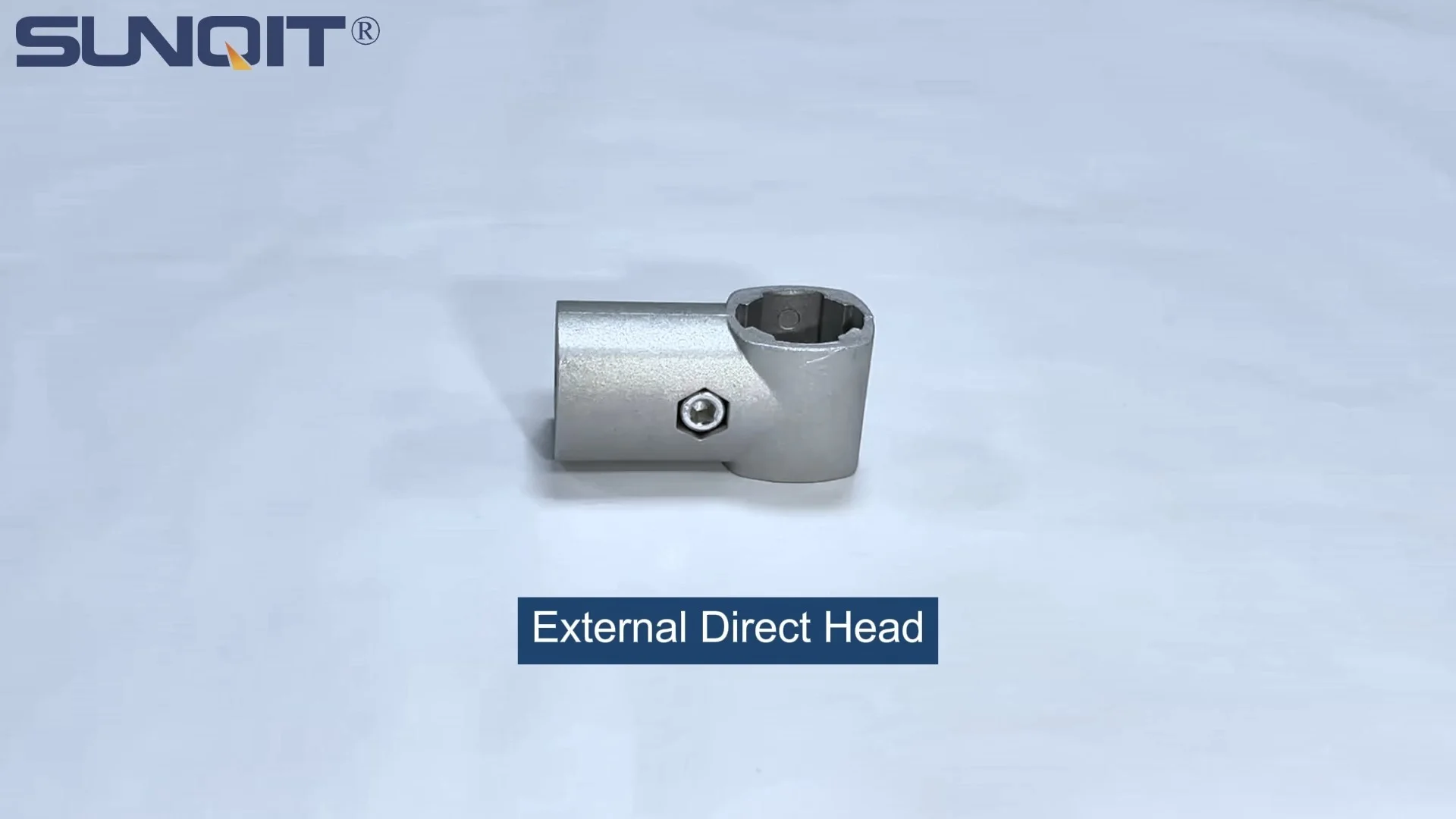
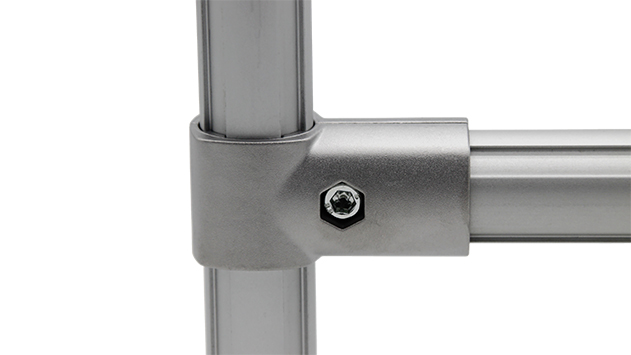
Aluminum 2 way pipe joint for 28mm aluminum pipe connection in 2 direction.
It's a Tuesday morning on the factory floor of PrecisionWorks, a mid-sized electronics manufacturer in Ohio. Maria, an assembly line supervisor, sighs as she watches two workers struggle to maneuver a bulky steel workbench into a new configuration. The old setup—welded steel frames and fixed shelves—was supposed to last "forever," but forever feels like a burden now. Their production line for smart thermostats is shifting to a new model next month, and the rigid workbench just won't adapt. "We need something that moves with us," Maria mutters, staring at the 300-pound beast they're trying to reposition. "Not against us."
That frustration—shared by manufacturers everywhere—was the spark that led PrecisionWorks down a path toward lean system solutions. Like many companies embracing lean manufacturing, they craved flexibility: workbenches that could be reconfigured in hours, not days; material racks that adjusted to new product sizes without welding torches; and a system that grew with their needs, not against them. The answer, they soon discovered, lay in a deceptively simple component: the two way aluminum pipe joint . But before this small but mighty part could revolutionize their factory floor, it had to survive a gauntlet of tests—from prototype sketches to production reality.
The Case for Aluminum: Why Not Steel? Why Not Plastic?
Before diving into the joint itself, let's backtrack: Why aluminum? PrecisionWorks considered three options: traditional steel pipes, plastic tubing, and aluminum profiles. Steel was strong but heavy—moving a steel-framed workbench required a forklift, defeating the "flexible" goal. Plastic was lightweight but flimsy; it warped under heat from machinery and couldn't support the weight of circuit boards and tools. Then there was aluminum.
Aluminum profile systems, they learned, offered the best of both worlds. Aluminum is 30% lighter than steel but boasts impressive tensile strength—enough to support heavy loads without bending. Its natural corrosion resistance meant it could handle the factory's occasional spills and humidity. And unlike steel, it didn't require painting or coating to stay durable. But the real kicker? Aluminum's modularity. With the right joints and accessories, aluminum pipes and profiles could be snapped together like a high-stakes LEGO set, then taken apart and rebuilt when needs changed. "It's like building with tinker toys, but for grown-ups who make thermostats," joked Raj, the plant engineer.
The problem? While aluminum profiles were widely available, the joints connecting them often fell short. PrecisionWorks tested off-the-shelf options: plastic snap-fit joints (too weak), steel threaded joints (too heavy and prone to seizing), and even custom-machined brass joints (expensive and slow to produce). None checked all the boxes: strength, ease of use, compatibility with standard aluminum pipe accessories , and affordability. So, they decided to design their own: a two way aluminum pipe joint that would be the linchpin of their new lean system.
Prototyping: From Sketch to 3D-Printed Dream
Designing a joint sounds simple until you start asking questions: How much weight does it need to hold? Can it connect pipes at 90 degrees? 45 degrees? What if we need to adjust the angle later? And—most importantly—can a worker with basic tools (no power drills, no welding) assemble it in under a minute?
Raj's team started with sketches. The first draft looked like a bulky T-junction, but that limited movement. "We need two-way versatility," Maria argued during a design review. "Sometimes we need a straight line; sometimes a right angle. The joint should do both." Back to the drawing board: a cylindrical core with two hollow ends, each fitted with a spring-loaded clamp. Slide an aluminum pipe into each end, twist the collar, and the clamps bite down, securing the connection. Simple, but would it hold?
Next came material selection. They settled on 6061-T6 aluminum alloy—a common choice for industrial parts—known for its balance of strength and machinability. "It's the same alloy used in bike frames," Raj explained. "Light enough to ride, strong enough to take a fall." They 3D-printed a prototype using PLA plastic first, just to test the fit. When Maria's team tried assembling a mini workbench with the plastic joints, the result was… underwhelming. "It felt like building with straws," one worker joked. But the concept worked: pipes slid in smoothly, the collar twisted easily, and the joint held its shape—until someone leaned on it. The plastic deformed, and the pipes slipped. "Back to strength," Raj noted in his notebook.
The next prototype was machined from solid aluminum. No more plastic. This time, they added reinforcing ribs to the collar and thickened the walls around the clamp mechanism. When the first batch arrived from the local machine shop, Raj held one in his hand. "Feels solid," he said, tossing it to Maria. She caught it, weighing it in her palm. "Lighter than steel, heavier than plastic. Good." Then came the first test: sliding a 20mm aluminum pipe into one end. *Click*. The clamp engaged with a satisfying snap. "That's the sound of progress," Maria smiled.
Testing: The Gauntlet Begins
A prototype that "feels solid" is one thing. A joint that survives the chaos of a factory floor is another. PrecisionWorks partnered with a local testing lab to put their two way aluminum pipe joint through four grueling phases: load testing, durability testing, compatibility testing, and real-world user trials. Let's break them down.
Phase 1: Load Testing—How Much Weight Can It Really Hold?
A workbench isn't much good if it collapses under the weight of tools, components, and the occasional tired worker leaning on it. PrecisionWorks needed to know: What's the maximum load the joint can support before failing? They started with static load tests—slowly adding weight until the joint bent or the pipes slipped.
The setup was straightforward: two 1-meter aluminum pipes connected by the joint, mounted horizontally between two steel frames. A hydraulic press applied downward force at the joint's midpoint, while sensors measured deflection (how much the joint bent) and slip (when the pipe started to move inside the joint). The goal? Support at least 50kg—enough for a workbench loaded with tools, a laptop, and a bin of circuit boards. The results? Surprising, even to Raj.
| Test Type | Load Applied (kg) | Deflection (mm) | Result |
|---|---|---|---|
| Static Load (90° angle) | 50 | 1.2 | No slip; minor deflection (within acceptable range) |
| Static Load (90° angle) | 75 | 2.5 | No slip; deflection increased but stable |
| Static Load (90° angle) | 100 | 4.8 | Pipe slipped 2mm at 98kg; joint itself remained intact |
| Dynamic Load (vibration test) | 40kg + 5Hz vibration | 0.8 (peak) | No slip after 10,000 cycles (simulates 6 months of factory vibration) |
"It held 75kg without breaking?" Maria asked, staring at the report. "That's more than our old steel workbench could handle, and this thing weighs half as much!" The dynamic load test was equally reassuring: 40kg plus continuous vibration (mimicking the hum of nearby machinery) for 10,000 cycles, and the joint didn't budge. "Now we know it won't loosen up over time," Raj said, grinning. The only failure came at 98kg, when the pipe slipped—not the joint breaking. "That's a good failure," he added. "The joint protects itself by letting the pipe slip before it bends. We can just add a locking pin for extra-heavy loads."
Phase 2: Durability—Can It Take a Beating (and Keep Going)?
A joint that works once is easy. A joint that works after being assembled, disassembled, and reassembled 50 times? That's the real test. In lean manufacturing, reconfiguration is constant—today's workbench is tomorrow's material rack. So PrecisionWorks subjected the joint to a "torture test" of assembly cycles.
The process was repetitive but revealing: A technician would slide two pipes into the joint, twist the collar to lock, then twist again to unlock and remove the pipes. Repeat. They counted cycles and checked for wear: Did the clamp lose grip? Did the collar start sticking? After 50 cycles, the joint still worked like new. At 100 cycles, minor wear appeared on the clamp teeth, but grip strength dropped by only 5%. "We'll take it," Raj said. "Most joints on the market fail at 30 cycles. This one's a trooper."
They also tested corrosion resistance. The factory floor isn't a clean room—oils, coolants, and occasional water spills are part of life. So they sprayed the joint with a saltwater solution (simulating humidity and chemical exposure) and left it in a 90°F chamber for a week. Result? No rust, no pitting. "Aluminum's natural oxide layer does its job," Raj noted. "No need for extra coatings."

Real-World Trials: Building the First Workbench
Tests in a lab are one thing. Tests on the factory floor? That's where the rubber meets the (aluminum) road. PrecisionWorks decided to build a full-size workbench using their new two way aluminum pipe joints, aluminum profiles, and off-the-shelf accessories like casters and shelves. The goal: replace Maria's problem steel workbench with a lean, modular version and see if it held up to daily use.
Assembly day was a team effort. Maria, Raj, and two workers unboxed the parts: 2-meter aluminum pipes, two way joints, a plywood top, and locking casters. "Let's see if this '10-minute assembly' claim holds," Maria said, eyeing the instruction sheet. Spoiler: It took 12 minutes—including a coffee break. "We could've done it in 10 if Tom hadn't insisted on 'perfect alignment,'" Raj joked. The result was a sleek, 6-foot workbench that weighed 85 pounds (light enough for two people to move) and stood steady as a rock.
For the next month, the prototype workbench became the star of the thermostat assembly line. Workers loaded it with tools, bins of screws, and a 25kg test fixture. They rolled it across the factory floor (casters glided smoothly). They adjusted the height by swapping out pipe lengths (no tools needed—just twist, remove, replace). And when a new batch of larger thermostats arrived, they added a second shelf using—you guessed it—more two way joints. "I used to dread reconfiguring workbenches," said Lisa, an assembly line worker. "Now? It's like rearranging furniture at home. Except this furniture helps me make twice as many thermostats."
The only hiccup? A worker accidentally stepped on a pipe, bending it slightly. But the joint itself? Unscathed. "We just replaced the pipe—$15 part—and were back up in 5 minutes," Maria reported. "With the old steel bench, that would've meant a welder and a half-day of downtime."

Scaling to Production: Partnering with the Right Supplier
With prototypes tested and real-world trials passed, PrecisionWorks was ready to scale. But building joints in-house (with their small machine shop) was too slow—they needed 500 joints to outfit the entire factory, plus extras for future projects. So they turned to a trusted aluminum pipe supplier with experience in lean system components.
Choosing a supplier wasn't just about cost. PrecisionWorks needed consistency: Every joint had to fit every pipe, every time. They audited three suppliers, checking their manufacturing processes, quality control (QC) steps, and lead times. One supplier stood out: a family-owned shop in Michigan that specialized in aluminum extrusions and modular components. "They didn't just quote us a price," Raj said. "They asked about our load tests, our assembly cycles—they wanted to understand *why* the joint mattered. That's the partner we needed."
The supplier tweaked the design slightly for mass production: switching from machined solid aluminum to die-casting (faster, cheaper) while keeping the same alloy and clamp mechanism. They also added a small logo emboss—"PrecisionWorks x LeanJoints"—a detail that made Maria smile. "It feels like ours, even though we're not making it in-house."
The first production run arrived in crates labeled "Handle with Care," but Raj and Maria couldn't resist a spot check. They grabbed a handful of joints, slid in pipes, and twisted. *Click*. Perfect. "Same feel, same strength," Maria said, handing one to a worker. "Let the revolution begin."
The Ripple Effect: Beyond the Joint
Today, six months later, PrecisionWorks' factory floor looks unrecognizable. The steel workbenches are gone, replaced by aluminum modular setups that adjust with a twist of a joint. Material racks, once fixed, now expand or shrink as orders fluctuate. Even the break room got a makeover: a custom aluminum-framed table built with—you guessed it—two way joints. "Workers kept 'borrowing' them for potlucks," Maria laughed. "So we built them their own."
The numbers tell the story: Setup time for new production lines is down 70%. Floor space utilization is up 35% (no more oversized workbenches wasting space). And worker satisfaction scores? Through the roof. "It's not just about the joint," Maria says. "It's about feeling like the factory works for *us*, not the other way around."
Back to that Tuesday morning when Maria watched workers struggle with the steel bench. Last week, she walked past the same spot and saw two new hires reconfiguring a workbench for the latest thermostat model. They had it done in 15 minutes. "How'd it go?" Maria asked. One of them grinned. "Easier than building IKEA furniture. And this thing actually stays together."
The two way aluminum pipe joint may be small, but its impact is huge. It's a reminder that in lean manufacturing, the most powerful solutions aren't always the flashiest. Sometimes, they're the ones that quietly connect the dots—literally and figuratively—turning rigid systems into flexible, worker-centric spaces. And for PrecisionWorks, that's the difference between surviving and thriving in a fast-changing industry.