- Company Articles
- Products and Technology
- Product knowledge
- Functions of Castor Installation Base in Lean Pipe Workbenches (Workbench E Application)

Functions of Castor Installation Base in Lean Pipe Workbenches (Workbench E Application)
Related Product
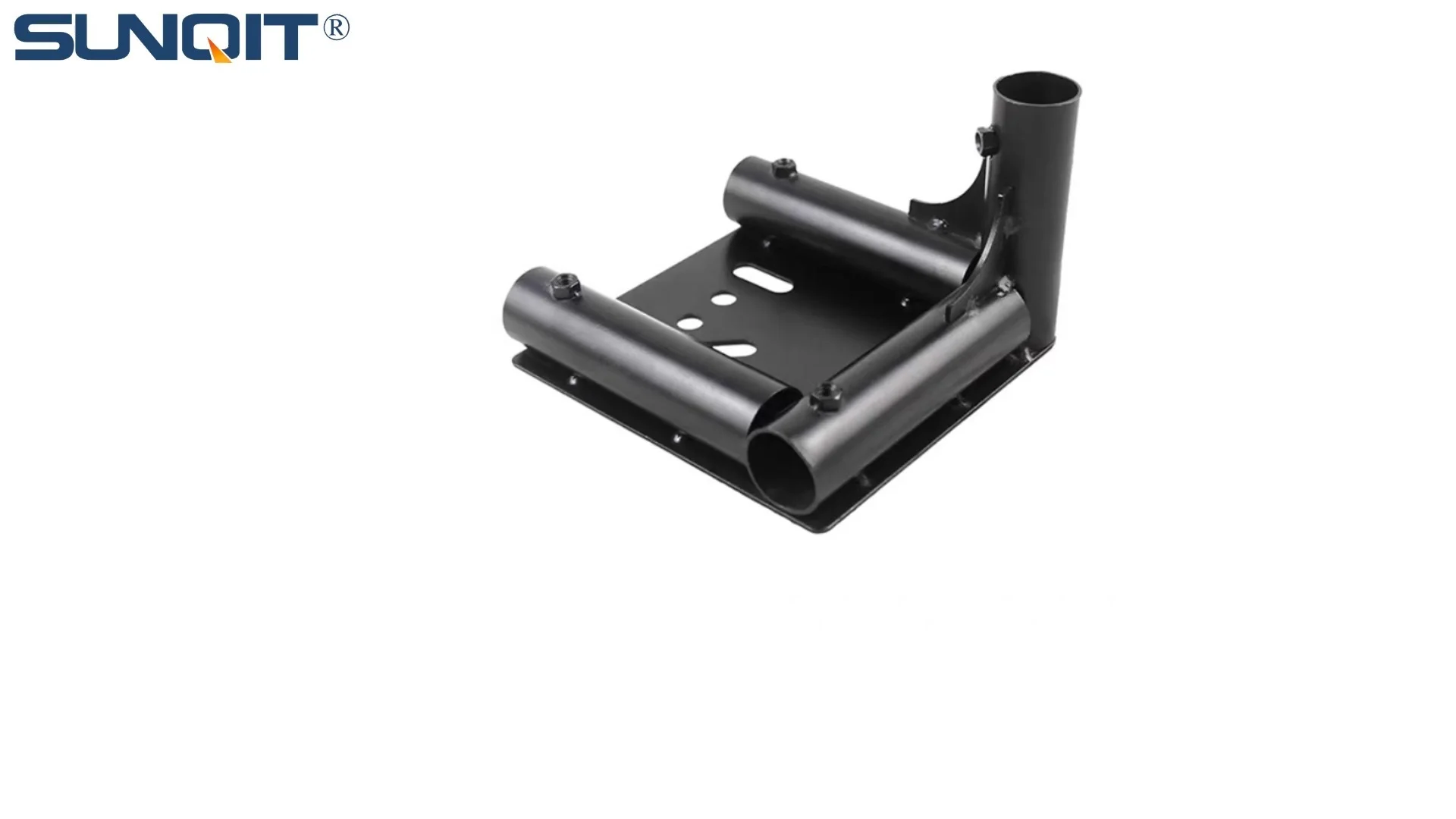
Castor Installation Base
Pipe fitting castor installation base,Well made, precise and strong. Made of high quality of steel,black painting surface treatment for greater resistance to corrosion. It is used for castor or foot lever connection with lean pipe.
Exploring how a simple accessory transforms static workstations into dynamic tools of lean manufacturing
Introduction: The Heartbeat of Lean Manufacturing—Workstations That Work With You
Walk into any modern manufacturing facility, and you'll notice a quiet revolution happening on the factory floor. Gone are the days of clunky, immovable workbenches that anchor workers to a single spot, limiting their ability to adapt to shifting production needs. Today, lean manufacturing isn't just a buzzword—it's a way of life, and at the center of it all are tools designed to reduce waste, boost efficiency, and put control back in the hands of the people who use them every day. Among these tools, the lean pipe workbench stands out as a champion of versatility. Lightweight yet sturdy, built from modular components like lean pipe joints and aluminum profiles, it's a blank canvas for customization—until you realize one critical limitation: mobility.
Enter Workbench E: a single-deck, no-nonsense workstation designed for stability and simplicity. On paper, it checks all the boxes: a solid surface for assembly, a frame built from durable lean pipe, and a footprint that fits neatly into tight production lines. But here's the catch: Workbench E, by default, comes "without caster"—meaning it's fixed in place. In a world where just-in-time production and agile workflows demand flexibility, a static workbench can quickly become a bottleneck. That's where the unsung hero of this story comes in: the castor installation base. It's a small accessory, often overlooked, but it holds the power to turn Workbench E from a stationary fixture into a dynamic, movable asset. In this article, we'll dive deep into what makes the castor installation base indispensable, exploring its functions, real-world impact, and why it's more than just a "wheel adapter"—it's a bridge between rigidity and adaptability in lean manufacturing.
What Is a Castor Installation Base, Anyway? Breaking Down the Basics
Before we jump into its functions, let's get clear on what a castor installation base actually is. At its core, it's a mounting bracket or plate designed to attach to the bottom of a lean pipe workbench —specifically, models like Workbench E that don't come pre-fitted with casters. Think of it as a translator: it speaks the "language" of the workbench's frame (built from lean pipe and aluminum profile) and the "language" of casters, creating a secure connection that turns a fixed workstation into one that rolls.
Most castor installation bases are made from robust materials like powder-coated steel or aluminum profile, chosen for their ability to handle heavy loads without bending or warping. They typically feature pre-drilled holes that align with the existing bolt patterns on Workbench E's legs, ensuring a snug fit that won't loosen over time. Some models even include additional reinforcement plates or gussets to distribute weight evenly, preventing stress on the workbench's frame. And since they're part of the broader ecosystem of caster and accessories , they're designed to work seamlessly with standard caster wheels—whether you need locking casters for stability, heavy-duty wheels for rough floors, or ESD-safe options for electronics manufacturing.
But why not just drill holes directly into Workbench E's legs and attach casters? While that might seem like a quick fix, it's a risky move. Lean pipe workbenches are engineered with specific weight limits and structural integrity in mind; haphazardly modifying the frame can weaken it, leading to wobbling, instability, or even collapse under heavy tools or materials. The castor installation base, by contrast, is purpose-built to integrate with the workbench's design. It uses existing mounting points and reinforces stress areas, ensuring that adding mobility doesn't compromise safety or durability. In short, it's the difference between a DIY hack and a professional, lean-compliant solution.
Real Talk: A Maintenance Manager's Perspective
"We tried attaching casters directly to our Workbench E legs once," says Mark, a maintenance supervisor at a mid-sized electronics plant. "At first, it worked—until we loaded the bench with circuit boards and tools. The legs started to bend, and the whole thing wobbled so bad, we were scared someone would get hurt. We switched to castor installation bases, and it was night and day. The base spread the weight evenly, and the bench rolls smoothly without a single creak. Now, we won't touch a workbench without one."

Function 1: Unlocking Mobility—Because Your Workbench Should Move When You Do
Let's start with the most obvious (and most celebrated) function of the castor installation base: mobility. In lean manufacturing, "motion waste" is the enemy—every unnecessary step a worker takes, every time they have to carry materials from Point A to Point B, eats into productivity and increases the risk of errors or injury. A fixed Workbench E might be great for stability, but when the assembly line shifts, or a rush order demands reconfiguring the production floor, that stability becomes a liability.
With a castor installation base, Workbench E transforms into a mobile workstation. Imagine a scenario in automotive assembly: a team is tasked with installing door panels on a new model. One minute, they need the workbench near the left side of the production line; the next, a design change requires them to shift to the right. Without casters, they'd have to unload the bench, disassemble part of the frame, move it, and rebuild—wasting 20 minutes or more. With a castor installation base? Two workers can roll the fully loaded bench into place in 30 seconds. That's 19.5 minutes saved per shift, multiplied by 50 weeks a year—that's over 80 hours of recovered productivity, just from adding wheels.
But mobility isn't just about speed; it's about responsiveness. In a factory where customer orders change daily, or where small-batch production is the norm, the ability to reposition workbenches on the fly turns chaos into order. Need to group three Workbench E units together for a team assembly project? Roll them into a U-shape. Finished? Spread them out again for individual tasks. It's flexibility that adapts to your workflow, not the other way around.

Function 2: Balancing Stability and Movement—No Wobbles, No Compromises
When most people hear "mobile workbench," they picture a rickety cart that feels like it might tip over at any second. But the castor installation base is engineered to eliminate that fear by prioritizing stability alongside mobility. How? Let's break it down.
First, the base itself acts as a stabilizer. By attaching to all four legs of Workbench E (or six, for larger models), it creates a wider "footprint" than the workbench alone, lowering the center of gravity and reducing the risk of tipping. Many bases also feature adjustable feet or leveling knobs, which can be extended to contact the floor when the bench is in use, adding an extra layer of stability. Pair that with locking caster wheels—another staple of caster and accessories —and you've got a workstation that stays put when you need it to, no sliding or shifting mid-task.
Second, the materials matter. A cheap castor installation base might save you a few dollars upfront, but it'll bend under heavy loads, leading to uneven rolling and instability. High-quality bases, made from thick-gauge steel or aluminum profile, are designed to handle weights of 500 pounds or more—easily supporting tools, materials, and even a worker leaning on the bench. They also resist corrosion and wear, ensuring that stability doesn't degrade over time, even in dusty or humid factory environments.
| Feature | Workbench E Without Castor Installation Base | Workbench E With Castor Installation Base |
|---|---|---|
| Mobility | Fixed in place; requires disassembly to move | Rolls smoothly on casters; repositioned in seconds |
| Stability (empty) | High (no movement, but rigid) | High (base widens footprint; locking casters prevent sliding) |
| Stability (fully loaded) | High (weight distributed through fixed legs) | High (base reinforces frame; even weight distribution across casters) |
| Adaptability to Floor Unevenness | Limited (fixed legs can't adjust to bumps) | High (adjustable feet on base compensate for uneven floors) |
| Risk of Frame Damage | Low (no modification to legs) | Low (base uses existing mounting points; no frame drilling) |
To put this in perspective, consider a typical assembly task: screwing components onto a circuit board. On a wobbly workbench, even a small movement can misalign the screw, leading to rework or scrap. With a castor installation base, the bench stays rock-steady—so workers can focus on precision, not balancing. It's a small detail, but it adds up to fewer errors, less frustration, and higher quality output.

Function 3: Adapting to Your Space—Because No Two Factories Are the Same
Factories come in all shapes and sizes, and so do their production needs. One day, you might need Workbench E to tuck into a narrow aisle; the next, you might need it to straddle a conveyor belt. A castor installation base doesn't just make the workbench mobile—it makes it adaptable to the unique quirks of your space.
Take floor type, for example. Concrete floors with cracks or uneven patches can turn a smooth-rolling caster into a bumpy nightmare. But many castor installation bases are compatible with "shock-absorbing" casters—wheels with rubber or polyurethane treads that glide over rough surfaces without jostling the workbench. Similarly, in cleanrooms or labs where dust is a concern, you can pair the base with casters that have sealed bearings to prevent debris from getting trapped. The base acts as a universal adapter, letting you mix and match caster types to suit your environment.
Then there's the issue of space constraints. In a busy factory, every square inch counts. A fixed Workbench E takes up permanent real estate, but with a castor installation base, you can tuck it into a corner when it's not in use, freeing up space for other equipment. Need to use the same bench for two different tasks? Roll it from the assembly line to the inspection area in minutes. It's like having a workstation that can "shrink" or "expand" its footprint based on the day's priorities.
Case Study: A Furniture Manufacturer's Space-Saving Win
A mid-sized furniture company was struggling with limited floor space. Their production line for dining chairs required two Workbench E units: one for upholstery and one for final assembly. The problem? When they weren't assembling chairs, the benches sat idle, taking up room needed for storage. After installing castor bases, they started rolling the benches into a storage bay overnight. "We gained back 120 square feet of space—enough to add a new packing station," says the plant manager. "And during the day, we can reposition the benches to line up with the upholstery machine or the sewing station, cutting down on walking time by half."
Even better, the castor installation base plays nice with other lean pipe accessories. Need to add a tool rack or a parts bin to Workbench E? The base's reinforced frame can support additional attachments without compromising mobility. It's modularity at its finest—proof that the best lean tools are those that grow with your needs, not hold you back.
Function 4: Integrating with Lean Systems—More Than a Workbench, a Building Block
Lean manufacturing isn't just about individual tools—it's about creating a system where every component works together to eliminate waste. A castor installation base doesn't just improve Workbench E; it makes it a more integral part of your broader lean ecosystem.
Consider the principle of "continuous flow." In lean, the goal is to move materials from raw goods to finished product with as few stops as possible. A static Workbench E disrupts this flow: workers have to carry parts to the bench, work on them, then carry them to the next station. With a mobile workbench (thanks to the castor installation base), you can position the bench directly next to the upstream and downstream processes. For example, in electronics assembly, Workbench E can roll up to a lean pipe workbench used for component sorting, then move to the testing station once assembly is done. No more carrying, no more waiting—just a seamless flow that cuts down on lead times.
The base also supports 5S principles, the foundation of lean organization. "Sort," "Set in order," "Shine," "Standardize," "Sustain"—these steps rely on having a place for everything and everything in its place. A mobile Workbench E, with a castor installation base, makes "Set in order" a breeze. At the end of each shift, workers can roll the bench to its designated spot, ensuring the floor stays clutter-free. During audits, it's easy to rearrange benches to match updated 5S layouts, keeping the workspace organized without major overhauls.
Perhaps most importantly, the castor installation base future-proofs your investment. As your production needs change—whether you add new product lines, scale up output, or shift to a different manufacturing model—Workbench E can evolve with you. Need to turn it into a mobile testing station? Add a power strip and ESD mat. Need to use it for kitting parts? Attach a hanging bin rack. The base ensures that no matter how you customize the bench, it remains mobile and adaptable. In a world where manufacturing trends shift fast, that kind of flexibility is priceless.
Choosing the Right Castor Installation Base—What to Look For
Not all castor installation bases are created equal. To get the most out of your Workbench E, you'll need to choose one that fits your specific needs. Here are the key factors to consider:
Load Capacity: Start by calculating the maximum weight your Workbench E will carry. This includes the bench itself, tools, materials, and any workers who might lean on it. Most bases list a "dynamic load capacity" (weight when rolling) and a "static load capacity" (weight when stationary). Err on the side of caution—if you think you'll need 300 pounds, choose a base rated for 500.
Compatibility: Ensure the base is designed for Workbench E specifically. While some bases are universal, those made by the same manufacturer as your lean pipe workbench will have the best fit, using matching lean pipe joint sizes and bolt patterns. Check the product specs for your workbench model to confirm dimensions.
Material and Finish: For general manufacturing, a powder-coated steel base is durable and affordable. If you work in a wet or corrosive environment (like food processing), opt for stainless steel. In cleanrooms or electronics, an aluminum profile base is lightweight and resists dust buildup.
Caster Compatibility: The base should accept standard caster stems (either threaded or stem-type). If you already have casters, check their stem diameter and length to ensure they'll fit the base's mounting holes. If not, look for bases sold as part of a "caster kit" with matching wheels.
Adjustability: Does the base have adjustable feet or leveling knobs? This is a must if your floor is uneven, as it prevents wobbling and ensures the workbench stays level when locked in place.
Conclusion: The Small Accessory That Makes a Big Difference
In the grand scheme of lean manufacturing, the castor installation base might seem like a minor detail. It's not flashy, it doesn't have any buttons or screens, and it rarely gets mentioned in company newsletters. But ask anyone who uses a lean pipe workbench every day, and they'll tell you: it's a game-changer. It turns a static workstation into a dynamic tool that moves when you do, adapts to your space, and grows with your needs. It eliminates motion waste, boosts productivity, and makes the factory floor feel less like a maze of fixed obstacles and more like a canvas for innovation.
For Workbench E, in particular, the castor installation base is the missing piece of the puzzle. It takes a solid, reliable workstation and elevates it to something greater—proof that lean manufacturing isn't just about big machines or complex software. Sometimes, the most powerful tools are the ones that solve a single problem, exceptionally well. In this case, that problem is simple: why should your workbench stay still when your workflow doesn't?
So the next time you walk past a row of Workbench E units, take a closer look. The ones with castor installation bases aren't just workbenches—they're silent partners in the quest for efficiency. They're the reason a worker can roll their station to the action instead of the other way around. They're the reason a factory can reconfigure its line in an hour instead of a day. And they're the reason lean manufacturing continues to thrive: because it's built on small, smart innovations that add up to big results.
In the end, the castor installation base isn't just an accessory. It's a reminder that in lean manufacturing, every detail counts—and sometimes, the smallest tools are the ones that move the needle the most.