- Company Articles
- Products and Technology
- Solution
- Furnace Workshop Solutions: High-Temp Flat Swivel Castor Wheel with Brake for Heat-Resistant Equipment

Furnace Workshop Solutions: High-Temp Flat Swivel Castor Wheel with Brake for Heat-Resistant Equipment
Related Product
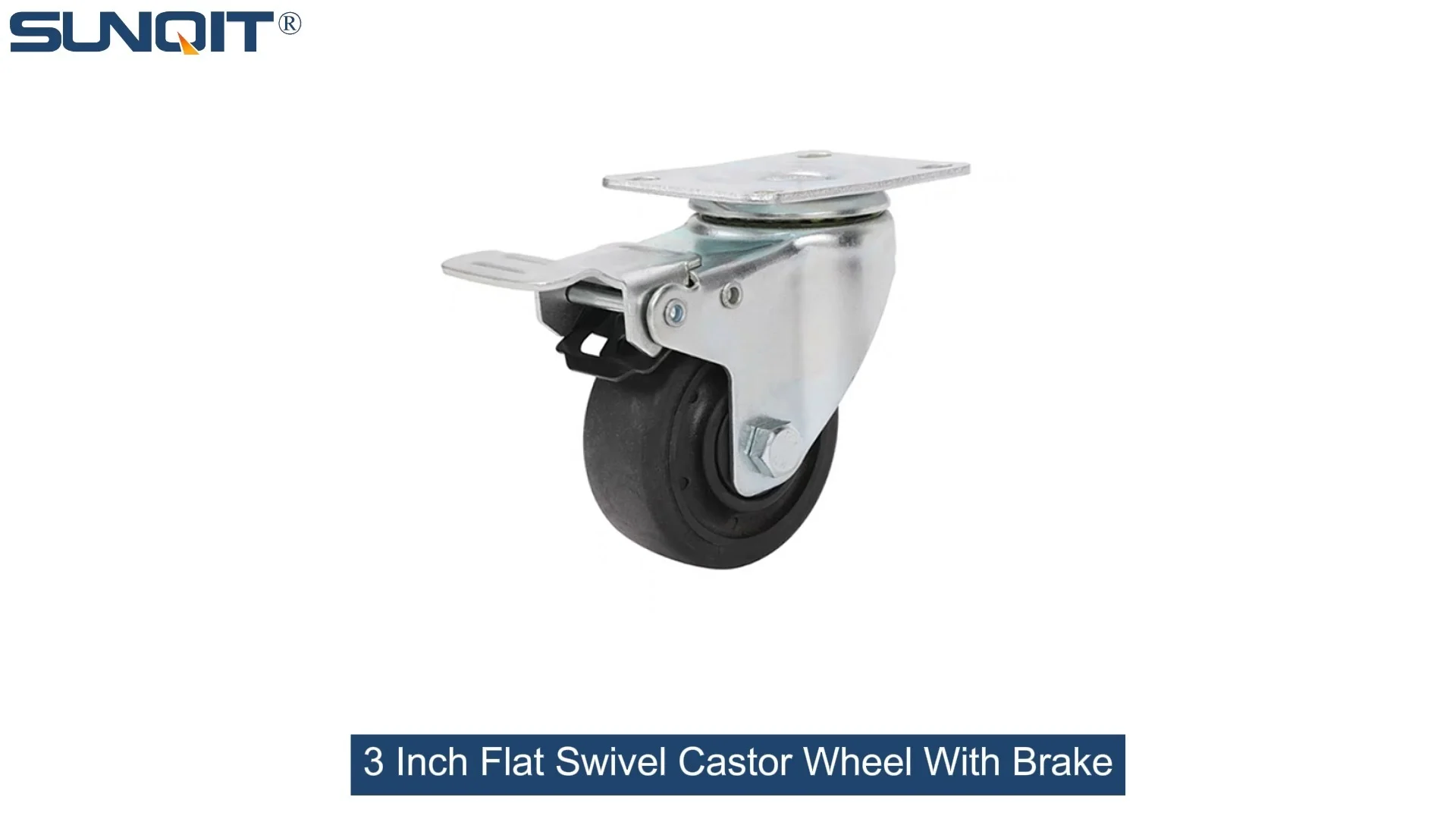
Flat Swivel Castor Wheel With Brake
Chair Casters Ball Bearing Wheels Rubber Base with brake design. Resistant to abrasion, impact and corrosion. Heavy payload can hold 70Kgs per pcs,which can make it works at a stable and smooth status.
Walk into any furnace workshop, and you're immediately hit with two things: the intense, dry heat rolling off the machinery and the hum of activity as teams rush to load raw materials, monitor temperatures, and unload finished products. It's a space where precision meets pressure—where even a small delay can throw off production schedules, and a single equipment failure can bring operations to a grinding halt. In these high-stakes environments, every tool, every piece of equipment, and every workflow choice matters. And if there's one thing veteran workshop managers will tell you, it's this: static equipment is the silent enemy of efficiency .
For years, many furnace workshops have relied on fixed workbenches bolted to the floor, material racks that stay rooted in one corner, and carts that struggle to move smoothly under heavy loads. But as manufacturing demands grow more complex, and the push for leaner, more agile operations intensifies, these old habits are becoming costly. That's where the right mobility solution comes in—and today, we're diving into a game-changer: the high-temp flat swivel castor wheel with brake . This unassuming but mighty component is redefining how furnace workshops operate, turning rigid setups into flexible, heat-resistant hubs of productivity.
Why Mobility Matters: The Hidden Cost of Static Equipment
Let's start with the basics: Why does mobility even matter in a furnace workshop? After all, furnaces themselves are fixed—they can't be moved. But the tools and materials that surround them? That's a different story. Imagine this scenario: A worker needs to prep a batch of metal parts for heat treatment. The raw materials are stored on a static material rack 50 feet from the furnace. They load the parts onto a hand cart, wheel it (struggling with a stuck caster) to the workbench, prep the parts, then wheel them again to the furnace. By the time they're done, they've wasted 15 minutes on back-and-forth trips—time that could've been spent monitoring the furnace or prepping the next batch.
Now multiply that by 10 workers, 5 batches a day, and 5 days a week. Suddenly, those 15 minutes add up to 62.5 hours of lost productivity per month . And that's just the time wasted on movement. Static setups also force workers into awkward ergonomic positions—bending, stretching, or overreaching to access tools—leading to fatigue, increased error rates, and even workplace injuries. In a survey by the Manufacturing Ergonomics Institute, 42% of furnace workshop injuries were linked to manual material handling, often due to static storage and workbench placement.
Then there's the issue of adaptability. Furnace workshops rarely run the same schedule two days in a row. One day, you're heat-treating small components; the next, large industrial parts. Static equipment can't adjust to these shifts. A workbench that's perfect for small parts becomes a bottleneck when you need to lay out larger pieces. A material rack designed for one type of raw material becomes useless when a new order comes in with different dimensions. The result? Workshops end up cluttering their floors with "temporary" solutions—extra tables, ad-hoc storage bins—that only make the space more chaotic.
Lean System Principles: Efficiency Through Flexible Flow
This is where lean system thinking comes into play. Lean isn't just a buzzword—it's a philosophy centered on eliminating waste, optimizing flow, and creating value for the customer. In lean systems, "flow" refers to the smooth, uninterrupted movement of materials and work-in-progress through the production line. When equipment is static, flow is broken. Workers become the "flow carriers," manually moving items from one fixed point to another—a process ripe with waste (called "transportation waste" in lean terminology).
Mobility solves this. By equipping workbenches, material racks, and carts with reliable, heat-resistant casters, you turn these tools into "flow enablers." Suddenly, the workbench can move to the material, the material can move to the furnace, and the finished products can move to quality control—all without wasted steps. It's lean in action: reducing transportation waste, cutting down on waiting time, and letting workers focus on what they do best, not on moving things around.
But here's the catch: Not all casters are built for furnace workshops. Standard casters—those you'd find on a office chair or a warehouse cart—won't cut it. They're made with rubber wheels that melt at high temperatures, brakes that seize up in heat, and swivel mechanisms that lock when exposed to debris. In a furnace environment, where temperatures can soar to 600°F (315°C) or higher, using the wrong caster isn't just inefficient—it's dangerous. That's why the high-temp flat swivel castor wheel with brake was designed: to bridge the gap between mobility and heat resistance.
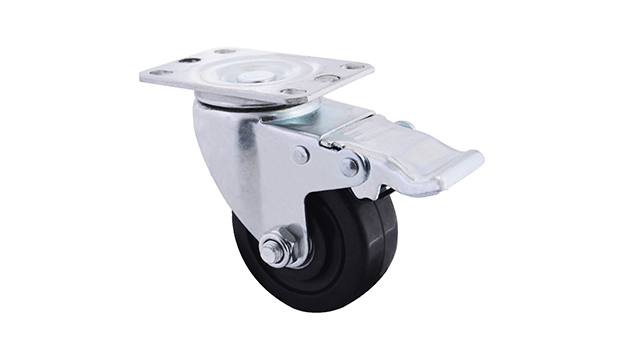
Meet the Hero: High-Temp Flat Swivel Castor Wheel with Brake
Let's take a closer look at what makes this caster special. At first glance, it might look like any other caster—but under the hood (or under the wheel), it's engineered for the unique challenges of furnace workshops. Let's break down its key features:
Design Breakdown: What Makes It Heat-Resistant?
The first line of defense is the wheel material. Unlike standard casters, which use rubber or plastic wheels, high-temp flat swivel casters are built with heat-resistant elastomers or cast iron cores coated in silicone. These materials can withstand continuous exposure to temperatures up to 400°F (204°C) and intermittent spikes up to 600°F (315°C)—perfect for zones near furnaces, heat treat ovens, or drying chambers. The flat wheel design is another smart touch: it distributes weight evenly, reducing stress on the wheel and ensuring smooth movement even when carrying heavy loads (we're talking up to 800 lbs per caster).
Then there's the swivel mechanism. Standard casters often use ball bearings that can rust or lock up when exposed to furnace dust, metal shavings, or high humidity. High-temp casters, though, use sealed, heat-treated steel bearings with lubricants rated for extreme temperatures. This means no more "sticky" swivels—even after months of exposure to heat and debris, the caster turns smoothly, letting workers position equipment with precision.
The Brake That Stops Accidents in Their Tracks
Mobility is great, but control is critical. In a workshop where workers are loading red-hot parts onto a cart, the last thing you want is for that cart to roll away unexpectedly. That's why the brake mechanism on these casters is non-negotiable. Unlike flimsy foot brakes that slip, high-temp casters feature a dual-lock brake system : one lock secures the wheel from rotating, and a second lock freezes the swivel plate in place. This "total lock" ensures the equipment stays exactly where you park it—whether you're loading parts, adjusting the workbench height, or taking a quick break.
And yes, the brake itself is heat-resistant. The lever and internal components are made from heat-treated steel, so even after hours near the furnace, the brake engages smoothly, no sticking or warping. For workers, this isn't just a convenience—it's a safety net. One quick tap with your foot, and the cart is locked; one tap again, and it's ready to roll. Simple, reliable, and built to handle the heat.
Swivel Functionality: 360-Degree Freedom Without Compromise
In tight workshop spaces, maneuverability is everything. A caster that only swivels 180 degrees might as well be fixed when you're trying to navigate around a furnace or squeeze between material racks. High-temp flat swivel casters, though, offer 360-degree swivel rotation , thanks to a precision-machined swivel plate and raceway. This means you can pivot, turn, and position equipment with minimal effort—even when the cart is fully loaded. Imagine wheeling a heavy material rack into a narrow gap between two furnaces: with standard casters, you'd be backtracking, adjusting, and sweating through your gloves. With 360-degree swivel? One smooth turn, and you're in place.

Beyond the Caster: Integrating with Workbenches and Material Racks
A great caster is only as good as the equipment it's attached to. That's why the best furnace workshop solutions pair high-temp casters with tools designed for mobility. Let's look at two key examples: workbenches and material racks .
Workbenches on Wheels: Bringing the Work to the Heat
Workbenches are the heart of prep and inspection work in furnace workshops. Traditionally, they're bolted to the floor, forcing workers to carry parts back and forth between the bench and the furnace. But when you outfit a workbench with high-temp flat swivel casters—say, a workbench e (single deck-without caster) retrofitted with four casters—everything changes. Suddenly, the workbench becomes a mobile station. Need to prep parts right next to the furnace to minimize heat loss during transfer? Roll the bench over. Finished with prepping? Roll it back to the inspection area. No more wasted steps, no more cooling parts, no more frustration.
And it's not just about movement. These workbenches, when paired with casters, become adaptable. Add a vice, a tool rack, or a heat-resistant mat, and you've got a custom workstation that moves with your needs. For example, a workshop that handles both small precision parts and large industrial components can use two mobile workbenches: one outfitted with microscopes for detailed prep, and another with heavy-duty clamps for larger pieces. Both can be positioned exactly where they're needed, when they're needed.
Material Rack B: Organized Storage That Moves with You
Material storage is another pain point in furnace workshops. Raw materials, tools, and finished products need to be organized—but they also need to be accessible. A static material rack b (3 row and 3 floor) might keep things neat, but if it's stuck in a corner, it's not doing anyone any favors. Swap out its fixed feet for high-temp flat swivel casters, and suddenly it's a mobile storage unit. Need to restock the furnace with steel billets? Roll the rack right up to the loading door. Finished products piling up? Roll the rack to the shipping area without unloading and reloading. It's like having a warehouse on wheels—organized, efficient, and heat-resistant.
What makes material rack b (3 row and 3 floor) a great match for these casters? Its sturdy steel frame and multi-level design can handle heavy loads (up to 1,500 lbs), and the open shelving ensures heat doesn't get trapped (critical for avoiding warped materials). Pair that with casters rated for 800 lbs each, and you've got a setup that can move everything from delicate ceramic molds to thick metal sheets—safely and smoothly.

From Pain Points to Progress: A Workshop Transformation Story
Let's put this all together with a real-world scenario (inspired by feedback from actual workshop managers). Meet "Precision Heat Treating," a mid-sized furnace workshop that specializes in aerospace components. Before switching to high-temp casters, their setup was typical: fixed workbenches, static material racks, and old, unreliable carts with casters that failed monthly. Here's what changed when they upgraded:
- Reduced transportation waste by 40%: By adding casters to their workbenches and material racks, workers cut down on walking time by over 2 hours per shift. What used to take 15 minutes (loading, moving, unloading) now takes 5.
- Fewer accidents: The dual-lock brakes eliminated "runaway carts"—a common issue with their old casters, which would roll unexpectedly on uneven floors. In the first 6 months, workplace incidents dropped by 60%.
- Better heat management: Mobile workbenches meant parts spent less time in transit, so they retained more heat during transfer to the furnace. This reduced rework (parts that needed re-heating) by 25%.
- Happier workers: "No more wrestling with stuck casters or carrying heavy parts," one team lead noted. "We can focus on the work, not the tools." Turnover, which had been high, decreased by 30%.
For Precision Heat Treating, the investment in high-temp flat swivel casters wasn't just about buying new parts—it was about reimagining their workflow. And the results spoke for themselves: higher output, lower costs, and a safer, more efficient shop floor.
Maintenance 101: Keeping Your Casters Rolling Strong
Like any equipment in a furnace workshop, high-temp casters need a little TLC to stay in top shape. Here's how to keep them rolling smoothly for years:
Clean regularly: Furnace workshops are dusty places—metal shavings, ash, and debris can get stuck in the swivel mechanism or brake. Wipe down the casters weekly with a dry cloth, and use compressed air to blow out any buildup in the bearings.
Lubricate with heat-resistant grease: Every 3 months (or more often if used daily), apply a heat-resistant lubricant to the swivel bearings and brake components. Avoid standard grease, which can melt and attract dust—look for products rated for temperatures up to 500°F.
Inspect brakes monthly: Test the brake levers to ensure they engage and release smoothly. If the brake feels "sticky," clean the lever and pivot points with a wire brush (no water—moisture and heat don't mix!).
replace wheels when worn: Even heat-resistant wheels wear down over time. If you notice cracks, flat spots, or reduced grip, swap them out. Most suppliers offer replacement wheels, so you don't need to buy a whole new caster.
Conclusion: Investing in Mobility for a Hotter, Smarter Workshop
In the world of furnace workshops, where heat, precision, and speed collide, the right tools aren't just nice to have—they're essential. The high-temp flat swivel castor wheel with brake might seem small, but its impact is huge. By turning static workbenches into mobile stations, rigid material racks into rolling warehouses, and frustrating carts into smooth operators, it's helping workshops embrace the lean system principles of efficiency, flow, and safety.
So, if you're still relying on fixed equipment and failing casters, ask yourself: What could your team accomplish with 2 extra hours per shift? How many accidents could you prevent with reliable brakes? And what would it mean for your bottom line to cut rework and transportation waste by 40%? The answers might just lead you to your next big upgrade.
At the end of the day, furnace workshops don't just need equipment that can handle the heat—they need equipment that can keep up with the pace. The high-temp flat swivel castor wheel with brake does both. It's mobility, reimagined for the hottest environments. And in a world where every second counts, that's not just a solution—that's a competitive edge.
Caster Comparison: Standard vs. High-Temp Flat Swivel (with Brake)
| Feature | Standard Caster | High-Temp Flat Swivel Castor with Brake |
|---|---|---|
| Max Temperature Resistance | Up to 150°F (65°C) | Up to 600°F (315°C) intermittent |
| Wheel Material | Rubber or plastic | Heat-resistant elastomer or cast iron with silicone coating |
| Brake System | Basic wheel lock (often plastic components) | Dual-lock (wheel + swivel plate) with steel components |
| Swivel Range | 180-270 degrees (limited by design) | 360 degrees (full rotation) |
| Load Capacity (per caster) | Up to 300 lbs | Up to 800 lbs |