- Company Articles
- Products and Technology
- Technology Sharing
- Future Developments in Gusset ALP 4040: Predictions for Material and Design Innovations

Future Developments in Gusset ALP 4040: Predictions for Material and Design Innovations
Related Product
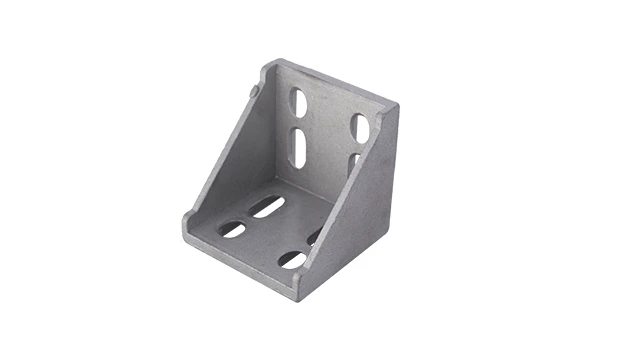
Gusset ALP 4040
The 4040 bracket/Gusset is an external fastening method that creates a 90 degree connection. 4040 means this size is used for 40 series aluminum profile with a quick connection by bolt and nut. It is a lightweight bracket that requires no machining servic
Walk into any modern manufacturing facility, and you'll notice a quiet revolution unfolding. Gone are the days of rigid, one-size-fits-all production lines; today's factories thrive on flexibility, adaptability, and efficiency. At the heart of this transformation lies a network of unassuming components that hold everything together—components like the Gusset ALP 4040. Small in size but mighty in impact, this unassuming piece of hardware plays a critical role in stabilizing aluminum profile structures, from workbenches and material racks to lean system setups. But as manufacturing demands evolve, so too must the tools that support them. In this article, we'll dive into the future of Gusset ALP 4040, exploring how material science breakthroughs and design innovations are set to redefine its role in the factories of tomorrow.
The Unsung Hero of Modern Manufacturing
Before we look ahead, let's take a moment to appreciate where Gusset ALP 4040 stands today. For those unfamiliar, a gusset plate is a flat component used to reinforce joints between two or more structural elements—in this case, aluminum profiles. The "ALP 4040" designation refers to its compatibility with 4040 aluminum extrusion profiles, one of the most widely used sizes in industrial setups. Whether it's a workbench supporting heavy machinery, a material rack holding inventory, or a lean system conveyor guiding products through assembly, Gusset ALP 4040 ensures these structures remain stable, even under constant stress.
Current iterations are typically made from standard aluminum alloys, such as 6061-T6, prized for its balance of strength, weldability, and cost-effectiveness. They're designed to bolt onto aluminum profiles via T-slot connections, requiring tools and a certain level of expertise to install. While effective, this approach has its limits: rigidity in design, time-consuming assembly, and a "one-and-done" mindset that doesn't align with today's need for rapid reconfiguration. As factories shift toward agile manufacturing—where lines must adapt to new products, smaller batches, and changing worker needs—these limitations are becoming harder to ignore.
Material Innovations: Beyond Traditional Aluminum
The future of Gusset ALP 4040 begins with the materials from which it's made. While aluminum will remain a cornerstone, the alloys and composites of tomorrow will push the boundaries of what's possible in terms of strength, weight, and functionality.
High-Strength, Low-Weight Aluminum Alloys
The days of relying solely on 6061-T6 are numbered. Emerging aluminum alloys, such as 7075-T73 and 6082-T6, are set to gain traction for Gusset ALP 4040 production. 7075-T73, often called "aircraft-grade aluminum," boasts a tensile strength nearly double that of 6061-T6, meaning thinner, lighter gusset plates can achieve the same or greater load capacity. This reduction in weight isn't just about ease of handling; it translates to lower shipping costs, reduced energy use during manufacturing, and less strain on the aluminum profiles they support—extending the lifespan of entire structures.
Even more exciting is the potential for scandium-reinforced aluminum alloys. Adding trace amounts of scandium (as little as 0.2%) to aluminum creates a material with improved weldability, corrosion resistance, and fatigue strength. For Gusset ALP 4040, this means better performance in harsh environments—think factories with high humidity, chemical exposure, or temperature fluctuations. Imagine a food processing plant where equipment must withstand daily washdowns; scandium-aluminum gussets would resist rust and degradation far longer than standard alloys, reducing maintenance costs and downtime.
Composite Materials: The Best of Both Worlds
While aluminum will dominate, composite materials are poised to carve out a niche in specialized applications. Aluminum matrix composites (AMCs), which combine aluminum with reinforcing fibers (like carbon fiber or glass fiber), offer a compelling mix of strength and lightness. For example, a carbon fiber-reinforced Gusset ALP 4040 could be up to 40% lighter than a traditional aluminum version while maintaining the same structural integrity. This is a game-changer for mobile applications, such as turnover trolleys or portable workbenches, where reducing weight improves maneuverability without sacrificing stability.
Another composite to watch is fiber-reinforced polymers (FRPs), particularly glass fiber-reinforced plastic (GFRP). GFRP gussets would excel in environments where corrosion is a primary concern, such as marine manufacturing or chemical plants. They're also non-conductive, making them ideal for ESD (electrostatic discharge) sensitive workbenches in electronics production—though ESD compatibility isn't new, the lightweight nature of GFRP adds an extra layer of utility.
Smart Coatings: More Than Just Protection
Materials aren't just about the base substance; coatings will play an equally vital role in future Gusset ALP 4040 designs. Nanotechnology is enabling the development of ultra-thin, self-healing coatings that can repair minor scratches or corrosion spots automatically. Imagine a gusset plate that, when nicked by a tool, releases tiny healing agents from its coating to seal the damage—extending its lifespan by years.
Anti-microbial coatings will also gain importance, especially in industries like pharmaceuticals and medical device manufacturing, where cleanliness is non-negotiable. Silver ion-infused coatings, for example, can inhibit the growth of bacteria and fungi on the gusset's surface, reducing the risk of contamination in cleanroom environments.

Design Innovations: From Static to Adaptive
Materials set the foundation, but design is where Gusset ALP 4040 will truly shine in the future. The goal? To move from a "passive" component to an "active" one that enhances flexibility, reduces assembly time, and integrates seamlessly with smart manufacturing systems.
Tool-Less Assembly: Snap, Click, Done
One of the biggest pain points with current Gusset ALP 4040 designs is installation. Bolting them onto aluminum profiles requires wrenches, screwdrivers, and time—precious resources that could be better spent on value-added tasks. Future designs will prioritize tool-less assembly, leveraging snap-fit mechanisms, magnetic connections, or quick-release levers.
Imagine a gusset plate with spring-loaded tabs that lock into the T-slots of an aluminum profile with a simple push. No bolts, no tools—just a satisfying "click" to confirm it's secure. For disassembly, a small release button would disengage the tabs, allowing workers to reposition the gusset in seconds. This isn't just about speed; it empowers line workers to make on-the-fly adjustments without waiting for maintenance teams, a key tenet of lean system principles.
Modular and Reconfigurable Designs
Today's Gusset ALP 4040 is often designed for a specific angle or load capacity—use it for anything else, and it becomes ineffective. Tomorrow's versions will be modular, with interchangeable parts that adapt to different scenarios. For example, a base gusset could accept add-on "wings" or extensions, allowing it to transition from a 90-degree joint to a 45-degree or 135-degree joint without needing a entirely new component. This modularity reduces inventory costs, as factories can stock a single base model and a few accessories rather than dozens of specialized gussets.
Another trend is the integration of adjustable tension mechanisms. Picture a gusset plate with a built-in dial that lets workers fine-tune the clamping force on the aluminum profile. This would be particularly useful in applications where loads vary—say, a material rack that sometimes holds lightweight boxes and other times heavy machinery. A quick turn of the dial could increase tension to prevent slippage, ensuring stability across different use cases.
Embedded Intelligence: Gussets That "Talk"
As factories embrace Industry 4.0, even the smallest components are getting smarter—and Gusset ALP 4040 is no exception. Future iterations may include embedded sensors that monitor stress, temperature, or vibration levels in real time. These sensors could wirelessly transmit data to a central dashboard, alerting maintenance teams to potential issues before they become failures. For example, if a gusset on a conveyor system detects unusual vibration, it could trigger a notification, prompting a technician to inspect the joint before it weakens and causes a breakdown.
RFID tags are another low-cost addition that could revolutionize inventory management. Each gusset could come with a unique RFID chip, allowing factories to track its location, installation date, and maintenance history with a simple scan. No more hunting through parts bins or guessing when a component was last replaced—data-driven decision-making becomes the norm.

Integration with Aluminum Profiles and Lean Systems
Gusset ALP 4040 doesn't exist in a vacuum; its future is closely tied to the aluminum profiles and lean systems it supports. As aluminum extrusion profiles become more advanced—with features like integrated wiring channels, built-in magnets, and customizable T-slot configurations—gussets must evolve to complement these innovations.
Take, for example, the rise of "smart profiles" with embedded power rails for tools and sensors. Future Gusset ALP 4040 could include pass-through channels for wires, eliminating the need for external cable management and reducing clutter on workbenches. Similarly, profiles with magnetic T-slots would pair seamlessly with gussets featuring magnetic bases, enabling tool-free installation and repositioning in seconds.
In lean systems, where the goal is to minimize waste and maximize flow, Gusset ALP 4040's role will expand beyond structural support. Quick-connect gussets will enable "plug-and-play" lean setups, where production lines can be reconfigured in hours instead of days. Imagine a factory switching from assembling smartphones to tablets; with modular gussets and aluminum profiles, workers could disassemble the old line, reposition components, and have the new line up and running by the end of the shift. This agility reduces downtime and allows manufacturers to respond faster to market demands.
Sustainability: Green by Design
Sustainability is no longer a buzzword—it's a business imperative. As such, future Gusset ALP 4040 designs will prioritize eco-friendly materials and manufacturing processes.
Recycled aluminum will play a starring role. Currently, most aluminum alloys contain a portion of recycled content, but future gussets could be made from 100% recycled aluminum, reducing the carbon footprint associated with primary aluminum production (which is energy-intensive). Advances in recycling technology are making it possible to recover high-purity aluminum from scrap, ensuring recycled alloys meet the same strength standards as virgin materials.
Design for disassembly will also become standard. Gussets will be engineered to come apart easily at the end of their lifespan, with components that can be recycled or reused individually. For example, a composite gusset might have a removable aluminum core that can be melted down, while the outer polymer layer is recycled separately. This reduces waste and aligns with the circular economy principles that many manufacturers are now adopting.
A Glimpse into the Future: The Gusset ALP 4040 of 2030
To bring this all together, let's paint a picture of what Gusset ALP 4040 might look like in 2030. Imagine a lightweight, scandium-reinforced aluminum gusset with a carbon fiber composite overlay for extra strength. It snaps onto a 4040 aluminum profile via magnetic T-slot connections, requiring no tools. The gusset has a modular wing that can pivot to 45, 90, or 135 degrees, and a small dial lets the operator adjust clamping tension. Embedded sensors monitor stress levels, and an RFID tag tracks its history. When it's time for maintenance, the gusset disassembles into recyclable components, and a new one—made from 100% recycled materials—is snapped into place in minutes.
This isn't science fiction; it's the logical next step in a manufacturing landscape that demands more from every component. Gusset ALP 4040, once a humble piece of hardware, will become a linchpin in the agile, sustainable, and intelligent factories of the future.
Traditional vs. Future Gusset ALP 4040: A Comparison
| Feature | Traditional Gusset ALP 4040 | Future Gusset ALP 4040 (Predicted) | |
|---|---|---|---|
| Material | Standard aluminum alloys (e.g., 6061-T6) | High-strength alloys (7075-T73, scandium-reinforced), aluminum matrix composites | |
| Assembly | Tool-dependent (bolts, wrenches); 10–15 minutes per installation | Tool-less (snap-fit, magnetic); 1–2 minutes per installation | |
| Design Flexibility | Fixed angle/load capacity; single-use design | Modular wings, adjustable angles/tension; reconfigurable for multiple applications | |
| Intelligence | No integrated sensors; manual tracking | Embedded stress/temperature sensors, RFID tags for inventory management | |
| Sustainability | Recyclable but not designed for disassembly; moderate recycled content | 100% recycled materials; design for disassembly; minimal waste |
Conclusion: Small Component, Big Impact
The future of Gusset ALP 4040 is a story of evolution driven by necessity. As manufacturing becomes faster, more flexible, and more sustainable, even the smallest components must rise to the challenge. From high-strength alloys and smart coatings to modular designs and embedded intelligence, the gusset plates of tomorrow will do more than just hold structures together—they'll enable the factories of the future to adapt, innovate, and thrive.
For manufacturers, this means investing in components that align with long-term goals of agility and sustainability. For workers, it means tools that are easier to use, setups that adapt to their needs, and a safer, more efficient environment. And for the industry as a whole, it's a reminder that progress often starts with the parts we overlook—the unsung heroes that, when reimagined, can change everything.
So the next time you walk past a workbench or a material rack, take a closer look at the gusset plates holding it all together. They might seem small now, but in the years to come, they'll be leading the charge toward a smarter, greener, and more agile manufacturing future.