- Company Articles
- Products and Technology
- Technology Sharing
- Future Innovations in 60 Aluminum Roller Track Small Wheel Technology

Future Innovations in 60 Aluminum Roller Track Small Wheel Technology
Related Product
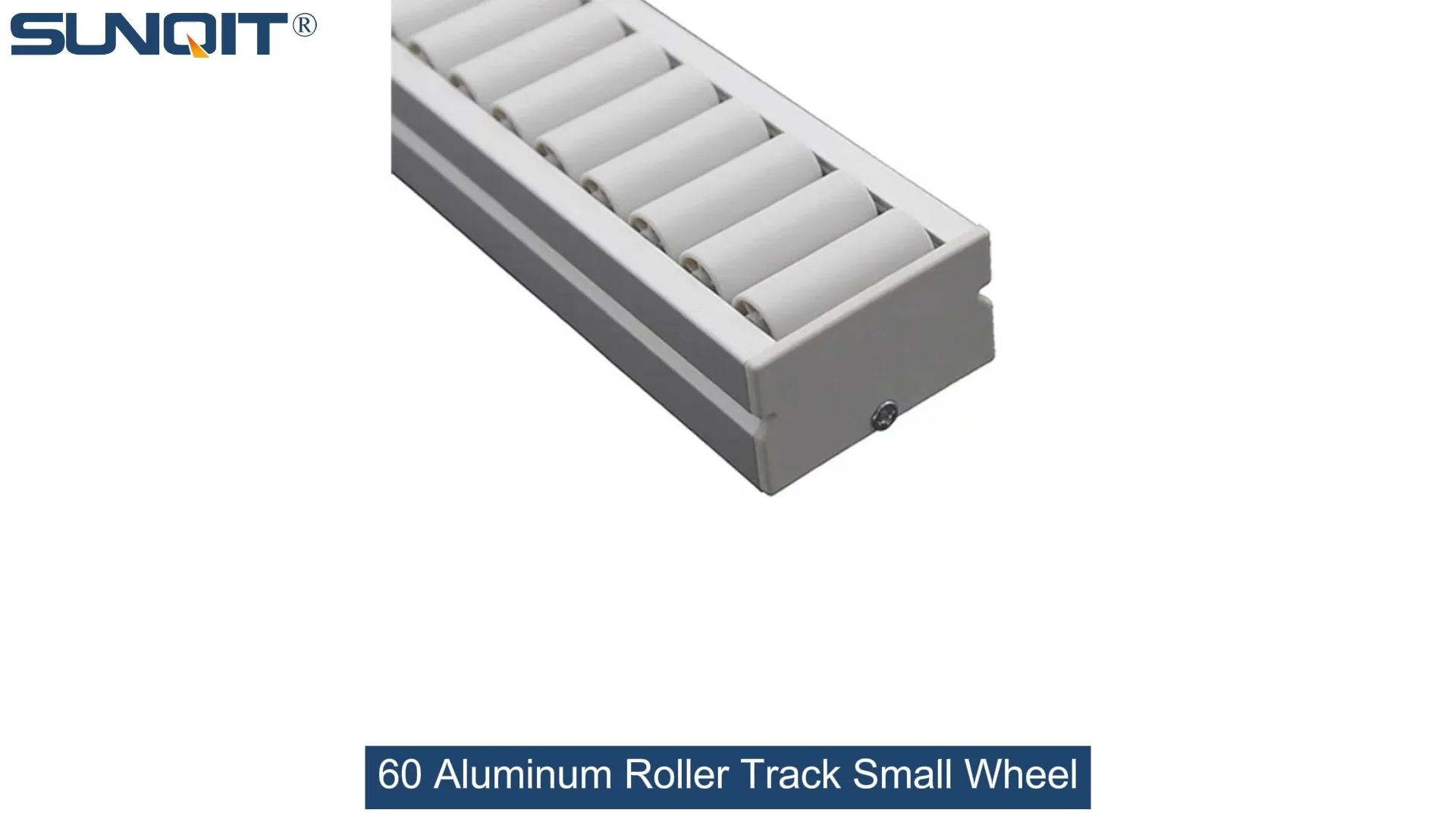
60 Aluminum Roller Track Small Wheel
Modular system roller tracks aluminum gravity roller tracks are an excellent solution for transporting materials within industrial environments, warehouses and distribution centres.
Future Innovations in 60 Aluminum Roller Track Small Wheel Technology
In the fast-paced world of modern manufacturing, every small component plays a big role in keeping operations running smoothly. One such unsung hero is the 60 aluminum roller track small wheel— a tiny but powerful part that's at the heart of material handling systems across industries. From moving delicate 3C assembly parts to heavy warehouse goods, these wheels are critical for efficiency, flexibility, and lean operations. But as manufacturing demands evolve, so does the technology behind these wheels. Let's take a deep dive into the future innovations shaping this essential component and how they're transforming the way we build, move, and optimize production lines.
The Current State of 60 Aluminum Roller Track Small Wheel Technology
Today's 60 aluminum roller track small wheels are already impressive. Made from high-grade aluminum alloys, they strike the perfect balance between strength and lightness—ideal for supporting loads without adding unnecessary weight to the system. Their compact size (around 60mm in diameter) makes them perfect for tight spaces, like those found in flow racks or small conveyor sections in 3C assembly lines.
What's more, these wheels are designed to work seamlessly with aluminum profile accessories, allowing manufacturers to customize their material handling systems quickly. For example, you can attach guides or brackets to the track to direct products exactly where they need to go, or adjust the height to fit different workstation setups. This flexibility aligns with lean principles, as it lets teams adapt their lines without investing in entirely new equipment.
But even with these strengths, there's room for growth. Current wheels often lack smart monitoring capabilities, and while they're durable, their lifespan can be cut short by heavy use or improper maintenance. That's where future innovations come in.
Key Innovations Shaping the Future of 60 Aluminum Roller Track Small Wheels
1. Smart Integration with IoT Sensors
Imagine a world where your roller track wheels tell you when they're about to wear out—before they cause a breakdown. That's not science fiction; it's the future of 60 aluminum roller track small wheel technology.
Future wheels will come embedded with tiny IoT sensors that monitor key metrics: temperature, load weight, rotation speed, and wear and tear. These sensors send real-time data to a central system, which uses AI algorithms to predict maintenance needs. For example, if a wheel's rotation speed drops below a certain threshold (a sign of increased friction or wear), the system will alert the maintenance team to replace it before it fails.
This smart feature is a game-changer for lean solutions. It reduces unplanned downtime, which is one of the biggest enemies of efficiency. Instead of waiting for a problem to happen, teams can schedule maintenance during off-hours, keeping production lines running smoothly. And since the data is collected automatically, there's no need for manual inspections—saving time and labor costs.
2. Enhanced Durability & Sustainability
Sustainability is no longer an afterthought in manufacturing; it's a core requirement. Future 60 aluminum roller track small wheels will be built with this in mind, using 100% recycled aluminum alloys without compromising strength. This not only reduces the carbon footprint but also aligns with the lean principle of reusability—since recycled aluminum can be melted down and reused again and again.
Another innovation in durability is the use of advanced coatings. These coatings will be resistant to corrosion, scratches, and chemical damage, making the wheels suitable for harsh environments like medical device manufacturing or automotive assembly lines. For example, a medical device plant using these wheels in their conveyor systems won't have to worry about rust contaminating sensitive equipment parts.
Additionally, the design of the wheels will be optimized to distribute load more evenly, reducing stress on individual components. This means the wheels will last longer—up to 30% longer than current models—cutting down on replacement costs and waste.
3. Adaptive Customization for Niche Industries
Every industry has unique needs, and future 60 aluminum roller track small wheels will be able to adapt to them. For example, in the 3C assembly industry, where electrostatic discharge (ESD) can damage sensitive components, future wheels will have ESD-compliant coatings. This means they can be used in ESD workstations without risking damage to phones, laptops, or other electronic parts.
For warehouse logistics, wheels will be designed to handle heavier loads—up to 50% more than current models—while still maintaining their compact size. This makes them perfect for conveyor systems that move large boxes or pallets. And since they're compatible with aluminum profile accessories, teams can easily add features like brake systems or shock absorbers to handle fragile goods.
Even in the medical industry, where hygiene is paramount, future wheels will have smooth, non-porous surfaces that are easy to clean and sanitize. This ensures that they meet strict regulatory standards for medical device manufacturing.
4. Improved Friction Control & Energy Efficiency
Friction is a major issue for roller track systems. Too much friction means products move slowly or get stuck; too little means they move too fast and risk damage. Future 60 aluminum roller track small wheels will solve this problem with adaptive friction control.
These wheels will use a special polymer coating that adjusts its friction level based on the load and speed of the product. For example, if a light component (like a phone battery) is moving along the track, the coating will reduce friction to let it glide smoothly. If a heavier part (like a laptop chassis) comes through, the coating will increase friction to slow it down and prevent damage.
This adaptive control not only improves product safety but also saves energy. Since the system doesn't have to use extra power to push products through high-friction areas, it reduces electricity consumption—another win for sustainability.
| Feature | Current State | Future Innovation |
|---|---|---|
| Smart Monitoring | No built-in sensors; manual inspections required | IoT sensors for real-time wear, load, and speed monitoring |
| Material | New aluminum alloys | 100% recycled aluminum with advanced corrosion-resistant coatings |
| Customization | Compatible with basic aluminum profile accessories | Adaptive features (ESD coatings, load-specific friction) for niche industries |
| Durability | Good lifespan for standard use | 30% longer lifespan with even load distribution |
| Energy Efficiency | Fixed friction level | Adaptive friction control to reduce energy consumption |
Real-World Applications of Future 60 Aluminum Roller Track Small Wheels
Case Study: 3C Assembly Line Optimization
A leading 3C manufacturer was struggling with unplanned downtime in their assembly line. Their current roller track wheels would wear out unexpectedly, causing production to stop for hours. They decided to test future 60 aluminum roller track small wheels with IoT sensors.
The results were impressive. The smart wheels alerted the team to a worn wheel 24 hours before it would have failed. The maintenance team replaced it during a scheduled break, and the line didn't miss a beat. Over six months, the manufacturer saw a 40% reduction in unplanned downtime and a 25% decrease in maintenance costs.
What's more, the adaptive friction control feature helped reduce product damage by 30%. Delicate components like phone screens no longer got scratched or broken when moving along the track, saving the company thousands in wasted materials.
This case shows how future wheels can transform a lean solution into an even more efficient, cost-effective system.
Case Study: Warehouse Logistics Efficiency
A large warehouse was dealing with slow conveyor systems in their picking area. The current wheels couldn't handle the heavy loads of boxes, so products moved slowly, leading to delays in order fulfillment. They switched to future 60 aluminum roller track small wheels with enhanced load capacity.
The new wheels could handle up to 50% more weight than the old ones, and the adaptive friction control let them adjust to different box sizes. For small boxes, the wheels reduced friction to speed up movement; for large boxes, they increased friction to keep them stable.
As a result, the conveyor system's speed increased by 20%, and order fulfillment time decreased by 15%. The warehouse also saved money on energy costs, since the system used less power to move the boxes.
This example demonstrates how future wheels can improve efficiency in warehouse logistics, a key area for many manufacturers.
Challenges & Future Outlook
While the future of 60 aluminum roller track small wheels is bright, there are some challenges to overcome. One of the biggest is the cost of integrating IoT sensors into the wheels. For small and medium-sized manufacturers, this might be a barrier to adoption. However, as the technology becomes more widespread, the cost is expected to drop, making it accessible to more businesses.
Another challenge is ensuring compatibility with existing systems. Future wheels need to work with current aluminum profile accessories and conveyor systems so manufacturers don't have to replace everything at once. This requires standardization across the industry, which is something many companies are already working on.
Looking ahead, the future of 60 aluminum roller track small wheels is all about smart, sustainable, and adaptive solutions. As these innovations become mainstream, they will help manufacturers build more efficient, flexible, and eco-friendly production lines. Whether you're in 3C assembly, medical device manufacturing, or warehouse logistics, these wheels will play a key role in shaping the next generation of material handling systems.
Conclusion
The 60 aluminum roller track small wheel may be a small component, but its impact on manufacturing is huge. Future innovations like IoT sensors, enhanced durability, adaptive friction control, and niche industry customization will take this component to the next level. These changes won't just improve efficiency—they'll help manufacturers build leaner, more sustainable operations that can adapt to the ever-changing demands of the market.
So, what does this mean for you? If you're a manufacturer looking to stay ahead of the curve, now is the time to start exploring these future technologies. Whether you're using flow racks, conveyors, or custom lean solutions, the next generation of 60 aluminum roller track small wheels will help you build a better, more efficient production line.
The future of manufacturing is smart, sustainable, and flexible—and it all starts with the small components that keep things moving.