- Company Articles
- Products and Technology
- Product knowledge
- Future Innovations in Two Way Lean Pipe Joint Chrome Design: What to Expect

Future Innovations in Two Way Lean Pipe Joint Chrome Design: What to Expect
Related Product
Two Way Lean Pipe Joint Chrome
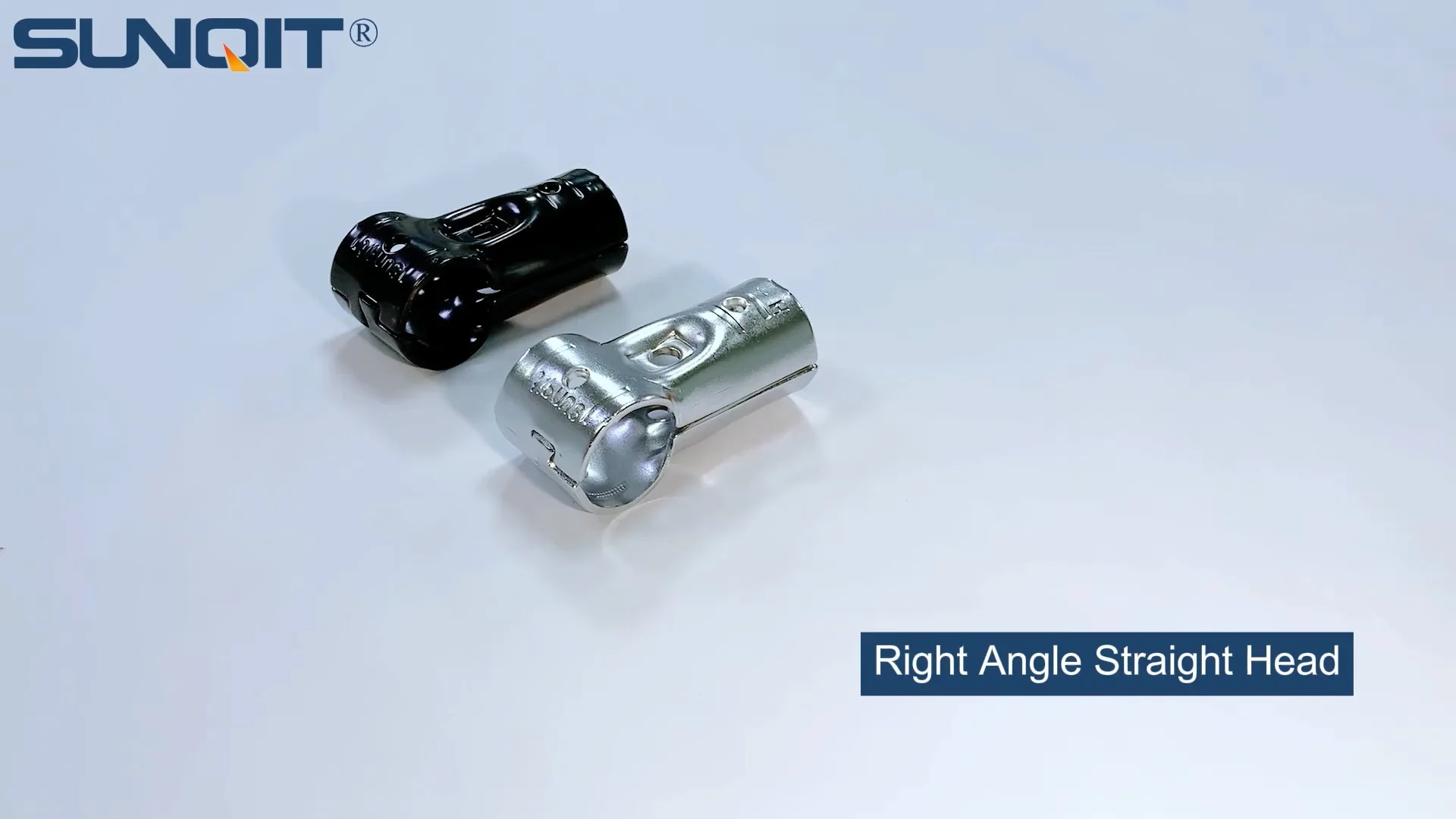
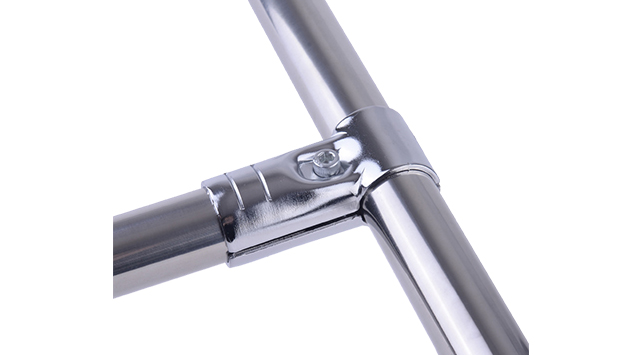
Two way lean pipe joint for 2 pcs 28MM lean pipe connection in straight angle, which used widely in workbench, flow rack, hand trolley frame connection.
In the bustling heart of modern manufacturing facilities, where efficiency is king and adaptability is the key to survival, there's an unsung hero holding everything together: the lean pipe joint. These unassuming connectors are the backbone of lean systems, quietly enabling the workbenches, flow racks, and turnover trolleys that keep production lines moving. Among them, the two way lean pipe joint chrome stands out for its durability and versatility, but as manufacturing evolves, so too must the tools that power it. Today, we're diving into the future of this critical component—exploring how emerging technologies, material science, and a relentless focus on sustainability are set to redefine what two way lean pipe joint chrome can do. Whether you're a facility manager reconfiguring an assembly line or a supplier designing the next generation of lean solutions, this is what you need to know.
The Unsung Backbone: Why Two Way Lean Pipe Joint Chrome Matters
Before we look ahead, let's ground ourselves in the present. Lean pipe systems—often built with steel, aluminum, or stainless steel pipe series—are the workhorses of lean manufacturing. They're designed to be modular, allowing teams to build, disassemble, and rebuild workbenches, material racks, and conveyor systems with minimal effort. At the center of this flexibility are the joints, and two way lean pipe joint chrome has long been a staple. Its chrome plating offers corrosion resistance, making it ideal for environments where moisture or chemicals are present, while its simple, robust design ensures a secure connection between pipes.
Walk through any automotive plant, electronics factory, or warehouse, and you'll see these joints in action. They hold up the shelves of a material rack B (3 row and 3 floor) in a parts room, connect the rails of a roller track guiding components to the assembly line, and stabilize the legs of a workbench E (single deck-without caster) where technicians assemble circuit boards. In short, they're the quiet enablers of the "just-in-time" workflows that make lean manufacturing so powerful. But for all their reliability, today's two way lean pipe joint chrome has room to grow—and the industry is taking notice.
The Pain Points: What's Holding Today's Joints Back?
To understand where innovation is needed, we first need to listen to the people who use these joints every day. Talk to a production supervisor tasked with reconfiguring a line for a new product, and they'll tell you about the time wasted wrestling with traditional joints. "We needed to adjust the height of our workbench last month," one supervisor shared. "The two way joints took two people and a wrench to loosen—by the time we were done, we'd lost an hour of production." Rigidity is another issue: once tightened, many joints offer little to no adjustability, forcing teams to rebuild entire structures from scratch when workflows change.
Weight is a hidden culprit, too. Chrome-plated steel joints add heft to structures, making turnover trolleys harder to maneuver and increasing shipping costs for suppliers. Sustainability is also rising as a concern. Traditional chrome plating processes use harsh chemicals, and at the end of a joint's life, separating the chrome from the steel for recycling is labor-intensive—often leading to joints ending up in landfills. Finally, compatibility: as manufacturers adopt newer materials like aluminum profile or aluminum lean pipe for their lighter weight, many existing two way lean pipe joint chrome designs struggle to connect seamlessly, creating Frankenstein-like setups that compromise stability.
Future Innovations: Redefining the Two Way Lean Pipe Joint Chrome
The good news? The industry is already hard at work solving these pain points. Let's break down the key innovations set to transform two way lean pipe joint chrome in the next 5–10 years.
1. Material Science: Stronger, Lighter, Greener
The future of two way lean pipe joint chrome starts with what it's made of. Traditional joints are typically steel cores with a chrome plating, but emerging materials are set to shake things up. One promising direction is hybrid construction: combining a high-strength aluminum alloy core (think aluminum profile but optimized for joint stress) with a thin, nano-engineered chrome coating. This would cut weight by up to 30%—making trolleys easier to push and reducing shipping emissions—while maintaining the corrosion resistance chrome is known for.
Plating technology is also evolving. Traditional hexavalent chrome plating, while effective, is environmentally problematic. Suppliers are now experimenting with trivalent chrome alternatives, which use 70% less toxic chemicals and produce fewer hazardous byproducts. Some are even exploring "chrome-free" coatings, like diamond-like carbon (DLC), which offers similar hardness and corrosion resistance without the environmental footprint. For facilities focused on sustainability, this could be a game-changer—imagine a joint that performs like chrome but is fully recyclable at the end of its life.
2. Tool-Less Modularity: Assembly Without the Wrench
If there's one innovation users are begging for, it's tool-less assembly. Enter the next generation of two way lean pipe joint chrome: designed to click, twist, or lock into place with nothing more than a hand. Inspired by the internal rotatary aluminum joint's smooth movement, these new joints could feature cam-locking mechanisms or spring-loaded pins that engage when twisted, creating a secure connection in seconds. "We tested a prototype last quarter," says a lean manufacturing consultant. "A single worker could assemble a small flow rack in 15 minutes—down from an hour with traditional joints. The difference in productivity was staggering."
Adjustability is another focus. Imagine a joint that lets you rotate pipes 360 degrees or tilt them up to 45° without disassembling—perfect for fine-tuning a roller track's angle to control material flow. Some designs even incorporate "memory" features, like notches that lock into place at common angles (90°, 45°, 30°), ensuring consistency across multiple workstations. For manufacturers juggling frequent reconfigurations, this means less trial and error and more time focused on production.
3. Smart Integration: Joints That Talk
The rise of Industry 4.0 is turning even the simplest components into data generators—and two way lean pipe joint chrome is no exception. Future joints could embed tiny sensors that monitor load, temperature, or vibration, sending alerts to a factory's IoT system if something's wrong. "Imagine a workbench where the joints detect when it's overloaded and automatically notify the supervisor," says a smart manufacturing expert. "Or a roller track where joints track how often materials pass through, helping managers optimize inventory levels."
RFID tags are another possibility, allowing facilities to track joint usage and maintenance. Scan a joint with a mobile app, and you'll see when it was installed, its load capacity, and even its recycling code for end-of-life disposal. For large-scale operations with thousands of joints, this level of visibility could drastically reduce downtime and waste.
4. Sustainability: Designing for the Circular Economy
As manufacturers race to meet net-zero goals, sustainability is moving from "nice-to-have" to "must-have." Future two way lean pipe joint chrome will be designed with the circular economy in mind—easy to disassemble, recyclable, and made from recycled materials. Take stainless steel: by using scrap from stainless steel pipe series, suppliers can cut raw material costs and reduce carbon emissions by up to 50%. Chrome plating, too, is getting greener: some companies are developing water-based plating solutions that eliminate toxic solvents, while others are exploring "electroless" plating, which uses chemical reactions instead of electricity to apply the chrome layer.
Disassembly is equally important. Today's joints often weld or fuse components together, making recycling difficult. Tomorrow's designs will use snap-fit or threaded connections that separate cleanly, allowing steel, aluminum, and chrome to be recycled individually. Some suppliers are even experimenting with "biodegradable" coatings, though chrome itself is unlikely to be replaced anytime soon—its durability is too valuable. Instead, the focus is on making the entire lifecycle of the joint as eco-friendly as possible.

Traditional vs. Next-Gen: A Side-by-Side Comparison
| Feature | Traditional Two Way Lean Pipe Joint Chrome | Next-Gen Two Way Lean Pipe Joint Chrome |
|---|---|---|
| Material | Steel core with hexavalent chrome plating | Hybrid (aluminum alloy core + trivalent chrome/nano-coating) |
| Assembly Time | 10–15 minutes per joint (requires tools) | 30 seconds–2 minutes per joint (tool-less) |
| Adjustability | Fixed angles (requires disassembly to reposition) | 360° rotation, 0–45° tilt (on-the-fly adjustment) |
| Weight | Heavy (steel-dominant) | 30% lighter (aluminum hybrid design) |
| Sustainability | Hard to recycle (welded components, toxic plating) | Easy disassembly, recycled materials, eco-friendly plating |
| Smart Features | None | Embedded sensors, RFID tracking |
Real-World Impact: How These Innovations Will Transform Workflows
To see the potential of these innovations, let's paint a picture of a manufacturing facility in 2028. Maria, a production manager at an electronics plant, needs to reconfigure her line to assemble a new smartphone model. In the past, this would take a full day: disassembling workbenches, re-cutting pipes, and wrestling with joints. Today, she grabs a handful of next-gen two way lean pipe joint chrome and gets to work.
First, she replaces the old joints on her workbench E with tool-less models, twisting them into place to adjust the height by 6 inches—perfect for the new assembly fixtures. Next, she reconfigures the roller track leading to the bench, using adjustable joints to tilt the track slightly, slowing the flow of components to match the new assembly pace. As she works, the joints' sensors send data to her tablet: "Workbench load: 250 lbs (within safe limit)," "Roller track angle: 5° (optimal for component type)." By lunch, the line is up and running—10 hours faster than the last reconfiguration.
Down the hall, the warehouse team is using hybrid joints to build a new material rack B. The aluminum core makes the rack light enough for two workers to move, while the chrome coating stands up to the warehouse's humidity. When the product line ends in a year, the team will disassemble the rack in minutes, recycling the aluminum core and chrome-plated parts separately. No waste, no hassle—just lean manufacturing at its best.
Challenges Ahead: What Could Slow Innovation?
Of course, innovation doesn't come without hurdles. Cost is a major concern: developing new materials and tooling for next-gen joints could raise prices initially, though suppliers predict costs will drop as production scales. Compatibility is another issue: facilities with existing lean pipe systems (many of which use older steel pipes) need joints that work with both old and new components. "We can't ask customers to replace all their pipes overnight," says a lean pipe supplier. "The next-gen joints need to be backward-compatible—otherwise, adoption will stall."
Regulatory hurdles also loom, especially around new plating chemicals or smart sensor technologies. Suppliers will need to navigate EPA regulations for eco-friendly coatings and ensure IoT-enabled joints meet data privacy standards. But with demand growing—and the benefits so clear—these challenges are likely temporary. As one industry analyst put it: "The writing's on the wall. Manufacturers can't afford to stick with outdated joints when the alternative is faster, greener, and more productive."
The Road Ahead: When Can We Expect These Innovations?
The future isn't as far off as you might think. Some tool-less joint prototypes are already in beta testing, with full production expected within 2–3 years. Hybrid materials and eco-friendly plating are further along—several suppliers plan to launch chrome-aluminum hybrid joints by late 2026. Smart sensors will likely roll out in phases, starting with high-end applications (aerospace, medical device manufacturing) before trickling down to mainstream use by 2030.
For buyers and suppliers, now is the time to prepare. Start by auditing your current lean systems: What pain points do your teams face? Which workflows would benefit most from tool-less assembly or adjustability? Talk to your suppliers about their innovation roadmaps—ask for demos, share feedback, and consider pilot programs. The manufacturers who adopt these innovations early will gain a competitive edge, turning their lean systems from static infrastructure into dynamic, adaptable tools that drive growth.
Conclusion: The Joints of Tomorrow, Building the Factories of Today
Two way lean pipe joint chrome may not be the most glamorous component in manufacturing, but its evolution will ripple through every corner of the industry. From lighter, greener materials to tool-less assembly and smart sensors, these innovations are set to make lean systems more efficient, adaptable, and sustainable than ever before. For the workers on the factory floor, it means less time wrestling with wrenches and more time creating value. For facility managers, it means faster reconfigurations, lower costs, and a smaller environmental footprint. And for suppliers, it means an opportunity to lead—shaping the future of manufacturing one joint at a time.
So the next time you walk through a factory, take a closer look at those unassuming chrome joints. They may not look like much now, but soon, they'll be the smart, sustainable backbone of the lean revolution. The future of manufacturing isn't just about robots and AI—it's about reimagining the basics, one joint at a time.