- Company Articles
- Products and Technology
- Technology Sharing
- Future Innovations: What's Next for 40 Aluminum Roller Track Green Technology?

Future Innovations: What's Next for 40 Aluminum Roller Track Green Technology?
Related Product
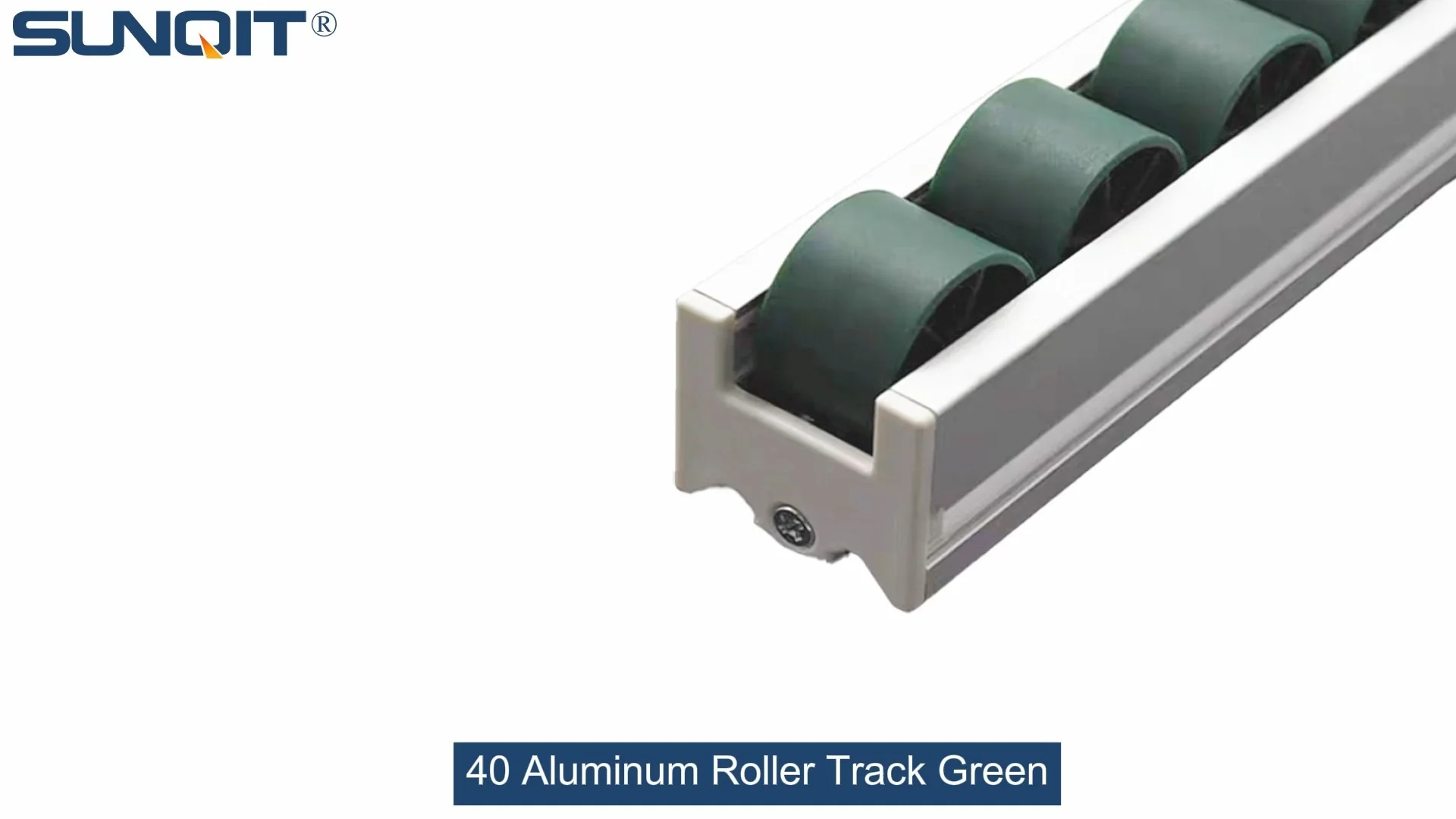
40 Aluminum Roller Track Green
Durable and smooth-running modular roller rails. The system is fully assembled. The roller rail profile contains plastic rollers mounted on steel axles. Aluminum frame with plastic wheel make it anti corrosion,and material convey more smooth.
Future Innovations: What's Next for 40 Aluminum Roller Track Green Technology?
Introduction
Walk into any modern manufacturing plant today, and you'll notice a quiet revolution happening on the floor. Lines are more flexible, waste is being cut down, and every component is being designed with sustainability in mind. One piece of tech that's been at the forefront of this shift is the 40 aluminum roller track—especially its green variants. But what does the future hold for this essential tool in lean manufacturing? Let's dive in and explore the innovations, trends, and possibilities that are shaping the next chapter of 40 aluminum roller track green technology.
What Exactly Is 40 Aluminum Roller Track Green Technology?
First, let's get on the same page about what we're talking about. The 40 aluminum roller track refers to a type of conveyor or flow rack component made from aluminum profiles, typically 40mm in size (though exact dimensions can vary slightly). The "green" label here isn't just a buzzword—it means the track is designed with sustainability at its core: using recycled materials, being reusable, and minimizing environmental impact throughout its lifecycle.
This track is a workhorse in many manufacturing setups. You'll find it in flow racks moving parts to assembly lines, in conveyors transporting finished products, and even in custom lean solution setups for industries like 3C assembly and medical device manufacturing. What makes it stand out is its balance of strength, flexibility, and eco-friendliness—something traditional steel tracks often struggle to match.
Current Applications & Why Green 40 Aluminum Roller Track Matters
Right now, green 40 aluminum roller tracks are used across a wide range of industries. For example, in a 3C assembly plant, they're part of flow racks that feed components to workers efficiently, reducing the time spent searching for parts and cutting down on material waste. In a medical device factory, they're used in conveyors that move sensitive equipment through sterile production lines, thanks to their easy-to-clean surfaces and non-corrosive properties.
To understand why green 40 aluminum roller track is gaining traction, let's compare it to traditional steel tracks using a quick table:
| Feature | Traditional Steel Roller Track | Green 40 Aluminum Roller Track |
|---|---|---|
| Material Composition | Virgin steel, often with toxic coatings | Recycled aluminum (up to 80% in some cases) with eco-friendly coatings |
| Recyclability Rate | ~60% (steel is recyclable but requires high energy to melt) | ~95% (aluminum can be recycled infinitely without losing quality) |
| Energy Use in Production | High (mining iron ore + smelting) | Low (recycling aluminum uses 95% less energy than making virgin aluminum) |
| Reusability | Limited (heavy, hard to reconfigure) | High (modular design, easy to disassemble and reuse in new setups) |
| Long-Term Cost | Higher (corrosion leads to frequent replacements) | Lower (durability + recyclability offset initial costs) |
| Carbon Footprint | Significant (from mining to production) | 50-70% lower than traditional steel tracks |
As you can see, green 40 aluminum roller track isn't just better for the planet—it's also a smarter choice for businesses looking to reduce long-term costs and improve operational efficiency. That's why more and more manufacturers are making the switch.
Future Innovations Shaping Green 40 Aluminum Roller Track Technology
The future of green 40 aluminum roller track is bright, with several key innovations on the horizon. Let's break down the most exciting ones:
1. Material Advancements: Even Greener, Even Stronger
One of the biggest trends is the push for higher recycled aluminum content. Currently, many green tracks use 50-80% recycled aluminum, but future versions could hit 100%—without compromising on strength. Manufacturers are also experimenting with new eco-friendly coatings, like water-based paints and anodizing processes that don't use harmful chemicals. These coatings will not only be better for the environment but also more durable, resisting scratches and corrosion longer than traditional options.
Another area of research is hybrid materials. Imagine combining recycled aluminum with biodegradable polymers to create a track that's lighter, stronger, and even more sustainable. While this is still in the early stages, it's a promising direction for reducing the environmental impact of manufacturing components.
2. Design Optimizations: Modularity & Smart Connectors
Modularity has always been a strength of aluminum roller tracks, but future designs will take this to the next level. For example, new internal rotary aluminum joint designs will make it easier to adjust track angles and configurations on the fly, without needing special tools. This means workers can reconfigure a flow rack or conveyor in minutes instead of hours, adapting to changing production needs quickly.
Another design innovation is the integration of lightweight yet strong aluminum profiles that reduce the overall weight of the track. This not only makes installation easier but also cuts down on energy use when the track is part of a moving conveyor system. Manufacturers are also looking at ways to optimize the roller spacing and shape to reduce friction, which further improves energy efficiency.
3. Smart Manufacturing Integration: IoT & Predictive Maintenance
The future of manufacturing is smart, and green 40 aluminum roller tracks are no exception. Soon, we'll see tracks embedded with IoT sensors that monitor things like wear and tear, temperature, and load capacity. These sensors will send real-time data to a central system, allowing maintenance teams to fix issues before they lead to downtime. For example, if a roller is starting to wear out, the sensor will alert the team, and they can replace it during a scheduled break—instead of waiting for a breakdown that stops production.
This data will also help manufacturers optimize their flow lines. For instance, if a conveyor using green 40 aluminum track is moving parts faster than needed in one section, the system can adjust the speed to reduce energy use. Over time, this data-driven approach will lead to more efficient, sustainable production lines.
4. Circular Economy Enhancements: Reuse & Recycle
The circular economy is all about reusing and recycling products instead of throwing them away, and future green 40 aluminum roller tracks will be designed with this in mind. Manufacturers will offer take-back programs where old tracks are collected, disassembled, and recycled into new ones. This not only reduces waste but also ensures that the aluminum stays in the loop indefinitely.
Another circular economy innovation is the use of standardized components. For example, a track from a flow rack can be disassembled and used in a conveyor system, or vice versa, as long as the connectors and profiles are standardized. This flexibility will make it easier for businesses to adapt their production lines without buying new equipment every time.
Real-World Case Studies: Green 40 Aluminum Roller Track in Action
Let's look at a few examples of how green 40 aluminum roller track is already making a difference, and how future innovations will build on these successes:
Case Study 1: 3C Assembly Plant in Shenzhen
A leading 3C assembly plant in Shenzhen switched to green 40 aluminum roller tracks for their flow racks and conveyors last year. The results were impressive: they reduced material waste by 30% (since parts were moved more efficiently), cut energy use by 25% (thanks to the lighter tracks and lower friction), and saved 20% on maintenance costs (due to the durable, corrosion-resistant material).
Looking ahead, the plant plans to integrate IoT sensors into their tracks to further optimize their production lines. They also want to use 100% recycled aluminum tracks in their next expansion, which will reduce their carbon footprint even more.
Case Study 2: Medical Device Manufacturer in Guangzhou
A medical device manufacturer in Guangzhou needed a custom lean solution for their sterile production line. They chose green 40 aluminum roller tracks for their conveyors because of their easy-to-clean surfaces and non-corrosive properties. The tracks were designed with internal rotary aluminum joints to allow for quick adjustments, which was essential since the plant produces multiple types of medical devices.
The future plan for this plant is to use hybrid aluminum-polymer tracks that are even lighter and more sustainable. They also want to implement a take-back program for their old tracks, ensuring that every component is recycled or reused.
Choosing the Right Supplier for Green 40 Aluminum Roller Track
If you're looking to adopt green 40 aluminum roller track technology, choosing the right supplier is key. Here are a few things to look for:
- Commitment to sustainability: Does the supplier use recycled aluminum? Do they have take-back programs for old components?
- Custom solution capabilities: Can they design tracks that fit your specific production needs? For example, if you need a track for a sterile medical line, do they offer the right coatings and configurations?
- Quality of components: Are their internal rotary aluminum joints durable? Do their aluminum profiles meet industry standards?
- Smart integration support: Can they help you add IoT sensors to your tracks? Do they offer data analytics tools to optimize your production lines?
Many suppliers are now focusing on green technology, so take the time to research and find one that aligns with your sustainability goals. A good supplier will not only provide high-quality tracks but also help you implement them in a way that maximizes efficiency and reduces your environmental impact.
Conclusion
The future of green 40 aluminum roller track technology is full of promise. From material advancements to smart manufacturing integration, these innovations will make manufacturing more sustainable, efficient, and flexible. Whether you're in the 3C assembly industry, medical device manufacturing, or any other sector, adopting green 40 aluminum roller track technology is a step towards a more sustainable future.
As we look ahead, it's clear that green 40 aluminum roller tracks will play a key role in the next generation of lean manufacturing. By embracing these innovations, businesses can reduce their carbon footprint, cut costs, and stay competitive in an increasingly sustainable world. So, are you ready to be part of this revolution?