- Company Articles
- Products and Technology
- Product knowledge
- Future of 4080 Aluminum Profile End Caps: Innovations in Lean Design

Future of 4080 Aluminum Profile End Caps: Innovations in Lean Design
Related Product
4080 Aluminum Profile End Cap
The aluminum profile end cap adds a finishing touch to your project and closes off profile ends to limit dust and debris buildup, also it can avaid some scratch for material and labor during the assemble work.
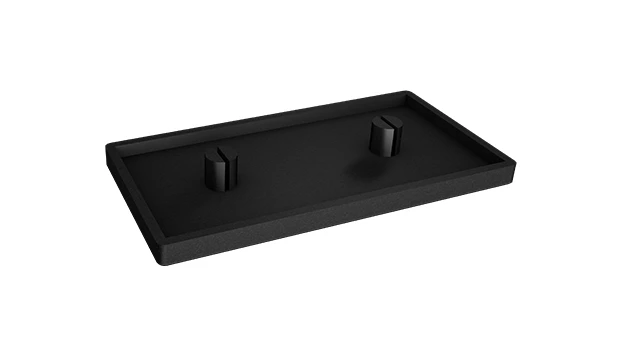
In the bustling world of manufacturing and industrial design, it's often the smallest components that hold the power to transform entire systems. Take, for example, the humble end cap—those unassuming pieces that seal the ends of aluminum extrusion profiles. While they might not grab headlines, they play a quiet yet critical role in ensuring safety, durability, and efficiency in everything from workbenches to material racks. Today, we're diving into one specific star of this unsung category: the 4080 aluminum profile end cap. As lean systems continue to redefine how we build, organize, and operate, these tiny components are undergoing a revolution of their own. Let's explore how innovations in 4080 end caps are shaping the future of lean design—and why they matter more than you might think.
The Backbone of Modern Manufacturing: Aluminum Extrusion Profiles
Before we zoom in on end caps, let's set the stage with the material that makes it all possible: aluminum extrusion profiles. If you've ever walked through a factory floor, visited a workshop, or even assembled a modular shelf, you've likely encountered these versatile building blocks. Aluminum extrusion profiles—like the widely used 4080 series—are created by forcing heated aluminum through a die, resulting in consistent, customizable shapes with precision-engineered T-slots. These slots, along with aluminum profile accessories like connectors, brackets, and rubber strips, make the profiles infinitely adaptable. They're the reason why a single 4080 aluminum extrusion profile can be transformed into a sturdy workbench, a dynamic flow rack, or a lightweight turnover trolley.
The 4080 series, in particular, has become a staple in industries ranging from automotive to electronics. Its name refers to its dimensions: 40mm in width and 80mm in height, though variations exist. This size strikes a perfect balance between strength and flexibility, capable of supporting heavy loads while remaining easy to assemble and reconfigure—two pillars of lean system philosophy. But here's the thing: even the most robust aluminum extrusion profile is only as good as the components that complete it. And that's where end caps come into play.
Why End Caps Matter: More Than Just a "Finishing Touch"
Traditionally, end caps were seen as little more than protective covers. Their primary job was to seal the open ends of aluminum profiles to prevent dust, debris, or moisture from entering the T-slots, which could corrode the metal or jam accessories like bolts and brackets. They also served a safety purpose, eliminating sharp edges that might snag clothing or cause cuts during assembly or daily use. For anyone who's ever handled a raw aluminum extrusion profile, the difference between a capped and uncapped end is immediately noticeable—one feels like a polished tool, the other like a potential hazard.
But as lean systems evolved, so did the expectations for end caps. Lean design isn't just about efficiency; it's about eliminating waste, enhancing user experience, and creating systems that adapt to changing needs. Suddenly, a basic plastic end cap that merely "covers" the profile wasn't enough. Manufacturers and workers began asking: Could end caps do more? Could they reduce assembly time? Improve ergonomics? Support sustainability goals? The answer, as we'll see, is a resounding yes.

Innovations Reshaping 4080 Aluminum Profile End Caps
Today's 4080 aluminum profile end caps are a far cry from their one-size-fits-all predecessors. Let's break down the key innovations driving their evolution:
1. Material Science: Durability Meets Sustainability
Gone are the days of brittle plastic end caps that crack under pressure or fade under UV light. Modern end caps are crafted from advanced polymers—like reinforced nylon or polypropylene—that offer superior impact resistance, temperature tolerance, and longevity. But it's not just about durability; sustainability is taking center stage. Many manufacturers now use recycled or biodegradable materials in their end caps, aligning with the lean principle of minimizing environmental waste. For example, some suppliers offer end caps made from 30% recycled plastic, without compromising on strength. This shift not only reduces the carbon footprint of production but also appeals to companies eager to meet their green initiatives.
Another material trend is the integration of ESD (Electrostatic Discharge) properties. In electronics manufacturing, even a small static charge can damage sensitive components. New ESD-safe end caps, often infused with conductive additives, help dissipate static electricity, making them a critical addition to ESD workstations and material racks. This isn't just an upgrade—it's a necessity for industries where precision is non-negotiable.
2. Design for Assembly: Snap, Twist, Done
Anyone who's ever fumbled with a tiny screw or adhesive to attach an end cap knows: traditional installation methods are a waste of time. Lean systems thrive on efficiency, and that includes how quickly components can be assembled and reconfigured. Enter "snap-fit" end caps—a game-changer for assembly lines and DIY enthusiasts alike. These end caps feature flexible tabs or ridges that lock securely into the T-slots of the 4080 aluminum extrusion profile with a simple push or twist. No tools, no adhesives, no hassle. A worker can install a snap-fit end cap in seconds, reducing assembly time by up to 70% compared to screw-on versions. For high-volume production facilities, this translates to significant labor savings and fewer bottlenecks—a classic lean win.
But innovation doesn't stop at speed. Some end caps now include "tool-less removal" features, like a small tab that can be pulled to release the cap. This is a boon for maintenance and reconfiguration. Imagine needing to adjust a workbench or replace a damaged bracket: instead of hunting for a screwdriver to remove the end cap, you simply pull the tab, make your changes, and snap the cap back on. It's small touches like this that turn a rigid system into a truly agile one.
3. Ergonomics and User-Centric Design
Lean systems aren't just about machines and processes—they're about people. A workbench that's uncomfortable to use or a material rack that's awkward to load defeats the purpose of lean, which aims to create value for both workers and customers. Modern 4080 end caps are being redesigned with ergonomics in mind, focusing on how they feel in hand and interact with the human body.
For starters, edge design has come a long way. Traditional end caps sometimes had sharp corners or rough edges, even after installation. Newer models feature rounded, smoothed edges that feel comfortable to touch and reduce the risk of scrapes or snags. This might seem trivial, but consider a worker who interacts with a workbench dozens of times a day—those small discomforts add up. A smoother end cap means less fatigue and more focus on the task at hand.
Some end caps also include integrated grips or textured surfaces, making it easier to move or reposition aluminum profile structures like portable workbenches or hand trolleys. Others are designed to be stackable, allowing for neat storage when not in use—another space-saving lean principle. Even color is being leveraged for ergonomics: high-visibility yellow end caps can signal "caution" on moving parts, while color-coded caps (e.g., blue for ESD zones, green for general use) help workers quickly identify the purpose of a structure, reducing errors and improving workflow.
4. Integration with Aluminum Profile Accessories
No component exists in isolation, and 4080 end caps are no exception. Today's designs are increasingly engineered to work seamlessly with other aluminum profile accessories, creating a more cohesive system. For example, some end caps feature built-in channels that accommodate aluminum profile rubber strips, which seal gaps between profiles to prevent dust buildup or reduce noise. Others have recessed areas that allow for flush mounting of labels or QR codes, making it easier to track inventory or identify components in a lean warehouse.
Perhaps most exciting is the integration with modular lighting or cable management systems. Imagine a workbench built with 4080 profiles, where the end caps have small ports to route power cords or USB cables, keeping the workspace clutter-free. Or end caps that include mounting points for LED light strips, illuminating the work surface without the need for separate fixtures. These integrations turn end caps from passive components into active contributors to a more organized, efficient workspace.

The Lean Impact: How End Caps Drive System-Wide Efficiency
At this point, you might be wondering: how do these small innovations in end caps translate to big wins for lean systems? Let's connect the dots. Lean design is built on five core principles: value, value stream, flow, pull, and perfection. 4080 aluminum profile end caps touch on all of these:
- Value: By enhancing safety, durability, and ease of use, innovative end caps add tangible value to aluminum profile structures. A workbench with ergonomic, ESD-safe end caps is more valuable to a manufacturer than one with basic caps, as it reduces the risk of product damage and worker injury.
- Value Stream: Snap-fit installation and tool-less removal eliminate non-value-added steps in assembly and maintenance. This streamlines the value chain, from production to use.
- Flow: Color-coded and labeled end caps help workers quickly identify and access tools or materials, keeping the production flow smooth and uninterrupted.
- Pull: Sustainable, recyclable end caps align with customer demand for eco-friendly products, allowing suppliers to "pull" materials based on green initiatives rather than just cost.
- Perfection: The ability to reconfigure, repair, or upgrade end caps without replacing entire profiles supports the lean goal of continuous improvement, moving systems closer to "perfection."
To put this into perspective, let's consider a real-world example: a small electronics manufacturer that switched to innovative 4080 end caps on their assembly workbenches. Before the switch, installing end caps took 5 minutes per bench (using screws), and workers reported occasional scrapes from rough edges. After switching to snap-fit, ESD-safe end caps with rounded edges, installation time dropped to 30 seconds per bench, and worker complaints about discomfort decreased by 90%. Over a year, the company saved 120 labor hours (valued at $3,600) and reduced product damage due to static by 15%, translating to $10,000 in savings. All from a component that costs less than $2 per unit. That's the power of lean innovation at the micro level.
Traditional vs. Innovative: A Comparison
Table 1: Key Differences Between Traditional and Innovative 4080 Aluminum Profile End Caps
| Feature | Traditional End Caps | Innovative End Caps | Lean Benefit |
|---|---|---|---|
| Installation | Screw-on or adhesive; requires tools | Snap-fit or twist-lock; tool-less | Reduces assembly time by 50-70% |
| Material | Basic plastic; limited durability | Reinforced polymers, recycled materials, ESD-safe options | Longer lifespan; reduced waste; safer for sensitive environments |
| Ergonomics | Sharp edges; minimal design | Rounded edges, textured grips, color-coding | Reduced worker fatigue; improved safety; faster workflow |
| Integration | Standalone; no compatibility with accessories | Works with rubber strips, labels, lighting, and cable management | Clutter-free workspaces; better organization |
| Sustainability | Non-recyclable; single-use | Recyclable materials; reusable design | Lower environmental impact; aligns with green lean goals |
Looking Ahead: The Future of 4080 End Caps
So, what's next for these tiny but mighty components? The future of 4080 aluminum profile end caps lies in even deeper integration with smart manufacturing and Industry 4.0. Here are a few trends to watch:
Smart Sensing End Caps: Imagine end caps embedded with tiny sensors that monitor temperature, vibration, or load on a structure. A workbench end cap could detect if a shelf is overloaded and send an alert to a worker's tablet, preventing damage. Or a flow rack end cap could track how often materials are accessed, providing data to optimize inventory in a lean pull system.
3D-Printed Customization: As 3D printing becomes more accessible, manufacturers may offer on-demand, custom end caps tailored to specific applications. Need an end cap with a unique shape to fit a specialized tool? Upload the design, and a local supplier prints it—reducing lead times and waste from mass production.
Self-Healing Materials: Research into self-healing polymers could lead to end caps that repair minor scratches or cracks on their own, extending lifespan and reducing maintenance. This aligns with the lean goal of "perfection" by minimizing the need for replacements.
Biodegradable Options: While recycled plastics are a step forward, future end caps might be made from fully biodegradable materials, such as plant-based polymers, that break down naturally at the end of their life cycle. This would close the loop on sustainability, making aluminum extrusion profile systems truly cradle-to-cradle.
Conclusion: Small Parts, Big Dreams
As we wrap up, it's clear that the 4080 aluminum profile end cap is more than just a finishing touch—it's a symbol of how lean design is transforming manufacturing from the ground up. These small components embody the lean spirit: they eliminate waste, add value, and put people at the center of the process. Whether it's through snap-fit installation that saves hours of labor, ESD-safe materials that protect sensitive products, or ergonomic edges that make workspaces more comfortable, innovative end caps are proving that big change often starts small.
For suppliers, wholesalers, and manufacturers, the message is clear: paying attention to the details—like end caps—isn't just good design; it's good business. In a world where lean systems are the gold standard, the companies that innovate at the component level will be the ones leading the charge toward more efficient, sustainable, and human-centric manufacturing.
So, the next time you walk past a workbench or a material rack, take a moment to look at the end caps. Chances are, they're not just covering a profile—they're building the future of lean design, one small, thoughtful innovation at a time.