- Company Articles
- Products and Technology
- Product knowledge
- Future of Gusset Alp 3030: Innovations in Lean Manufacturing Components

Future of Gusset Alp 3030: Innovations in Lean Manufacturing Components
Related Product
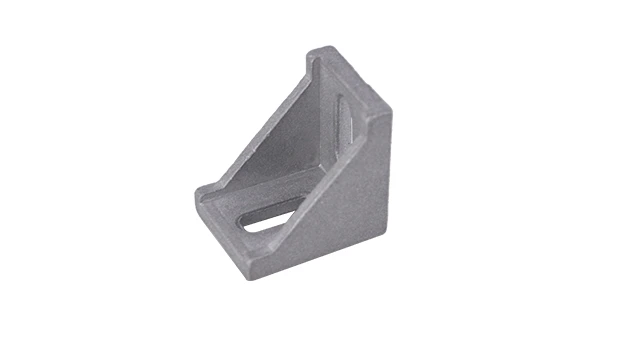
Gusset ALP 3030
The 3030 bracket/Gusset is an external fastening method that creates a 90 degree connection. 3030 means this size is used for 30 series aluminum profile with a quick connection by bolt and nut.
Walk into any modern manufacturing facility today, and you'll notice a shift. Gone are the days of rigid, bolted-down workbenches and static production lines that take weeks to reconfigure. Instead, floors hum with adaptable setups—workstations that pivot for new tasks, flow racks that adjust to changing inventory, and aluminum frames that snap together like oversized building blocks. This isn't just about looks; it's about survival. In an era where customer demands flip overnight and product lifecycles shrink by the month, manufacturers can't afford to be tied to inflexible systems. Lean manufacturing, the philosophy of minimizing waste and maximizing value, has always been the north star here. But lately, the real magic isn't in the big-picture strategies—it's in the small, unsung components that make agility possible. Enter the Gusset Alp 3030 : a humble bracket that's quietly revolutionizing how factories build, adapt, and thrive.
The Unsung Hero of Modern Lean Systems
Let's start with the basics: What even is a Gusset Alp 3030? If you've ever assembled a bookshelf or a DIY furniture kit, you're familiar with the concept of a bracket—a small piece that holds two parts together, adding strength where they meet. In manufacturing, brackets do the same, but the stakes are higher. A flimsy bracket on a workbench might mean a wobbly surface mid-assembly; a weak bracket on a flow rack could lead to jams, delays, or worse, accidents. For decades, factories relied on heavy steel brackets. They were tough, sure, but they came with a catch: they were permanent. Welding or bolting them into place meant once your production line was set, changing it meant cutting, rewelding, and starting from scratch. It was like building a house with superglue instead of screws—strong, but impossible to rearrange when you needed an extra room.
The Gusset Alp 3030 flips that script. Made from high-grade aluminum, this bracket is designed to work seamlessly with aluminum profiles —the modular, T-slot frames that have become the backbone of modern lean systems. Unlike steel, aluminum is lightweight, corrosion-resistant, and (most importantly) infinitely reusable. The Gusset Alp 3030 slides into the T-slots of aluminum profiles, locks in place with a simple screw, and can be just as easily unscrewed and moved when your needs change. It's the difference between using Velcro and nails—strong enough to hold, but gentle enough to reposition without damage.
But why does this matter for lean systems? Lean isn't just about cutting costs; it's about creating a culture of continuous improvement. Workers on the floor know best what's slowing them down—a workbench that's too low, a flow rack that's too narrow, a material bin that's out of reach. With traditional brackets, suggesting a change meant filling out forms, waiting for maintenance, and crossing fingers. With Gusset Alp 3030, a team can reconfigure a workstation during a lunch break. That's empowerment. That's lean in action.
From Steel to Aluminum: The Material Revolution
To understand the Gusset Alp 3030's impact, you have to talk about the material it's made for: aluminum profiles. A few decades back, steel was king in manufacturing. It was cheap, abundant, and could handle heavy loads. But steel has drawbacks. It rusts, for one—bad news in humid factories or those handling liquids. It's also heavy, making it a nightmare to move. And cutting or welding steel requires specialized tools and skilled labor, which adds time and cost to any reconfiguration. Aluminum profiles solved most of these issues. Lightweight but surprisingly strong (think aircraft-grade aluminum), they resist corrosion, come in standardized sizes, and their T-slot design lets you attach brackets, shelves, or tools anywhere along the frame—no drilling required. But even with aluminum profiles, the brackets mattered. Early aluminum brackets were often plastic or thin metal, prone to bending under heavy loads. The Gusset Alp 3030 was built to fix that.
What makes the Gusset Alp 3030 stand out? Let's break it down. First, it's precision-engineered. The 3030 in its name refers to the size of the aluminum profile it's designed for—30mm x 30mm, a common size for workbenches, small flow racks, and material trolleys. The bracket itself is shaped like a right triangle (hence "gusset," a term for triangular support pieces), with holes that align perfectly with the T-slots in the profile. This isn't just about fit; it's about force distribution. When you mount a shelf or a crossbeam using a Gusset Alp 3030, the triangular shape spreads the weight evenly across the profile, reducing stress points. Steel brackets could do this too, but again—they couldn't move. The Gusset Alp 3030 does it all while staying adaptable.
Take a typical scenario: a electronics manufacturer needs to add a new testing station to their assembly line. With traditional steel brackets, they'd order custom-cut steel frames, weld on brackets, and hope the measurements were right. If the station needed to shift six inches left a month later? They'd have to start over. With aluminum profiles and Gusset Alp 3030 brackets, they can grab pre-cut profiles, slide the brackets into place, and have the station up and running in an hour. If they need to adjust later, just loosen the screws, slide the brackets, and retighten. No welding, no waste, no waiting. It's lean manufacturing at its most tangible.

Building Better Workbenches: Where Comfort Meets Productivity
Let's zoom in on one of the most critical spots in any factory: the workbench . This is where the rubber meets the road—where assemblers spend 8+ hours a day, where precision matters, and where small discomforts add up to big losses in productivity. A wobbly workbench? Fatigue sets in faster. A surface that's too high or low? Back pain and errors follow. For years, workbenches were one-size-fits-all, built to "standard" heights and widths that rarely matched the reality of the people using them. The Gusset Alp 3030 is changing that by making customization not just possible, but easy.
Consider a workbench for a small electronics assembly line. The team assembles circuit boards, so they need a flat, stable surface, a shelf for tools, and a bin for components. With aluminum profiles and Gusset Alp 3030 brackets, here's how it comes together: start with four vertical aluminum profiles for legs. Slide Gusset Alp 3030 brackets onto the profiles at the desired height for the main surface—say, 36 inches for a standing desk, or 30 inches for seated work. Attach crossbeams to the brackets, lay a plywood or aluminum top, and boom: base done. Need a shelf for tools? Add more brackets 18 inches below the top, attach another beam, and drop in a shelf. Too low? Loosen the screws, slide the brackets up, and retighten. It's like building with Legos, but for grown-ups with deadlines.
But it's not just about height. Workers often need accessories: monitor arms, tool hooks, cable management clips. The T-slot in aluminum profiles (and the Gusset Alp 3030's ability to lock into them) means you can add these on the fly. A monitor arm slides into a T-slot, secured by a bracket; a hook for screwdrivers does the same. If a new worker joins and prefers the monitor on the left instead of the right? Move the bracket. No drilling new holes, no patching old ones—just adjust and go. This level of personalization might sound trivial, but studies show that ergonomic, customizable workstations reduce fatigue by up to 30% and boost productivity by 15%. That's not just good for workers; it's good for the bottom line.

Flow Racks Reimagined: Keeping Materials Moving, No Jams Allowed
If workbenches are where the work happens, flow racks are the arteries that keep materials flowing to them. These are the sloped racks where bins of parts slide down as they're used, ensuring assemblers always have what they need right in front of them—no bending, reaching, or searching. But flow racks have their own set of headaches. If the angle is off, bins get stuck. If the racks are too narrow, you can't fit larger parts. If they're too wide, you waste space. Traditional flow racks, built with fixed steel frames and brackets, forced factories to choose: optimize for one part, or accept inefficiency. The Gusset Alp 3030, paired with aluminum profiles, turns flow racks into chameleons.
Let's say a automotive parts supplier needs a flow rack for two types of components: small plastic clips (light, small bins) and heavy metal brackets (dense, large bins). With a traditional rack, they'd need two separate racks—one with shallow, narrow lanes for the clips, another with deep, wide lanes for the brackets. With aluminum profiles and Gusset Alp 3030 brackets? They can build a single rack with adjustable lanes. The vertical supports are aluminum profiles; the horizontal rails (where the bins sit) are attached using Gusset Alp 3030 brackets. Need a narrow lane? Slide the brackets closer together. Need a wider one? Slide them apart. The slope? Adjust the height of the brackets on one side to tilt the rails—steeper for light bins, gentler for heavy ones. It's like having a rack that speaks your language, adapting to whatever you throw at it.
And when the product mix changes (because it always does), the rack changes with it. Last month's "heavy metal bracket" line might become next month's "plastic housing" line, requiring shallower bins. No need to buy a new rack—just reposition the brackets. This isn't just about saving money on new equipment; it's about saving space. Factories are expensive real estate, and wasting square footage on redundant racks is the opposite of lean. The Gusset Alp 3030 turns one rack into many, freeing up space for new machines, more workbenches, or even just breathing room for workers.
By the Numbers: Traditional Brackets vs. Gusset Alp 3030
| Feature | Traditional Steel Brackets | Gusset Alp 3030 (Aluminum) |
|---|---|---|
| Installation Time | 2–4 hours (welding/bolting required) | 15–30 minutes (screw-on, no special tools) |
| Reusability | Low (welding/bolting damages materials) | High (easily removed and reinstalled) |
| Weight | Heavy (adds load to frames) | Lightweight (30–50% lighter than steel) |
| Corrosion Resistance | Poor (prone to rust in humid environments) | Excellent (aluminum naturally resists corrosion) |
| Cost Over Time | High (replacement costs for reconfigurations) | Low (one-time purchase, reusable indefinitely) |
| Load Capacity | High (but fixed) | High (adjustable to match changing loads) |
The Future: Where Gusset Alp 3030 and Lean Manufacturing Go Next
So, what's next for the Gusset Alp 3030? If the past decade is any indication, the future is all about smarter, greener, and more connected components. Let's start with sustainability. Aluminum is already 100% recyclable, and the Gusset Alp 3030's reusability means less waste—no more cutting up old steel brackets and sending them to the scrapyard. But manufacturers are pushing further. Some suppliers are experimenting with recycled aluminum for Gusset Alp 3030 brackets, reducing the carbon footprint even more. Imagine a bracket that not only helps you cut waste in production but is itself a product of waste reduction. That's lean manufacturing coming full circle.
Then there's customization. As factories move toward "batch size one" production (making one-of-a-kind products efficiently), components like the Gusset Alp 3030 will need to adapt to even more specific needs. We're already seeing suppliers offer Gusset Alp 3030 brackets with specialized coatings—anti-static for electronics factories, heat-resistant for automotive plants, or even antimicrobial for medical device production. There's also the rise of 3D printing for custom brackets, though aluminum's strength still makes it the go-to for heavy-duty use. The goal? A bracket that doesn't just fit your current setup, but your wildest future setup too.
And let's not forget tech. The "smart factory" isn't a buzzword anymore; it's here. Sensors, IoT devices, and AI are transforming floors into data hubs, tracking everything from machine downtime to material usage. The Gusset Alp 3030 could soon play a role here too. Imagine brackets with built-in RFID tags, letting managers track which components are where, or sensors that alert maintenance when a bracket is loosening (before it becomes a problem). It's a stretch, but not a big one—after all, the bracket is already in the perfect position: at the intersection of frames, where stress and movement are highest. Why not turn it into a data point?
Real-World Impact: Factories That Ditched Steel for Aluminum (and Never Looked Back)
Talk is cheap; results matter. Let's look at two factories that swapped steel brackets for Gusset Alp 3030 and aluminum profiles—and the difference it made.
Case Study 1: A Small Electronics Assembler Saves Big on Setup Time
A family-owned electronics company in Ohio with 50 employees was struggling to keep up with custom orders. Their production line, built with welded steel workbenches and flow racks, took 2–3 days to reconfigure for each new product. By the time they were set up, the next order was already rolling in. They switched to aluminum profiles and Gusset Alp 3030 brackets. The result? Setup time dropped to 2–3 hours. "We used to have to schedule reconfigurations over the weekend," says the plant manager. "Now, we can do it between shifts. Last month, we took on three rush orders we would've turned down before—all because we could adjust on the fly."
Case Study 2: A Automotive Supplier Cuts Waste, Boosts Safety
A mid-sized automotive parts supplier in Michigan was dealing with frequent flow rack jams. Their steel racks were fixed, so they'd often overstock bins to avoid running out, leading to clutter and spills. After switching to aluminum profiles and Gusset Alp 3030-adjustable flow racks, they optimized bin sizes and angles. Spills dropped by 60%, and overstocking fell by 40%. "Workers used to spend 10 minutes an hour unjamming bins," the safety director notes. "Now, that time goes back to building parts. And with the racks so easy to adjust, we've cut down on bending injuries too—people aren't straining to reach misaligned bins anymore."
Conclusion: The Bracket That Built a Better Factory
At the end of the day, the Gusset Alp 3030 is more than a bracket. It's a symbol of how lean manufacturing is evolving—from lofty principles to tangible tools that put power back in the hands of the people on the floor. It's proof that sometimes, the smallest components make the biggest difference. Steel brackets did their job for decades, but they belonged to a world of mass production, where change was slow and waste was accepted. Today's factories need something different: something light, strong, and ready to adapt. The Gusset Alp 3030, paired with aluminum profiles, workbenches, and flow racks, is that something.
So the next time you walk through a factory, take a closer look at those aluminum frames. The brackets holding them together might not look like much—small, silver, unassuming. But chances are, they're Gusset Alp 3030 brackets. And they're not just holding up the line—they're holding up the future of manufacturing.