- Company Articles
- Products and Technology
- Product knowledge
- Future of Lean Manufacturing: Innovations in One Way Rotatory Straight Lean Pipe Joints

Future of Lean Manufacturing: Innovations in One Way Rotatory Straight Lean Pipe Joints
Related Product
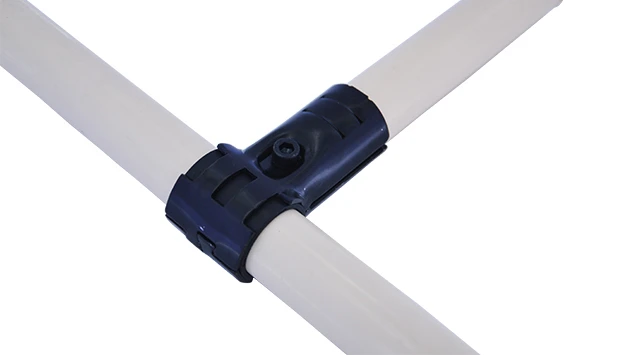
One Way Rotatory Straight Lean Pipe Joint
Two way lean pipe joint for 2 pcs 28MM lean pipe connection in straight angle with rotatory fucntion, which used widely in workbench, flow rack, hand trolley frame connection.
The Heartbeat of Lean Manufacturing: Where People and Process Meet
Walk onto any modern factory floor, and you'll feel it immediately—the hum of purpose. Workers move with intention, materials glide smoothly from station to station, and every square foot of space feels deliberate. This isn't chaos; it's lean manufacturing in action. At its core, lean is about more than just cutting costs or boosting output. It's about people—making their work easier, safer, and more meaningful—while eliminating the waste that drains energy and creativity. And in this mission, the tools we use matter just as much as the principles we follow.
For decades, lean pipe systems have been the backbone of this movement. These modular, easy-to-assemble structures—think workbenches, material racks, and conveyor supports—adapt to changing needs, letting teams reconfigure lines in hours instead of weeks. But as manufacturing evolves, so too must the building blocks of these systems. Enter the one way rotatory straight lean pipe joint : a small but revolutionary component that's quietly transforming how factories stay agile in an era of constant change. Let's dive into how this innovation is shaping the future of lean—and why it matters for anyone who believes that great manufacturing starts with great tools.
From Rigid to Agile: The Evolution of Lean Pipe Systems
To appreciate the one way rotatory joint, we need to take a quick trip back in time. Lean manufacturing emerged in the mid-20th century, but the first lean pipe systems—often called "Kanban racks" or "flexible tubing systems"—gained popularity in the 1990s. Early versions relied on steel pipes and fixed joints: sturdy, but stiff. If a team needed to adjust a workbench height or reangle a material rack, they'd grab a wrench, loosen bolts, and hope the joints didn't strip. It was better than permanent concrete structures, but far from perfect.
Then came the shift to aluminum lean pipe . Lighter than steel, resistant to corrosion, and infinitely recyclable, aluminum pipe systems cut down on installation time and long-term maintenance. Factories handling electronics or food products, where cleanliness is critical, embraced aluminum for its smooth, easy-to-clean surface. But even with aluminum's advantages, the joints remained a bottleneck. Traditional fixed joints locked pipes into static angles, limiting how quickly teams could adapt to new product lines, smaller batch sizes, or sudden demand spikes.
Today, manufacturers face pressure like never before. Consumer expectations shift overnight, supply chains wobble, and sustainability goals demand less waste and more reuse. A lean system that worked last quarter might feel outdated by next month. This is where the one way rotatory straight lean pipe joint steps in: it's not just a better joint—it's a tool for resilience.

Meet the Innovator: The One Way Rotatory Straight Lean Pipe Joint
What Is It, Exactly?
At first glance, the one way rotatory straight lean pipe joint looks unassuming—a sleek, often aluminum or stainless steel connector that links two lean pipes. But its magic lies in its movement: unlike fixed joints that require tools to adjust, this joint rotates freely in one direction (say, clockwise) while locking securely in the other. Imagine a door hinge that lets you swing it open smoothly but stays put when you let go—no bolts, no clamps, just instant stability.
Here's how it works: inside the joint, a spring-loaded mechanism or precision-engineered ratchet allows controlled rotation in a single plane. When you need to adjust the angle of a pipe—say, to tilt a workbench shelf for better ergonomics or reposition a roller track to feed materials to a new station—you simply rotate the joint to the desired position, and it locks automatically. No tools, no downtime, no fumbling with nuts and bolts. It's lean's "continuous improvement" ethos packed into a 3-inch component.
Why It's a Game-Changer for Lean Teams
Let's talk about the real-world impact. Maria, a line supervisor at a mid-sized electronics plant, remembers the old days: "When we launched a new smartphone model, we'd spend two days reconfiguring our assembly workbenches. Teams would carry wrenches, fight with stuck bolts, and by the end, everyone was exhausted. Now, with these rotatory joints, we adjust the angle of the component bins in 10 minutes. The joint just clicks into place, and we're back to building. It's not just faster—it's less stressful. People don't dread change anymore."
That's the power of the one way rotatory joint: it turns "change" from a headache into a routine. For lean, which thrives on kaizen (continuous improvement), this flexibility is gold. Teams can test new layouts on the fly, adapt to worker feedback (e.g., "Can we tilt this shelf up 15 degrees? My back aches"), or even repurpose entire sections of a line for a rush order—all without halting production for hours.
Durability matters too. These joints are built to withstand the daily grind of manufacturing. Many are made from high-grade aluminum or stainless steel, resisting scratches, corrosion, and the wear of repeated adjustments. Some even come with ESD (electrostatic discharge) coatings, making them safe for sensitive electronics—a critical feature in industries like semiconductors or medical device manufacturing.

Traditional vs. Rotatory: A Side-by-Side Comparison
Curious how the one way rotatory straight lean pipe joint stacks up against older designs? Let's break it down:
| Feature | Traditional Fixed Lean Pipe Joint | One Way Rotatory Straight Lean Pipe Joint |
|---|---|---|
| Adjustment Time | 15–30 minutes per joint (requires tools) | 10–30 seconds per joint (tool-free) |
| Flexibility | Limited to pre-drilled angles (e.g., 90°, 45°) | Infinite angles within rotation range (0°–180° typical) |
| Worker Fatigue | High (requires manual wrenching, repetitive motion) | Low (one-handed adjustment, minimal effort) |
| Durability | Prone to stripped threads with frequent adjustments | Designed for repeated rotation; no wear on locking mechanism |
| Best For | Static layouts with rare changes | Dynamic environments (small batches, frequent reconfigurations) |
Beyond the Joint: Building the Lean Ecosystem of Tomorrow
The one way rotatory straight lean pipe joint doesn't work in isolation. It's part of a broader shift toward smarter, more integrated lean systems—one where lean pipe , aluminum profiles, roller tracks, and even IoT sensors work together to create factories that adapt as quickly as ideas do.
Pairing with Roller Tracks for Seamless Material Flow
Material flow is the lifeblood of lean, and roller tracks are its arteries. These systems of rotating rollers carry components, subassemblies, and finished products from station to station, reducing the need for manual lifting. But traditional roller tracks are often fixed in place, making it hard to reroute materials when a line changes. Enter the rotatory joint: by attaching roller track supports to pipes connected with one way rotatory joints, teams can tilt, angle, or even reposition entire tracks in minutes.
Take a automotive parts supplier, for example. When they started producing electric vehicle (EV) components alongside traditional parts, their old roller tracks couldn't keep up. "EV batteries are heavier, so we needed to lower the track height to reduce lifting strain," explains Raj, the plant's lean coordinator. "With rotatory joints, we tilted the track supports by 10 degrees, and suddenly, materials rolled right to the workers' waist level. No more bending, no more back injuries—just smoother flow."
The Role of the Lean System Supplier: More Than Just Parts
In this new era, a lean system supplier isn't just someone who ships you pipes and joints. They're a partner in innovation. The best suppliers design systems with the one way rotatory joint at the center, offering pre-configured kits for common setups (like adjustable workbenches or modular material racks) and custom solutions for unique challenges. They also provide training: teaching teams how to maximize the joint's potential, troubleshoot minor issues, and brainstorm new ways to use flexibility to eliminate waste.
For instance, a leading supplier might offer a "lean starter pack" that includes aluminum lean pipes, one way rotatory joints, roller track segments, and casters—everything a team needs to build a fully adjustable assembly line in a day. They'll even send a consultant to observe the factory floor and suggest optimizations, like using rotatory joints to angle a workstation toward natural light, boosting worker satisfaction and reducing eye strain.
Case Studies: When Innovation Meets Action
Case Study 1: Medical Device Manufacturer Cuts Changeover Time by 75%
A medical device company in Minnesota produces surgical tools in small batches—sometimes as few as 50 units of a specialized scalpel or forceps. With traditional lean pipe joints, reconfiguring their assembly workbenches for each batch took 4 hours. Workers spent half that time adjusting the angle of component bins and tool holders to match the new product's dimensions.
After switching to one way rotatory straight lean pipe joints, they reduced changeover time to just 1 hour. "We used to schedule two changeovers a day, max," says Lisa, the production manager. "Now we can handle five. We're not just faster—we're taking on smaller, more specialized orders that we couldn't before. It's opened up new revenue streams."
Case Study 2: Food Packaging Plant Boosts Safety and Sustainability
A food packaging facility in California was struggling with two issues: worker injuries from repetitive lifting and a sustainability goal to reduce waste from disposable packaging. Their old material racks, built with fixed steel lean pipe joints, forced workers to reach above shoulder height to grab bags of packaging material, leading to strains. And when the racks wore out, they were scrapped entirely.
By upgrading to aluminum lean pipes with one way rotatory joints, they solved both problems. Workers now adjust the rack shelves to waist height with a quick twist, cutting injuries by 40%. And because the aluminum pipes and rotatory joints are reusable, the plant has reduced steel waste by 60%—they simply reconfigure the racks for new packaging sizes instead of building new ones.
The Road Ahead: What's Next for Lean Pipe Innovation?
The one way rotatory straight lean pipe joint is just the beginning. As manufacturing leans into Industry 4.0, we're likely to see even more integration between physical flexibility and digital intelligence. Imagine joints with built-in sensors that track how often they're adjusted, feeding data to a central dashboard that suggests optimal workstation layouts. Or "smart" aluminum lean pipes with embedded RFID tags, letting teams locate components instantly in a sea of reconfigurable racks.
Sustainability will also drive innovation. Suppliers are already experimenting with recycled aluminum alloys for lean pipes, and joints made from plant-based plastics for low-load applications. The goal? A lean system that's not just adaptable, but also leaves a smaller footprint.
But perhaps the most exciting trend is the focus on human-centric design. The one way rotatory joint isn't just about speed or cost—it's about dignity. It says, "We value your time, your body, and your ideas enough to give you tools that work with you, not against you." In the end, that's the future of lean: where technology elevates people, and people drive progress.
Conclusion: Small Joints, Big Impact
The next time you walk through a factory, take a closer look at the structures around you. The workbenches, the racks, the roller tracks—they're more than metal and plastic. They're the silent partners in every product we use, every job we value, every step toward a more efficient, human-centered world. And in those structures, the one way rotatory straight lean pipe joint stands out as a symbol of what lean manufacturing can be: innovative, adaptable, and unapologetically focused on making work better.
For manufacturers ready to embrace the future, the message is clear: don't overlook the small parts. Sometimes, the biggest revolutions come in the form of a joint that clicks into place—and sets your team free to do their best work.