- Company Articles
- Products and Technology
- Technology Sharing
- Future of Lean Manufacturing: Role of Internal Straight Aluminum Joints in Smart Factories

Future of Lean Manufacturing: Role of Internal Straight Aluminum Joints in Smart Factories
Related Product
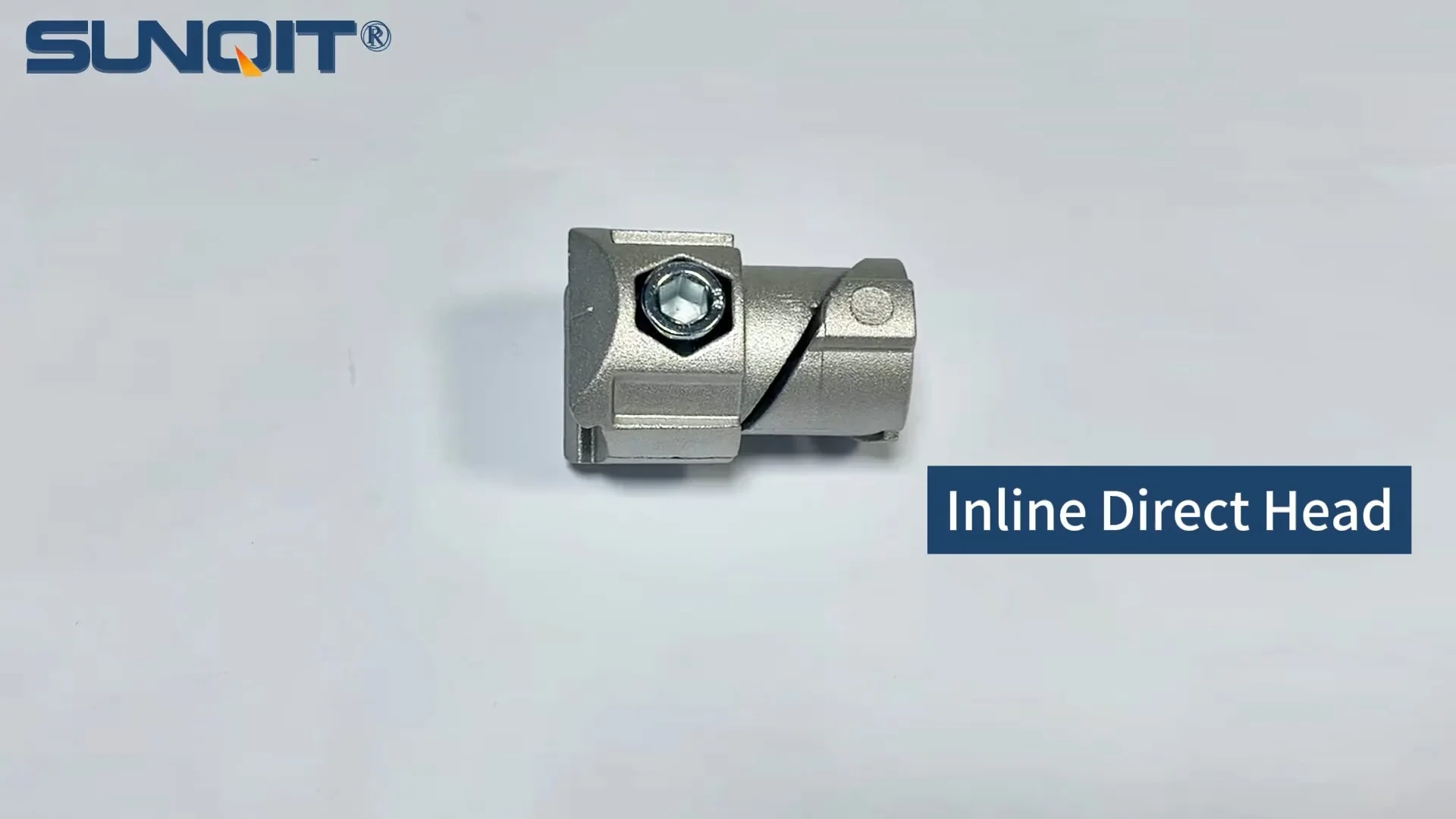
Internal straight aluminum joint
Aluminum pipe joint inside connection used for two pcs 28pcs aluminum pipe connection in straight angle,it connects two pcs pipe from inside.
The Evolution of Lean: From Waste Reduction to Adaptive Excellence
Lean manufacturing has long been the backbone of efficient production, born from the Toyota Production System's focus on eliminating waste—whether it's excess inventory, unnecessary motion, or downtime. For decades, manufacturers have relied on rigid, fixed systems to chase this efficiency: assembly lines bolted to the floor, workbenches built to last decades, and material racks that rarely changed. But as global markets shift toward customization, shorter product lifecycles, and real-time demand fluctuations, the "set-it-and-forget-it" approach to manufacturing infrastructure is becoming a liability.
Today's factories aren't just about making things faster—they're about making things smarter . Enter the era of smart factories, where data, automation, and flexibility converge to create systems that adapt as quickly as customer needs change. This evolution isn't replacing lean principles; it's supercharging them. Waste isn't just about physical clutter anymore—it's about rigidity. A factory that can't reconfigure a production line in hours instead of weeks is wasting opportunities to innovate, scale, or pivot. And at the heart of this new flexibility lies a quiet revolution in manufacturing components: modular, adaptable building blocks that turn static workspaces into dynamic ecosystems. Among these, the internal straight aluminum joint stands out as a yet transformative tool, redefining how lean systems are built, modified, and optimized.
Smart Factories: Where Lean Meets Agility
Smart factories aren't just filled with robots and sensors—though those play a role. At their core, they're about flow : the seamless movement of materials, information, and people. Lean's original goal was to create "flow" by minimizing interruptions, but today's flow must be adaptive . A smartphone manufacturer, for example, might need to shift from assembling 5,000 units of Model A to 3,000 units of Model B (with a new component) overnight. A medical device plant might suddenly scale production of a critical tool during a health crisis. In these scenarios, fixed infrastructure becomes a bottleneck.
This is where modular systems shine. Unlike traditional steel or wooden structures, modular systems use lightweight, durable components that can be disassembled, reconfigured, and reassembled with minimal effort. Think of it like building with advanced Legos for factories: pieces that lock together securely but can be taken apart and rearranged when needs change. And in this modular toolkit, aluminum has emerged as the material of choice. Its strength-to-weight ratio, corrosion resistance, and recyclability make it ideal for manufacturing environments. But aluminum profiles alone aren't enough—they need joints that balance stability with flexibility. That's where the internal straight aluminum joint comes in.

Internal Straight Aluminum Joints: The Unsung Heroes of Modular Lean
What Are Internal Straight Aluminum Joints?
At first glance, an internal straight aluminum joint might seem unremarkable: a small, cylindrical component designed to connect two aluminum profiles in a straight line. But its simplicity is deceptive. Unlike traditional welded joints (permanent, time-consuming to modify) or plastic connectors (prone to wear), internal straight aluminum joints are engineered for both strength and versatility . They fit inside the hollow channels of aluminum extrusion profiles, creating a secure bond without protruding parts that could catch on materials or impede workflow. Their design allows for quick assembly—often with just a hex key—and even quicker disassembly, making them perfect for environments where change is constant.
But why "internal"? Traditional external joints can add bulk, limit the placement of accessories (like tool hooks or sensor mounts), and create uneven surfaces that disrupt material flow. Internal joints sit flush with the aluminum profile, maintaining a smooth, clean line that supports everything from conveyor belts to workbench surfaces. This subtle design choice has a big impact: it turns aluminum profiles into a blank canvas, where manufacturers can add, remove, or reposition elements without worrying about compatibility or structural compromise.
Key Benefits: Beyond Just "Connecting"
To understand why internal straight aluminum joints are becoming indispensable, let's compare them to traditional connection methods. The table below highlights their advantages in the context of lean and smart manufacturing goals:
| Feature | Traditional Joints (Welded/Plastic) | Internal Straight Aluminum Joints | Impact on Lean/Smart Goals |
|---|---|---|---|
| Assembly Time | Hours (welding) or minutes (plastic, but weak) | Minutes (no special tools needed) | Reduces downtime during line reconfiguration |
| Reusability | Welded: Non-reusable; Plastic: Prone to breakage after 2-3 uses | Reusable indefinitely (no wear on threads/joints) | Eliminates waste from discarded components |
| Surface Smoothness | Welded: Bumpy; External plastic: Protruding parts | Flush with profile (no protrusions) | Improves material flow (reduces jams on conveyors/racks) |
| Load Capacity | Welded: High, but fixed; Plastic: Low (max 50kg) | High (supports up to 200kg per joint, depending on profile) | Enables heavy-duty applications (e.g., engine component racks) |
| Compatibility | Welded: Profile-specific; Plastic: Limited to same brand | Works with standard aluminum extrusion profiles (2020, 3030, 4040, etc.) | Reduces supplier lock-in; supports mixed-profile systems |
These benefits add up to a system that aligns perfectly with the dual demands of lean and smart manufacturing: stability when needed, adaptability when required . Let's explore how this plays out in real-world applications.

Applications: Building the Smart Lean Factory, One Joint at a Time
Internal straight aluminum joints aren't just theoretical—they're transforming shop floors across industries. Let's look at three key areas where they're making an impact:
1. Adaptive Workbenches: From Static to Smart
Workbenches are the heart of any assembly line, but traditional models are built for a single task. A workbench for smartphone assembly, for example, might have fixed tool holders, a specific height, and no room for adjustments. If the factory shifts to tablet assembly (larger components, different tools), the old workbench becomes obsolete—wasted space and money. Enter modular workbenches built with aluminum profiles and internal straight aluminum joints. These workbenches can be reconfigured in hours: adjust the height by swapping out leg profiles, add new tool rails by connecting additional aluminum sections, or integrate a conveyor belt along one side using compatible roller track accessories.
Take the "Workbench E (Single Deck-Without Caster)" from many lean system suppliers. Designed with internal straight aluminum joints, it starts as a basic surface but can evolve: add casters for mobility, attach LED task lights to the frame, or mount barcode scanners on side brackets—all without drilling holes or welding. For workers, this means a workspace that adapts to their needs (reducing motion waste), and for managers, it means no more buying new workbenches every time a product line changes. It's lean's "continuous improvement" principle made tangible.
2. Material Racks: From "One-Size-Fits-All" to Demand-Driven
Material storage is a classic source of waste in manufacturing. Overstocking (inventory waste) or understocking (downtime) is often tied to rigid racks that can't adjust to varying part sizes or demand spikes. A "Material Rack B (3 Row and 3 Floor)" might work for small components, but if a new order requires larger parts, those rows become useless. Internal straight aluminum joints solve this by letting factories build racks that grow or shrink with inventory.
For example, a automotive parts supplier using aluminum extrusion profiles and internal joints can add extra shelves by simply cutting new profile sections, connecting them with joints, and securing them to the existing frame. No need for a welder or a new rack—just a few minutes of assembly. Even better, internal joints ensure the rack remains stable under heavy loads (critical for metal components), while the aluminum profiles resist corrosion from oils or coolants. This flexibility turns material storage from a static cost center into a dynamic part of the supply chain, supporting just-in-time (JIT) inventory practices and reducing the "waste of waiting" for parts to arrive.
3. Conveyors and Flow Systems: Keeping Pace with Customization
In smart factories, conveyors aren't just for moving boxes—they're part of a data-driven flow system, where products are routed based on real-time demand or quality checks. Traditional steel conveyors are heavy, hard to reconfigure, and expensive to modify. Modular conveyors built with aluminum profiles, roller tracks, and internal straight aluminum joints, however, are game-changers. Imagine a factory that needs to split a conveyor line into two overnight to handle a rush order for a new product. With internal joints, workers can disconnect sections, add a "Y" junction (using 90° aluminum profile connectors), and reattach the roller tracks—all without halting production for days.
Even small details, like the "Plastic Roller Track Guide Rail Yellow" or "Aluminum Guide Rail A," benefit from internal joints. These guide rails, which keep products centered on conveyors, can be extended or shortened by connecting new rail sections with internal joints, ensuring smooth flow even as product sizes change. It's lean's "flow" principle elevated: not just a steady stream, but a stream that can change course at a moment's notice.
The Future: Internal Joints as Enablers of Industry 4.0
As factories move deeper into Industry 4.0, the line between physical infrastructure and digital systems is blurring. Sensors, IoT devices, and AI-driven analytics are becoming standard, but they need a physical foundation that can support them. Internal straight aluminum joints play a quiet but critical role here by making it easy to integrate smart technologies into existing setups.
Consider a workbench built with aluminum profiles and internal joints. Adding a vibration sensor (to detect machine wear) or a barcode scanner (to track work-in-progress) is as simple as mounting the device on a small aluminum bracket connected via an internal joint. No need to redesign the entire bench—just add the component where it's needed. Over time, as more sensors are added, the bench evolves from a passive workspace into a data-collection hub, feeding insights back to managers to optimize workflows (another lean win: "information waste" reduction).
Sustainability is another area where internal straight aluminum joints shine. Aluminum is 100% recyclable, and modular systems built with reusable joints reduce the need for new materials. A factory that reconfigures a workbench instead of replacing it cuts down on waste, lowers carbon footprints, and aligns with the growing demand for eco-friendly manufacturing. It's lean's "respect for people and planet" principle (often overlooked in traditional lean) given new life.
Conclusion: Small Joints, Big Impact
The future of lean manufacturing isn't about rigid efficiency—it's about adaptive efficiency . Smart factories need systems that can keep up with change, and internal straight aluminum joints are the unsung heroes making that possible. They turn aluminum extrusion profiles from static building blocks into dynamic tools, enabling everything from reconfigurable workbenches to demand-driven material racks. By reducing assembly time, eliminating waste, and supporting smart technologies, these small components embody the best of lean: continuous improvement, respect for workers, and a focus on flow.
For manufacturers looking to stay competitive in a world of customization and uncertainty, the message is clear: invest in infrastructure that grows with you. Internal straight aluminum joints aren't just about connecting pipes—they're about connecting lean principles to the future of manufacturing. And in that connection, the next generation of smart, efficient, and human-centered factories is being built.