- Company Articles
- Products and Technology
- Technology Sharing
- Future of Lean Pipe Clamp Chrome: Material Innovations and Tech Integration

Future of Lean Pipe Clamp Chrome: Material Innovations and Tech Integration
Related Product
Lean Pipe Clamp Chrome
Lean pipe clamp is used for rack system hang monitor or other panel for workbenck, flowrack in production daily use.
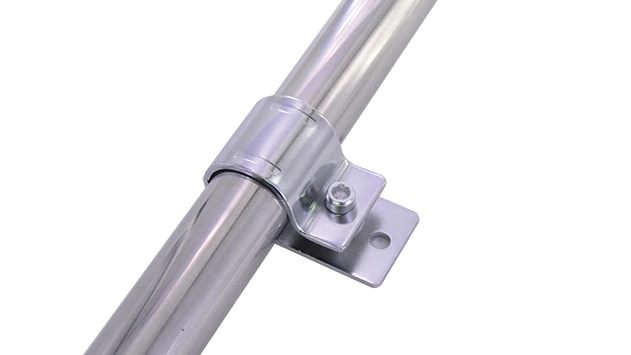
In the fast-paced world of manufacturing, where every second counts and efficiency is the name of the game, the tools we rely on shape more than just production lines—they shape the future of how we build, create, and innovate. At the heart of this revolution lies lean manufacturing, a philosophy built on eliminating waste, streamlining processes, and adapting to change. And if lean manufacturing is the brain of the operation, then lean pipe systems are its backbone. Within these systems, one component often flies under the radar but holds everything together: the lean pipe clamp chrome. Today, we're diving deep into this unsung hero, exploring how material breakthroughs and cutting-edge technology are set to redefine its role in the factories of tomorrow.
From the assembly lines of automotive plants to the precision-driven workbenches of electronics manufacturers, lean pipe clamp chrome has long been the quiet connector that turns disjointed parts into cohesive, flexible workspaces. But as factories evolve—becoming smarter, more sustainable, and more agile—the demands on these clamps are growing. They're no longer just "connectors"; they're becoming enablers of innovation. Let's unpack what this means, starting with the basics: what exactly is a lean pipe clamp chrome, and why does its future matter?
Understanding Lean Pipe Clamp Chrome: The Unsung Hero of Lean Systems
Before we look to the future, let's ground ourselves in the present. A lean pipe clamp chrome is, at its core, a fastening device designed to join lean pipes (often made of steel, aluminum, or stainless steel) into structures like workbenches, flow racks, conveyors, and turnover trolleys. What sets the "chrome" variant apart is its plating—a thin layer of chromium that adds corrosion resistance, durability, and a sleek finish, making it ideal for environments where moisture, chemicals, or frequent cleaning are part of the daily routine.
But to call it just a "fastening device" is to undersell its impact. In a typical lean system, these clamps are the reason you can reconfigure a workstation in hours instead of days, or adapt a flow rack to handle a new product size without overhauling the entire line. Imagine a small electronics manufacturer ramping up production for a new smartphone model: with lean pipe clamp chrome, they can adjust their esd workstation (electrostatic discharge workstation) by simply loosening a few clamps, rearranging the pipes, and tightening them back—no need for welding, no specialized tools, just flexibility at your fingertips.
Today's clamps are mostly made from carbon steel with chrome plating, and while they've served us well, they're starting to show their limits. Traditional steel clamps are strong, but they're heavy—making large structures cumbersome to move. Their corrosion resistance, while better than unplated steel, still falls short in high-humidity or chemical-exposed environments. And in an era where sustainability is non-negotiable, their weight and limited recyclability are becoming harder to ignore. These challenges aren't just inconveniences; they're bottlenecks. And bottlenecks, in lean manufacturing, are meant to be eliminated.
Current Challenges: Why the Status Quo Isn't Enough Anymore
To understand why innovation is critical, let's zoom in on the pain points manufacturers face with today's lean pipe clamp chrome. Take a large automotive plant, for example, where assembly lines stretch for hundreds of feet. The steel clamps holding together their roller track systems (used to move parts from one station to the next) add significant weight to the structure. When the plant needs to reconfigure the line for a new vehicle model, the heavy clamps make disassembly and reassembly labor-intensive, increasing downtime. Worse, in areas where oil or coolant is present, even chrome-plated steel can corrode over time, leading to loose joints, wobbly racks, and safety risks.
Then there's the issue of precision. In industries like aerospace or medical device manufacturing, even a fraction of an inch of misalignment can compromise product quality. Traditional clamps, which rely on manual tightening, can loosen over time due to vibration, leading to subtle shifts in workbench alignment. For an esd workstation handling sensitive microchips, this isn't just a productivity issue—it's a quality control disaster waiting to happen.
And let's not forget cost. While steel clamps are cheap upfront, their lifecycle costs tell a different story. Corroded clamps need replacement. Heavy structures require more energy to move. Manual adjustments eat into labor hours. When you multiply these costs across a large factory, they add up fast. It's clear: the lean pipe clamp chrome of today is due for an upgrade. Enter material innovations and tech integration—the twin engines driving its transformation.

Material Innovations: Building Clamps for the Next Generation
The future of lean pipe clamp chrome starts with what it's made of. Materials science has come a long way, and manufacturers are no longer limited to steel. Let's explore the most promising contenders reshaping the landscape:
Aluminum Lean Pipe: Lightweight, Strong, and Sustainable
If there's one material stealing the spotlight in lean systems today, it's aluminum—and for good reason. Aluminum lean pipe, paired with chrome-plated aluminum clamps, offers a game-changing combination of lightweight design and durability. Aluminum is 60% lighter than steel, which means structures built with aluminum clamps are easier to move, reconfigure, and transport. For a factory floor that needs to shift from producing Part A to Part B in hours, this translates to less downtime and fewer strained muscles for workers.
But aluminum isn't just about weight. Its natural resistance to corrosion (thanks to a thin oxide layer that forms on its surface) makes it ideal for humid environments or facilities that require frequent sanitization, like food processing plants or pharmaceutical labs. When combined with a chrome plating, aluminum clamps gain an extra layer of protection, ensuring they stand up to chemicals and moisture without rusting. What's more, aluminum is highly recyclable—95% of the energy used to produce new aluminum can be saved by recycling scrap aluminum. For manufacturers aiming to reduce their carbon footprint, this is a huge win.
Take the example of a consumer electronics manufacturer that recently switched from steel to aluminum lean pipe clamps for their esd workstations. The result? Workstations that are 40% lighter, cutting reconfiguration time by half. Workers no longer need to use forklifts to move small sections of the line; two people can lift and adjust a segment in minutes. And because aluminum conducts electricity well, the clamps help maintain consistent grounding—critical for ESD protection, where static buildup can fry sensitive components.
Stainless Steel Pipe Series: Durability Redefined
While aluminum excels in lightweight applications, there are environments where brute strength and resistance to extreme conditions are non-negotiable. This is where the stainless steel pipe series comes into play. Stainless steel clamps, particularly those made from 304 or 316-grade stainless steel, are virtually immune to rust and corrosion. They can withstand high temperatures, exposure to saltwater, and even harsh chemicals—making them perfect for outdoor use, marine manufacturing, or industrial settings with aggressive cleaning protocols.
Manufacturers are now experimenting with thinner-gauge stainless steel (like 1.5mm vs. traditional 2.0mm) to reduce weight without sacrificing strength. A 1.5mm stainless steel clamp might not be as light as aluminum, but it's significantly lighter than its 2.0mm predecessor while still handling heavy loads. For a shipyard building offshore equipment, this means sturdier flow racks that can endure salt spray without corroding, and clamps that won't weaken over time—even in the harshest conditions.
Composite Materials: The New Frontier
Looking further ahead, composite materials are emerging as a wildcard. Composites—made by combining two or more materials (like carbon fiber and resin)—offer the ultimate customization: high strength, low weight, and tailored properties. Imagine a clamp reinforced with carbon fiber for tensile strength, wrapped in a resin matrix infused with conductive particles to support ESD protection. Such a clamp could be lighter than aluminum, stronger than steel, and inherently static-dissipative—perfect for the most demanding esd workstations.
While composites are still in the early stages of adoption (and more expensive than aluminum or stainless steel), their potential is undeniable. Research labs are already testing composite clamps in aerospace manufacturing, where weight savings directly translate to fuel efficiency. As production scales and costs come down, we could see composite clamps become mainstream in high-precision industries within the next decade.
| Material Type | Weight (kg/m)* | Corrosion Resistance | Tensile Strength (MPa) | Ideal Application |
|---|---|---|---|---|
| Traditional Steel (Chrome-Plated) | 7.85 | Moderate (prone to rust in humid environments) | 400-500 | General manufacturing, dry environments |
| Aluminum Lean Pipe (Chrome-Plated) | 2.7 | High (natural oxide layer + chrome plating) | 300-400 | ESD workstations, lightweight reconfigurable lines |
| Stainless Steel (304 Grade, Chrome-Plated) | 7.93 | Excellent (resists salt, chemicals, moisture) | 500-600 | Marine, food processing, harsh industrial settings |
| Carbon Fiber Composite | 1.5-2.0 | Exceptional (resists most chemicals, no rust) | 1,500-3,000+ | Aerospace, high-precision electronics, weight-critical applications |
*Approximate weight for clamps of similar dimensions. Actual weight may vary by design.
Tech Integration: Smart Clamps for Smart Factories
Materials are just half the story. The other half? Technology. As factories become "smart"—equipped with IoT sensors, AI-driven analytics, and automated systems—lean pipe clamp chrome is getting a digital upgrade. These aren't just "connected" clamps; they're clamps that communicate , monitor , and adapt . Let's break down the most exciting tech trends:
IoT Sensors: Clamps That "Feel" and "Report"
Imagine a clamp that knows when it's loose. Sounds like science fiction, but it's already here. IoT-enabled lean pipe clamps are being embedded with tiny sensors that measure tension, vibration, and temperature. These sensors send real-time data to a central dashboard, alerting maintenance teams when a clamp is at risk of loosening or overheating. For a roller track system moving heavy automotive parts, this could prevent a catastrophic failure. For an esd workstation, it ensures that joints stay tight, maintaining the precise alignment needed for quality control.
Take a large automotive plant using roller track conveyors to move engine blocks. Each clamp on the roller track is fitted with a tension sensor. If a clamp starts to loosen, the sensor detects a drop in tension and sends an alert to the plant's maintenance app. Instead of waiting for a breakdown, a technician can tighten the clamp during a scheduled break—saving hours of unplanned downtime. This isn't just predictive maintenance; it's proactive efficiency.
Modular Design: Clamps That Adapt to Change
In the past, reconfiguring a lean system meant unscrewing clamps, replacing pipes, and hoping the new setup worked. Today, tech-driven modular design is making this process almost plug-and-play. New clamp designs feature quick-release mechanisms, standardized fittings, and color-coded joints that guide workers through assembly. For example, a lean pipe joint with a "click-lock" feature allows a worker to secure a pipe in seconds, no tools required. Pair this with a mobile app that provides step-by-step reconfiguration guides, and even new employees can adjust a workstation correctly on their first try.
Modularity also extends to compatibility. The best new clamps are designed to work with multiple pipe materials—aluminum, stainless steel, even composite—so factories don't have to replace their entire system to upgrade. A manufacturer using steel pipes today can start swapping in aluminum clamps gradually, mixing and matching as needed. This "hybrid" approach reduces upfront costs and makes innovation accessible to small and medium-sized businesses, not just industry giants.
ESD Integration: Clamps That Protect Sensitive Electronics
For industries like semiconductors or medical devices, electrostatic discharge (ESD) is a silent killer. A single static spark can destroy a $1,000 microchip in an instant. That's why esd workstations require careful grounding—and why clamps are becoming critical to ESD protection. New chrome-plated clamps are being designed with conductive materials that channel static electricity away from sensitive components, ensuring a continuous path to ground.
Some manufacturers are even embedding ESD sensors directly into clamps, which monitor grounding continuity in real time. If a clamp loses its connection to the ground (due to loosening or corrosion), the sensor triggers an alarm, preventing workers from handling components until the issue is fixed. For a factory producing pacemakers or smartphone chips, this isn't just a feature—it's a necessity.
Case Study: How One Manufacturer Transformed Its Line with New Clamps
To see these innovations in action, let's look at a real-world example: a mid-sized electronics manufacturer based in Southeast Asia that produces printed circuit boards (PCBs). Like many manufacturers, they were struggling with two key issues: slow reconfiguration times for their esd workstations and frequent clamp failures due to the humid climate.
Their old setup relied on traditional steel clamps, which would rust within 6-8 months in the factory's humid environment. Rusty clamps meant loose joints, which led to misaligned workbenches and, occasionally, damaged PCBs. Reconfiguring a line to produce a new PCB model took 8 hours—time they couldn't afford in a market where product cycles are measured in months, not years.
In 2024, the company decided to upgrade to aluminum lean pipe clamps with chrome plating and IoT tension sensors. The results were staggering: Workstation reconfiguration time dropped from 8 hours to 2 hours, thanks to the clamps' lightweight design and quick-release mechanisms. Rust-related failures vanished entirely, reducing maintenance costs by 35%. And the IoT sensors caught 12 potential clamp loosening issues in the first six months, preventing what would have been costly downtime.
"It's like night and day," said the plant manager. "We used to dread product line changes—now we look forward to them because we know we can adapt quickly. The clamps aren't just holding pipes together; they're holding our competitive edge."
Future Trends: What's Next for Lean Pipe Clamp Chrome?
So, where do we go from here? The future of lean pipe clamp chrome is bright, with three key trends set to dominate the next decade:
1. Sustainability Takes Center Stage
As manufacturers race to meet net-zero goals, clamps will play a role in reducing carbon footprints. Expect to see more recycled aluminum and stainless steel in clamp production, as well as bio-based composites that break down at the end of their lifecycle. Some companies are even experimenting with "circular clamps"—designs that can be disassembled, repaired, and reused indefinitely, cutting down on waste.
2. AI-Driven Predictive Maintenance
IoT sensors are just the beginning. In the future, AI algorithms will analyze data from clamp sensors to predict not just when a clamp might fail, but why . For example, if sensors detect that clamps on a particular roller track loosen faster than others, AI could identify patterns—maybe the track vibrates more due to heavy loads—and suggest design tweaks, like reinforced joints or heavier-duty clamps. This level of insight will turn clamps from passive components into active participants in process optimization.
3. Integration with Digital Twins
Digital twins—virtual replicas of physical production lines—are revolutionizing manufacturing planning. Soon, clamps will have digital counterparts, allowing engineers to test reconfigurations in a virtual space before touching a single pipe. Want to see how a new clamp design affects the stability of a flow rack? Plug it into the digital twin and simulate months of use in minutes. This will reduce trial-and-error, speed up innovation, and ensure that new clamp technologies are tested rigorously before hitting the factory floor.
Conclusion: The Clamp That Builds the Future
At first glance, a lean pipe clamp chrome might seem like a small, unremarkable part of the manufacturing puzzle. But as we've explored, it's anything but. It's a bridge between the past and future of lean manufacturing—a component that, when reimagined with new materials and technology, unlocks levels of efficiency, sustainability, and adaptability we could only dream of a decade ago.
From aluminum lean pipe clamps that lighten the load on workers to IoT-enabled sensors that prevent breakdowns, the future of this humble connector is about more than just "holding things together." It's about empowering manufacturers to build smarter, more resilient factories—factories that can keep up with changing markets, reduce their environmental impact, and create products that shape our world. So the next time you walk through a factory, take a moment to look at the clamps holding the line together. They might just be the key to the future of manufacturing.