- Company Articles
- Products and Technology
- Technology Sharing
- Future of Lean Pipe Systems: Innovations in Five Way Straight Lean Pipe Joint Technology

Future of Lean Pipe Systems: Innovations in Five Way Straight Lean Pipe Joint Technology
Related Product
Five Way Straight Lean Pipe Joint
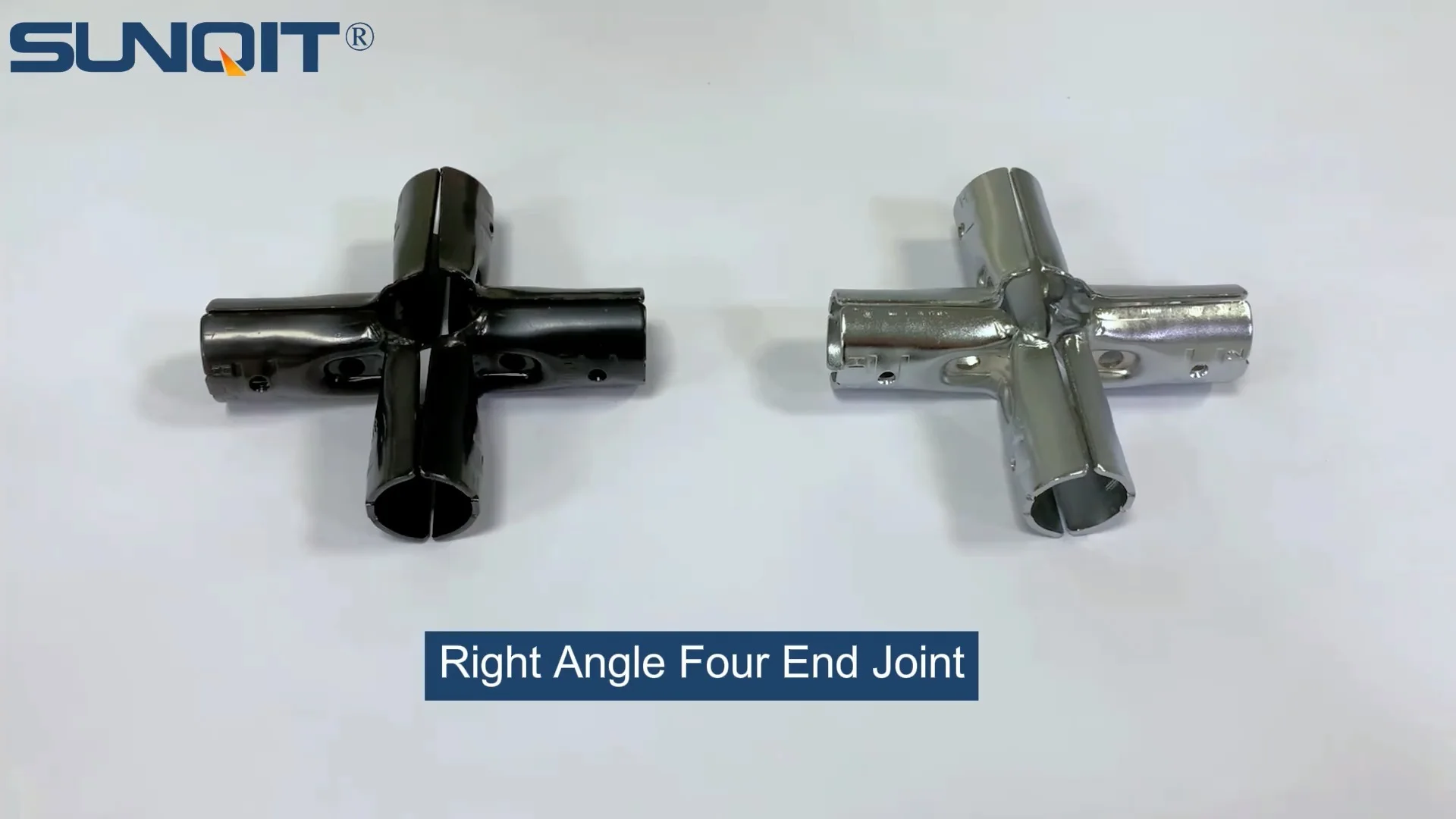
Five way straight lean pipe joint, for 5 pcs 28mm lean pipe connect in straight angle,which used widely in workbench, flow rack, hand trolley frame connection.
The Backbone of Modern Manufacturing: Lean Systems and the Need for Innovation
In the fast-paced world of manufacturing, where every second counts and efficiency is the name of the game, lean systems have become more than just a buzzword—they're the backbone of how products move from concept to creation. At the heart of these systems lies the humble lean pipe, a deceptively simple component that, when paired with the right joints and accessories, transforms into the scaffolding of assembly lines, workbenches, and material flow racks. But as factories evolve, so too must the tools that power them. Today, we're diving into one of the most exciting advancements in this space: the five way straight lean pipe joint. This unassuming yet revolutionary piece is redefining what's possible in modular manufacturing, and its impact is rippling through workshops, warehouses, and production floors worldwide.
Lean manufacturing, at its core, is about eliminating waste—whether that's wasted time, materials, or effort. Traditional lean pipe systems, while effective, often hit a wall when it comes to flexibility. Early joints were limited in how they connected pipes, forcing teams to build rigid structures that were hard to reconfigure when production needs changed. Enter the five way straight lean pipe joint: a component designed to break those barriers. By allowing five pipes to connect in a straight line with precision and strength, it's not just a joint—it's a catalyst for adaptability. But to truly appreciate its innovation, we need to take a step back and understand how lean pipe systems have evolved, and why this particular joint is a game-changer.
From Rigid to Responsive: The Evolution of Lean Pipe Joints
Decades ago, lean pipe systems relied heavily on basic steel pipes and simple two-way or three-way joints. These setups were sturdy, sure, but they lacked finesse. If a factory needed to add a shelf to a workbench or extend a roller track to accommodate a new product line, it often meant disassembling large portions of the structure and starting from scratch. The joints were bulky, hard to adjust, and prone to loosening over time, leading to safety concerns and frequent maintenance checks. As manufacturers began to prioritize agility—especially in industries like electronics and automotive, where product cycles shrink by the year—the demand for more versatile solutions grew.
The shift toward modularity brought with it advancements in materials: steel gave way to aluminum, which was lighter, resistant to corrosion, and easier to handle. Aluminum profiles, with their T-slot designs, opened up new possibilities for attaching accessories, but the joints remained a bottleneck. Four-way joints helped, allowing for more complex structures, but they still limited the number of directions pipes could extend. Then came the five way straight lean pipe joint. Unlike its predecessors, which often required multiple components to achieve a multi-directional connection, this joint does it all in one piece. Imagine a central hub with five equally spaced ports, each engineered to lock a pipe in place with minimal effort. No more fumbling with extra clamps or adapters; no more compromising on design to fit the limitations of the joint. It's a small change in form, but a massive leap in function.

Inside the Innovation: What Makes the Five Way Straight Lean Pipe Joint Stand Out?
So, what exactly sets the five way straight lean pipe joint apart from the crowd? Let's break it down. First, it's all about design precision. Modern iterations are crafted using high-grade aluminum or stainless steel, materials chosen for their strength-to-weight ratio. Aluminum, in particular, has been a game-changer here. Unlike traditional steel joints, which could add unnecessary heft to structures, aluminum joints keep setups lightweight without sacrificing durability. This not only makes assembly easier for workers (no more straining to lift heavy components) but also reduces the load on floors and conveyor systems, extending their lifespan.
Another key innovation is the locking mechanism. Early joints often relied on bolts that needed constant tightening, or plastic clips that wore out quickly. The five way straight joint, however, uses a combination of internal springs and precision-machined grooves to create a secure, tool-free connection. Simply insert the pipe into the joint, twist, and it locks into place—firm enough to support heavy loads (we're talking hundreds of pounds in some cases) but easy to release when it's time to reconfigure. This "click-and-go" functionality cuts assembly time dramatically. A team that once spent hours building a material rack can now have it up and running in minutes, freeing up time to focus on more critical tasks.
Compatibility is another area where this joint shines. In the past, mixing and matching components from different suppliers was a recipe for frustration—pipes from one brand might not fit joints from another, leading to mismatched structures and wasted inventory. The five way straight joint, however, is designed with standardization in mind. It works seamlessly with most common lean pipe sizes, including the popular 28mm aluminum lean pipe, as well as aluminum profiles and roller track systems. This universality means factories aren't locked into a single supplier, giving them the freedom to source components based on cost, availability, or specific project needs.

Beyond the Joint: Real-World Applications Transformed by Five Way Technology
To truly grasp the impact of the five way straight lean pipe joint, let's look at how it's transforming everyday manufacturing setups. Take the humble workbench, for example. A standard assembly workbench needs to be sturdy, customizable, and adaptable to different tasks—whether it's assembling circuit boards, packing products, or testing equipment. With traditional joints, adding a shelf, a tool holder, or a monitor arm often meant drilling holes or using clunky adapters. The five way joint changes that. By connecting pipes in multiple directions, it allows workers to add accessories exactly where they need them: a side shelf for parts bins, a overhead rack for cables, or a lower shelf for tools—all without compromising the bench's stability.
Then there's the roller track, a critical component in material flow systems. Roller tracks ensure that parts glide smoothly from one workstation to the next, reducing the need for manual lifting and cutting down on errors. But traditional roller tracks were often limited in length or configuration; extending them required adding extra support brackets or reworking the entire setup. With the five way straight joint, roller tracks can be extended, split, or angled with ease. Imagine a warehouse where a single roller track feeds three different assembly lines—thanks to the five way joint, the track can branch off in multiple directions without losing momentum, keeping parts moving efficiently and reducing bottlenecks.
Material racks are another area seeing significant benefits. A typical material rack might need to hold boxes, pallets, or even heavy machinery parts. With the five way joint, these racks can be built with adjustable shelves that can be moved up or down in seconds, adapting to different product sizes. For example, a electronics manufacturer that produces both small circuit boards and larger components can use the same rack, simply repositioning shelves as needed. This flexibility not only saves space (no more dedicated racks for every product) but also reduces the need to purchase new equipment, cutting costs in the long run.

A Side-by-Side Look: Traditional Joints vs. Five Way Straight Joints
| Feature | Traditional Lean Pipe Joints | Five Way Straight Lean Pipe Joint |
|---|---|---|
| Assembly Time | 2-3 hours for a basic material rack | 30-45 minutes for the same rack |
| Load Capacity | Up to 150 lbs per joint (steel) | Up to 300 lbs per joint (aluminum/stainless steel) |
| Reconfigurability | Requires tools and disassembly | Tool-free, can be adjusted in minutes |
| Compatibility | Often brand-specific | Works with standard 28mm pipes, aluminum profiles, roller tracks |
| Long-Term Durability | Prone to rust (steel) or wear (plastic) | Corrosion-resistant (aluminum/stainless steel), minimal wear |
Sustainability: Building Greener with Lean Pipe Innovations
In an era where sustainability is no longer optional, the five way straight lean pipe joint is also making waves for its eco-friendly credentials. Let's start with materials. Aluminum, the primary material used in modern joints, is 100% recyclable. Unlike steel, which requires significant energy to mine and process, recycled aluminum uses just 5% of the energy needed to produce new aluminum. This means that every joint made from recycled aluminum is a step toward reducing a factory's carbon footprint.
Then there's the issue of waste. Traditional lean systems often led to a "build-and-replace" cycle—if a structure became obsolete, it was easier to throw it away than to repurpose it. The five way joint, with its modular design, flips that script. A workbench that's no longer needed for assembly can be disassembled and rebuilt into a material rack or a turnover trolley. This "circular" approach to manufacturing tools reduces the amount of waste sent to landfills and cuts down on the need to purchase new equipment. It's a small change, but multiplied across thousands of factories, the impact adds up.
Even the shipping and transportation of these joints contribute to sustainability. Aluminum's lightweight nature means that more joints can be packed into a single shipment, reducing the number of trucks on the road and lowering emissions. For global suppliers, this translates to lower carbon footprints in their supply chains—a win for both the planet and the bottom line.
Case Study: How One Factory Transformed Its Workflow with Five Way Joints
Let's put this all into perspective with a real-world example. Consider a mid-sized automotive parts manufacturer based in the Midwest. A few years ago, their assembly line was struggling with bottlenecks. Their old material racks, built with traditional three-way steel joints, were rigid and hard to adjust. When they introduced a new line of smaller components, they found themselves with racks that were too tall, too wide, or simply not configured to hold the new parts. Workers were spending extra time searching for tools or moving materials by hand, leading to delays and frustration.
The solution? A switch to five way straight lean pipe joints and aluminum profiles. The factory's maintenance team began by rebuilding their material racks. Using the new joints, they were able to create adjustable shelves that could be raised or lowered in seconds, accommodating both the old and new components. They also extended their roller track system, using the joints to branch the track into three different workstations, ensuring parts arrived exactly where they were needed, when they were needed.
The results were staggering. Assembly time for the new components dropped by 25%, and material handling errors decreased by nearly 40%. Workers reported less physical strain, thanks to the lighter aluminum structures, and the maintenance team noted that they were spending half as much time tightening loose joints. Perhaps most importantly, the factory was able to repurpose 80% of their old steel pipes and joints, reducing waste and saving thousands of dollars in new equipment costs. It's a story that's becoming increasingly common as more manufacturers discover the power of the five way straight lean pipe joint.
The Road Ahead: What's Next for Lean Pipe Systems?
As impressive as the five way straight lean pipe joint is, the innovation train isn't stopping here. Looking ahead, we can expect to see even more integration between lean systems and smart manufacturing. Imagine joints embedded with sensors that monitor weight distribution or vibration, alerting maintenance teams before a structure becomes unstable. Or joints that connect to factory management software, tracking how often they're reconfigured to help optimize workflows further. The possibilities are endless.
Material science will also play a role. Researchers are experimenting with composite materials that could make joints even lighter and stronger, or self-healing plastics that reduce wear and tear. And as 3D printing becomes more accessible, we might see custom joints printed on-site, tailored to the unique needs of a specific production line—no more waiting for parts to ship from a supplier.
But perhaps the most exciting trend is the democratization of lean systems. Thanks to innovations like the five way joint, small and medium-sized factories that once couldn't afford complex assembly lines can now build modular setups on a budget. This levels the playing field, allowing smaller players to compete with industry giants by staying just as agile and efficient.
Conclusion: The Five Way Joint—Small Part, Big Impact
In the grand scheme of manufacturing, the five way straight lean pipe joint might seem like a small player. But as we've explored, its impact is anything but minor. It's a testament to how innovation often happens not in the flashy, headline-grabbing technologies, but in the quiet, incremental improvements to the tools we use every day. By making lean systems more flexible, durable, and sustainable, this joint is helping factories around the world do more with less—less time, less waste, and less effort.
Whether you're a factory manager looking to streamline your assembly line, a warehouse supervisor aiming to improve material flow, or a sustainability officer tasked with reducing your company's environmental impact, the five way straight lean pipe joint deserves a spot on your radar. It's not just a piece of hardware; it's a tool that empowers teams to adapt, innovate, and thrive in an ever-changing industry. And as manufacturing continues to evolve, one thing is clear: the future is lean, and it's built on joints that can keep up.