- Company Articles
- Products and Technology
- Technology Sharing
- Future of Material Handling: 40 Aluminum Roller Track White in Smart Factories

Future of Material Handling: 40 Aluminum Roller Track White in Smart Factories
Related Product
40 Aluminum Roller Track White
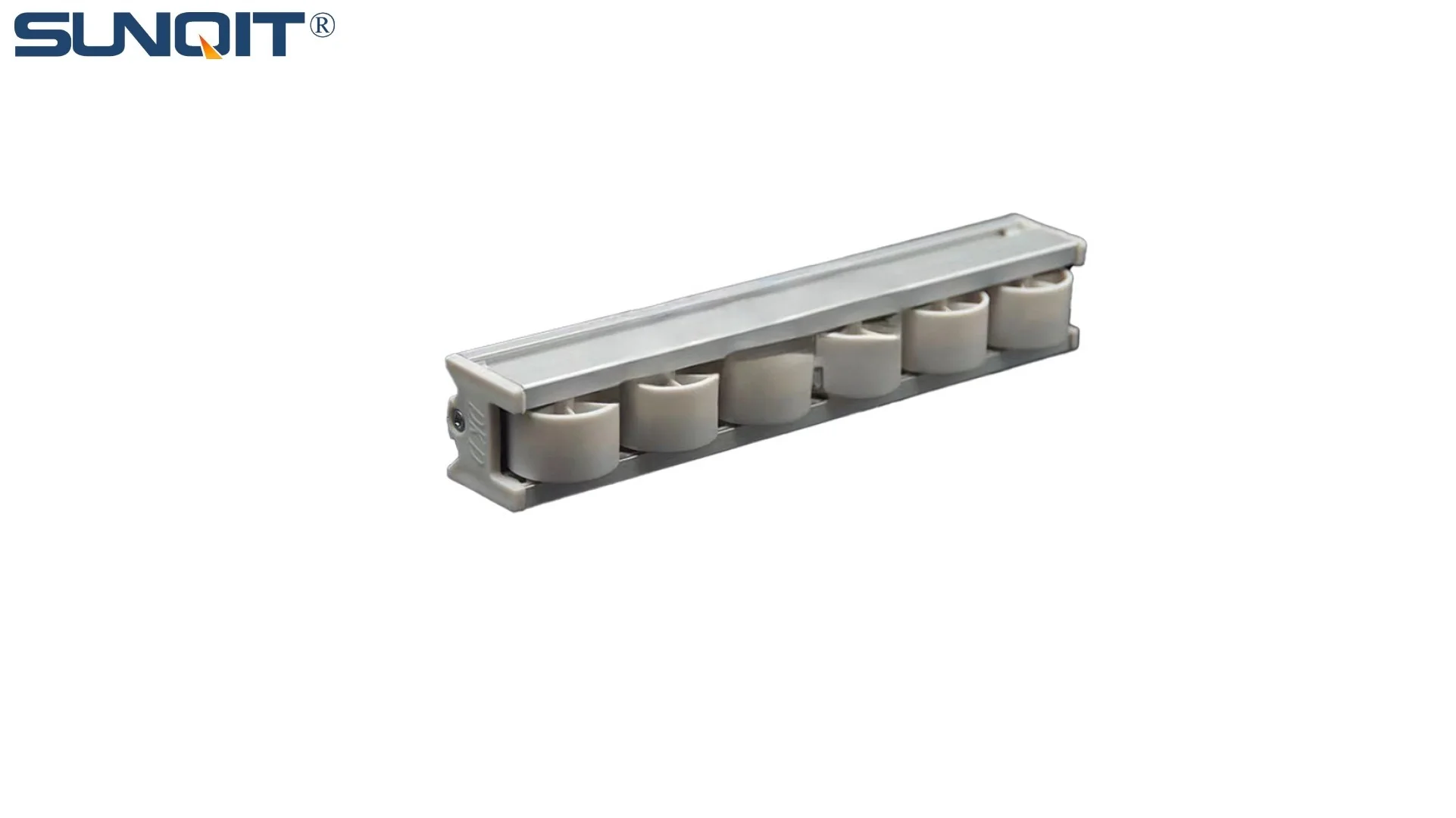
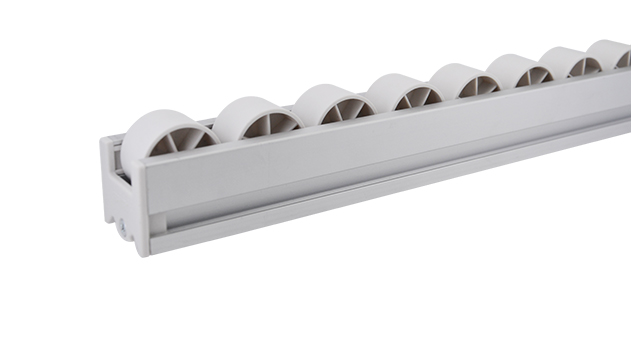
Durable and smooth-running modular roller rails. The system is fully assembled. The roller rail profile contains plastic rollers mounted on steel axles. Aluminum frame with plastic wheel make it anti corrosion,and material convey more smooth.
How a Simple Component is Transforming Efficiency, Flexibility, and Sustainability on the Factory Floor
Introduction: The Material Handling Challenge in Smart Factories
In the age of Industry 4.0, smart factories are no longer just a buzzword—they're the new standard. These high-tech environments rely on interconnected systems, real-time data, and automation to streamline production, reduce waste, and adapt to changing demands. But for all their advanced technology, one fundamental challenge remains: moving materials efficiently. From raw components to finished products, the flow of goods through a factory floor can make or break productivity. Bottlenecks, clunky equipment, and inflexible setups often turn even the most advanced smart factory into a patchwork of inefficiencies.
Enter material handling systems—the unsung heroes of modern manufacturing. These systems, which include conveyors, racks, and workbenches, form the backbone of a factory's operations. But not all material handling solutions are created equal. Traditional options, like heavy steel conveyors or rigid plastic tracks, often fail to keep up with the needs of smart factories. They're tough to reconfigure, prone to wear and tear, and can't always integrate with the latest automation tools. What's needed is a solution that's lightweight yet durable, flexible yet reliable, and designed with the future of manufacturing in mind.
That's where the 40 Aluminum Roller Track White comes in. At first glance, it might seem like just another component in a long list of factory equipment. But dig deeper, and you'll find a product that's quietly revolutionizing how smart factories handle materials. From its aluminum extrusion profile to its smooth-rolling design, every aspect of this roller track is engineered to address the unique challenges of modern manufacturing. In this article, we'll explore why the 40 Aluminum Roller Track White is quickly becoming a cornerstone of smart factory material handling, how it integrates with lean systems, and what it means for the future of production.
What is 40 Aluminum Roller Track White?
Let's start with the basics: What exactly is the 40 Aluminum Roller Track White? At its core, it's a modular material handling component designed to facilitate the smooth movement of goods across a factory floor. The "40" in its name refers to its width—40mm—making it compact enough for tight spaces but robust enough to handle moderate to heavy loads. The "aluminum" denotes its material, a lightweight yet strong aluminum extrusion profile that's both durable and corrosion-resistant. And the "white" finish? That's not just for aesthetics; it serves a practical purpose, enhancing visibility on the factory floor and making it easier to spot debris or misaligned items.
But there's more to this roller track than meets the eye. Unlike traditional steel tracks, which are heavy and difficult to maneuver, the 40 Aluminum Roller Track White leverages the benefits of aluminum extrusion. This manufacturing process involves forcing heated aluminum through a die to create a uniform, precise shape—resulting in a track that's not only strong but also incredibly consistent. The extrusion process also allows for intricate designs, such as built-in T-slots, which make it easy to attach accessories like guide rails or connectors without the need for welding or drilling.
The roller track itself is equipped with small, smooth-rolling wheels (often made of high-quality plastic or steel) that reduce friction, allowing materials to glide across the track with minimal effort. The white finish, typically a powder coating, adds an extra layer of protection against scratches and corrosion, ensuring the track remains in top condition even in harsh factory environments. And because it's made of aluminum, it's significantly lighter than steel alternatives—making installation, reconfiguration, and maintenance a breeze.
Perhaps most importantly, the 40 Aluminum Roller Track White is modular. That means it can be easily connected to other tracks, workbenches, or conveyor systems using simple aluminum profile accessories like connectors or placon mounts. This modularity is a game-changer for smart factories, which need to adapt quickly to new product lines, seasonal demands, or layout changes. Instead of tearing out entire systems and starting from scratch, manufacturers can simply reconfigure the roller track to fit their new needs—saving time, money, and resources.
Key Features: Why Aluminum Extrusion and White Finish Matter
To understand why the 40 Aluminum Roller Track White stands out, let's break down its key features and what makes them so valuable in a smart factory setting.
1. Lightweight yet Durable Aluminum Extrusion Profile
Aluminum is the unsung hero here. When compared to steel, aluminum is about one-third the weight, which makes the roller track easy to handle during installation and reconfiguration. A single worker can often move and adjust sections of the track without heavy machinery, reducing downtime and labor costs. But don't let its light weight fool you—aluminum is surprisingly strong. Thanks to the extrusion process, the 40mm track can support loads of up to 50kg per meter (depending on the roller spacing), making it suitable for everything from small electronic components to heavier automotive parts.
Aluminum also offers excellent corrosion resistance, a critical feature in factories where moisture, oils, or chemicals might be present. Unlike steel, which can rust over time, aluminum forms a natural oxide layer that protects it from degradation. This means the roller track will maintain its performance and appearance for years, even in challenging environments.
2. Smooth, Low-Friction Rolling System
At the heart of the roller track are its wheels. The 40 Aluminum Roller Track White typically uses high-quality plastic or steel rollers with precision bearings, ensuring smooth, consistent movement. This low-friction design reduces the amount of force needed to move materials, which not only speeds up production but also minimizes wear and tear on both the track and the items being transported. For example, in an electronics assembly line, delicate circuit boards can glide across the track without jostling, reducing the risk of damage.
The spacing of the rollers is also optimized. Too far apart, and small items might get stuck; too close, and the track becomes unnecessarily heavy. Manufacturers of the 40 Aluminum Roller Track White carefully calibrate roller spacing to balance load capacity, smoothness, and cost—resulting in a system that works seamlessly for a wide range of applications.
3. White Powder-Coated Finish for Visibility and Cleanliness
The white finish might seem like a small detail, but it has a big impact. In busy factory environments, visibility is key to preventing errors and accidents. The bright white color makes it easy for workers to spot misaligned items, debris, or spills on the track, allowing for quick cleanup and reducing the risk of jams. It also reflects light, brightening up the workspace and making it easier to inspect materials as they move along the track.
From a cleanliness standpoint, white is less likely to show dust and grime than darker colors—though when it does, it's immediately noticeable, prompting workers to clean the track regularly. This is especially important in industries like food processing or pharmaceuticals, where hygiene standards are strict. The powder coating itself is also easy to wipe down, ensuring the track remains sanitary and compliant with industry regulations.
4. Modular Design with Versatile Aluminum Profile Accessories
Modularity is where the 40 Aluminum Roller Track White truly shines. The track is designed to work with a wide range of aluminum profile accessories, from simple connectors to complex brackets. For example, roller track placon mounts allow the track to be attached to aluminum profiles (like workbenches or racks) at various heights and angles. End supports with stops prevent materials from sliding off the end of the track, while swivel roller balls can be added to create junctions where materials need to change direction.
This versatility means the roller track can be integrated into almost any material handling system. Need to connect it to a conveyor? Use a simple connector. Want to create a gravity-fed flow rack? Attach the track to an inclined aluminum frame. Need to move materials from a workbench to a packaging station? Configure the track to bridge the gap. The possibilities are nearly endless, making the 40 Aluminum Roller Track White a flexible solution for factories of all sizes and types.

Integrating with Lean Systems: Streamlining Workflows the Smart Way
Smart factories aren't just about technology—they're also about philosophy. One of the most influential philosophies in modern manufacturing is lean manufacturing, which focuses on minimizing waste while maximizing value. Lean systems aim to eliminate seven types of waste: overproduction, waiting, transportation, overprocessing, inventory, motion, and defects. The 40 Aluminum Roller Track White aligns perfectly with these goals, making it a natural fit for lean-oriented smart factories.
Reducing Transportation Waste
Transportation waste refers to unnecessary movement of materials, which can lead to delays, damage, and increased labor costs. The 40 Aluminum Roller Track White addresses this by creating a direct, efficient path for materials to flow from one workstation to the next. For example, in an automotive assembly line, parts can be transported from the storage area to the assembly workbench via the roller track, eliminating the need for workers to carry heavy components back and forth. This not only speeds up production but also reduces the risk of injury from manual lifting.
The track's smooth rolling system also ensures materials move at a consistent pace, reducing waiting times between workstations. In traditional setups, materials might sit idle while workers wait for a conveyor to start or a forklift to arrive. With the roller track, materials can flow continuously, keeping the production line moving and minimizing bottlenecks.
Minimizing Motion Waste
Motion waste occurs when workers have to make unnecessary movements, such as reaching, bending, or walking, to access materials. The 40 Aluminum Roller Track White helps eliminate this by bringing materials directly to the worker. For instance, a workstation equipped with a roller track can have components delivered right to the edge of the workbench, reducing the need for the worker to stretch or walk to a distant shelf. This not only saves time but also reduces fatigue, leading to higher productivity and fewer errors.
The modular design of the roller track allows factories to customize the layout to fit the natural flow of work. For example, a U-shaped production line with roller tracks along each workstation ensures materials are always within arm's reach, minimizing motion and keeping workers focused on value-adding tasks.
Flexibility to Adapt to Pull Systems
Lean systems often rely on pull production, where materials are only moved to the next workstation when they're needed (rather than being pushed through the line based on a schedule). This helps prevent overproduction and excess inventory. The 40 Aluminum Roller Track White is ideal for pull systems because it allows for easy, on-demand movement of materials. Workers at the downstream workstation can simply signal that they need more components, and the materials can be released onto the roller track, flowing directly to where they're needed.
This flexibility is crucial in today's fast-paced manufacturing environment, where product lines can change overnight. With a modular roller track system, factories can quickly adjust their layout to support new pull production workflows without major overhauls.
Supporting Continuous Improvement
Continuous improvement, or kaizen, is a core principle of lean manufacturing. It involves regularly evaluating and optimizing processes to eliminate waste. The 40 Aluminum Roller Track White makes kaizen easier by providing a flexible platform that can be tweaked and adjusted as needed. If a team identifies a bottleneck in the production line, they can reconfigure the roller track in a matter of hours to create a more efficient path. If a new workstation is added, the track can be extended to connect it to the existing system. This ability to experiment and adapt without significant investment encourages teams to take ownership of their processes and strive for constant improvement.

Benefits in Smart Factories: Efficiency, Agility, and Sustainability
When you combine the features of the 40 Aluminum Roller Track White with the needs of a smart factory, the benefits are clear. Let's explore how this roller track enhances efficiency, agility, and sustainability—three key pillars of modern manufacturing success.
Boosting Efficiency Through Reduced Downtime
Efficiency is the name of the game in smart factories, and downtime is the enemy. Every minute a production line is stopped due to equipment failure or maintenance costs money. The 40 Aluminum Roller Track White minimizes downtime in several ways. First, its aluminum construction is highly durable, reducing the risk of breakages or jams. The smooth-rolling wheels are designed to last, and when they do wear out, they can be replaced quickly without disassembling the entire track.
Second, the modular design makes maintenance a breeze. If a section of the track needs repair, it can be removed and replaced in minutes, rather than hours. This means the production line can be back up and running quickly, minimizing losses. For example, if a roller gets stuck, a worker can simply disconnect that section of the track, replace the roller, and reconnect it—all without stopping the entire line.
Finally, the track's low-friction design reduces the need for power. Unlike motorized conveyors, which require electricity and regular maintenance, the 40 Aluminum Roller Track White often operates on gravity alone. This not only saves on energy costs but also eliminates the risk of downtime due to motor failures or power outages.
Enhancing Agility for Rapid Reconfiguration
Smart factories need to be agile. Consumer demands change quickly, and manufacturers must be able to pivot to new products or production methods at a moment's notice. The 40 Aluminum Roller Track White's modular design makes agility possible. Let's say a electronics manufacturer suddenly gets a large order for a new smartphone model. Their existing production line for laptops needs to be reconfigured to accommodate the smaller components. With traditional conveyors, this might take weeks of planning and construction. With the roller track, they can simply disconnect sections, reposition them, and add new accessories like guide rails or workbenches to create a custom line for the new phone—all in a matter of days.
This agility also extends to seasonal demands. For example, a toy manufacturer might need to ramp up production during the holiday season. By adding extra sections of roller track, they can quickly expand their material handling capacity to meet the increased demand, then scale back down in the off-season without wasting resources.
Promoting Sustainability Through Recyclable Materials
Sustainability is no longer an afterthought in manufacturing—it's a business imperative. Consumers, regulators, and investors are all pushing for greener practices, and smart factories are leading the way. The 40 Aluminum Roller Track White supports sustainability in two key ways: through its material and its longevity.
Aluminum is 100% recyclable, and recycling it requires only 5% of the energy needed to produce new aluminum. This means when the roller track eventually reaches the end of its life (which could be decades down the line), it can be recycled into new products, reducing waste and carbon emissions. Additionally, the powder-coated white finish is free of harmful chemicals, making it an eco-friendly choice.
The track's durability also plays a role in sustainability. By lasting longer than plastic or even some steel alternatives, it reduces the need for frequent replacements—meaning fewer resources are consumed over time. And because it's lightweight, transporting the track from the supplier to the factory requires less fuel, further lowering its carbon footprint.
Comparison: How 40 Aluminum Roller Track White Stacks Up Against Alternatives
To truly appreciate the value of the 40 Aluminum Roller Track White, it helps to compare it to other common roller track materials, such as stainless steel and plastic. The table below breaks down the key differences in terms of weight, durability, cost, and suitability for smart factories.
| Feature | 40 Aluminum Roller Track White | Stainless Steel Roller Track | Plastic Roller Track |
|---|---|---|---|
| Weight (per meter) | 1.2–1.5 kg | 3.0–4.0 kg | 0.8–1.0 kg |
| Load Capacity (per meter) | 30–50 kg | 50–100 kg | 10–20 kg |
| Corrosion Resistance | Excellent (natural oxide layer + powder coating) | Excellent (but heavier) | Good (but prone to UV damage over time) |
| Flexibility/Modularity | High (easily reconfigured with aluminum accessories) | Low (heavy, requires welding for modifications) | Medium (light but less durable for frequent reconfigurations) |
| Cost (initial investment) | Moderate | High | Low |
| Maintenance Requirements | Low (occasional roller replacement, easy cleaning) | Medium (may require rust treatment, heavier to maintain) | High (prone to cracks, wheel degradation) |
| Best For | Smart factories, lean systems, medium-load applications, frequent reconfigurations | Heavy-load applications, high-moisture environments (e.g., food processing) | Light-load applications, temporary setups, low-budget projects |
As the table shows, the 40 Aluminum Roller Track White strikes a balance between strength, flexibility, and cost that makes it ideal for smart factories. Stainless steel is stronger but much heavier and more expensive, making it overkill for many applications. Plastic is cheap and light but lacks the durability and load capacity needed for long-term, high-demand use. Aluminum, on the other hand, offers the best of both worlds: it's strong enough for most medium-load tasks, light enough for easy reconfiguration, and affordable enough to fit into smart factory budgets.
Real-World Applications: From Automotive to Electronics
The 40 Aluminum Roller Track White isn't just a theoretical solution—it's already making waves in industries across the globe. Let's take a look at how two key sectors are using it to transform their material handling processes.
Automotive Manufacturing: Streamlining Assembly Lines
The automotive industry is a pioneer in lean manufacturing and smart factory adoption, so it's no surprise that many car manufacturers have embraced the 40 Aluminum Roller Track White. One leading automotive parts supplier, for example, was struggling with bottlenecks in their transmission assembly line. Parts were being transported manually from storage to the assembly workbench, leading to delays and ergonomic issues for workers.
After installing the 40 Aluminum Roller Track White, they created a gravity-fed system that delivered parts directly to each workstation. The track was integrated with aluminum profile workbenches, allowing workers to access components without leaving their stations. The result? A 25% reduction in assembly time and a 40% decrease in worker complaints about fatigue. The modular design also allowed them to quickly reconfigure the line when they introduced a new transmission model, saving weeks of downtime.
Electronics Manufacturing: ESD Safety and Precision
Electronics manufacturing requires precision and protection against electrostatic discharge (ESD), which can damage sensitive components like circuit boards. The 40 Aluminum Roller Track White, when paired with ESD-safe accessories (like black ESD wheels), is an excellent fit for this industry. A major smartphone manufacturer, for instance, was looking for a material handling solution that could transport circuit boards between soldering and testing stations without risking ESD damage.
They chose the 40 Aluminum Roller Track White with black ESD wheels and aluminum guide rails to keep boards aligned. The white finish made it easy to spot any debris that might scratch the boards, while the smooth rolling system ensured gentle handling. The modular design allowed them to integrate the track with their existing ESD workbenches and conveyor systems, creating a seamless flow from production to testing. As a result, they saw a 15% reduction in defective boards and a 30% increase in throughput.
Accessories: Enhancing Functionality with Aluminum Profile Connectors and More
The true power of the 40 Aluminum Roller Track White lies in its ability to work with a wide range of accessories. These add-ons extend the track's functionality, making it even more versatile and adaptable to specific factory needs. Let's explore some of the most popular accessories and how they enhance the roller track's performance.
Roller Track Connectors and Placon Mounts
Connectors are essential for building longer track systems or creating junctions. The 40 Aluminum Roller Track White uses simple, yet robust, roller track connectors that allow sections to be joined with minimal effort. These connectors are often made of aluminum or steel and feature a snap-on or bolt-on design, ensuring a secure fit that won't loosen over time.
Placon mounts are another key accessory. These brackets allow the roller track to be attached to aluminum profiles, workbenches, or racks at various heights and angles. For example, roller track placon mounts for aluminum profile flat are used when the track needs to be mounted directly onto a flat aluminum surface, while placon mounts for aluminum profile high raise the track off the surface, creating space underneath for storage or other equipment. This flexibility in mounting options means the track can be integrated into almost any factory layout.
Guide Rails and End Stops
Guide rails are used to keep materials aligned as they move along the track, preventing them from veering off course. The 40 Aluminum Roller Track White is compatible with both plastic and aluminum guide rails. Plastic guide rails, available in yellow or grey, are cost-effective and ideal for lightweight materials, while aluminum guide rails (like Aluminum Guide Rail A or B) are more durable and suitable for heavier loads. The white track finish contrasts nicely with colored guide rails, making it easy to see where materials should be positioned.
End stops are simple but crucial accessories that prevent materials from sliding off the end of the track. They can be fixed or adjustable, depending on the size of the materials being transported. For example, a fixed end stop might be used for small boxes, while an adjustable stop can accommodate larger items like automotive parts.
Swivel Roller Balls and Caster Wheels
Swivel roller balls (available in 0.5 inch and 1 inch sizes) are used to create "transfer points" where materials need to change direction. For example, if a track is moving materials from left to right but needs to feed into a second track moving forward, swivel roller balls allow the materials to pivot smoothly without jamming. This is especially useful in complex layouts with multiple production lines.
Caster wheels, when attached to the bottom of aluminum profile frames, make the entire roller track system mobile. This is perfect for temporary setups or for moving materials between different areas of the factory. Caster accessories like brakes ensure the track stays in place during operation, adding an extra layer of safety.
Future Trends: What's Next for 40 Aluminum Roller Track White in Smart Factories?
As smart factories continue to evolve, so too will the tools and components that power them. The 40 Aluminum Roller Track White is no exception. Here are a few trends we can expect to see in the coming years that will further enhance its role in material handling.
Integration with IoT and Predictive Maintenance
The Internet of Things (IoT) is transforming manufacturing by connecting equipment and collecting real-time data. In the future, we can expect to see 40 Aluminum Roller Track White systems equipped with sensors that monitor roller performance, track material flow, and detect potential issues before they cause downtime. For example, sensors could measure roller rotation speed and alert maintenance teams if a roller starts to slow down (a sign of wear or debris). This predictive maintenance approach would further reduce downtime and extend the track's lifespan.
Customization for Industry-Specific Needs
As more industries adopt smart manufacturing, we'll see greater demand for specialized material handling solutions. The 40 Aluminum Roller Track White will likely evolve to meet these needs, with custom finishes (like anti-microbial coatings for healthcare facilities), specialized rollers (like heat-resistant wheels for high-temperature environments), and industry-specific accessories (like ESD-safe components for aerospace manufacturing). Suppliers may also offer pre-configured kits for common applications, making it even easier for factories to implement the track.
Sustainability Enhancements
As sustainability becomes more critical, manufacturers will look for ways to make the 40 Aluminum Roller Track White even greener. This could include using recycled aluminum in the extrusion process, developing more eco-friendly powder coatings, or designing accessories that are also recyclable. We might also see the integration of solar-powered sensors or low-energy motors for powered roller track systems, further reducing their environmental impact.
Conclusion: The 40 Aluminum Roller Track White—A Foundation for the Future of Manufacturing
In the fast-paced world of smart manufacturing, every component matters. The 40 Aluminum Roller Track White may seem like a small piece of the puzzle, but its impact on material handling efficiency, flexibility, and sustainability is undeniable. By combining lightweight aluminum extrusion, a durable white finish, and a modular design, it addresses the key challenges facing modern factories: the need to adapt quickly, reduce waste, and operate sustainably.
From automotive assembly lines to electronics manufacturing, the roller track is proving its value by streamlining workflows, reducing downtime, and supporting lean principles. Its ability to integrate with aluminum profile accessories and other smart factory systems makes it a versatile solution that can grow and change with a factory's needs. And as IoT integration and customization trends take hold, its role will only become more central.
So, the next time you walk through a smart factory, take a closer look at the material handling systems. Chances are, you'll spot the 40 Aluminum Roller Track White hard at work—quietly, efficiently, and reliably moving materials and helping to build the future of manufacturing. It's a testament to the idea that sometimes, the most innovative solutions are the ones that make the complex seem simple.