- Company Articles
- Products and Technology
- Technology Sharing
- Future of Material Handling: Innovations in 40 Aluminum Roller Track Grey Technology

Future of Material Handling: Innovations in 40 Aluminum Roller Track Grey Technology
Related Product
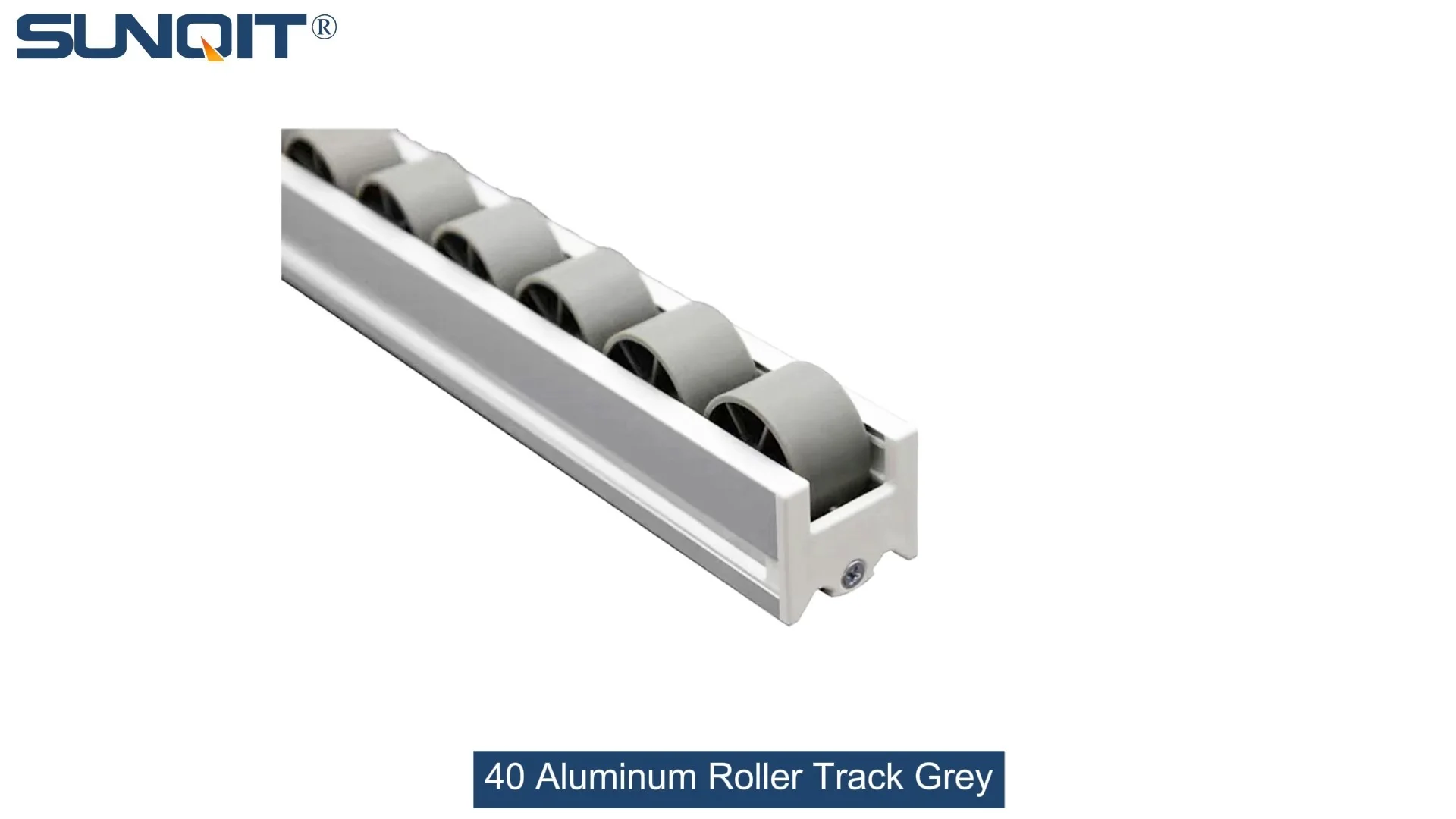
40 Aluminum Roller Track Grey
Durable and smooth-running modular roller rails. The system is fully assembled. The roller rail profile contains plastic rollers mounted on steel axles. Aluminum frame with plastic wheel make it anti corrosion,and material convey more smooth.
The Unsung Hero of Modern Material Handling
In the fast-paced world of manufacturing, warehousing, and logistics, the difference between success and stagnation often lies in the details. While flashy robots and high-tech software grab headlines, it's the humble components—the ones that quietly keep operations moving—that truly form the backbone of efficient material handling. Enter the 40 Aluminum Roller Track Grey: a seemingly simple tool that's revolutionizing how businesses move, sort, and manage materials. This isn't just a track with rollers; it's a testament to how thoughtful engineering and smart material choices can turn everyday workflows into streamlined, cost-saving processes.
Walk into any busy warehouse or production floor, and you'll quickly spot the pain points: conveyor lines that jam under heavy loads, flow racks that rust in humid environments, and roller tracks that require constant maintenance to keep up with demand. These issues don't just slow things down—they eat into profits, frustrate teams, and create bottlenecks that ripple through entire supply chains. For years, the solution was often "good enough": steel tracks that were durable but heavy, plastic rollers that were cheap but flimsy, or one-size-fits-all systems that forced businesses to adapt their processes instead of the other way around. But as industries evolve, "good enough" no longer cuts it. Today's material handling demands flexibility, durability, and sustainability—and that's where 40 Aluminum Roller Track Grey steps in.
From Steel to Aluminum: The Evolution of Roller Track Design
To understand why 40 Aluminum Roller Track Grey is a game-changer, it helps to look at where roller track technology has been. Decades ago, steel was the go-to material. It was strong, readily available, and could handle heavy loads—qualities that made sense for industrial settings. But steel came with trade-offs: it was heavy, making installation and reconfiguration a labor-intensive hassle. It was prone to rust, especially in damp warehouses or outdoor loading areas, which meant frequent replacements and increased maintenance costs. And its rigidity left little room for customization; if a business needed to adjust the track's layout to fit a new workflow, they'd often have to start from scratch.
Then came plastic roller tracks. Lighter than steel and resistant to corrosion, they offered a more affordable alternative, particularly for low-weight applications like e-commerce order fulfillment. But plastic had its own limitations: it lacked the strength to handle heavy loads, warped under extreme temperatures, and wore down quickly under constant use. For businesses with high-volume operations—think automotive manufacturing or large-scale distribution centers—plastic tracks were a temporary fix, not a long-term solution.
Aluminum changed the game. Lightweight yet surprisingly strong, aluminum brought together the best of steel and plastic without the drawbacks. Early aluminum tracks were a step forward, but they still had room for improvement: some were too thin, bending under moderate loads, while others used low-quality rollers that didn't glide smoothly. The 40 Aluminum Roller Track Grey addresses these issues head-on, combining precision engineering with high-grade materials to create a track that's as tough as it is versatile.
The "40" in its name refers to its width—40mm—a size carefully chosen to balance load capacity with flexibility. Wide enough to support bulky items like automotive parts or large boxes, yet narrow enough to fit into tight spaces, it's a sweet spot that makes it adaptable to everything from small workbenches to large-scale conveyor systems. The "grey" isn't just a color choice, either. Unlike bright hues that show scuffs and wear, the muted grey finish hides daily use, keeping the track looking professional even after years of heavy operation. It also blends seamlessly with industrial aesthetics, making it a practical choice for environments where function and appearance matter equally.

The Science of the Track: What Makes 40 Aluminum Roller Track Grey Tick
At first glance, a roller track might seem simple: a metal rail with rollers spaced along its length. But the 40 Aluminum Roller Track Grey is anything but basic. Its design is the result of careful consideration of three key factors: material science, roller mechanics, and user-centric engineering. Let's break them down.
Material Matters: The Aluminum Profile Advantage
The heart of this track is its aluminum profile—a term that refers to the specific shape and composition of the aluminum extrusion used to create the track's base. Unlike generic aluminum, the profile here is engineered for strength and precision. It's made from high-grade aluminum alloy, chosen for its exceptional strength-to-weight ratio. This means the track can support loads up to 150kg per meter (depending on roller spacing) without bending or warping, yet it's light enough that two people can easily carry and install a 3-meter section. For businesses, this translates to lower labor costs during setup and the freedom to reconfigure layouts as needs change—no crane or heavy machinery required.
But the aluminum profile's benefits go beyond strength and weight. Aluminum is naturally resistant to corrosion, thanks to a thin oxide layer that forms on its surface, protecting it from moisture, chemicals, and UV rays. This makes 40 Aluminum Roller Track Grey ideal for a wide range of environments: from humid food processing facilities to outdoor loading docks, and even cleanrooms where steel would risk contamination. Unlike steel, it won't rust, chip, or require painting, reducing long-term maintenance to little more than an occasional wipe-down with a damp cloth.
Rollers That Glide: Precision Engineering in Motion
A track is only as good as its rollers, and 40 Aluminum Roller Track Grey doesn't cut corners here. The rollers are made from high-density polyurethane, a material known for its durability and smooth operation. Unlike plastic rollers that can stick or metal rollers that squeak, polyurethane glides over the aluminum track with minimal friction, reducing the force needed to move materials. This not only speeds up workflows but also reduces strain on workers, lowering the risk of repetitive motion injuries.
The rollers are also spaced strategically—typically 50mm apart—to ensure even weight distribution. This prevents "hot spots" where heavy items might cause the track to bend and ensures that even irregularly shaped loads (like awkwardly sized boxes or oddly shaped parts) move smoothly without getting stuck. And because the rollers are replaceable individually, businesses don't have to replace the entire track if one roller wears out—a small detail that adds up to big savings over time.

Integrating with Lean Systems: More Than Just a Track, a Workflow Partner
In today's competitive landscape, efficiency isn't just about moving materials quickly—it's about moving them smartly . That's where lean manufacturing principles come in, and 40 Aluminum Roller Track Grey is designed to align seamlessly with lean systems. Lean, at its core, is about eliminating waste: reducing unnecessary movement, minimizing inventory, and optimizing workflows to create value for customers. Traditional roller tracks often worked against these goals, with their rigidity and one-size-fits-all design forcing businesses to adapt their processes to the track. 40 Aluminum Roller Track Grey flips that script, adapting to your processes to support lean initiatives.
Take flow racks, for example. A staple of lean warehousing, flow racks use gravity to move materials from the back (where they're stocked) to the front (where they're picked), ensuring first-in, first-out (FIFO) inventory management and reducing the need for workers to reach or bend. But for flow racks to work well, the track needs to be precisely angled and smoothly surfaced to control the speed of materials. 40 Aluminum Roller Track Grey's lightweight design makes it easy to adjust the rack's angle, while its low-friction rollers ensure materials glide at a consistent pace—fast enough to keep up with demand, slow enough to prevent jams or damage.
Conveyor systems are another area where 40 Aluminum Roller Track Grey shines. In lean manufacturing, conveyors are often used to create "pull" systems, where materials are moved only when needed, rather than stockpiling inventory. The track's flexibility makes it easy to design custom conveyor paths that snake around workstations, deliver materials directly to where they're needed, and adapt as production lines change. For example, a car manufacturer might use the track to move engine parts from the assembly line to quality control, then reconfigure the track a month later to accommodate a new model with different part sizes—all without major construction or downtime.
Even small details support lean goals. The track's modular design means businesses can add or remove sections as needed, avoiding overbuilding and reducing waste. Its durability ensures it won't need to be replaced every few years, aligning with the lean principle of "long-term thinking." And because it's compatible with a range of accessories—like aluminum guide rails, roller track connectors, and caster wheels—it can be integrated with existing systems, avoiding the need to replace perfectly functional equipment.

Comparing the Competition: Why 40 Aluminum Roller Track Grey Stands Out
To truly appreciate the value of 40 Aluminum Roller Track Grey, it helps to see how it stacks up against traditional options. Below is a comparison of key features that matter most to businesses: durability, cost-effectiveness, and adaptability.
| Feature | Steel Roller Tracks | Plastic Roller Tracks | 40 Aluminum Roller Track Grey |
|---|---|---|---|
| Material | Mild steel | Polypropylene or PVC | High-grade aluminum alloy + polyurethane rollers |
| Load Capacity | High (up to 200kg/m) | Low (up to 50kg/m) | High (up to 150kg/m) |
| Weight (per meter) | 8-10kg | 1-2kg | 3-4kg |
| Corrosion Resistance | Poor (prone to rust) | Good | Excellent (naturally resistant) |
| Maintenance Needs | High (painting, rust removal) | Moderate (roller replacement) | Low (occasional cleaning, replaceable rollers) |
| Customization | Limited (hard to cut/shape) | Moderate (easily cut but limited strength) | High (easily cut, modular, compatible with accessories) |
| Lifespan | 5-7 years (with maintenance) | 2-3 years (heavy use) | 10+ years (minimal maintenance) |
| Total Cost of Ownership | High (installation, maintenance, replacement) | Medium (low upfront, high replacement) | Low (moderate upfront, minimal upkeep) |
The table tells a clear story: 40 Aluminum Roller Track Grey balances strength, weight, and cost in a way that neither steel nor plastic can match. It offers nearly the load capacity of steel but at a fraction of the weight, making it easier to install and reconfigure. It matches plastic's corrosion resistance but with the durability to handle heavy, daily use. And while its upfront cost might be slightly higher than plastic, its 10+ year lifespan and minimal maintenance needs make it the most cost-effective choice over time.
Real-World Applications: Where 40 Aluminum Roller Track Grey Shines
Theory is one thing, but real-world results are what matter. Let's take a look at how businesses across industries are using 40 Aluminum Roller Track Grey to transform their operations.
Automotive Manufacturing: Speeding Up Assembly Lines
A mid-sized automotive parts manufacturer in Michigan was struggling with bottlenecks on its transmission assembly line. The line used old steel roller tracks that were prone to jamming, especially when moving heavy gearboxes. Workers often had to stop production to free stuck parts, costing an estimated 20 hours of downtime per month. The company considered upgrading to a new steel track system but balked at the installation cost and the downtime required to replace the old tracks. Instead, they tested 40 Aluminum Roller Track Grey on a small section of the line.
The results were immediate. The aluminum track's smooth rollers reduced jams by 90%, cutting downtime to just 2 hours per month. The track's lightweight design also made it easy to reposition, allowing the team to adjust the line layout to accommodate a new, larger gearbox model without major construction. Within six months, the company had replaced all its steel tracks with 40 Aluminum Roller Track Grey, recouping the investment through increased productivity and reduced maintenance costs.
E-Commerce Fulfillment: Handling the Holiday Rush
A large e-commerce warehouse in California was gearing up for the holiday season, expecting a 30% increase in order volume. Their existing plastic roller tracks were struggling to keep up, with rollers wearing out under the constant flow of boxes and frequent jams slowing down pickers. The warehouse needed a solution that could handle the holiday rush without breaking the bank. They turned to 40 Aluminum Roller Track Grey, installing it on their most heavily used flow racks.
The difference was night and day. The aluminum track's polyurethane rollers handled the increased load with ease, and the track's corrosion resistance stood up to the warehouse's humid, air-conditioned environment (plastic tracks had previously warped in the same conditions). Pickers reported moving 15% more orders per hour, and the warehouse avoided the usual holiday overtime costs. Best of all, when the holiday rush ended, the track's modular design allowed the warehouse to reconfigure the racks for slower, off-season operations—something that would have been impossible with rigid steel tracks.
Food and Beverage: Meeting Strict Sanitation Standards
A food processing plant in Texas needed to upgrade its material handling system to comply with new FDA sanitation regulations. Their old steel tracks were rusting in the plant's humid environment, creating a risk of contamination. Plastic tracks were an option, but they couldn't handle the weight of the plant's stainless steel ingredient bins. 40 Aluminum Roller Track Grey offered the perfect solution: its corrosion-resistant aluminum profile and easy-to-clean surface met FDA standards, while its load capacity easily supported the bins. The plant installed the track on its ingredient delivery line, and inspections since have shown zero issues with rust or contamination—a win for both compliance and efficiency.
Sustainability: Building a Greener Future, One Track at a Time
In an era where sustainability is no longer optional, 40 Aluminum Roller Track Grey stands out as an eco-friendly choice. Aluminum is one of the most recyclable materials on the planet—nearly 75% of all aluminum ever produced is still in use today. Unlike steel, which requires intensive mining and energy-heavy processing, recycling aluminum uses just 5% of the energy needed to produce new aluminum, reducing carbon emissions significantly. For businesses looking to reduce their environmental footprint, choosing aluminum over steel or plastic is a tangible step toward sustainability.
The track's longevity also plays a role. A 10+ year lifespan means fewer replacements, reducing waste and the need for raw materials. And because the track is modular, businesses can expand or reconfigure it instead of replacing it entirely when needs change—another way to minimize waste. Even the track's grey color contributes to sustainability: by hiding scuffs and wear, it stays looking professional longer, reducing the urge to replace it for aesthetic reasons.
For companies with sustainability goals or green certifications (like LEED or ISO 14001), 40 Aluminum Roller Track Grey isn't just a material handling tool—it's a way to demonstrate commitment to the planet while improving operations. It's a rare win-win: doing good for the environment and the bottom line.
The Future of Material Handling: What's Next for Roller Track Technology?
As industries continue to evolve, so too will material handling technology. So what does the future hold for 40 Aluminum Roller Track Grey? One trend is the integration of smart technology. Imagine track systems equipped with sensors that monitor roller wear, detect jams in real time, or track material flow to identify bottlenecks. With the Internet of Things (IoT) becoming more prevalent in industrial settings, "smart" roller tracks could soon alert maintenance teams to issues before they cause downtime, or feed data to analytics platforms to optimize workflows further. 40 Aluminum Roller Track Grey's durable design and aluminum profile (which conducts electricity well) make it an ideal foundation for these innovations.
Another trend is increased customization. As businesses of all sizes embrace agile manufacturing and on-demand production, they'll need material handling systems that can adapt quickly. 40 Aluminum Roller Track Grey's modular design is already ahead of the curve, but future iterations could offer even more flexibility—think tracks that can be easily curved, extended, or combined with other components (like conveyor belts or robotic pickers) to create fully integrated systems.
Finally, sustainability will continue to drive innovation. As aluminum recycling technology improves, the environmental impact of producing 40 Aluminum Roller Track Grey will shrink even further. We may also see the development of bio-based polyurethane rollers or other eco-friendly materials that reduce the track's carbon footprint without sacrificing performance.
Choosing the Right Supplier: What to Look For
Not all 40 Aluminum Roller Track Grey products are created equal. To ensure you're getting a track that lives up to its promise, it's important to choose a reputable supplier. Here are a few key factors to consider:
Material Quality: Ask about the aluminum alloy used. Look for suppliers that use high-grade alloys (like 6063-T5, a common choice for industrial profiles) which offer the best balance of strength and corrosion resistance. Avoid suppliers that cut corners with low-quality aluminum, as it may bend or wear prematurely.
Manufacturing Standards: Reputable suppliers will have strict quality control processes in place, from extrusion to roller assembly. Ask about certifications (like ISO 9001) that demonstrate a commitment to quality. A good supplier should also be willing to provide test reports or samples so you can evaluate the track's performance firsthand.
Customization Options: Every business has unique needs, so look for a supplier that offers customization—whether it's custom lengths, specialized rollers, or custom colors. The best suppliers will work with you to design a track system that fits your specific workflow, not just sell you off-the-shelf products.
Support and Service: Installation and maintenance can be daunting, especially for businesses new to aluminum track systems. Choose a supplier that offers technical support, installation guides, or even on-site assistance if needed. A supplier that stands behind its product with a warranty (look for at least 5 years) is also a good sign—they're confident in the track's durability.
Conclusion: The Quiet Revolution in Material Handling
In a world obsessed with innovation, it's easy to overlook the power of better basics. The 40 Aluminum Roller Track Grey may not have the glamour of a robotic warehouse or the excitement of AI-driven logistics, but it's a reminder that sometimes the most impactful innovations are the ones that make the everyday work better. It's a track that doesn't just move materials—it moves businesses forward, one smooth glide at a time.
From its aluminum profile that balances strength and weight to its polyurethane rollers that reduce friction and strain, every aspect of 40 Aluminum Roller Track Grey is designed with the user in mind. It's durable enough for heavy industry, flexible enough for small businesses, and sustainable enough for the future. It integrates with lean systems, reduces costs, and adapts to changing needs. In short, it's not just a tool—it's a partner in efficiency.
So the next time you walk through a warehouse, factory, or fulfillment center, take a closer look at the roller tracks. Chances are, the ones keeping things moving smoothly, quietly, and efficiently are made of aluminum. And if they're grey? Even better—you're looking at the future of material handling. The 40 Aluminum Roller Track Grey isn't just changing how we move materials; it's changing how we think about what's possible in the world of work.