- Company Articles
- Products and Technology
- Technology Sharing
- Future of Roller Track Placon Mount Connectors: Smart Manufacturing Integration

Future of Roller Track Placon Mount Connectors: Smart Manufacturing Integration
Related Product
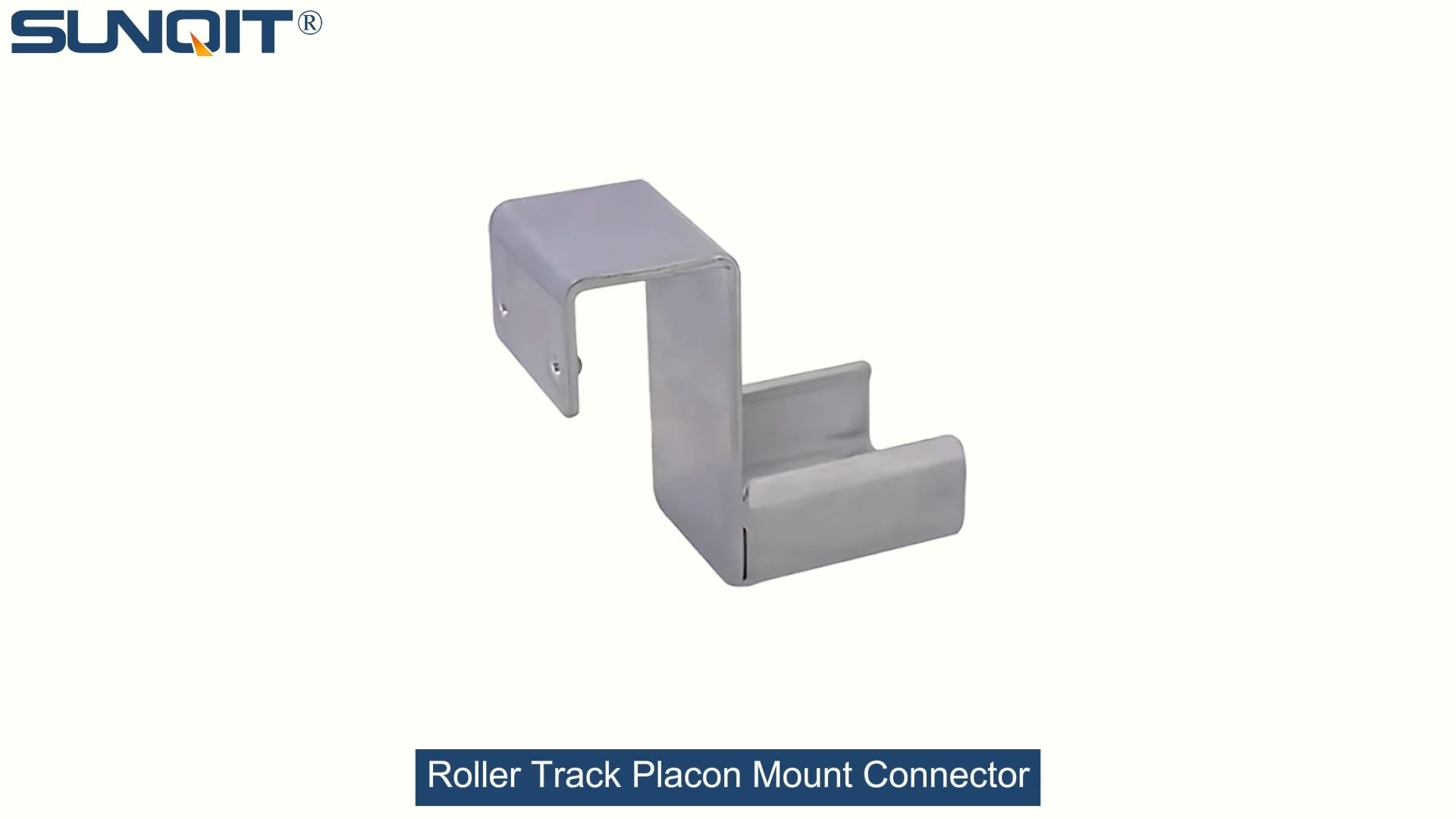
Roller Track Placon Mount Connector
Roller track placon mount work as a connector for roller track and pipe or aluminum profile in rack syetem, it is a necessary parts in rack system which widely used in industrial plant and logistic,warehouse storage.
Bridging Flexibility, Efficiency, and Innovation in Modern Production
The New Era of Smart Manufacturing: Why Connections Matter
In today's fast-paced manufacturing landscape, the shift toward smart factories is no longer a trend—it's a necessity. As industries from automotive to medical devices race to meet rising demands for customization, speed, and sustainability, the backbone of production lies in how well each component works together. At the heart of this integration are the unsung heroes: roller track placon mount connectors. These small yet critical parts are redefining how factories adapt, evolve, and thrive in the age of Industry 4.0.
Traditional manufacturing setups often struggle with rigidity. Fixed conveyor lines, static workbenches, and one-size-fits-all material racks leave little room for adjustments when production needs change. This inflexibility leads to downtime, wasted resources, and missed opportunities to optimize workflows. But imagine a production floor where every part—from the aluminum profile of a workstation to the caster wheels of a turnover trolley—can be reconfigured in hours, not weeks. That's the promise of advanced roller track placon mount connectors, designed to turn manufacturing spaces into dynamic ecosystems that grow with your business.
Key Challenge: Modern factories need solutions that balance stability with adaptability. A single production line might switch between assembling smartphones in the morning and medical devices in the afternoon. Without flexible connections, this level of versatility is nearly impossible.
What Are Roller Track Placon Mount Connectors? More Than Just "Parts"
At first glance, roller track placon mount connectors might seem like simple hardware—metal pieces that hold roller tracks, aluminum pipes, or conveyor systems together. But their true value lies in their ability to transform disjointed production elements into a cohesive, responsive network. These connectors act as the "nervous system" of a lean system, enabling seamless movement of materials, tools, and products across the factory floor.
Unlike generic fasteners, roller track placon mount connectors are engineered for precision and purpose. They're designed to work with specific components: aluminum guide rails that ensure smooth material flow, swivel roller balls that reduce friction, and adjustable brackets that adapt to different heights and angles. Whether connecting a 40 steel roller track to a flow rack or securing an ESD workstation to a conveyor line, these connectors provide the stability needed for heavy-duty operations while allowing quick disassembly and reconfiguration.
| Connector Type | Primary Function | Key Advantage |
|---|---|---|
| Roller Track Placon Mount for Aluminum Profile | Links roller tracks to aluminum frames | Tool-free adjustment for rapid reconfiguration |
| Internal Rotary Aluminum Joint | Connects aluminum pipes at flexible angles | 360° rotation for multi-directional workflows |
| End Support with Stop | Secures roller track ends to prevent material slippage | Enhanced safety and controlled material flow |
| Parallel Aluminum Joint | Aligns multiple aluminum pipes in parallel setups | Uniform weight distribution for heavy loads |

Design Innovation: How Modern Connectors Drive Lean Manufacturing
1. Material Science: Aluminum Profile and Beyond
The choice of material is where innovation begins. Traditional steel connectors often add unnecessary weight and corrosion risk, limiting their use in sensitive environments like medical device assembly. Today's roller track placon mount connectors leverage high-grade aluminum profile and aluminum extrusion profile to strike the perfect balance between strength and versatility. Aluminum's natural resistance to rust makes it ideal for factories with strict hygiene standards, while its lightweight nature simplifies manual adjustments—no heavy machinery needed to reposition a workbench or reconfigure a flow rack.
For specialized needs, options like stainless steel swivel roller balls and ESD-safe components ensure compatibility with industries like 3C assembly, where static electricity can damage delicate electronics. Even small details, like plastic roller track guide rails in yellow or grey, are designed to enhance visibility and organization, reducing errors in fast-paced production lines.
2. Modular Design: Build, Adapt, Repeat
The core of lean manufacturing is the ability to "do more with less," and modular design is the key to this principle. Modern roller track placon mount connectors are built on a "plug-and-play" philosophy. Instead of welding or permanent fastening, they use simple locking mechanisms and internal rotary joints that allow workers to disassemble a conveyor line, reconfigure a material rack, or expand a workstation in minutes. This modularity aligns perfectly with the "reusable, sustainable improvement" ethos of lean systems, cutting down on waste from custom-built, single-use equipment.
Real-World Impact: A 3C electronics manufacturer in China recently reduced changeover time between product models by 65% after switching to modular roller track connectors. What once took 8 hours to reconfigure now takes just 2.5 hours, freeing up staff to focus on quality control and innovation.
3. Compatibility: The Glue That Binds Lean Systems Together
A connector is only as good as its ability to work with other components. Today's designs prioritize cross-compatibility, ensuring that a roller track placon mount can seamlessly attach to aluminum guide rails, caster wheels, and even smart sensors. This interoperability is critical for building integrated lean systems where conveyors feed into flow racks, which feed into ESD workstations—all without compatibility gaps that cause bottlenecks.
For example, the 40 roller track placon mount series is engineered to work with both steel and aluminum roller tracks, while parallel aluminum joints can connect pipes of different diameters. This flexibility means factories aren't locked into a single brand or system, reducing long-term dependency and lowering costs.

From the Factory Floor to the Bottom Line: Real-World Applications
Case Study 1: 3C Assembly Lines – Speed Meets Precision
In the consumer electronics industry, where new smartphone models launch every few months, production lines must pivot quickly. A leading 3C manufacturer recently adopted a lean solution centered on roller track placon mount connectors and aluminum profile workstations. By using internal rotary aluminum joints and modular flow racks, they created a flexible assembly line that can switch between assembling tablets and smartwatches in under 3 hours. The connectors' ESD-safe design also eliminated static-related defects, reducing scrap rates by 18%.
Case Study 2: Medical Device Manufacturing – Compliance and Flexibility
Medical device production demands strict compliance with hygiene and safety standards, often requiring dedicated workspaces for different product lines. A medical equipment supplier faced the challenge of expanding production without investing in new facilities. By using stainless steel roller track series and adjustable aluminum workbenches with roller track placon mount connectors, they reconfigured existing space to add two new production cells. The connectors' corrosion-resistant materials met FDA guidelines, while their modularity allowed for easy cleaning and sanitization between shifts.
Case Study 3: Automotive Parts Logistics – Streamlining Material Flow
Automotive parts warehouses deal with heavy, bulky items that require efficient material handling. A major auto supplier upgraded its storage system with flow racks connected by roller track placon mount brackets and swivel roller balls. The new setup reduced picking time by 30% as parts now glide smoothly from storage to assembly lines. The connectors' durability also withstood the daily wear of heavy loads, extending the system's lifespan by an estimated 5 years compared to traditional fixed racks.

Sustainability: Building Factories That Last (and Recycle)
In an era where environmental responsibility is as important as profitability, roller track placon mount connectors are playing a key role in green manufacturing. Aluminum profile and aluminum extrusion profile are 100% recyclable, and their lightweight design reduces energy use during transportation and installation. Unlike plastic or welded steel components, which often end up in landfills when production lines change, modular connectors can be reused across multiple projects, cutting down on waste.
Take, for example, a plastic roller track guide rail that's no longer needed for one production line. With modular connectors, it can be repurposed as part of a new material rack or conveyor system. This "circular economy" approach not only reduces environmental impact but also lowers long-term costs—factories spend less on new equipment and more on innovation.
Sustainability Stat: The Aluminum Association reports that recycled aluminum uses 95% less energy than producing new aluminum. By choosing aluminum-based roller track systems, manufacturers can significantly shrink their carbon footprint.
Looking Ahead: The Future of Roller Track Connectors in Smart Factories
As smart manufacturing evolves, roller track placon mount connectors are set to become even more integral. Here's what the future holds:
- Smart Sensors Integration: Future connectors may include built-in sensors that monitor wear, temperature, and vibration, sending real-time data to factory management systems. This predictive maintenance could reduce downtime by alerting teams to potential issues before they cause failures.
- IoT-Enabled Adjustments: Imagine a connector that automatically adjusts its tension based on material flow data from the factory's IoT network. This level of automation would take flexibility to new heights, allowing production lines to self-optimize during shifts.
- Advanced Materials: Research into carbon fiber-reinforced aluminum could make connectors even lighter and stronger, opening doors for use in high-load industries like aerospace manufacturing.
- AI-Driven Design Tools: Software that uses AI to recommend optimal connector configurations based on production goals—whether that's faster changeovers or higher weight capacity—will make lean system design more accessible to small and medium manufacturers.
Conclusion: The Connection Between Today's Choices and Tomorrow's Success
Roller track placon mount connectors may not grab headlines, but they are the foundation upon which smart, flexible factories are built. In a world where manufacturing success depends on adaptability, these small components deliver big results: faster changeovers, lower costs, greener operations, and happier, more productive teams.
As industries continue to embrace lean solutions and smart manufacturing, the message is clear: the future belongs to factories that can connect, adapt, and evolve. By choosing the right connectors—ones that prioritize modularity, compatibility, and sustainability—manufacturers aren't just building production lines; they're building resilience. And in manufacturing, resilience is the ultimate competitive advantage.