Future of T Slot Aluminum Pipe: Technological Advancements on the Horizon
Related Product
T Slot Aluminum Pipe
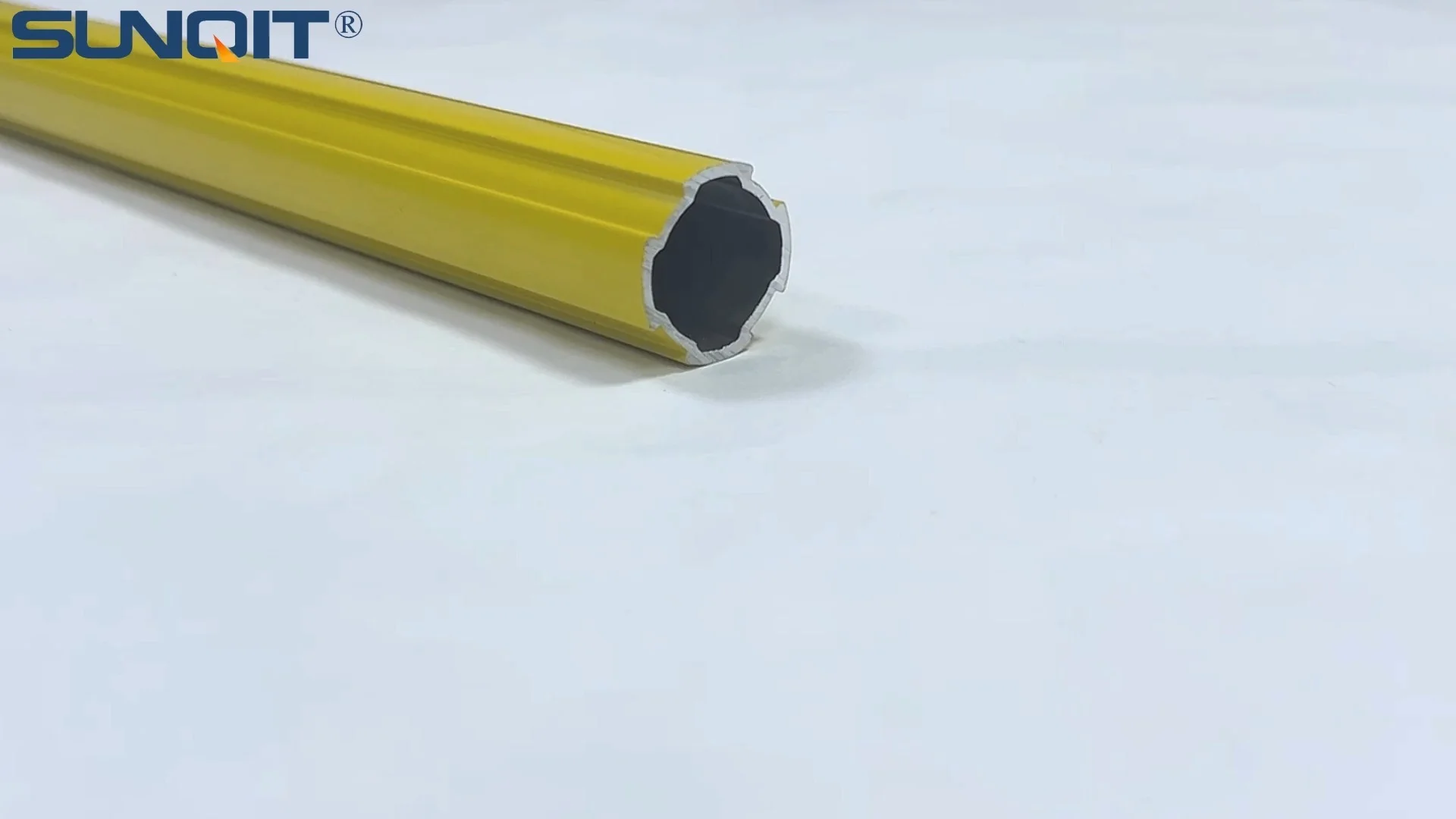
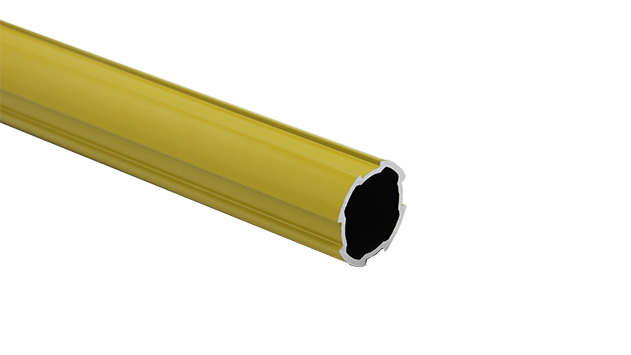
Aluminum pipe, it is used for workbench, flow rack,hand trolley assemble work with advantage of flexible and durable, yellow color makes it more attactive as a caution remind.
T Slot Aluminum Pipe

How modular innovation is reshaping manufacturing, workspace design, and industrial efficiency

The Quiet Revolution of Modular Infrastructure

Walk through a bustling electronics factory, a precision automotive workshop, or even a cutting-edge research lab, and you'll likely overlook the most critical element keeping operations flowing: T-slot aluminum pipe . These unassuming, grooved tubes—paired with aluminum profile accessories like connectors, brackets, and casters—form the backbone of workbenches, material racks, and lean production lines. They're the invisible architects of efficiency, quietly adapting to shifting workflows and evolving demands. But as industries race toward smarter, more sustainable operations, the future of T-slot aluminum pipe is anything but humble. It's a future where modularity meets AI, where lightweight strength merges with eco-conscious design, and where every groove and joint tells a story of innovation.

For decades, T-slot aluminum pipe has been the unsung hero of flexible manufacturing. Unlike rigid steel structures or one-size-fits-all fixtures, these systems thrive on adaptability. A single aluminum extrusion profile can be reconfigured into a workbench in the morning, a conveyor rail by afternoon, and a storage rack by evening—all with basic tools and minimal downtime. This flexibility has made it indispensable for lean system setups, where reducing waste and maximizing productivity are paramount. But as Industry 4.0 accelerates, and businesses demand infrastructure that's not just flexible, but intelligent and sustainable, the technology is poised for a transformation.
Material Science: Beyond Aluminum—Stronger, Lighter, Greener

The next generation of T-slot aluminum pipe starts with the material itself. Traditional aluminum extrusion profile has long balanced strength and weight, but new alloys are rewriting the rules. Engineers are now experimenting with scandium-infused aluminum, which boosts tensile strength by 25% while cutting weight by 10%—a game-changer for applications like aerospace manufacturing jigs or mobile aluminum workbench setups. Imagine a production line where the workbench supporting heavy machinery weighs 30 pounds less but carries 50% more load—this isn't science fiction; it's the near future.

Corrosion resistance is another frontier. For food processing plants, marine workshops, or chemical labs, where moisture and harsh substances are constants, new surface treatments are making T-slot systems nearly indestructible. Anodization processes now create oxide layers 50% thicker than standard, while nano-ceramic coatings add a protective barrier that repels chemicals and resists scratches. These advancements don't just extend lifespan—they reduce maintenance costs, a critical win for businesses clinging to tight lean system budgets.

Sustainability, too, is driving material innovation. Today's aluminum extrusion profile is already 100% recyclable, but tomorrow's will be even greener. Manufacturers are developing "closed-loop" production cycles, where old T-slot pipes are melted down, purified, and recast into new profiles with zero loss in quality. Some are even experimenting with bio-based lubricants in extrusion dies, cutting carbon footprints by 15%. For companies aiming for net-zero goals, this isn't just a selling point—it's a necessity.

Design & Engineering: Precision, Speed, and Smart Integration

Modularity has always been T-slot aluminum pipe's superpower, but future designs will take this to unprecedented levels. Thanks to 3D printing and AI-driven design tools, aluminum profile accessories are becoming hyper-customizable. Need a bracket that fits an oddly shaped sensor? A connector that swivels 180 degrees and locks in place? Engineers can now design, prototype, and produce these parts in hours, not weeks. This on-demand manufacturing is a boon for small businesses and startups, who can now afford custom setups without the cost of mass production.

Precision is another breakthrough area. Traditional T-slot systems had tolerances of ±0.1mm, which was enough for most tasks—but not for the microchip assembly lines of tomorrow. New CNC-machined extrusion dies are achieving tolerances as tight as ±0.02mm, ensuring that every aluminum extrusion profile and accessory fits together with zero wobble. This level of accuracy is critical for industries like semiconductors, where even a fraction of a millimeter misalignment can ruin a batch of chips. It also opens doors for "click-and-play" assembly: no more fumbling with wrenches or calibrating joints. Snap a connector into place, hear the satisfying "click," and trust it will hold 500 pounds without budging.

The most exciting leap, though, is the integration of smart technology. Imagine a T-slot workbench equipped with sensors embedded in the aluminum extrusion profile that monitor weight distribution, temperature, and vibration. If a machine mounted on the bench starts vibrating abnormally, the system alerts maintenance via a mobile app. Or consider a lean production line where aluminum profile accessories like motorized casters adjust the height of a conveyor rail automatically, based on real-time data from upstream stations. These aren't just conveniences—they're the building blocks of self-optimizing factories.

Industry Impact: From Factory Floors to Operating Rooms

The future of T-slot aluminum pipe isn't just about better materials or smarter designs—it's about transforming how entire industries operate. Take automotive manufacturing, where production lines must switch between models in days, not weeks. A next-gen T-slot system could reconfigure itself: aluminum workbench surfaces rise or fall, material racks shift positions, and conveyor rails realign—all controlled by AI that analyzes production schedules. This would cut changeover time from 48 hours to 4, a competitive edge in an industry where speed is everything.

In healthcare, cleanliness and adaptability are critical. New T-slot designs with seamless, crevice-free aluminum extrusion profile are making hospital workbenches and equipment carts easier to sanitize, reducing infection risks. Lightweight yet sturdy systems are also being used to build mobile surgical tool stations that glide silently through corridors, supporting 300-pound loads with ease. For rural clinics with limited space, these modular setups can transform from exam tables to medication storage racks in minutes.

Even the retail sector is getting in on the action. Pop-up shops and e-commerce fulfillment centers need infrastructure that's portable, durable, and reconfigurable. T-slot aluminum pipe systems with quick-lock aluminum profile accessories allow store owners to build custom shelving, checkout counters, and product displays that collapse into compact bundles for transport. It's retail infrastructure that keeps up with the fast pace of trends—no tools required.

The Rise of Smart Accessories: More Than Just Connectors

Behind every great T-slot aluminum pipe is a suite of aluminum profile accessories that turn tubes into tools. The future of these accessories is as innovative as the pipes themselves. Take casters, for example: tomorrow's casters won't just roll—they'll "think." Equipped with RFID tags and proximity sensors, they'll track the location of mobile workbenches in a factory, alerting managers if a cart strays from its assigned zone. Brake systems will engage automatically when the cart reaches a workstation, preventing accidental movement during assembly.

Connectors are also evolving. Traditional joints required screws and hex keys, but new magnetic and cam-lock designs allow for tool-free assembly. Some connectors will even feature built-in LED lights, illuminating workbench surfaces or signaling when a joint is loose. For night shifts or dimly lit warehouses, this isn't just convenience—it's safety.

Perhaps most innovative are "smart" end caps. These unassuming plugs, which seal the ends of T-slot pipes, will soon house tiny batteries, Bluetooth chips, and environmental sensors. Imagine an end cap that monitors temperature and humidity in a food storage rack, sending alerts if conditions fall out of the safe range. Or one that tracks how many times a workbench is reconfigured, helping businesses optimize their lean system workflows based on real usage data.

Traditional vs. Next-Gen T-Slot Systems: A Comparative Look

Feature Traditional T-Slot Aluminum Pipe Next-Gen T-Slot Aluminum Pipe
Material Strength Standard aluminum alloys (6061-T6), 200 MPa tensile strength Scandium-infused alloys, 260+ MPa tensile strength (30% stronger)
Assembly Time 30–60 minutes for basic workbench (requires tools) 5–10 minutes for advanced workbench (tool-free, snap-fit accessories)
Customization Limited to off-the-shelf accessories 3D-printed, AI-designed custom parts (available on-demand)
Sustainability Recyclable but high energy use in production 95% recycled content, closed-loop manufacturing, carbon-neutral extrusion
Smart Integration None (static infrastructure) Embedded sensors, IoT connectivity, AI-driven reconfiguration
Industry Use Cases Basic manufacturing, warehousing Aerospace, healthcare, microelectronics, sustainable retail

Challenges & Opportunities: Building the Future

Of course, the future of T-slot aluminum pipe isn't without hurdles. Cost remains a barrier: advanced alloys and smart accessories will initially carry premium prices, though mass production and competition should drive costs down. Standardization is another issue—with so many manufacturers developing proprietary aluminum profile accessories , compatibility between brands can be hit-or-miss. Industry-wide standards for slot dimensions and connector designs would unlock even more innovation.

But the opportunities far outweigh the challenges. As businesses prioritize agility and sustainability, T-slot aluminum pipe will become a cornerstone of the "circular factory"—where infrastructure is reused, recycled, and reconfigured rather than replaced. In emerging markets, its low cost and ease of assembly could democratize manufacturing, allowing small workshops to compete with larger firms. And in a world grappling with climate change, its recyclability and energy efficiency will make it a poster child for green industrial practices.

The Road Ahead: More Than Pipes—A Platform for Innovation

So, what will the future look like? Picture a factory where T-slot aluminum pipe systems learn from their users: a workbench that adjusts its height based on an operator's habits, a material rack that orders replacement parts automatically when stock runs low, or a conveyor system that reroutes itself to avoid bottlenecks. These aren't just dreams—they're the logical next steps for a technology built on adaptability.

At its core, the future of T-slot aluminum pipe is about empowerment. It's about giving manufacturers, designers, and entrepreneurs the tools to build, iterate, and grow without being limited by rigid infrastructure. It's about turning "good enough" into "exactly what I need, when I need it." And as we move toward a world where efficiency and sustainability are non-negotiable, T-slot aluminum pipe—quiet, versatile, and ever-evolving—will be right there, holding it all together.

So the next time you walk through a workshop or factory, take a closer look at those aluminum pipes and accessories. They're not just building structures—they're building the future.


Get In Touch with us

Hey there! Your message matters! It'll go straight into our CRM system. Expect a one-on-one reply from our CS within 7×24 hours. We value your feedback. Fill in the box and share your thoughts!