- Company Articles
- Products and Technology
- Technology Sharing
- Future of Three Way Lean Pipe Joint: Smart Manufacturing Integration

Future of Three Way Lean Pipe Joint: Smart Manufacturing Integration
Related Product
Three Way Lean Pipe Joint
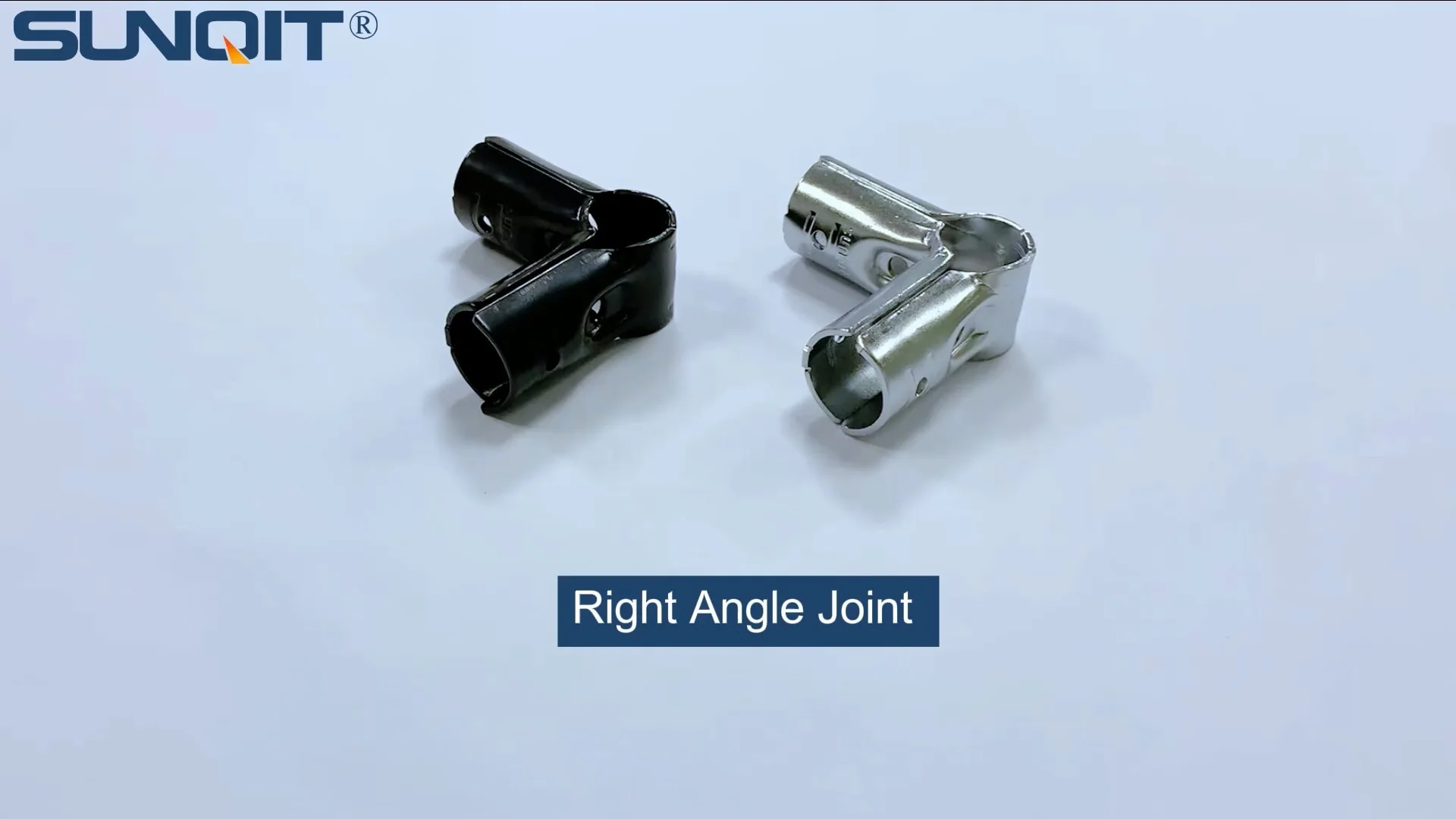
Three way lean pipe joint for 3 pcs 28MM lean pipe connection in straight angle, which used widely in workbench, flow rack, hand trolley frame connection.
Walk into any modern manufacturing facility today, and you'll likely hear the steady hum of conveyor belts, the clink of metal parts, and the focused chatter of workers assembling products. Amidst this organized chaos, there's a silent workhorse holding everything together: the three way lean pipe joint. These unassuming connectors are the backbone of lean systems, quietly supporting workbenches, flow racks, and roller tracks that keep materials moving and production lines efficient. But as manufacturing hurtles toward the era of smart factories and Industry 4.0, even the most humble components are getting a high-tech makeover. The future of the three way lean pipe joint isn't just about holding pipes together—it's about becoming a critical node in the intelligent, connected ecosystem of tomorrow's manufacturing plants.
In this article, we'll explore how three way lean pipe joints are evolving to meet the demands of smart manufacturing. From advanced materials like aluminum profile to embedded sensors and seamless integration with esd workstations and roller tracks, these tiny connectors are set to play a starring role in building flexible, efficient, and data-driven production systems.
The Unsung Hero of Lean Systems Today
Before diving into the future, let's take a moment to appreciate the present. Three way lean pipe joints are the unsung heroes of lean manufacturing. Designed to connect lean pipes (often steel or PE-coated) at 90-degree angles, they enable the quick assembly of custom workbenches, material racks, and flow racks—core components of any lean system. Their simplicity is their strength: no welding or specialized tools required, just a twist or clamp to secure the joint, making it easy to reconfigure lines as production needs change.
Today's joints are reliable, cost-effective, and built for durability. They support the lean philosophy of "just-in-time" production by allowing manufacturers to adapt their workspace on the fly. Need a new workstation for a sudden order spike? Grab some lean pipes, three way joints, and you're up and running in hours. But as manufacturing evolves, "good enough" isn't enough anymore. Smart manufacturing demands more than just physical connectivity—it needs data, adaptability, and intelligence.
Smart Manufacturing: A New Era of Demands
Smart manufacturing isn't just a buzzword—it's a revolution. Driven by IoT, AI, and real-time data analytics, modern factories are becoming "connected ecosystems" where machines, materials, and workers communicate seamlessly. The goal? To boost efficiency, reduce downtime, enable mass customization, and respond faster to market changes. But to achieve this, every component in the system—including the humble three way lean pipe joint—must evolve.
Consider this: A traditional lean system with fixed workbenches and static roller tracks works well for high-volume, low-variety production. But today's consumers want personalized products, and manufacturers need to switch between product lines in days, not months. This requires production lines that can reconfigure in minutes, not hours. It also demands visibility into every step of the process—from material flow on roller tracks to the load capacity of workbenches. Traditional three way lean pipe joints, which are passive and unconnected, simply can't provide this level of flexibility or data.
That's where the future three way lean pipe joint comes in. It's not just a connector anymore; it's a smart node that bridges the physical and digital worlds of manufacturing.

The Future Three Way Lean Pipe Joint: Reimagined
Materials Evolution: From Steel to Aluminum Profile
The first shift we'll see is in materials. While traditional lean pipe joints are often made of steel (or PE-coated steel for basic protection), the future belongs to aluminum profile. Why? Aluminum offers a winning combination of strength, lightness, and corrosion resistance—critical for factories where hygiene, durability, and mobility matter. Imagine a three way joint crafted from high-grade aluminum profile: it's 30% lighter than steel, making it easier for workers to reconfigure lines without heavy lifting, yet strong enough to support the weight of tools, materials, and even automated equipment.
Aluminum profile also brings another advantage: compatibility with a wide range of accessories. Today's lean system suppliers are already developing aluminum profile accessories—from clamps to brackets—that snap into T-slots on the profile, eliminating the need for drilling or welding. This means the future three way joint won't just connect pipes; it will integrate seamlessly with sensors, cable management systems, and even small actuators, turning static structures into dynamic, adaptable workspaces.
Embedded Intelligence: Sensors That Speak
The most exciting evolution, though, is embedded intelligence. Picture this: a three way lean pipe joint with tiny, low-power sensors built into its core. These sensors could monitor everything from load capacity (alerting managers if a workbench is overloaded) to vibration (detecting early signs of wear in roller tracks) to temperature (preventing overheating in sensitive environments like electronics assembly). Even static electricity—a major risk in esd workstations—could be tracked, with the joint sending real-time alerts if ESD levels exceed safe thresholds.
How would this work? The sensors would connect via low-energy Bluetooth or Wi-Fi to a central dashboard, giving plant managers a bird's-eye view of their entire operation. If a roller track jam occurs, the joint nearest the blockage could instantly flag the issue, reducing downtime from hours to minutes. If a workbench in an esd workstation starts to accumulate static, the joint could trigger a warning light or sound an alarm, preventing costly damage to sensitive components like circuit boards.
Modular & Adaptive Design: Snap, Twist, Produce
Flexibility will be king in future factories, and the three way lean pipe joint will lead the charge. Forget fumbling with bolts or wrenches—tomorrow's joints will feature "quick-connect" mechanisms inspired by modular furniture. A simple twist or click, and the joint locks into place, creating a secure connection in seconds. What's more, these joints will be universally compatible, working with aluminum pipe, traditional lean pipe, and even stainless steel pipe series, allowing manufacturers to upgrade gradually without replacing their entire infrastructure.
Adaptive design will also extend to adjustability. Imagine a joint with a built-in ratchet system that lets workers angles by 5-degree increments, making it easy to slope roller tracks for optimal material flow or tilt workbenches to reduce worker strain. Some lean system suppliers are even experimenting with "shape-memory" aluminum alloys that allow the joint to flex slightly under stress and return to its original shape, preventing cracks and extending lifespan.
Sustainability: Green by Design
Finally, the future three way lean pipe joint will be greener. With manufacturers under increasing pressure to reduce their carbon footprint, sustainability isn't an afterthought—it's a requirement. Aluminum profile is 100% recyclable, and the energy required to produce it has dropped by 50% in the last decade. What's more, the embedded sensors in smart joints will help reduce waste by optimizing energy use: if a workbench isn't in use, the joint could trigger lights or fans to power down, cutting electricity costs by up to 15% in some facilities.

Integration with Smart Workstations and Roller Tracks
To truly understand the impact of the future three way lean pipe joint, let's look at how it will integrate with two critical components of modern manufacturing: esd workstations and roller tracks.
Esd Workstations: Safety Meets Intelligence
ESD (electrostatic discharge) workstations are essential in industries like semiconductor and medical device manufacturing, where even a tiny static spark can destroy sensitive components. Today's esd workstations rely on grounding mats and wristbands, but they lack real-time monitoring. The future workstation, built with smart three way joints, would change that.
Each joint in the workstation's frame could house an ESD sensor, continuously measuring static charge levels across the workspace. If a worker forgets to wear their wristband, or if the grounding mat fails, the joint would send an alert to the worker's tablet and the central dashboard, halting production until the issue is fixed. What's more, the aluminum profile structure would itself be conductive, providing an extra layer of ESD protection—no need for separate grounding wires cluttering the workspace.
Roller Tracks: Smoother Flow, Smarter Data
Roller tracks are the arteries of manufacturing, moving materials from one station to the next. But today's tracks often suffer from jams, uneven flow, and underutilization—problems that go undetected until production grinds to a halt. The future roller track, built with smart three way joints, would be self-monitoring and self-optimizing.
Sensors in the joints could track the speed of materials as they roll past, adjusting the track's slope (via small actuators in the joints) to keep flow steady. If a package gets stuck, the nearest joint would detect the sudden stop in motion and trigger a light or sound to alert workers. Over time, the data collected by these joints could even help optimize the track's layout: maybe moving a sharp turn to reduce jams, or adding a bypass track for high-priority orders. Lean system suppliers are already testing prototypes of these "smart tracks," and early results show a 20% reduction in downtime and a 15% increase in throughput.

The Role of Lean System Suppliers in Shaping the Future
None of this innovation happens in a vacuum. Lean system suppliers are on the front lines, driving the development of the future three way lean pipe joint. These suppliers, once focused solely on selling parts, are now evolving into solution providers, partnering with manufacturers to design end-to-end smart systems.
Take, for example, a leading lean system supplier that specializes in aluminum profile and lean pipe components. Five years ago, their catalog was filled with basic joints and pipes. Today, they're investing in R&D labs where engineers work with manufacturers to co-create smart joints with custom sensors. They're also building cloud platforms that aggregate data from these joints, giving clients actionable insights into their production lines—like which workbenches are underused, or which roller tracks need maintenance.
These suppliers are also addressing a key barrier to adoption: cost. While smart joints will initially be pricier than traditional ones, suppliers are developing modular designs that let manufacturers start small—say, retrofitting a single esd workstation with smart joints—and scale up as they see ROI. Over time, as production volumes increase, the cost of sensors and aluminum profile will drop, making smart joints accessible to even small and medium-sized manufacturers.
Case Study: A Glimpse into Tomorrow's Factory
Let's paint a picture of a factory using future three way lean pipe joints. Meet PrecisionTech, a mid-sized electronics manufacturer producing custom circuit boards for medical devices. Two years ago, their production line was typical: static workbenches, manual roller tracks, and frequent bottlenecks. Today, they've retrofitted 30% of their lean systems with smart three way joints made from aluminum profile, and the results are striking.
On their esd workstations, smart joints monitor static levels and send alerts to workers' smartwatches if grounding fails. In the past six months, ESD-related defects have dropped by 45%. On their roller tracks, joint sensors track material flow, and the tracks automatically adjust their slope to prevent jams—downtime has fallen by 30%. Even the workbenches are smarter: load sensors in the joints alert managers when a station is overloaded, reducing the risk of injury and equipment damage.
But the biggest win? Data. PrecisionTech's managers now have a real-time dashboard showing which lines are running at peak efficiency, which need adjustments, and which workers might need additional training. They've used this data to reconfigure their layout, cutting production time per unit by 18% and increasing on-time deliveries by 25%.
"The three way joint used to be the last thing we thought about," says Maria Gonzalez, PrecisionTech's operations manager. "Now, it's the first thing. It's the eyes and ears of our factory."
Traditional vs. Future Three Way Lean Pipe Joints: A Comparison
| Feature | Traditional Three Way Lean Pipe Joint | Future Three Way Lean Pipe Joint |
|---|---|---|
| Material | Steel or PE-coated steel; heavy, prone to corrosion | Aluminum profile; lightweight, corrosion-resistant, T-slot compatible |
| Connectivity | Passive; no data collection or communication | Embedded sensors; connects to IoT platforms via Bluetooth/Wi-Fi |
| Adaptability | Fixed angles; requires tools to reconfigure | Modular design; quick-connect, adjustable angles (5-degree increments) |
| Sustainability | Limited recyclability; energy-intensive production | 100% recyclable aluminum; lower production energy; energy-saving sensors |
| Integration | Connects pipes only; no accessory compatibility | Integrates with sensors, actuators, cable management, and aluminum profile accessories |
Conclusion: Small Joints, Big Impact
The future of manufacturing isn't just about robots and AI—it's about reimagining the smallest components to work smarter, harder, and more connectedly. The three way lean pipe joint, once a humble connector, is set to become a cornerstone of smart manufacturing, enabling the flexible, efficient, and safe factories of tomorrow.
From aluminum profile materials to embedded sensors, from esd workstation safety to roller track optimization, this tiny joint will bridge the gap between the physical and digital worlds, giving manufacturers the data and flexibility they need to thrive in an era of mass customization and rapid change. And as lean system suppliers continue to innovate, these smart joints will become more affordable, more reliable, and more essential—proving that in manufacturing, even the smallest parts can make the biggest difference.
So the next time you walk into a factory, take a closer look at those unassuming joints holding the lines together. In a few short years, they won't just be holding pipes—they'll be powering the future of manufacturing.