
Walk into a modern manufacturing facility today, and you'll immediately sense the pulse of change. Factories are no longer just about heavy machinery and repetitive tasks—they're dynamic ecosystems where flexibility, efficiency, and sustainability converge. At the heart of this transformation lies material handling technology, and one innovation stands out for its ability to redefine workflow agility: all direction roller track systems. These unassuming yet powerful components are quietly revolutionizing how products move through production lines, warehouses, and assembly stations. From 3C electronics plants racing to meet consumer demand to medical device facilities prioritizing precision, all direction roller tracks are becoming the unsung heroes of lean manufacturing. Let's dive into the trends shaping this technology, the innovations driving its growth, and how it's empowering industries to build smarter, more adaptable operations.
The Shift Toward Adaptive Material Handling
Traditional production lines were built for stability—once set up, they chugged along for years, resistant to change. But in today's market, where product lifecycles shrink and customization demands soar, stability can become a liability. This is where all direction roller track technology steps in, offering a middle ground between rigidity and chaos. Unlike fixed conveyor belts or one-directional roller tracks, these systems let materials glide, turn, and reorient with minimal effort, adapting to shifting production needs in real time.
Consider the 3C industry, where a single factory might assemble smartphones, tablets, and wearables on the same floor. A product launch or design tweak used to mean halting production for days to reconfigure lines. Now, with modular all direction roller tracks, teams can rearrange workstations, adjust flow paths, and even repurpose sections of the line in hours. This flexibility isn't just about saving time—it's about staying competitive in an era where speed to market can make or break a brand.
But the impact goes beyond electronics. In medical device manufacturing, where precision is non-negotiable, these roller tracks reduce the risk of product damage during handling. Delicate components like surgical instruments or diagnostic tools glide smoothly, minimizing friction and ensuring each part arrives at the assembly station in perfect condition. Meanwhile, in automotive plants, heavy-duty all direction roller tracks handle bulky parts with ease, allowing for seamless transitions between welding, painting, and assembly stages. It's a technology that doesn't just move products—it moves entire industries forward.
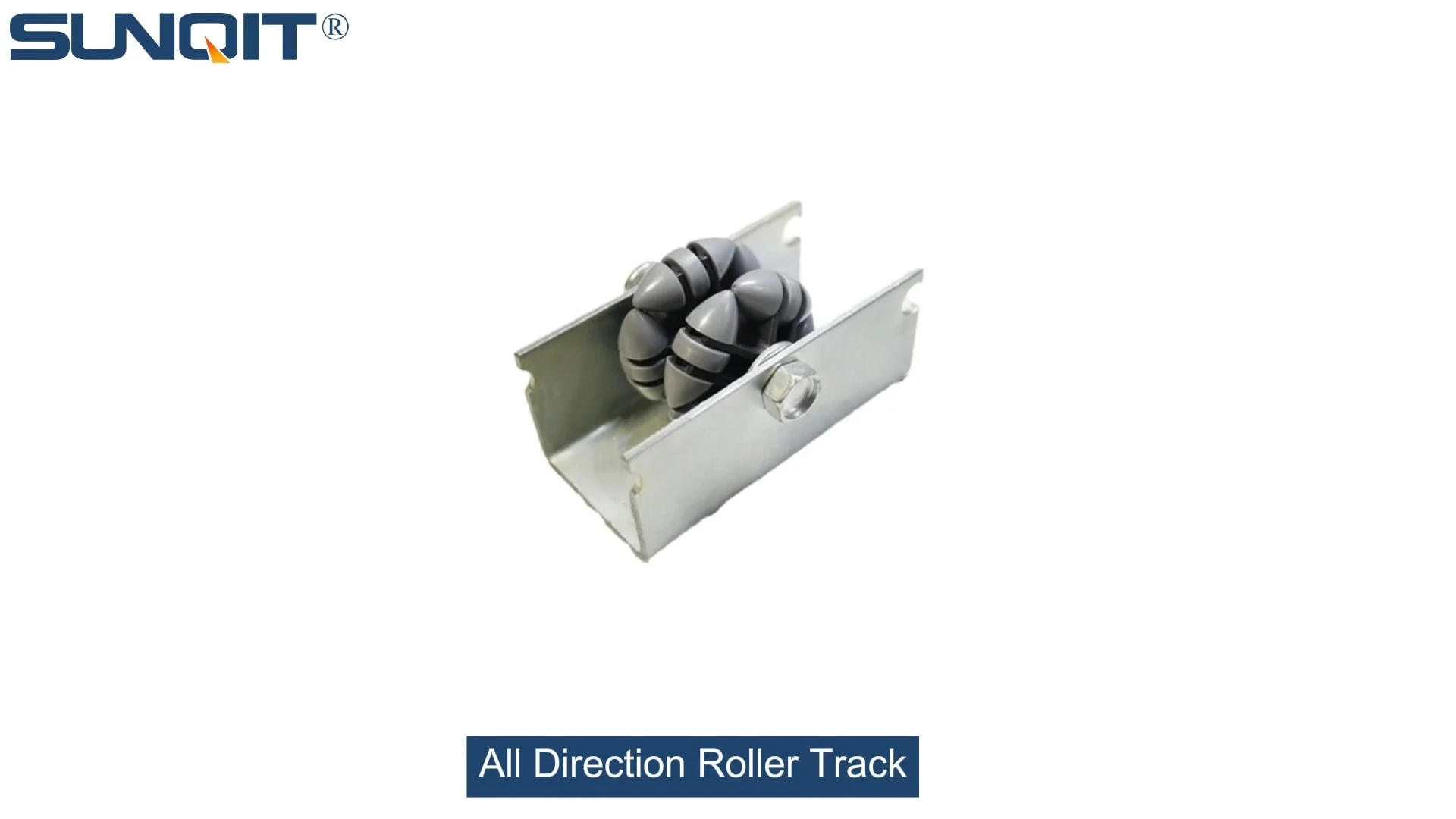
Material Innovations: The Building Blocks of Tomorrow's Roller Tracks
Behind every leap in performance lies a material breakthrough, and all direction roller track systems are no exception. The days of relying solely on steel pipes and plastic rollers are fading, replaced by advanced materials that balance strength, weight, and sustainability. At the forefront of this shift is the growing adoption of aluminum lean pipe and aluminum profiles, which are redefining what roller tracks can do.
Aluminum brings a host of advantages to the table. It's lightweight, making installation and reconfiguration a breeze—no more heavy lifting or specialized equipment required. Yet despite its lightness, it's surprisingly strong, capable of supporting heavy loads without bending or warping. This combination is a game-changer for lean manufacturing, where reducing waste (including physical strain on workers) is a core principle. Additionally, aluminum's natural resistance to corrosion ensures longevity, even in demanding environments like food processing or pharmaceutical facilities where cleanliness is paramount.
But it's not just about the pipes themselves. The accessories that accompany them—joints, connectors, and brackets—are also getting an upgrade. Internal rotary aluminum joints, for example, allow for smooth 360-degree movement, eliminating the need for rigid, fixed angles. This modularity means that a single set of components can be rearranged into countless configurations, from simple flow racks to complex multi-level conveyor systems. It's a "build once, adapt often" approach that aligns perfectly with the lean of sustainable improvement.
Another material making waves is stainless steel, particularly in industries where hygiene is critical. Stainless steel roller tracks resist rust and are easy to sanitize, making them ideal for medical device assembly lines or food packaging facilities. When paired with plastic roller track guide rails (available in yellow or grey for visual workflow management), they create systems that are both durable and easy to maintain. The result? Roller tracks that don't just last longer but perform better, even in the toughest conditions.

Design Trends: From One-Size-Fits-All to Hyper-Customization
If materials are the muscles of all direction roller track systems, design is the brain. Today's engineers aren't just creating products—they're crafting solutions that adapt to unique operational quirks. This shift toward hyper-customization is driven by the realization that no two factories are alike, even within the same industry. A 3C assembly plant in Shenzhen might prioritize speed and compactness, while a medical device facility in Munich focuses on precision and contamination control. All direction roller track systems are rising to the challenge with designs that cater to these specific needs.
One key trend is the integration of ESD (Electrostatic Discharge) protection into workstations and roller tracks. In electronics manufacturing, static electricity can fry sensitive components, leading to costly defects. ESD workbench and ESD workstation setups, paired with roller tracks featuring conductive materials, create a controlled environment where static charges are safely dissipated. This isn't just an add-on feature anymore—it's a standard requirement, and roller track designers are responding by embedding ESD protection directly into the track's structure, from the aluminum pipes to the roller wheels.
Modularity is another design cornerstone. Modern roller track systems are built like digital building blocks—each component (tracks, rollers, connectors) is interchangeable, allowing operators to "code" their workflow just as a programmer writes code. Need to add a curve to navigate around a workstation? Swap out a straight track for a curved section. Want to adjust the height to align with a conveyor? Use adjustable aluminum feet to fine-tune the position. This level of flexibility means that systems can grow with a business, scaling up or reconfiguring as production needs change. It's a far cry from the days of tearing out entire sections of track to accommodate a new product line.
Ergonomics is also taking center stage. Roller tracks are no longer installed at a fixed height—they're designed to adapt to human workers, not the other way around. Adjustable workbenches with integrated roller tracks let employees raise or lower the surface to their ideal height, reducing strain and boosting productivity. Even the roller spacing is being optimized: closer spacing for small, delicate parts, wider spacing for larger items. It's a thoughtful approach that recognizes material handling isn't just about moving things—it's about creating environments where people can work smarter, not harder.

Industry-Specific Applications: Where Roller Tracks Make the Biggest Impact
All direction roller track technology isn't a one-trick pony—it thrives in diverse environments, each with its own set of challenges. Let's explore how it's transforming key industries, turning operational hurdles into opportunities for innovation.
3C Electronics: Speed, Precision, and Micro-Scale Handling
In the world of 3C (Computer, Communication, Consumer Electronics) manufacturing, every second counts. Products like smartphones and smartwatches are assembled from hundreds of tiny components, each requiring careful handling. All direction roller tracks here are miniaturized marvels, with narrow profiles and ultra-smooth rollers that move circuit boards, screens, and batteries with pinpoint accuracy. Flow racks equipped with these tracks ensure that parts are always within arm's reach of assembly workers, reducing pick-and-place time and minimizing errors. What's more, the modular design means that when a new model is introduced, the production line can be reconfigured in hours, not days—critical for staying ahead in a market where new devices launch every few months.
Medical Devices: Cleanliness and Compliance
Medical device manufacturing is a high-stakes industry where contamination can have life-or-death consequences. Roller tracks here are built with materials that meet strict FDA and ISO standards, such as stainless steel and anti-microbial plastics. All direction tracks in cleanrooms allow for gentle movement of sterile components, while ESD-safe workstations prevent electrostatic damage to sensitive electronics in devices like pacemakers or MRI machines. Even the cleaning process is simplified: smooth, crevice-free surfaces make it easy to wipe down tracks, ensuring compliance with rigorous hygiene protocols. It's technology that doesn't just support production—it supports patient safety.
Warehouse and Logistics: Streamlining the Supply Chain
Warehouses are the backbone of global supply chains, and here, all direction roller tracks are revolutionizing order fulfillment. Traditional warehousing relied on manual labor or fixed conveyors to move goods, but roller tracks introduce a new level of agility. Flow racks with roller tracks let boxes and totes glide from the back to the front of the rack, ensuring first-in, first-out (FIFO) inventory management. In cross-docking facilities, all direction tracks allow for quick sorting of packages, redirecting them to different trucks without the need for multiple handling steps. Even in e-commerce warehouses, where orders are small and varied, roller tracks integrated with automated picking systems reduce the time between order placement and shipment, making same-day delivery a reality for more customers.
Automotive and Heavy Machinery: Handling the Big Stuff
Automotive manufacturing has long been a pioneer in lean principles, and all direction roller tracks are taking this to the next level. These heavy-duty systems can handle engine blocks, door panels, and even entire car frames, moving them smoothly between assembly stations. Unlike traditional conveyors, which are fixed in place, roller tracks allow for side-to-side movement, making it easy to access different parts of a vehicle during assembly. In body shops, where welding and painting require precise positioning, roller tracks with locking mechanisms hold components steady, ensuring accuracy. It's a blend of strength and flexibility that's helping automakers reduce production times while improving build quality.

Sustainability: Building Roller Tracks for a Greener Future
As industries worldwide grapple with the challenge of sustainability, all direction roller track technology is emerging as a champion of eco-friendly manufacturing. The lean of "reduce, reuse, recycle" isn't just a buzzword here—it's baked into the design of these systems, from the materials used to their end-of-life disposal.
At the core of this sustainability push is modularity. Unlike traditional fixed tracks, which often end up in landfills when they're no longer needed, modular roller tracks are designed to be disassembled and repurposed. Aluminum components can be melted down and recycled, while plastic parts are increasingly made from biodegradable or recycled materials. Even the packaging for these systems is being optimized, with minimal plastic and recyclable cardboard becoming the norm. It's a circular approach that reduces waste and lowers the carbon footprint of manufacturing operations.
Energy efficiency is another area where roller tracks shine. Traditional conveyor systems require motors and electricity to move materials, consuming energy even when not in use. All direction roller tracks, by contrast, rely on gravity and manual force for movement, eliminating the need for constant power. For heavier loads, they can be paired with low-energy conveyors that only activate when a product is detected, reducing energy consumption by up to 30%. It's a small change that adds up to big savings over time, both for the environment and the bottom line.
Longevity also plays a role in sustainability. Aluminum and stainless steel roller tracks are built to last, with lifespans measured in decades rather than years. When components do wear out—like roller wheels—they can be replaced individually, rather than replacing the entire track. This "repair, don't replace" philosophy not only reduces waste but also lowers maintenance costs, making sustainable practices a win-win for businesses and the planet.
The Role of Suppliers in Shaping the Future
Behind every successful all direction roller track implementation is a supplier that understands the unique needs of its customers. As technology evolves, suppliers are no longer just sellers of parts—they're partners in innovation, working closely with manufacturers to design custom solutions that address specific challenges.
One of the key ways suppliers are adding value is through end-to-end design services. Instead of simply providing roller tracks, they're offering full lean solutions, from initial consultation to installation and training. A 3C manufacturer looking to optimize its assembly line might work with a supplier to map out workflow patterns, identify bottlenecks, and design a roller track system that integrates seamlessly with existing workstations and conveyors. This collaborative approach ensures that the final system isn't just a collection of parts but a cohesive solution tailored to the factory's unique rhythm.
Speed is also a priority for suppliers. In today's fast-paced market, manufacturers can't afford to wait weeks for custom components. Leading suppliers are investing in advanced manufacturing technologies like 3D printing for prototyping and automated production lines for aluminum profiles, reducing lead times from months to weeks—or even days for standard components. This agility allows factories to respond quickly to market changes, launching new products or scaling production without delay.
Education and support are equally important. Implementing a new roller track system isn't just about installing hardware—it's about training workers to use and maintain it effectively. Suppliers are stepping up by offering on-site training sessions, online tutorials, and 24/7 technical support, ensuring that customers get the most out of their investment. Some even provide regular maintenance check-ups, helping to extend the life of the system and prevent costly breakdowns.
Comparing Traditional vs. Modern All Direction Roller Tracks
| Feature | Traditional Roller Tracks | Modern All Direction Roller Tracks |
| Material | Steel or plastic, prone to rust or wear | Aluminum, stainless steel, or recycled plastics; corrosion-resistant |
| Flexibility | Fixed direction; difficult to reconfigure | 360-degree movement; modular components for easy reconfiguration |
| Load Capacity | Limited; designed for specific weights | Adjustable; heavy-duty options for large parts, light options for small components |
| ESD Protection | Rarely integrated; requires additional equipment | Built-in ESD features for electronics manufacturing |
| Sustainability | Often single-use; difficult to recycle | Modular and recyclable; designed for reuse |
| Installation Time | Days to weeks; requires specialized labor | Hours to days; can be installed by in-house teams |
The Road Ahead: What's Next for All Direction Roller Track Technology
As we look to the future, the evolution of all direction roller track technology shows no signs of slowing down. Here are a few trends to watch that will shape the next generation of material handling:
Smart Roller Tracks with IoT Integration: Imagine roller tracks that can "talk"—sensors embedded in the tracks will monitor traffic flow, detect jams, and even predict maintenance needs. This data will feed into factory management systems, allowing for real-time adjustments to production schedules and workflow optimization. For example, if a section of track is consistently underused, the system could suggest reconfiguring it to balance workload across the factory.
Advanced Materials for Extreme Environments: As manufacturing expands into new frontiers—think space exploration components or deep-sea equipment—roller tracks will need to withstand extreme temperatures, pressure, and radiation. Research into ceramic composites and heat-resistant polymers is already underway, promising tracks that can perform in environments once considered too harsh for material handling systems.
AI-Driven Design Tools: Designing a roller track system today still requires manual planning, but AI is set to change that. Machine learning algorithms will analyze a factory's layout, production goals, and product specs to generate optimal roller track configurations, taking into account factors like traffic flow, worker ergonomics, and energy usage. It's like having a virtual lean consultant that can design a system in minutes, not weeks.
Collaborative Robots (Cobots) and Roller Tracks: Cobots are already working alongside humans on factory floors, and their partnership with roller tracks will deepen. Roller tracks will act as "highways" for cobots, allowing them to move freely around the factory without the need for fixed rails. This combination will create truly flexible work cells where humans and robots collaborate seamlessly, each handling tasks they do best.
Conclusion: Embracing the Roller Track Revolution
All direction roller track technology may not grab headlines like AI or robotics, but its impact on manufacturing is undeniable. It's a quiet revolution, happening one track, one roller, one workflow at a time. By prioritizing flexibility, sustainability, and human-centric design, these systems are helping industries adapt to a world where change is the only constant.
For businesses looking to stay ahead, investing in modern roller track systems isn't just about upgrading equipment—it's about future-proofing operations. Whether you're a small 3C assembly shop or a large automotive manufacturer, the right roller track solution can turn inefficiencies into opportunities, waste into resourcefulness, and static production lines into dynamic ecosystems that thrive on change.
As we move forward, one thing is clear: the factories of tomorrow won't just be built with machines—they'll be built with adaptability in mind. And at the heart of that adaptability will be all direction roller tracks, quietly carrying the weight of progress, one roll at a time.