- Company Articles
- Products and Technology
- Technology Sharing
- Future Trends in Suction Cup Anti-Slip Foot Adjuster Technology

Future Trends in Suction Cup Anti-Slip Foot Adjuster Technology
Related Product
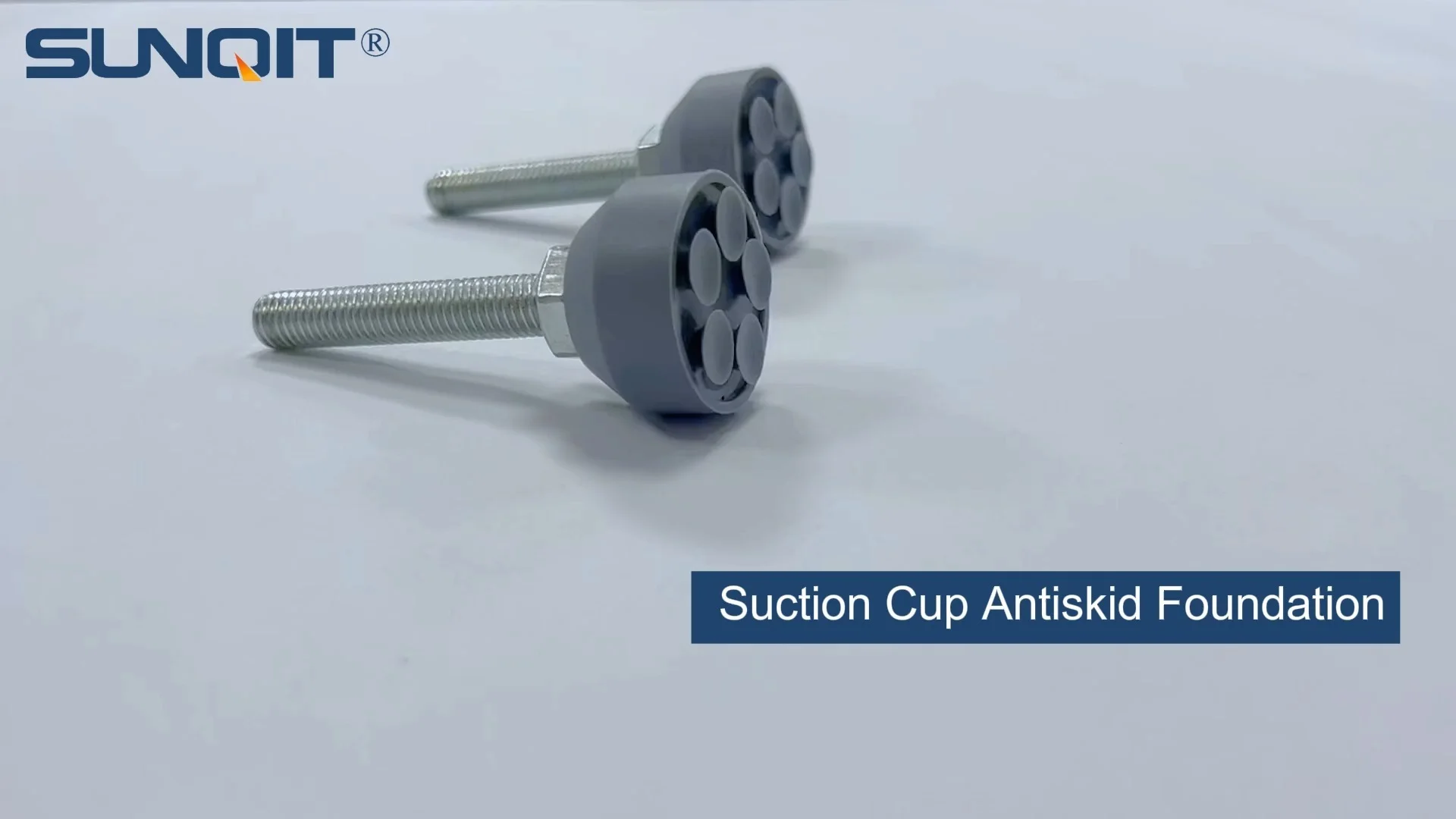
Suction Cup Anti-slip Foot Adjuster
D=35mm suction cup anti-slip foot adjusterï¼screw M10*55ï¼with a blot, used for workbench, flowrack pipe contact with groud.
Introduction: The Unsung Heroes of Stable Work Environments
In the bustling world of manufacturing, where conveyor belts hum, workbenches brim with components, and every second counts, there's a quiet champion keeping everything steady: the suction cup anti-slip foot adjuster. These small, unassuming devices might not grab headlines, but they're the backbone of stability in lean systems, ensuring that workbenches, material racks, and assembly stations stay firmly rooted even as operators move, tools vibrate, and materials shift. In a lean system, where efficiency and precision are paramount, a wobbly workbench or a sliding material rack isn't just an annoyance—it's a threat to productivity, safety, and the bottom line.
As factories evolve, driven by automation, sustainability goals, and the need for greater flexibility, the humble suction cup anti-slip foot adjuster is evolving too. No longer just a rubber pad on a screw, these components are becoming smarter, more durable, and more adaptable, designed to meet the demands of modern manufacturing. In this article, we'll explore the current state of suction cup anti-slip foot adjuster technology, the key trends shaping its future, and how these innovations will impact everything from small workshops to large-scale production facilities.
Current State: Where We Stand Today
Today's suction cup anti-slip foot adjusters are primarily designed to solve two core problems: stability and adjustability. Most models consist of a threaded metal rod (often steel or aluminum) topped with a suction cup made of rubber or synthetic elastomers. The rod screws into the base of equipment like workbenches or material racks, allowing operators to tweak the height to level surfaces, while the suction cup creates a vacuum-like seal with the floor, preventing slipping or sliding.
Common materials for the suction cup include natural rubber, nitrile, and polyurethane. Natural rubber offers excellent grip on smooth floors but can degrade in high temperatures or oily environments. Nitrile, resistant to oils and chemicals, is popular in automotive and industrial settings, while polyurethane balances durability and flexibility, making it a go-to for general-purpose use. The adjuster rods, meanwhile, are typically steel for strength or aluminum for lightweight applications, often coated to resist corrosion.
Despite their utility, today's foot adjusters have limitations. Many struggle with uneven floors, where the suction cup can't form a proper seal, reducing their anti-slip effectiveness. Harsh chemicals or extreme temperatures can cause the rubber to harden, crack, or lose elasticity over time. And in dynamic environments—like facilities with frequent layout changes—adjusters often need manual readjustment, eating into valuable time that could be spent on production.

Key Trends Shaping the Future of Suction Cup Anti-Slip Foot Adjusters
The future of suction cup anti-slip foot adjuster technology is being driven by four key trends: smart integration with Industry 4.0 tools, advanced material science, sustainability, and modular design. Each of these trends addresses a critical need in modern manufacturing, from reducing downtime to minimizing environmental impact, and together, they're transforming these components from passive stabilizers into active contributors to operational excellence.
1. Smart Sensors: From Passive to Predictive Stability
Imagine a workbench in an electronics assembly line. It's equipped with a suction cup anti-slip foot adjuster that doesn't just keep it steady—it also monitors its own performance. Tiny sensors embedded in the adjuster track variables like suction pressure, temperature, and wear, sending real-time data to a central dashboard. If the suction pressure drops below a threshold (maybe due to a small crack in the cup or a dusty floor), the system alerts maintenance before the workbench starts to wobble. If the temperature rises unexpectedly (a sign of nearby equipment overheating), it triggers a warning to prevent the rubber from degrading. This is the future of smart suction cup anti-slip foot adjusters: not just stabilizers, but predictive maintenance tools.
These sensors, often using IoT (Internet of Things) technology, will integrate seamlessly with existing factory management systems, allowing operators to track the health of every foot adjuster in the facility. For lean system managers, this means fewer unplanned stoppages, reduced repair costs, and a more proactive approach to equipment upkeep. In high-precision industries like aerospace or medical device manufacturing, where even micrometers of movement matter, this level of monitoring could be revolutionary, ensuring that workbenches remain stable to within fractions of a millimeter.
2. Material Innovations: Beyond Rubber—Stronger, Lighter, More Resilient
The suction cup itself is undergoing a material revolution. Traditional rubber and polyurethane are giving way to advanced composites and engineered elastomers designed to withstand harsher conditions, last longer, and grip better on a wider range of surfaces. One promising development is the use of silicone-carbon blends, which combine silicone's heat resistance (up to 300°C in some formulations) with carbon's strength, creating a suction cup that can handle high-temperature environments like foundries or plastic molding shops without degrading.
Another breakthrough is the rise of self-healing materials. These polymers contain microcapsules filled with a healing agent; when the suction cup develops a small crack, the capsules rupture, releasing the agent to seal the damage. This could extend the lifespan of foot adjusters by 50% or more, reducing the need for frequent replacements. For facilities that operate 24/7, this means less downtime spent swapping out worn adjusters and more time focused on production.
The adjuster rod is also getting an upgrade, with aluminum profile components gaining traction. Aluminum's lightweight nature makes it ideal for mobile workbenches or temporary stations, where operators need to reconfigure layouts quickly. Unlike steel, aluminum resists corrosion naturally, eliminating the need for coatings that can chip or wear off. Plus, aluminum profiles can be easily customized with threads or slots to fit different equipment, making them a versatile choice for manufacturers looking to standardize components across their facilities.
3. Sustainability: Eco-Friendly Design for a Greener Future
Sustainability isn't just a buzzword in manufacturing—it's a business imperative. As companies aim to reduce their carbon footprints and meet strict environmental regulations, even small components like suction cup anti-slip foot adjusters are being reimagined with eco-friendliness in mind. One trend is the shift toward recycled and biodegradable materials. For example, some manufacturers are now using rubber reclaimed from old tires to make suction cups, reducing waste and lowering reliance on virgin rubber, which requires significant energy to produce.
Another focus is on modular design, which allows components to be repaired or upgraded rather than replaced entirely. A suction cup that wears out can be unscrewed and swapped for a new one, leaving the aluminum or steel rod intact. This "repairable by design" approach cuts down on e-waste and reduces the raw materials needed to produce new adjusters. Some companies are even experimenting with plant-based elastomers, derived from sources like soybeans or castor oil, which biodegrade naturally at the end of their lifecycle without leaching harmful chemicals into landfills.
Energy efficiency is also playing a role. While foot adjusters themselves don't consume energy, the manufacturing process for their components does. Innovations like 3D printing for metal rods and injection molding with recycled plastics are reducing energy use by up to 30% compared to traditional manufacturing methods. For suppliers, this not only lowers costs but also positions them as partners for companies with aggressive sustainability goals.
4. Adaptability: Custom Solutions for Diverse Environments
Modern factories aren't one-size-fits-all, and neither are their stability needs. A food processing plant with wet, slippery floors requires different foot adjusters than a cleanroom in a semiconductor facility. To address this, manufacturers are developing highly customizable suction cup anti-slip foot adjusters, with interchangeable components that can be mixed and matched to suit specific environments.
For example, a facility with uneven concrete floors might opt for a suction cup with a flexible, multi-lobed design that conforms to surface irregularities, ensuring a tight seal even on bumpy terrain. A pharmaceutical plant, where cleanliness is critical, could choose a smooth, non-porous silicone suction cup that's easy to sanitize and resistant to harsh disinfectants. And for outdoor or marine applications, where saltwater and UV rays are a concern, a stainless steel rod paired with a UV-resistant fluoropolymer suction cup would be ideal.
This adaptability extends to installation and adjustment, too. New designs feature tool-free adjustment mechanisms, allowing operators to tweak height or suction force with a simple twist, no wrench required. Some models even come with color-coded suction cups to indicate load capacity or material compatibility, making it easier for workers to select the right adjuster for the job without flipping through manuals.

Comparing Traditional vs. Future Foot Adjuster Technologies
To better understand how these trends are reshaping suction cup anti-slip foot adjusters, let's compare traditional models with the next generation of technology:
| Feature | Traditional Suction Cup Foot Adjusters | Future-Ready Suction Cup Foot Adjusters |
|---|---|---|
| Material | Natural rubber, basic polyurethane, steel rods | Silicone-carbon blends, self-healing polymers, aluminum profile rods |
| Monitoring | No built-in sensors; relies on visual inspection | IoT-enabled sensors for real-time pressure, temperature, and wear tracking |
| Durability | 3–5 years lifespan in standard environments | 8–10 years lifespan with self-healing materials and corrosion-resistant rods |
| Sustainability | Often single-use; limited recycling options | Recycled materials, modular design for repair, biodegradable components |
| Adaptability | Fixed design; limited surface compatibility | Interchangeable suction cups, tool-free adjustment, multi-surface grip |

Integration with Lean Systems: A Match Made in Efficiency Heaven
Lean systems are all about eliminating waste—whether it's time, materials, or movement. Future suction cup anti-slip foot adjusters are poised to become key players in this mission, by reducing downtime, improving safety, and enabling more flexible workflows. For example, in a lean manufacturing cell where workbenches are reconfigured daily to accommodate different product runs, tool-free adjusters with quick-release suction cups would allow operators to set up or tear down stations in minutes, not hours.
Smart sensors, too, align with lean principles by preventing wasteful breakdowns. By alerting maintenance to a failing suction cup before it causes a workbench to wobble, these sensors avoid the need for emergency repairs, which often disrupt production schedules and require rush orders for replacement parts. In a lean system, where every minute of downtime is costly, this predictive approach can save thousands of dollars annually.
Even the materials used in future foot adjusters support lean goals. Lightweight aluminum profile rods make workbenches and material racks easier to move, reducing the physical strain on operators and lowering the risk of injury. Modular designs mean that when a component wears out, only the suction cup or rod needs to be replaced, not the entire adjuster—cutting down on inventory costs and waste.
Challenges and Opportunities Ahead
Of course, no technology evolves without challenges. One hurdle facing smart suction cup anti-slip foot adjusters is cost. Adding sensors, IoT connectivity, and advanced materials will likely make these components more expensive upfront than traditional models. For small and medium-sized manufacturers with tight budgets, this could be a barrier to adoption. However, proponents argue that the long-term savings—from reduced downtime, longer lifespans, and lower maintenance costs—will more than offset the initial investment.
Another challenge is standardization. As foot adjusters become more customizable, there's a risk of fragmentation, with different manufacturers using proprietary designs that aren't compatible with each other. This could complicate things for facilities that source components from multiple suppliers. To address this, industry groups are working to develop common standards for sensor communication protocols, thread sizes, and suction cup dimensions, ensuring that future adjusters are interoperable across brands.
Opportunities, though, abound. The global market for industrial stability components is projected to grow by 5.2% annually through 2030, driven by the rise of automation and the expansion of manufacturing in emerging economies. For suppliers that can innovate—whether by developing self-healing materials, integrating AI-powered predictive analytics, or creating fully recyclable adjusters—this growth represents a significant opportunity to capture market share.
There's also room for expansion beyond traditional manufacturing. Suction cup anti-slip foot adjusters are finding new applications in sectors like renewable energy (stabilizing solar panel assembly stations), logistics (securing mobile conveyor systems in warehouses), and even healthcare (keeping medical workbenches steady during delicate procedures). As these industries grow, so too will the demand for specialized foot adjusters tailored to their unique needs.
Conclusion: The Future is Stable, Smart, and Sustainable
The suction cup anti-slip foot adjuster may never be the star of the manufacturing floor, but its evolution is a testament to the power of innovation in even the smallest components. As we look ahead, these devices will no longer be just about keeping things steady—they'll be about making factories smarter, greener, and more efficient. From IoT sensors that predict failures to self-healing materials that outlast traditional rubber, from aluminum profile rods that reduce weight to modular designs that cut waste, the future of suction cup anti-slip foot adjuster technology is bright.
For manufacturers, embracing these trends isn't just a way to stay competitive—it's a way to build more resilient, productive, and sustainable operations. And for the workers who rely on stable workbenches and secure equipment every day, it's a promise of a safer, smoother, and more efficient workplace. So the next time you walk through a factory, take a moment to appreciate the quiet stability beneath your feet. The future of manufacturing is standing on it.