- Company Articles
- Products and Technology
- Technology Sharing
- Future Trends in Vertical Lean Pipe Joint Design: Innovation for Lean 4.0

Future Trends in Vertical Lean Pipe Joint Design: Innovation for Lean 4.0
Related Product
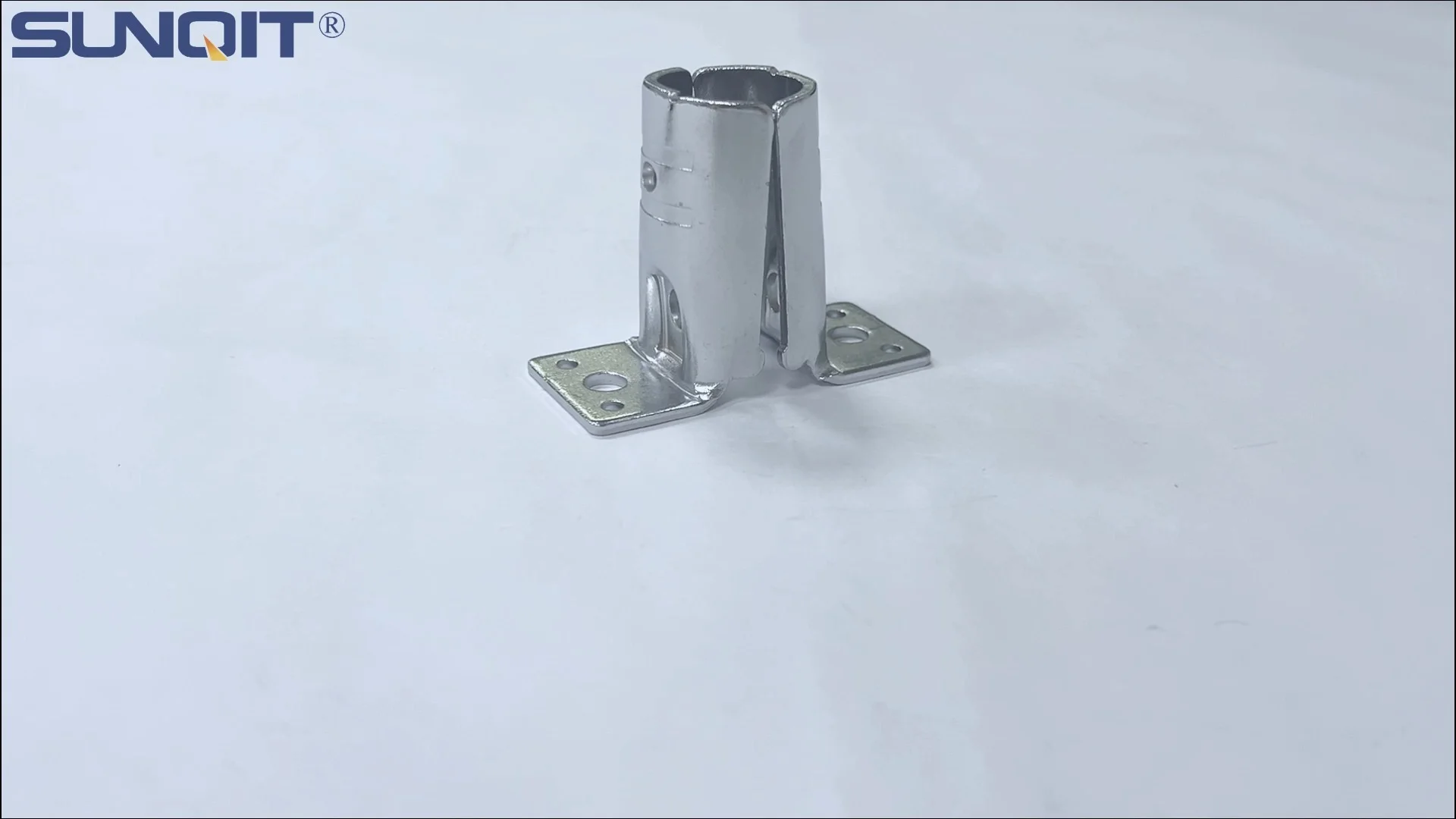
Vertical Lean Pipe Joint
Vertical lean pipe joint is used for 28mm lean pipe fixed on ground and keep it stable.
Walk into any modern manufacturing facility today, and you'll likely see the hallmarks of lean manufacturing: streamlined workstations, minimized waste, and teams focused on continuous improvement. But as Industry 4.0 transforms production floors with smart technology, the backbone of these lean systems—lean pipe joints—has remained surprisingly stagnant. Vertical lean pipe joints, in particular, have long been the unsung heroes of modular workbench setups, flow racks, and material handling systems. Yet their traditional designs often limit flexibility, slow down reconfiguration, and struggle to keep pace with the demands of agile, data-driven manufacturing. In this article, we'll explore how innovations in vertical lean pipe joint design are set to redefine lean systems for the next decade, focusing on material breakthroughs, modularity, and integration with smart factory ecosystems.
The Critical Role of Vertical Lean Pipe Joints in Lean 4.0
Before diving into trends, it's essential to understand why vertical lean pipe joints matter. In lean manufacturing, "flow" is everything—the seamless movement of materials, information, and people. Vertical joints are the connectors that bring this flow to life, enabling the construction of workbenches, flow racks, and turnover trolleys that can adapt to shifting production needs. Unlike horizontal joints, which handle linear loads, vertical joints bear structural weight while allowing for height adjustments, angular rotations, and modular extensions. They're the reason a single lean pipe workbench can transition from assembling small electronics one week to housing heavy machinery components the next.
In Lean 4.0—a term coined to describe the fusion of lean principles with digital technologies like IoT and AI—vertical joints must do more than just connect pipes. They need to support real-time data collection, ensure ESD (Electrostatic Discharge) safety in sensitive environments, and reduce the carbon footprint of manufacturing operations. As factories move toward batch sizes of one and on-demand production, the rigidity of traditional steel joints becomes a bottleneck. Workers waste precious time disassembling and rebuilding structures; maintenance teams struggle with corrosion in humid environments; and sustainability officers tally the cost of replacing short-lived, non-recyclable components. The future of lean manufacturing depends on vertical joints that can keep up with this pace of change.
Current Pain Points: Why Traditional Joints Are Falling Short
To appreciate the innovations ahead, let's first examine the frustrations of today's lean pipe joints. Many facilities still rely on standard steel or plastic-coated lean pipe joints, which come with a host of limitations:
- Limited Flexibility: Fixed-angle joints (like 90° or 45°) force workers into one-size-fits-all configurations. Adjusting a workstation's height or angle often requires replacing the entire joint, not just loosening a clamp.
- Weight and Corrosion: Steel joints add unnecessary bulk, making trolleys harder to maneuver. In food processing or pharmaceutical settings, steel also risks rust without constant maintenance—a problem that leads to frequent replacements.
- ESD Inconsistency: Plastic-coated joints may lose their electrostatic dissipative properties over time, putting sensitive electronics at risk of damage during assembly on an ESD workstation.
- Time-Consuming Installation: Traditional joints often require tools, specialized training, and multiple steps to secure. In a factory where changeovers happen daily, this translates to hours of downtime annually.
- Poor Compatibility: Mixing components from different suppliers—say, a steel joint with aluminum lean pipe—often results in ill-fitting connections, compromising stability and safety.
These issues aren't just inconveniences; they directly undermine the core principles of lean: eliminating waste, empowering workers, and optimizing flow. The good news? A new generation of vertical lean pipe joints is emerging to address these gaps, driven by advances in materials science and user-centered design.

Material Revolution: Aluminum Lean Pipe Takes Center Stage
The most significant shift in vertical joint design is the move from steel to aluminum. Aluminum lean pipe and its accessories are rapidly replacing traditional materials, and for good reason. Aluminum offers a rare combination of strength, lightness, and corrosion resistance that steel simply can't match. A 1.5mm aluminum lean pipe weighs up to 40% less than a steel pipe of the same diameter, making trolleys and mobile workstations easier to move—reducing worker fatigue and injury risk. In humid or cleanroom environments, aluminum's natural resistance to rust eliminates the need for costly coatings or frequent replacements.
But aluminum's benefits go beyond physical properties. It's also infinitely recyclable, aligning with the sustainability goals of Lean 4.0. Unlike steel, which loses quality when recycled, aluminum can be melted down and reused repeatedly without degradation. For manufacturers aiming for net-zero carbon footprints, this is a game-changer. Suppliers like those specializing in aluminum lean pipe wholesale are already reporting double-digit growth in demand, as companies phase out steel systems in favor of greener alternatives.
Innovations in aluminum extrusion profiles have further enhanced joint performance. Modern aluminum profiles feature precision-engineered T-slots that allow for quick, tool-free connections using internal rotary aluminum joints. These joints, which fit snugly into the T-slots, can rotate 360° and lock at any angle, giving workers unprecedented control over workstation design. Imagine a material rack B (3 row and 3 floor) that can be reconfigured in minutes to accommodate taller boxes simply by adjusting the vertical joints—no tools, no hassle. This level of adaptability was unthinkable with steel joints.
| Feature | Traditional Steel Lean Pipe Joints | Innovative Aluminum Vertical Joints |
|---|---|---|
| Weight (per joint) | 150-200g | 60-90g (40-55% lighter) |
| Corrosion Resistance | Poor (requires coating) | Excellent (no coating needed) |
| Max Load Capacity | 200-300kg | 300-450kg (higher strength-to-weight ratio) |
| ESD Compatibility | Inconsistent (coating wears off) | Consistent (integrated ESD properties) |
| Installation Time | 5-10 minutes (tools required) | 60-90 seconds (tool-free) |
| Recyclability | Low (loses quality when recycled) | High (100% recyclable, no quality loss) |

Design Breakthroughs: Modularity, Rotation, and Smart Integration
While material innovation is foundational, the real excitement lies in how new joint designs are reimagining functionality. Three trends stand out: modularity, internal rotation, and smart connectivity.
Modularity: Build What You Need, When You Need It
Gone are the days of stocking dozens of joint types for different angles. The future belongs to modular joints that adapt to multiple configurations. Take the multi-angle fixed aluminum joint, which can lock at 30°, 45°, 90°, or 135° with a simple twist of a lever. These joints come with standardized accessories—like aluminum guide rail A and B, or roller track placon mounts—that snap into place, eliminating the need for custom parts. For a lean pipe supplier, this means reduced inventory costs; for a factory, it means faster response to changing production needs.
Modularity also extends to accessories like caster wheels and roller tracks. Modern vertical joints feature universal mounting points that accommodate everything from heavy-duty casters for turnover trolleys to swivel roller balls (1 inch or 0.5 inch) for flow racks. This "plug-and-play" approach reduces downtime during reconfigurations and ensures that even small-batch manufacturers can affordably scale their lean systems.
Internal Rotary Joints: The Freedom to Rotate and Lock
One of the most user-centric innovations is the internal rotatary aluminum joint. Unlike traditional fixed joints, these allow the vertical pipe to rotate independently of the horizontal frame, with built-in locking mechanisms that secure the angle in seconds. Picture a workbench E (single deck-without caster) used for assembling circuit boards. A worker needs to tilt the bench surface 15° to reduce neck strain—with an internal rotary joint, they simply lift a lever, adjust the angle, and lock it back in place. No tools, no disassembly, no wasted time.
These joints also excel in dynamic environments, like conveyor systems. By integrating roller track connectors with rotary joints, manufacturers can create curved or inclined roller tracks that guide materials around obstacles without manual handling. For example, a plastic roller track guide rail (yellow or grey) can be mounted on a rotating vertical joint to redirect packages from a main line to a packing station, adapting to shifting order volumes throughout the day.
Smart Integration: ESD Safety and IoT Readiness
In electronics manufacturing, where even a tiny static discharge can ruin a $1,000 microchip, ESD workstations are non-negotiable. New vertical joints address this by incorporating conductive aluminum alloys that maintain a consistent ground path from the work surface to the floor. Unlike plastic-coated steel joints, which degrade over time, these aluminum joints retain their ESD properties for the lifetime of the system, reducing the risk of costly product failures.
Looking ahead, vertical joints are poised to become data hubs in smart factories. Embedded sensors in the joints can monitor load capacity, temperature, and vibration, alerting maintenance teams to potential failures before they occur. Imagine a lean system where a vertical joint detects an unusual vibration in a material rack and automatically sends a notification to a technician's tablet—preventing a collapse and keeping production on track. This level of predictive maintenance aligns with Lean 4.0's focus on data-driven decision-making, turning passive joints into active participants in factory efficiency.

Sustainability: The Green Advantage of Modern Joints
Sustainability is no longer a buzzword in manufacturing—it's a business imperative. Modern vertical lean pipe joints support eco-friendly operations in three key ways:
1. Recyclable Materials: Aluminum joints are 100% recyclable, and their long lifespan (10-15 years vs. 3-5 years for steel) reduces the frequency of replacements. When a joint does reach the end of its life, it can be melted down and reformed into new components, minimizing waste.
2. Energy Efficiency: The lightweight nature of aluminum joints reduces the energy required to transport and install lean systems. A study by the Aluminum Association found that aluminum lean pipe systems require 30% less energy to ship than steel equivalents, thanks to their lower weight.
3. Modular Design = Less Waste: Traditional lean systems often end up in landfills when production needs change. Modular aluminum joints, however, can be repurposed indefinitely. A vertical joint from a disassembled workbench might find new life in a flow rack or turnover trolley, extending its useful life and keeping waste out of landfills.
For sustainability-focused manufacturers, these benefits are more than just ethical—they're financial. Companies using aluminum lean pipe systems report a 20-30% reduction in long-term material costs, as the initial investment in durable, recyclable joints pays off in fewer replacements and lower disposal fees.
Case Study: Automotive Plant Cuts Changeover Time by 40% with Aluminum Joints
To see these innovations in action, let's look at a mid-sized automotive parts manufacturer in Michigan. The plant, which produces brake components for electric vehicles, was struggling with frequent changeovers between product lines. Their existing steel lean pipe workstations and material racks took 2-3 hours to reconfigure, leading to lost production time and frustrated workers.
In 2024, the plant partnered with a lean pipe supplier to upgrade to aluminum lean pipe systems with internal rotary vertical joints. The results were transformative:
- Faster Changeovers: Reconfiguring a workstation now takes 30-45 minutes, a 40-50% reduction. Workers use tool-free internal rotary joints to adjust heights and angles, eliminating the need for wrenches or bolts.
- Reduced Injuries: Lighter aluminum trolleys (25kg vs. 45kg steel) cut pushing/pulling injuries by 60%, lowering workers' compensation costs.
- Improved ESD Protection: The new aluminum joints maintain consistent grounding, reducing static-related defects from 12 per month to zero.
- Sustainability Wins: The plant diverted 2 tons of steel waste from landfills by recycling old joints, and reduced shipping emissions by 35% when restocking materials.
As the plant manager noted: "We used to see changeovers as a necessary evil. Now, with these aluminum joints, we can adapt on the fly—our team actually looks forward to optimizing the line because it's so easy. It's not just about speed; it's about empowering our workers to own the process."
Future Outlook: What's Next for Vertical Lean Pipe Joints?
The innovations we've explored are just the beginning. Looking ahead to 2030, three trends will shape the next generation of vertical lean pipe joints:
1. Self-Healing Materials: Researchers are developing aluminum alloys with microcapsules of healing agents that repair small cracks when exposed to heat or pressure. This could extend joint lifespans to 20+ years, further reducing waste.
2. AI-Driven Design Tools: Imagine a mobile app that scans your factory floor, recommends optimal joint configurations based on production data, and even pre-orders the necessary aluminum lean pipe and accessories. Early trials of such tools have shown a 25% reduction in over-ordering and better system performance.
3. Biodegradable Composites: While aluminum will remain dominant, we may see hybrid joints that combine aluminum with plant-based composites for non-structural components, further lowering environmental impact.
Perhaps most exciting is the potential for vertical joints to bridge the gap between physical and digital lean systems. With embedded RFID tags, joints could "communicate" with warehouse management software, automatically updating inventory when components are moved or reconfigured. This would create a closed-loop data system where the lean system itself becomes a source of continuous improvement insights.
Conclusion: Vertical Joints as Catalysts for Lean 4.0
In the grand scheme of manufacturing innovation, vertical lean pipe joints may seem like small components. But as any lean practitioner knows, it's the small, repeated improvements that drive transformative change. The shift from rigid steel joints to modular, lightweight, smart aluminum joints is more than an upgrade—it's a reimagining of what lean systems can be: flexible enough to adapt to the demands of Industry 4.0, sustainable enough to meet climate goals, and user-centric enough to empower the workers who bring lean principles to life.
For manufacturers looking to stay competitive in the decade ahead, investing in these innovative joints isn't just a choice—it's a necessity. Whether you're a small electronics shop upgrading your ESD workstations or a global automaker revamping your entire production line, the future of lean manufacturing is vertical, modular, and aluminum-powered. The joints may be small, but their impact will be enormous.