- Company Articles
- Products and Technology
- Technology Sharing
- Future Trends: Innovations in End Support for Roller Track Placon Mount with Stop Technology

Future Trends: Innovations in End Support for Roller Track Placon Mount with Stop Technology
Related Product
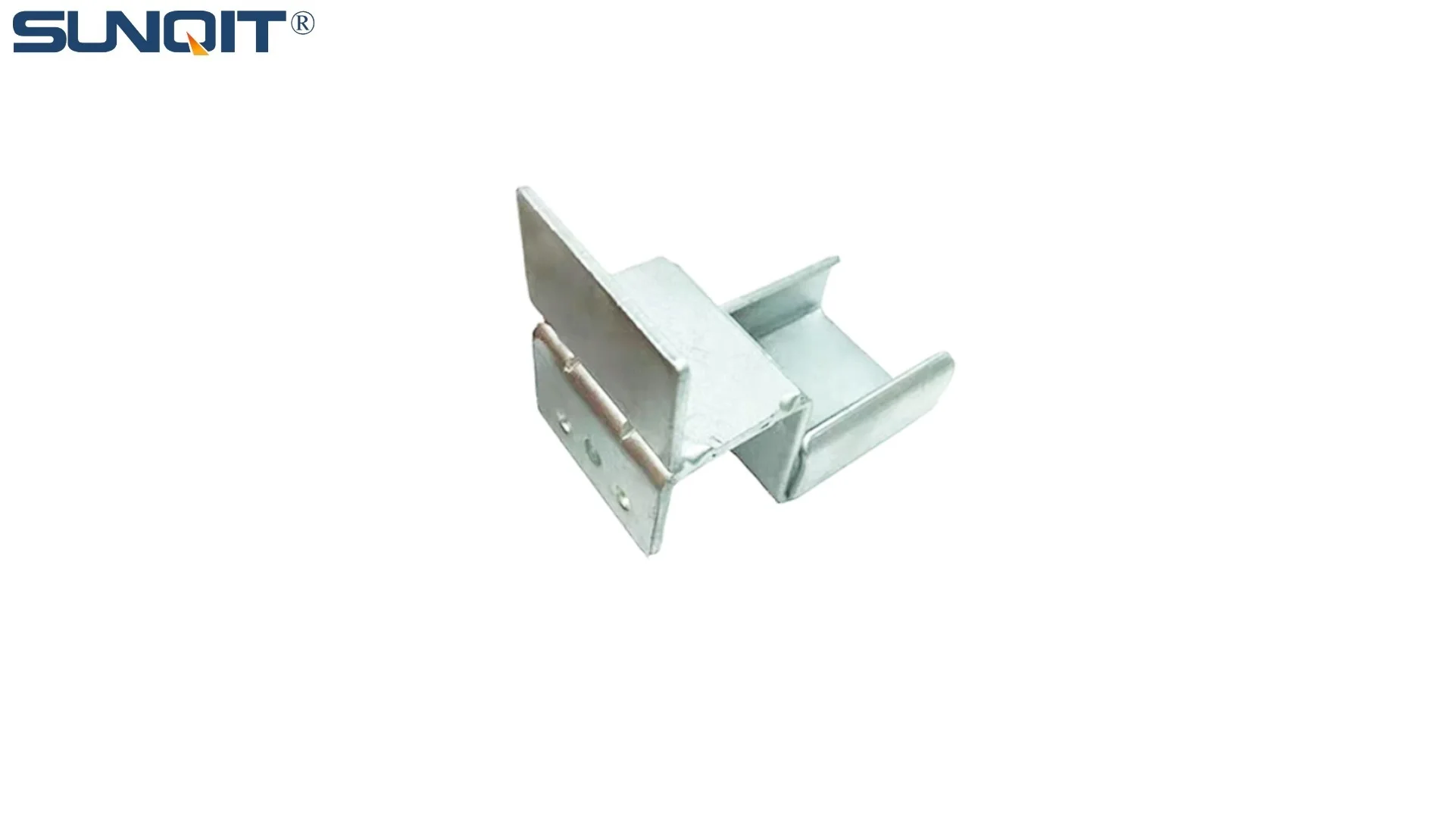
End Support for Roller Track Placon Mount with Stop
Roller track placon mount work as a connector for roller track and pipe or aluminum profile in rack syetem, it is a necessary parts in rack system which widely used in industrial plant and logistic,warehouse storage.
In today's fast-paced manufacturing landscape, where every second counts and flexibility can make or break production efficiency, the unsung heroes of material handling often lie in the smallest components. Take roller track systems, for example—these unassuming setups form the backbone of smooth flow in assembly lines, warehouses, and distribution centers. But within these systems, one critical element often determines success or frustration: the end support with stop technology. As manufacturers worldwide push for leaner operations and more adaptable workflows, innovations in this niche area are quietly revolutionizing how teams move, sort, and process goods. Let's dive into the latest trends, the problems they solve, and how forward-thinking suppliers are leading the charge.
The Hidden Challenges of Traditional End Support Systems
Walk into any mid-sized manufacturing facility, and you'll likely find roller tracks hard at work—transporting components between workstations, feeding assembly lines, or organizing inventory in flow racks. But talk to the operators, and you'll hear a common set of gripes about the end supports that keep these tracks in place. "They're rigid," one production manager might say. "If we need to reconfigure the line for a new product, we might as well rebuild the entire section." Another might mention safety: "Last month, a stop mechanism failed, and a cart full of sensitive 3C parts crashed into the workstation. Luckily, no one was hurt, but the damage added up."
These aren't isolated complaints. Traditional end supports often suffer from three critical flaws:
- Limited adjustability : Fixed brackets and welded joints mean once installed, repositioning or modifying the stop mechanism requires tools, time, and often new parts—slowing down changeovers and limiting lean manufacturing goals.
- Material fatigue : Cheap steel or plastic components wear quickly under constant use, leading to wobbling tracks, inconsistent stopping force, and frequent replacements.
- Poor integration : Many end supports are designed as one-off solutions, not as part of a cohesive lean pipe system. This misalignment creates bottlenecks when combining with conveyors, workbenches, or turnover trolleys.
For industries like medical device manufacturing or 3C assembly—where precision and cleanliness are non-negotiable—these issues aren't just inconvenient; they risk compliance violations, product defects, and wasted resources. The need for a better solution has never been clearer.
Innovations Redefining End Support Technology
Enter the next generation of end support for roller track placon mount with stop technology. Leading suppliers are reimagining these components from the ground up, drawing on lean principles, advanced materials, and modular design. Here's how they're making a difference:
1. Modular Aluminum Profiles: Strength Meets Flexibility
Gone are the days of one-size-fits-all steel brackets. Today's top solutions leverage aluminum profile systems—lightweight, corrosion-resistant, and infinitely adaptable. Take the internal rotatary aluminum joint, for example. This clever component allows end supports to pivot, tilt, and lock into place with minimal effort. Need to adjust the stop height by 10cm for a new batch of products? Loosen a knob, reposition, and tighten—no welding, no drilling, no downtime. It's a game-changer for facilities embracing agile manufacturing.
Aluminum's natural strength-to-weight ratio also shines here. A 40-series aluminum guide rail can support heavy loads (think pallets of automotive parts or stacks of medical supplies) while remaining easy to handle during installation. And because it's part of a standardized lean tube system, these end supports play well with other components—conveyors, ESD workbenches, and even custom material racks—creating a seamless workflow from start to finish.
2. Smart Stop Mechanisms: Safety and Precision in One
Stopping a moving load sounds simple, but doing it smoothly, consistently, and safely requires engineering finesse. New end supports integrate innovative stop technologies, such as spring-loaded dampers and adjustable friction pads, to control deceleration. For delicate items like circuit boards or medical devices, this means no more jostling that could damage sensitive components. For heavy loads, it reduces the risk of operator strain or equipment impact.
Take the stainless steel swivel roller balls, a staple in many flow rack setups. When paired with a modern end support, these balls work in harmony with the stop mechanism—allowing controlled movement until the exact moment the load needs to halt. Operators report fewer errors, faster processing times, and a noticeable drop in workplace accidents.
3. Sustainability by Design: Reuse, Reduce, Recycle
Lean manufacturing isn't just about efficiency—it's about sustainability. Today's end support systems are built with "reuse first" in mind. Modular components mean when a production line is retired or reconfigured, brackets, joints, and stop mechanisms can be disassembled, cleaned, and repurposed elsewhere. This reduces waste, cuts down on raw material costs, and aligns with global efforts to minimize manufacturing's environmental footprint.
Aluminum, in particular, is a star here. It's 100% recyclable, retains its properties through multiple cycles, and requires less energy to produce than steel. For companies aiming for green certifications or ESG goals, this isn't just a nice-to-have; it's a competitive advantage.

Real-World Impact: Case Studies from the Field
Numbers tell the story best. Let's look at how these innovations are transforming operations across key industries:
Case 1: 3C Assembly Line Reconfiguration in Shenzhen
A leading smartphone manufacturer was struggling with frequent product launches—each requiring a new assembly line layout. Their old steel end supports took 8 hours to reconfigure, and each changeover wasted 20+ man-hours. After upgrading to an aluminum profile-based lean pipe system with adjustable end supports and internal rotatary joints, they cut reconfiguration time to 2 hours. The modular design also allowed them to reuse 90% of components between launches, saving $45,000 annually in replacement parts. "We used to dread new product cycles," said their production lead. "Now, we can pivot on a dime—and the operators love how stable the tracks feel."
Case 2: Medical Device Warehouse Safety Upgrade
A medical equipment distributor in Europe was facing OSHA scrutiny after a series of near-misses involving runaway carts on their flow racks. Their plastic end stops were cracking under the weight of sterilized instrument cases. Switching to stainless steel swivel roller balls paired with aluminum end supports with integrated dampers eliminated these incidents. The new system also reduced noise levels by 30%—a welcome change for night shifts—and met strict EU medical device storage standards, avoiding potential fines.
Case 3: Automotive Parts Manufacturer's Lean Makeover
An automotive supplier was drowning in inventory costs, with parts scattered across mismatched storage systems. By integrating adjustable end supports into their lean pipe workbenches and conveyor-fed flow racks, they created a unified material handling network. Now, components flow directly from receiving to assembly line workstations with minimal manual handling. The result? A 22% reduction in work-in-progress inventory and a 15% boost in on-time deliveries. "It's like the entire facility finally speaks the same language," their logistics director noted.
| Feature | Traditional End Supports | Innovative Aluminum-Based Supports |
|---|---|---|
| Adjustment Time | 4–8 hours (requires tools/new parts) | 15–30 minutes (tool-free knobs) |
| Service Life | 6–12 months (frequent wear) | 3–5 years (aluminum corrosion resistance) |
| Integration with Lean Systems | Limited (one-off design) | Seamless (works with conveyors, workbenches, flow racks) |
| Sustainability | Low (often disposable) | High (reusable, recyclable aluminum) |

Looking Ahead: The Future of End Support Technology
As manufacturers embrace Industry 4.0 and the Internet of Things (IoT), end support systems are poised to get even smarter. Imagine end supports with built-in sensors that monitor wear and send alerts before failure, or stop mechanisms that sync with conveyor speeds to optimize flow. Some suppliers are already experimenting with AI-driven analytics—tracking how often stops are adjusted, which configurations work best for specific products, and suggesting lean pipe system tweaks to boost efficiency further.
Another trend is hyper-customization. While modularity is key, suppliers are offering end supports tailored to unique industry needs: ESD-safe versions for electronics manufacturing, antimicrobial coatings for medical settings, and high-temperature resistant models for automotive paint shops. This "one system, many configurations" approach aligns perfectly with the lean philosophy of doing more with less.
And let's not forget the human element. The best innovations make operators' lives easier. Ergonomic designs that reduce bending or reaching, color-coded components for quick identification, and lightweight materials that cut installation fatigue—these small touches add up to happier, more productive teams.

Why Choosing the Right Supplier Matters
In a market flooded with generic parts, the difference between a good end support system and a great one often comes down to the supplier. The leaders aren't just selling components—they're partners in your lean journey. They bring expertise in designing end-to-end solutions, from initial layout to post-installation support. They understand that a roller track's end support isn't just a bracket; it's a critical link in your facility's efficiency, safety, and sustainability goals.
When evaluating suppliers, look for those who prioritize:
- Standardization with flexibility : A strong lean tube system foundation that still allows custom tweaks.
- Material quality : Anodized aluminum profiles, stainless steel hardware, and tested stop mechanisms.
- Industry-specific experience : Case studies in your field (3C, medical, automotive) that demonstrate real results.
Final Thoughts: Small Components, Big Impact
End support for roller track placon mount with stop technology might not grab headlines, but its role in modern manufacturing is undeniable. As we've explored, the right innovations here can turn frustrating bottlenecks into smooth, adaptable workflows—cutting costs, boosting safety, and empowering teams to focus on what they do best: creating great products. Whether you're retooling a single workstation or overhauling your entire material handling system, don't overlook the power of a well-designed end support. The future of lean manufacturing is in the details—and the future starts now.