- Company Articles
- Products and Technology
- Technology Sharing
- Future Trends: Innovations in Single Side Aluminum Pipe Technology for Smart Factories

Future Trends: Innovations in Single Side Aluminum Pipe Technology for Smart Factories
Related Product
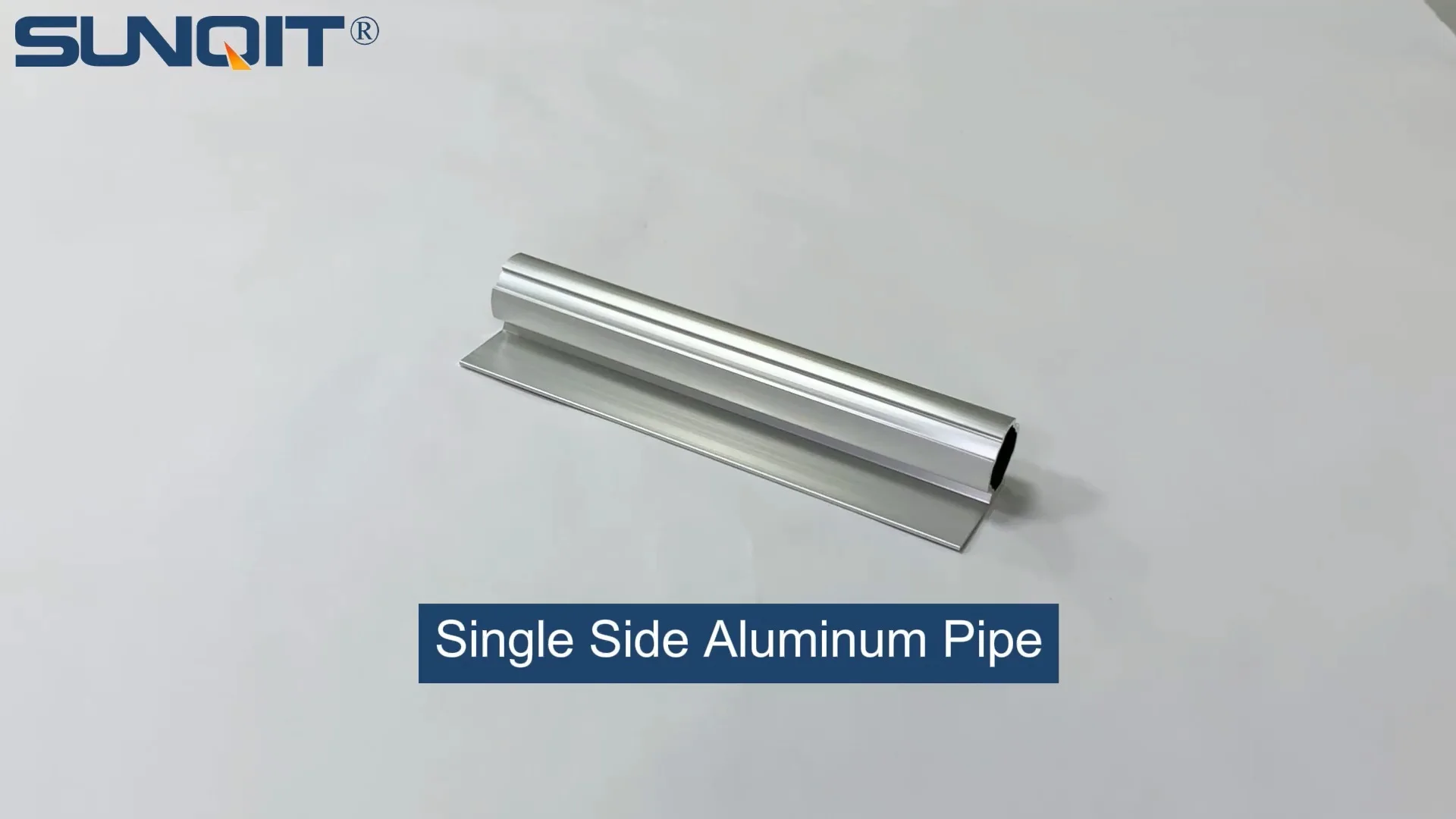
Single Side Aluminum Pipe
The single-sided plane can be installed with a back-mounted material box, and can also be used as a sidewall or partition.
The Smart Factory Revolution: Why Material Handling Matters More Than Ever
Walk into any modern smart factory, and you'll notice a few things right away: robots working alongside humans, screens displaying real-time production data, and a sense of seamless coordination that feels almost orchestral. But behind all that high-tech wizardry lies a critical, often overlooked foundation: how materials move, how workstations are built, and how every tool and component stays organized. In short, material handling isn't just about "moving stuff around"—it's the backbone that lets smart factories live up to their promise of efficiency, flexibility, and adaptability.
For years, manufacturers relied on rigid, one-size-fits-all solutions: heavy steel pipes for workbenches, fixed conveyor belts, and wooden racks that took days to reconfigure. But as factories shift to smaller batch sizes, custom orders, and rapid production changes, those old systems are starting to feel like trying to fit a square peg in a round hole. That's where single side aluminum pipe has emerged as a quiet disruptor. Lightweight, modular, and surprisingly strong, it's become the go-to material for forward-thinking factories looking to build systems that can keep up with the pace of smart manufacturing.
In this article, we'll dive into what makes single side aluminum pipe so special, explore the latest innovations shaping its future, and look at how it's transforming everything from workbenches to conveyor systems in smart factories. Whether you're a plant manager, a lean manufacturing enthusiast, or just curious about the tools that power modern production, this is your guide to the material that's quietly redefining how factories work.
What Is Single Side Aluminum Pipe, Anyway? Breaking Down the Basics
Let's start with the basics: What exactly is single side aluminum pipe? At first glance, it might look like any other aluminum tube, but a closer inspection reveals the secret to its popularity: a unique profile designed with a flat edge, groove, or channel along one side. This "single side" feature isn't just a design quirk—it's a functional masterpiece. Unlike smooth, round pipes that require clamps, brackets, or drilling to attach accessories, single side aluminum pipe lets you snap, slide, or bolt on components directly to that flat edge. It's like having a built-in "connection point" that turns a simple pipe into a versatile building block.
To understand why this matters, think about a typical factory workbench. Traditionally, if you wanted to add a shelf, a tool holder, or a monitor mount, you'd need to drill holes in the steel frame, bolt on brackets, and hope everything lines up. With single side aluminum pipe, though, that process gets flipped on its head. Using aluminum pipe accessories like internal rotary joints or t-slot connectors, you can attach those same components in minutes—no drilling, no welding, no guesswork. It's the difference between assembling furniture with a hex key versus a power drill and a instruction manual that might as well be in hieroglyphics.
But it's not just about ease of use. Single side aluminum pipe is also lightweight (about 30% lighter than steel), corrosion-resistant (thanks to aluminum's natural oxide layer), and surprisingly strong. Modern alloys mean it can handle heavy loads—think 200+ pounds per linear foot—without bending or warping, making it perfect for everything from workbench frames to material racks. And because it's aluminum, it's naturally conductive, which is a big plus in electronics manufacturing where static control (ESD protection) is critical.
Single Side Aluminum Pipe vs. Traditional Materials: A Quick Comparison
| Feature | Single Side Aluminum Pipe | Traditional Steel Pipe | Wooden Frames |
|---|---|---|---|
| Weight | Lightweight (30% lighter than steel) | Heavy; requires tools/team to move | Moderate weight, but prone to warping |
| Installation Time | Tool-free; 1-2 people can build a workbench in <1 hour | Requires welding/drilling; 4-6 hours for a basic setup | Requires cutting, screwing; 3-4 hours (and messy sawdust!) |
| Flexibility | Reconfigurable in minutes; swap components on the fly | Rigid; changes require cutting/welding new parts | Fixed; modifying means rebuilding from scratch |
| Durability | Corrosion-resistant; lasts 10+ years with minimal maintenance | Prone to rust if not painted/coated; heavy use leads to dents | Scratches easily; absorbs moisture, leading to rot/warping |
| Sustainability | 100% recyclable; minimal waste in production | Recyclable but energy-intensive to produce/recycle | Biodegradable but requires deforestation; limited lifespan |
As the table shows, single side aluminum pipe isn't just "better" than traditional materials—it's a different category altogether. It combines the strength of steel with the flexibility of plastic, the lightness of wood with the durability of metal. And when you factor in the time and labor savings from quick installation and reconfiguration, it's no wonder factories are making the switch.

Innovations Driving the Future of Single Side Aluminum Pipe
Like any technology, single side aluminum pipe isn't standing still. Manufacturers and engineers are constantly finding new ways to make it smarter, more adaptable, and better suited to the needs of smart factories. Let's take a look at the key innovations shaping its future:
1. Advanced Alloys: Stronger, Lighter, and More Resilient
Gone are the days of generic aluminum pipes. Today's single side aluminum pipe is made with high-performance alloys that blend aluminum with small amounts of magnesium, silicon, or copper to boost strength without adding weight. For example, 6061-T6 aluminum—commonly used in aerospace and automotive parts—is now finding its way into factory pipes. This alloy has a tensile strength of 45,000 psi (that's stronger than some steels!) and can withstand extreme temperatures, making it ideal for factories with harsh environments, like those producing automotive components or industrial machinery.
Another breakthrough is the use of "micro-extrusion" techniques, which let manufacturers create ultra-precise profiles with thinner walls but more uniform strength. This means pipes can be even lighter (saving on shipping and installation costs) while still supporting heavy loads. A recent study by the Aluminum Extruders Council found that these advanced alloys have increased the load capacity of single side aluminum pipe by 25% in the last five years alone.
2. Smart Connectors: From "Good Enough" to "Plug-and-Play"
If single side aluminum pipe is the "bones" of a factory system, then the connectors are the "joints"—and they've come a long way. Early connectors were clunky, required tools, and often loosened over time. Today's aluminum pipe accessories, though, are a marvel of engineering. Take internal rotary aluminum joints, for example: these small, cylindrical connectors fit inside the pipe and let you rotate components (like shelves or tool holders) 360 degrees, then lock them in place with a simple twist. No tools, no hassle, no slipping.
Even better, many connectors now feature "quick-release" mechanisms inspired by outdoor gear like hiking poles or bike racks. Need to reposition a conveyor track? Press a button, slide the connector, and lock it back in—done. Suppliers like leading lean pipe suppliers are also offering color-coded connectors (think red for fixed joints, blue for adjustable) to make assembly faster and reduce errors. It's the kind of small, thoughtful innovation that adds up to big time savings on the factory floor.
3. Integration with IoT: Pipes That "Talk"
Here's where things get really exciting: single side aluminum pipe is getting "smart." Thanks to its conductive properties and modular design, manufacturers are now embedding sensors directly into the pipe or its accessories. Imagine a workbench frame that can track vibration (alerting you if a machine is misaligned), or a conveyor rail with built-in RFID tags that log when parts pass through. These "connected pipes" feed data to the factory's IoT system, giving managers real-time insights into equipment health, workflow bottlenecks, or even employee ergonomics (like if a workbench is consistently adjusted to the wrong height).
One example is a pilot project at a electronics plant in Japan, where single side aluminum pipe workstations were fitted with pressure sensors in the (work surface). The sensors tracked how workers distributed weight across the bench, flagging areas where tools or materials were causing uneven stress—leading to adjustments that reduced wrist strain and cut down on repetitive motion injuries. It's a perfect example of how single side aluminum pipe isn't just a material; it's a platform for innovation.

Transforming Smart Factories: Real-World Applications of Single Side Aluminum Pipe
Enough theory—let's talk about how single side aluminum pipe is actually being used in smart factories today. From workbenches to conveyors, it's proving to be a Swiss Army knife of material handling. Here are four key applications where it's making the biggest impact:
Workbenches: The Heart of the Factory, Reimagined
Workbenches are where the magic happens—where assemblers build products, where technicians test equipment, where teams collaborate. So it's no surprise that single side aluminum pipe is revolutionizing this space. Take the "Workbench E (single deck-without caster)" from leading suppliers: this isn't your grandpa's workbench. Built with basic aluminum tube frames and internal rotary joints, it can be adjusted in height (from 30 inches to 42 inches) to fit workers of all sizes, and the single deck can be swapped out for a (ESD) surface in minutes for electronics assembly. Need a monitor arm? Slide it onto the single side edge. A tool? Snap it into place. It's a workbench that adapts to the worker, not the other way around.
But the real game-changer is how easy it is to scale. A small team might start with a single Workbench E, then add a second, third, or even a whole row—all connected with aluminum guide rails to keep everything aligned. And when the product line changes (say, from assembling smartphones to smartwatches), the benches can be reconfigured in a day instead of a week. As one plant manager put it: "We used to have workbenches that felt like permanent fixtures. Now, they feel like Legos—we can build, rebuild, and expand without ever slowing down."
Conveyors: From Rigid to "Reroutable" in Minutes
Conveyors are the "highways" of a factory, and single side aluminum pipe is turning them into smart highways. Traditional conveyor systems are built with steel frames and fixed tracks, which means if you need to change the path (to add a new inspection station, for example), you're looking at days of downtime and a big bill. Single side aluminum pipe conveyors, though, are built with roller track accessories like plastic roller track guide rails (yellow for general use, grey for ESD-sensitive areas) that snap onto the pipe frame. Want to add a 90-degree turn? Swap out a straight rail for a curved one. Need to extend the conveyor by 10 feet? Add a few more pipes and connectors. It's modularity at its finest.
Even better, these conveyors are lightweight enough to be moved by two people, so you can rearrange your entire production line layout during a weekend shutdown. A food packaging plant in Germany recently did just that: they swapped out their steel conveyors for aluminum ones and cut their reconfiguration time from 48 hours to 8 hours. "We used to dread product launches because we knew the conveyor change would mean lost production," said their operations director. "Now, we actually look forward to them—we can test new layouts quickly and find what works best."
Lean Systems: Making "Continuous Improvement" a Reality
Lean manufacturing is all about eliminating waste—whether that's time, materials, or unnecessary steps. And single side aluminum pipe is the perfect partner for lean systems. Why? Because lean thrives on flexibility, and single side aluminum pipe is the most flexible material out there. Take 5S, the lean methodology for organizing workspaces (Sort, Set in Order, Shine, Standardize, Sustain). With single side aluminum pipe, you can build custom flow racks (like Material Rack B, with 3 rows and 3 floors) that are sized to fit your exact parts, labeled clearly, and positioned right where workers need them. No more hunting for tools or walking across the factory for supplies—everything is "set in order" and stays that way.
Just-in-time (JIT) production is another area where single side aluminum pipe shines. JIT relies on delivering parts to the assembly line exactly when they're needed, which means material racks and trolleys need to be mobile and adaptable. Enter the turnover trolley, built with single side aluminum pipe and caster wheels (often with brakes for stability). These trolleys can be customized with dividers, bins, or even small conveyor tracks to match the size and shape of your parts. When production ramps up, add more trolleys; when it slows down, disassemble them and store the pipes—no wasted space.
ESD Workstations: Protecting Sensitive Electronics with Style
In electronics manufacturing, static electricity is the enemy—it can fry microchips, ruin circuit boards, and cost companies millions in scrap. That's why ESD workstations (workbenches designed to dissipate static) are non-negotiable. But traditional ESD workstations were often heavy, ugly, and hard to customize. Single side aluminum pipe is changing that. By combining aluminum's natural conductivity with ESD-safe surfaces (like carbon-fiber laminate), these workstations (ground) static charges before they can damage parts—all while looking sleek and modern.
What's more, ESD workstations built with single side aluminum pipe can include integrated features like grounding wrist strap holders, ESD mats with built-in cable management (thanks to the t-slot in the pipe), and even ionizers mounted on adjustable arms. A semiconductor plant in Taiwan recently switched to these workstations and saw a 40% drop in static-related defects. "It's not just about protecting parts," said their quality control manager. "It's about giving workers a clean, organized space where they can focus on building, not worrying about static."

Future Trends: Where Single Side Aluminum Pipe Goes Next
So, what's next for single side aluminum pipe? If the last few years are any indication, the future is all about smarter integration, sustainability, and even more customization. Here are three trends to watch:
1. AI-Designed Systems: Letting Algorithms Build the Perfect Workspace
Imagine typing into a computer: "I need a workstation for 3 workers assembling smart watches, with ESD protection, 2 monitors per station, and storage for 50 small parts." Then, an AI tool generates a 3D model of the perfect setup, lists the exact single side aluminum pipes, connectors, and accessories you need, and even provides step-by-step assembly instructions. Sound like science fiction? It's already happening. Leading aluminum profile suppliers are partnering with software companies to develop AI tools that take factory layout data (worker heights, part sizes, production volumes) and design optimized systems—no human engineer required. These tools can even suggest cost-saving tweaks, like using shorter pipes or reusing existing connectors from old setups.
In the next five years, we'll likely see these tools integrated with factory IoT systems, so the AI can "learn" from real-world use. If a workbench is consistently adjusted to a certain height, the AI might suggest making that the default. If a conveyor track jams in a specific spot, it could recommend a different roller type. It's the future of "self-optimizing" factories, and single side aluminum pipe is the flexible foundation that makes it possible.
2. Sustainability: From "Recyclable" to "Circular"
Sustainability isn't just a buzzword anymore—it's a business imperative. Factories are under pressure to reduce waste, cut carbon emissions, and use more eco-friendly materials, and single side aluminum pipe is stepping up. Aluminum is already 100% recyclable, but suppliers are now taking it further with "circular" programs: when a factory upgrades its system, the old pipes and connectors are collected, cleaned, and resold as "refurbished" components at a discount. Some suppliers even offer "take-back" guarantees, ensuring that no aluminum ends up in landfills.
There's also a push for "low-carbon" aluminum production. Companies like Hydro and Alcoa are developing aluminum made with renewable energy (think solar or wind power), which cuts the carbon footprint of aluminum extrusion profiles by up to 90%. For factories aiming for net-zero goals, this is a game-changer. "We used to choose materials based on cost and performance alone," said a sustainability director at a major electronics firm. "Now, we ask: 'Is it recyclable? Can we reuse it? How was it made?' Single side aluminum pipe checks all those boxes."
3. Customization: Pipes Built for Your Exact Needs
Finally, the future of single side aluminum pipe is all about "mass customization." In the past, factories had to choose from standard pipe sizes and profiles. But with advances in 3D printing and small-batch extrusion, suppliers can now create custom single side aluminum pipe profiles tailored to your factory's unique needs. Need a pipe with a deeper groove to fit larger connectors? A special coating to resist chemicals in a pharmaceutical plant? A thinner wall for ultra-lightweight trolleys? It's all possible—without the high costs of traditional custom manufacturing.
Some suppliers are even offering "build-your-own" tools on their websites, where you can design your own pipe profile (choose the width of the flat side, the depth of the groove, the alloy type) and get a quote in minutes. It's like ordering a custom pizza, but for factory pipes. And as 3D printing technology improves, we might even see on-site printing of small-batch pipes and connectors, eliminating shipping delays and reducing waste. The future isn't just about "one size fits most"—it's about "one size fits you."
Conclusion: The Future Is Flexible—And It's Made of Aluminum
Smart factories aren't just about robots and software—they're about building systems that can keep up with the speed of innovation. And single side aluminum pipe is proving to be the unsung hero in that mission. From its humble beginnings as a lightweight alternative to steel, it's evolved into a versatile, smart, and sustainable material that's redefining how factories are built and run.
Whether it's through advanced alloys that make it stronger than ever, smart connectors that turn assembly into child's play, or integration with AI and IoT that makes systems self-optimizing, single side aluminum pipe is more than just a trend—it's the future of material handling. And as factories continue to embrace flexibility, sustainability, and customization, there's no doubt it will play an even bigger role in the years to come.
So the next time you walk into a smart factory, take a closer look at the workbenches, the conveyors, the racks. Chances are, you'll see single side aluminum pipe hard at work—quietly, reliably, and flexibly building the future of manufacturing.