- Company Articles
- Products and Technology
- Technology Sharing
- Future Trends of Three Way Lean Pipe Joint Chrome in Smart Manufacturing Systems

Future Trends of Three Way Lean Pipe Joint Chrome in Smart Manufacturing Systems
Related Product
Three Way Lean Pipe Joint Chrome
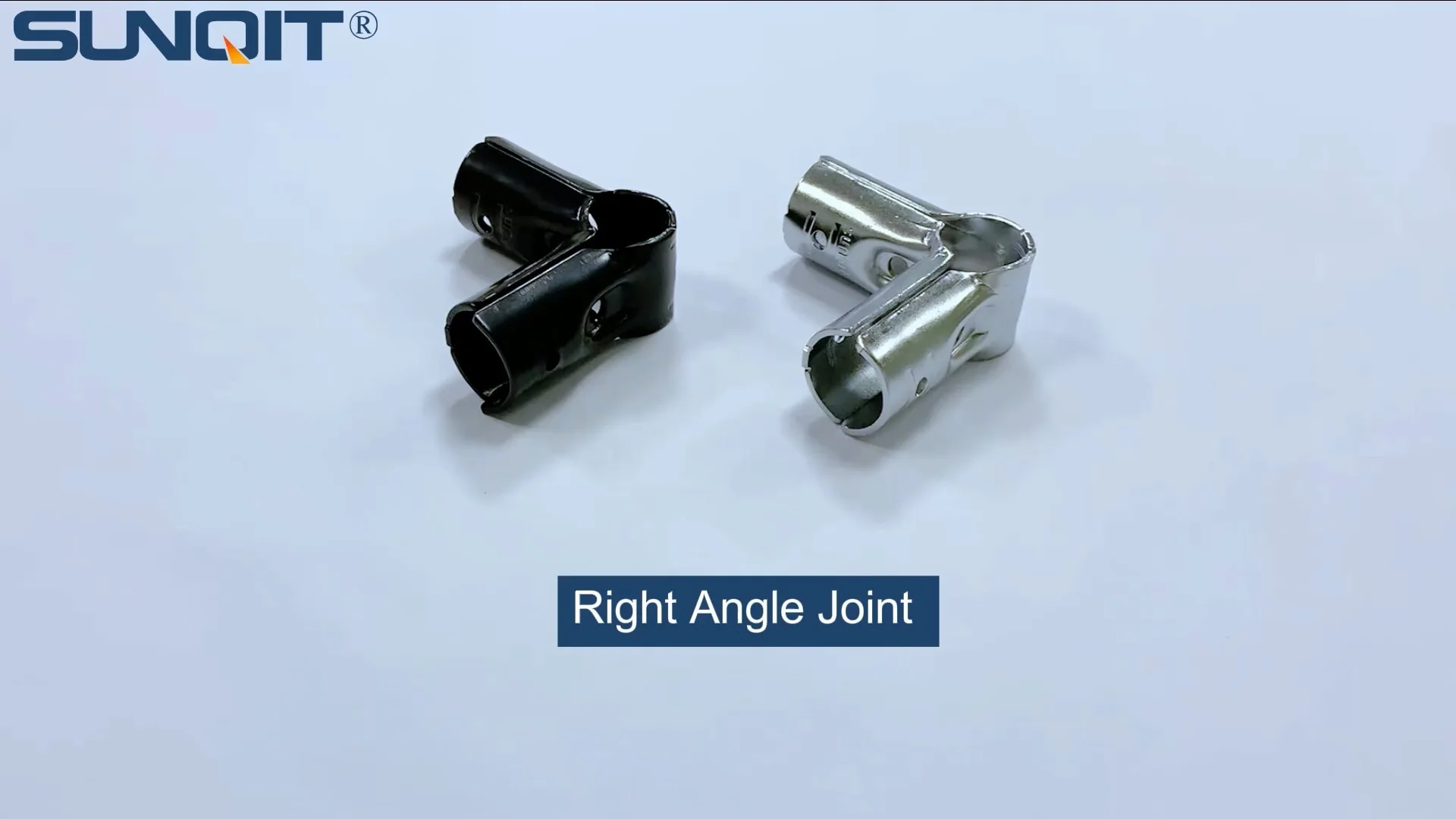
Three way lean pipe joint for 3 pcs 28MM lean pipe connection in straight angle, which used widely in workbench, flow rack, hand trolley frame connection.
1. The Quiet Revolution: Smart Manufacturing's Hidden Backbone
When we talk about smart manufacturing, the conversation often gravitates toward high-tech robots, AI-driven analytics, or 3D printing. But behind these headline-grabbers lies a less glamorous yet equally critical player: the infrastructure that holds everything together. Lean systems—those modular, flexible frameworks that optimize workflow, reduce waste, and adapt to changing production needs—are the unsung heroes of modern factories. And within these systems, one small component punches far above its weight: the three way lean pipe joint chrome.
Imagine a factory floor where assembly lines reconfigure overnight, where material flow adjusts in real time to demand spikes, and where every inch of space is used with pinpoint efficiency. This isn't science fiction; it's the reality of smart manufacturing, and it hinges on components like the three way lean pipe joint chrome. These unassuming metal connectors are the glue that turns simple pipes, aluminum profiles, and roller tracks into dynamic workbenches, flow racks, and conveyor systems. As factories evolve, so too must the humble joint. Let's dive into how this critical piece is shaping the future of smart manufacturing.
Imagine a factory floor where assembly lines reconfigure overnight, where material flow adjusts in real time to demand spikes, and where every inch of space is used with pinpoint efficiency. This isn't science fiction; it's the reality of smart manufacturing, and it hinges on components like the three way lean pipe joint chrome. These unassuming metal connectors are the glue that turns simple pipes, aluminum profiles, and roller tracks into dynamic workbenches, flow racks, and conveyor systems. As factories evolve, so too must the humble joint. Let's dive into how this critical piece is shaping the future of smart manufacturing.
2. Why Joints Matter: The Lean System's Core
Lean manufacturing has always been about eliminating waste—whether it's time, space, or resources. Traditional rigid structures, like welded steel frames, once dominated factories, but they're ill-suited for today's fast-paced, custom-order world. Enter lean systems: built from modular components like lean pipes, aluminum profiles, and roller tracks, these systems thrive on adaptability. And at the heart of that adaptability? Joints.
The three way lean pipe joint chrome is a standout in this category. Its design—three arms radiating from a central hub—allows for the creation of stable, multi-directional structures. Chrome plating adds durability, resisting corrosion in dusty or humid factory environments, while its simple twist-and-lock mechanism makes assembly and disassembly a breeze. Today, you'll find these joints holding together everything from workbenches on automotive lines to flow racks in electronics plants. But as smart manufacturing pushes the boundaries of what's possible, the three way joint is evolving from a passive connector to an active participant in the factory ecosystem.
The three way lean pipe joint chrome is a standout in this category. Its design—three arms radiating from a central hub—allows for the creation of stable, multi-directional structures. Chrome plating adds durability, resisting corrosion in dusty or humid factory environments, while its simple twist-and-lock mechanism makes assembly and disassembly a breeze. Today, you'll find these joints holding together everything from workbenches on automotive lines to flow racks in electronics plants. But as smart manufacturing pushes the boundaries of what's possible, the three way joint is evolving from a passive connector to an active participant in the factory ecosystem.

3. Today's Three Way Lean Pipe Joint Chrome: Strengths and Stumbling Blocks
To understand where we're going, we first need to understand where we are. Today's three way lean pipe joint chrome excels at solving traditional manufacturing challenges. Let's break down its current role:
Adaptability: In a world where product lifecycles shrink from years to months, factories need to retool quickly. A single three way joint can connect lean pipes, aluminum profiles, or roller tracks at different angles, allowing teams to build (and rebuild) workstations in hours, not days. For example, a consumer electronics plant switching from smartphone to tablet assembly can reconfigure its flow racks using these joints, avoiding the cost of entirely new infrastructure.
Cost-Efficiency: Compared to welded steel or custom-machined parts, lean pipe systems with chrome joints are budget-friendly. Chrome plating extends the joint's lifespan, reducing replacement costs, while the modular design minimizes waste—if a section of a workbench breaks, you replace the joint, not the entire bench.
Simplicity: No specialized tools? No problem. Most three way lean pipe joint chrome designs lock into place with a hex key or even by hand, making them accessible to line workers with minimal training. This simplicity speeds up onboarding and reduces downtime during reconfigurations.
But for all their strengths, today's joints have limitations. They're passive components—they hold things together but provide no data, no feedback, and no integration with the smart tools reshaping factories. In a smart manufacturing system that relies on real-time data to optimize workflows, this silence is a problem. Additionally, while chrome plating is durable, it's not infinitely so; in high-wear environments (think 24/7 production lines), joints can loosen or corrode over time, leading to unexpected downtime.
Adaptability: In a world where product lifecycles shrink from years to months, factories need to retool quickly. A single three way joint can connect lean pipes, aluminum profiles, or roller tracks at different angles, allowing teams to build (and rebuild) workstations in hours, not days. For example, a consumer electronics plant switching from smartphone to tablet assembly can reconfigure its flow racks using these joints, avoiding the cost of entirely new infrastructure.
Cost-Efficiency: Compared to welded steel or custom-machined parts, lean pipe systems with chrome joints are budget-friendly. Chrome plating extends the joint's lifespan, reducing replacement costs, while the modular design minimizes waste—if a section of a workbench breaks, you replace the joint, not the entire bench.
Simplicity: No specialized tools? No problem. Most three way lean pipe joint chrome designs lock into place with a hex key or even by hand, making them accessible to line workers with minimal training. This simplicity speeds up onboarding and reduces downtime during reconfigurations.
But for all their strengths, today's joints have limitations. They're passive components—they hold things together but provide no data, no feedback, and no integration with the smart tools reshaping factories. In a smart manufacturing system that relies on real-time data to optimize workflows, this silence is a problem. Additionally, while chrome plating is durable, it's not infinitely so; in high-wear environments (think 24/7 production lines), joints can loosen or corrode over time, leading to unexpected downtime.

4. Future Trends: The Three Way Joint Reimagined for Smart Factories
The next generation of three way lean pipe joint chrome isn't just a better connector—it's a bridge between the physical and digital worlds of manufacturing. Here are the key trends shaping its evolution:
For example, in a food packaging plant, temperature sensors in joints could track fluctuations near refrigerated flow racks, ensuring compliance with safety standards. In an automotive plant, vibration sensors might flag a misaligned roller track before it damages delicate parts. This shift from reactive to predictive maintenance could reduce unplanned downtime by up to 30%, according to industry reports.
- Adjustable Angles: Instead of fixed 90° or 45° angles, joints with rotating arms could lock into any position, allowing for curved workbenches or asymmetrical flow racks.
- Interchangeable Inserts: Swap out plastic, rubber, or metal inserts to accommodate different pipe sizes (lean pipe, aluminum profile, stainless steel) without buying new joints.
- Color-Coding for Smart Systems: Joints in different colors could signal their load capacity, material compatibility, or even IoT connectivity status, making visual management easier for workers.
4.1 IoT-Enabled Connectivity: From Silent Holder to Data Generator
Smart manufacturing runs on data. Soon, your three way joint could be a data hub. Imagine tiny sensors embedded within the joint, monitoring temperature, vibration, or torque. These sensors could detect when a joint is loosening (a sign of impending failure) or when a workbench is overloaded (risking structural damage). The data would feed into a factory's IoT platform, triggering alerts for maintenance crews or automatically slowing down a conveyor to prevent accidents.For example, in a food packaging plant, temperature sensors in joints could track fluctuations near refrigerated flow racks, ensuring compliance with safety standards. In an automotive plant, vibration sensors might flag a misaligned roller track before it damages delicate parts. This shift from reactive to predictive maintenance could reduce unplanned downtime by up to 30%, according to industry reports.
4.2 Sustainability: Greener Joints for Greener Factories
Sustainability isn't just a buzzword—it's a business imperative. Manufacturers are under pressure to reduce their carbon footprints, and the three way lean pipe joint chrome is no exception. Future iterations will likely feature:- Recycled Materials: The core of the joint could be made from recycled steel or aluminum, reducing reliance on virgin resources.
- Eco-Friendly Chrome Plating: Traditional chrome plating uses toxic chemicals, but new processes like trivalent chrome plating cut harmful waste by 90% while maintaining durability.
- Energy-Efficient Production: Suppliers will adopt solar-powered factories or energy recovery systems to manufacture joints with lower emissions.
4.3 Hyper-Customization: Joints That Adapt to Your Exact Needs
One size no longer fits all. As factories produce smaller batches of highly customized products, their infrastructure needs to be equally flexible. Future three way lean pipe joint chrome designs will offer modularity on steroids:- Adjustable Angles: Instead of fixed 90° or 45° angles, joints with rotating arms could lock into any position, allowing for curved workbenches or asymmetrical flow racks.
- Interchangeable Inserts: Swap out plastic, rubber, or metal inserts to accommodate different pipe sizes (lean pipe, aluminum profile, stainless steel) without buying new joints.
- Color-Coding for Smart Systems: Joints in different colors could signal their load capacity, material compatibility, or even IoT connectivity status, making visual management easier for workers.
4.4 Compatibility with Next-Gen Materials
Lean systems are expanding beyond traditional steel pipes. Aluminum profiles, carbon fiber composites, and even biodegradable plastics are entering the fray. The three way joint of the future must play well with all of them. For example, joints with rubberized grips could securely hold lightweight aluminum profiles without scratching them, while reinforced hubs could support the rigidity of carbon fiber. This versatility will be key as factories mix materials to balance strength, weight, and cost.5. A Side-by-Side Look: Traditional vs. Future-Ready Joints
| Feature | Traditional Three Way Lean Pipe Joint Chrome | Future-Ready Three Way Lean Pipe Joint Chrome |
|---|---|---|
| Material | Mild steel with chrome plating | Recycled steel/aluminum core, eco-chrome plating |
| Data Integration | None (passive component) | Embedded sensors (vibration, temperature, torque) |
| Installation Time | 10-15 minutes per joint (with basic tools) | 5 minutes or less (tool-free, self-locking design) |
| Sustainability | Moderate (chrome resists corrosion, but production is resource-heavy) | High (recycled materials, low-waste plating, energy-efficient manufacturing) |
| Compatibility | Limited to specific pipe diameters | Multi-material (aluminum profile, carbon fiber, stainless steel) |
6. Real-World Impact: How Future Joints Will Transform Factories
Let's paint a picture of a factory in 2028, equipped with future-ready three way lean pipe joint chrome. Meet Maria, a production manager at a medical device plant. Her team is tasked with assembling a new line of pacemakers—a high-precision product with frequent design updates.
This scenario isn't just wishful thinking—it's the logical outcome of the trends we've discussed. The three way lean pipe joint chrome, once a background player, becomes a catalyst for agility, efficiency, and sustainability.
Scenario:
On Monday morning, Maria receives a design change: the pacemaker's battery compartment is now 10% larger. In the past, this would mean stopping production for two days to reconfigure the assembly workbench. Today, she opens her factory's IoT dashboard and sees real-time data from the three way joints on her current workbench. Sensors show the joints are holding steady, but the workbench's layout is too narrow for the new battery compartment.
Maria orders a new set of adjustable-angle three way joints with aluminum profile compatibility. The joints arrive pre-calibrated, and her team swaps them out in 45 minutes—no tools needed, thanks to the self-locking mechanism. As they work, the joints' color-coded inserts confirm they're rated for the new load. By lunch, the line is running again, and the IoT sensors in the new joints start feeding data: vibration levels are normal, temperature is stable, and the workbench is perfectly aligned. No downtime, no wasted materials, just seamless adaptation.
Maria orders a new set of adjustable-angle three way joints with aluminum profile compatibility. The joints arrive pre-calibrated, and her team swaps them out in 45 minutes—no tools needed, thanks to the self-locking mechanism. As they work, the joints' color-coded inserts confirm they're rated for the new load. By lunch, the line is running again, and the IoT sensors in the new joints start feeding data: vibration levels are normal, temperature is stable, and the workbench is perfectly aligned. No downtime, no wasted materials, just seamless adaptation.
This scenario isn't just wishful thinking—it's the logical outcome of the trends we've discussed. The three way lean pipe joint chrome, once a background player, becomes a catalyst for agility, efficiency, and sustainability.
7. Conclusion: The Joint That Connects the Future
Smart manufacturing isn't just about big data or flashy robots—it's about reimagining every component, no matter how small, to work smarter. The three way lean pipe joint chrome is a perfect example of this mindset. From a simple connector to a data-generating, eco-friendly, hyper-customizable hub, its evolution mirrors the broader shift in manufacturing: toward systems that are not just efficient, but adaptive, sustainable, and human-centric.
As suppliers continue to innovate, and as factories demand more from their infrastructure, the three way lean pipe joint chrome will prove that even the smallest parts can drive the biggest transformations. So the next time you walk through a factory, take a closer look at those unassuming chrome joints—they're not just holding the place together. They're building the future.
As suppliers continue to innovate, and as factories demand more from their infrastructure, the three way lean pipe joint chrome will prove that even the smallest parts can drive the biggest transformations. So the next time you walk through a factory, take a closer look at those unassuming chrome joints—they're not just holding the place together. They're building the future.