- Company Articles
- Products and Technology
- Product knowledge
- Galvanized Steel Tracks vs. 60 Steel Roller Track Green: Corrosion Resistance Battle

Galvanized Steel Tracks vs. 60 Steel Roller Track Green: Corrosion Resistance Battle
Related Product
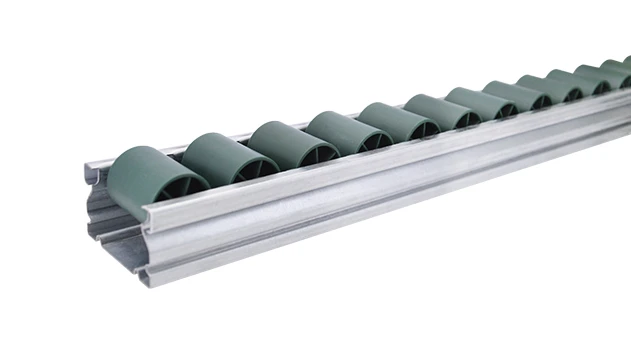
60 Steel Roller Track Green
The roller track can be installed with multiple accessories to create different slopes and configurations of flow racks.All steel conveyor 60 roller track accessories are engineered to perfectly fit the sliding rail.It is enable the movement of SLC boxes.
Galvanized Steel Tracks vs. 60 Steel Roller Track Green: Corrosion Resistance Battle
Introduction: Why Corrosion Resistance Matters for Your Lean System
If you've ever walked through a busy warehouse or stood beside a humming production line, you know how critical every component is to keeping operations running smoothly. Roller tracks are the unsung heroes here—they move parts, products, and materials from one spot to another without a hitch, or at least they should. But when corrosion sets in? Rust spots spread, rollers stick, and suddenly your once-efficient flow becomes a bottleneck. That's why choosing the right roller track for your environment isn't just a purchase—it's an investment in keeping your lean system (keyword) working like a well-oiled machine.
Today, we're pitting two popular roller track options against each other: galvanized steel tracks and the 60 Steel Roller Track Green (a product you'll find from leading suppliers like szsunqit.com). Both have their strengths, but which one wins the corrosion resistance battle? Let's dive in.
What Are Galvanized Steel Tracks?
Galvanized steel tracks are a staple in manufacturing and warehousing. They're made by dipping steel into molten zinc—a process called hot-dip galvanizing—that forms a protective layer over the metal. This layer does two key things: acts as a physical barrier between the steel and the elements, and offers "sacrificial protection" (meaning the zinc corrodes first, saving the steel underneath).
You'll often see galvanized tracks in outdoor or high-moisture areas. Think loading docks where rain and humidity are constant, or coastal warehouses where salt air lingers in the breeze. They're tough, affordable, and can handle a lot of wear and tear. But like any product, they have their limits. If the zinc layer gets scratched or chipped (say, from a heavy pallet sliding over it), the steel underneath is exposed and can start to rust quickly—especially if the area is wet.
Galvanized tracks are also common in heavy-duty conveyors (keyword) for moving large, bulky items. Their durability makes them a go-to for industries like automotive manufacturing or construction, where equipment needs to withstand rough handling.
What Is 60 Steel Roller Track Green?
The 60 Steel Roller Track Green is a specialized product designed for indoor, clean environments—exactly the kind of settings where 3C assembly lines, medical equipment factories, and modern warehouses operate. Let's break it down: it's made from high-quality steel, then coated with a thick, green powder coating that's cured under heat. This coating isn't just for looks; it's a super-tough barrier that keeps moisture, mild chemicals, and dirt from touching the steel.
Why green? Well, the color is often associated with lean manufacturing and efficiency, but more importantly, the powder coating is non-toxic and easy to clean—perfect for areas where hygiene matters (like medical device production). Unlike galvanized tracks, the green coating doesn't offer sacrificial protection, but it's much thicker and more resistant to scratches and chips. Even if a small scratch does occur, the coating around it helps prevent rust from spreading.
You'll find this track used in flow racks (keyword) where small parts are picked and packed, or in lean pipe workbenches (keyword) where assembly workers handle delicate components. It's also a favorite in conveyor systems (keyword) that move electronic parts—since the coating doesn't leave marks or residue on the products.
Head-to-Head Comparison: Galvanized vs. Green 60 Steel
| Feature | Galvanized Steel Tracks | 60 Steel Roller Track Green |
|---|---|---|
| Corrosion Resistance Mechanism | Zinc barrier + sacrificial protection (zinc rusts first) | Powder coating barrier (thick, non-porous layer) |
| Resistance to Salt Spray | Excellent (ideal for coastal areas) | Good (but best used indoors) |
| Resistance to Mild Chemicals | Fair (zinc reacts with strong acids) | Excellent (coating repels most cleaners) |
| Durability Against Scratches | Poor (scratch exposes steel to rust) | Very Good (coating is thick and scratch-resistant) |
| Maintenance Needs | Occasional touch-ups with zinc paint for scratches | Wipe clean with mild soap; rare touch-ups needed |
| Cost-Effectiveness | Lower upfront cost; higher long-term maintenance if scratched | Slightly higher upfront; lower maintenance over time |
| Ideal Application Scenarios | Outdoor loading docks, coastal warehouses, heavy-duty conveyors | 3C assembly lines, medical equipment factories, flow racks, lean workbenches |
Real-World Cases: How These Tracks Perform in Action
Case 1: Coastal Warehouse Uses Galvanized Tracks
A warehouse in Shenzhen (near the port) needed roller tracks for their outdoor conveyor system. The salt air was a big concern—they'd tried uncoated steel tracks before, and they rusted within six months. They switched to galvanized tracks, and three years later, the tracks are still in great shape. The only maintenance they do is wipe them down with a damp cloth every few months to remove salt residue. The tracks handle heavy pallets of electronics parts without any issues, and the warehouse manager says they've saved thousands in replacement costs.
Case 2: 3C Assembly Line Chooses Green 60 Steel Tracks
A leading 3C manufacturer was looking to upgrade their flow racks (keyword) for phone assembly. They needed tracks that were easy to clean, resistant to the mild cleaning agents used in their factory, and wouldn't scratch the delicate phone parts. They opted for the 60 Steel Roller Track Green, and it's been a game-changer. The assembly line workers love how smooth the tracks are—parts glide easily, and the green color makes it easy to spot any dirt or debris. After two years of daily use, the tracks have no rust spots, and the coating is still intact. The manufacturer says the tracks have helped them reduce downtime by 15%.
Case3: Medical Equipment Factory Relies on Green Tracks
A medical device factory needed roller tracks for their conveyors (keyword) that move sterile components. They couldn't use galvanized tracks because the zinc might flake off and contaminate the parts. The 60 Steel Roller Track Green was the perfect fit—its powder coating is non-toxic and meets all medical industry standards. The tracks are used in their lean pipe workbenches (keyword) where workers assemble surgical tools, and they're cleaned daily with disinfectants. After a year of use, the tracks look as good as new, and there's no sign of corrosion.
How to Choose the Right Track for Your Lean Solution
Choosing between galvanized and green 60 steel tracks depends on three key factors: your environment, your needs, and your budget. Let's break it down:
1. Environment
If your facility is outdoors, near the coast, or has high humidity (like a food processing plant), go with galvanized tracks. They're built to handle harsh conditions. If you're in an indoor, clean environment (3C assembly, medical manufacturing), the green 60 steel track is the way to go.
2. Usage Needs
Do you move heavy, bulky items? Galvanized tracks are stronger for heavy loads. Do you need tracks that are easy to clean and non-toxic? Green 60 steel is better. Are you using the tracks in flow racks or lean workbenches? Green is ideal for these applications.
3. Budget
Galvanized tracks are cheaper upfront, but if you have to do frequent maintenance (like touching up scratches), the cost adds up over time. Green 60 steel tracks are more expensive initially, but they require almost no maintenance—so you save money in the long run.
And remember: if you're not sure which track to choose, you can always get a custom lean solution (keyword) from a supplier like szsunqit.com. Their experts will look at your facility, your workflow, and your needs to recommend the perfect track for your system.
Conclusion: Which Track Wins the Battle?
So, who wins the corrosion resistance battle? It depends on where you're fighting! Galvanized steel tracks are the champions of harsh, outdoor environments—they're tough, affordable, and can handle salt air and heavy loads. But for indoor, clean settings like 3C assembly lines, medical factories, and modern warehouses, the 60 Steel Roller Track Green takes the crown. Its thick powder coating, easy-to-clean surface, and non-toxic properties make it the perfect choice for these applications.
At the end of the day, both tracks are great options—they just serve different purposes. The key is to understand your environment and needs, then pick the track that will keep your lean system running smoothly for years to come. Whether you choose galvanized or green, you're investing in efficiency, durability, and corrosion resistance.
If you want to learn more about these tracks or explore other lean manufacturing products (like flow racks, lean pipe workbenches, or conveyors), check out szsunqit.com. They offer a wide range of products and custom solutions to help you build the perfect lean system for your business.