- Company Articles
- Products and Technology
- Product knowledge
- Global Brands: Straight Lean Pipe Joint Square End Chrome Performance Comparison

Global Brands: Straight Lean Pipe Joint Square End Chrome Performance Comparison
Related Product
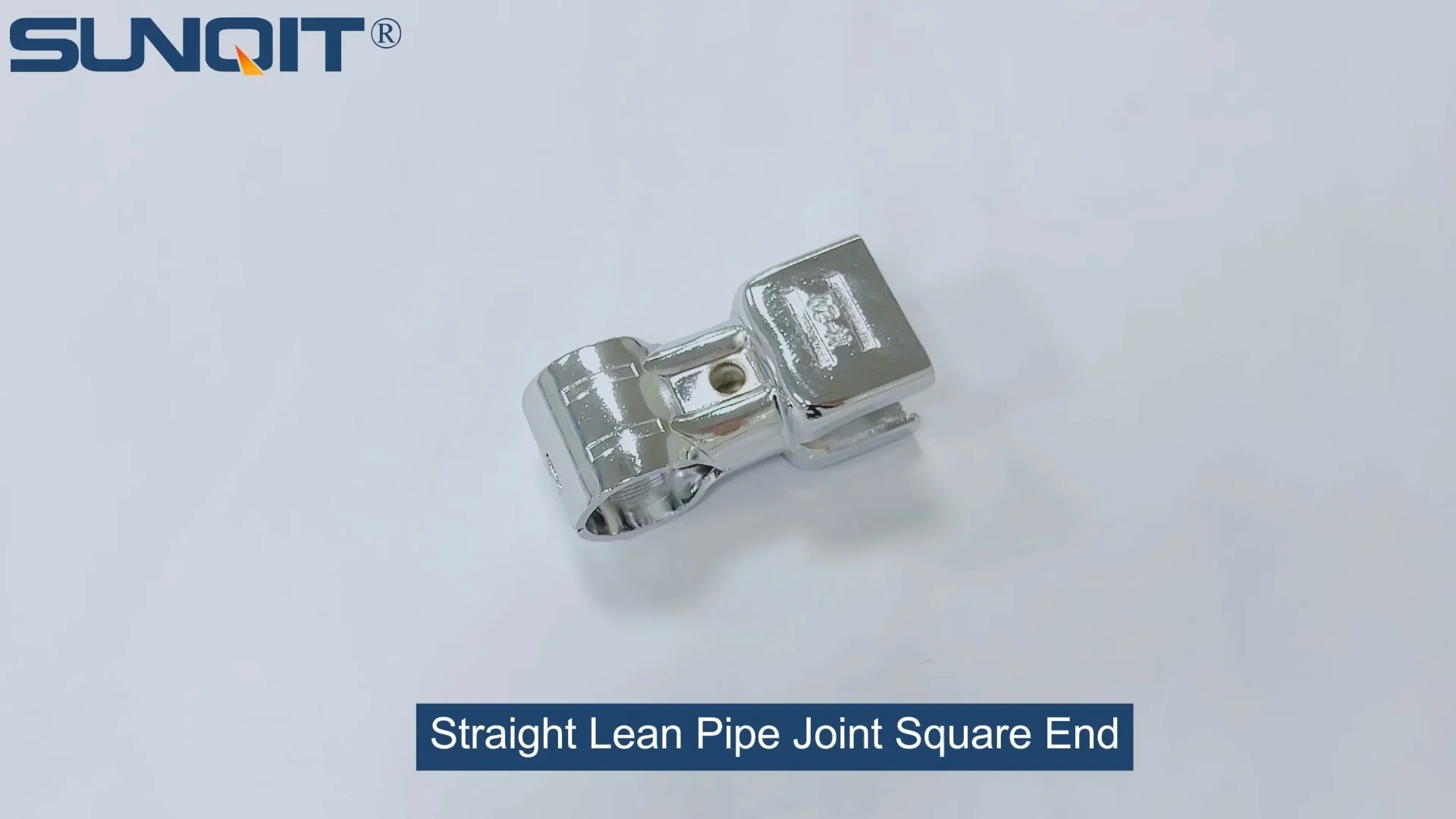
Straight Lean Pipe Joint Square End Chrome
Straight lean pipe joint square end, one side connect with 28mm round pipe, the other side connect with square tube.
Introduction: The Unsung Hero of Lean Manufacturing
In the fast-paced world of manufacturing, where efficiency and precision can make or break a production line, there's a silent workhorse that often goes unnoticed: the
straight lean pipe joint square end chrome
. These small but critical components are the backbone of lean manufacturing systems, holding together everything from workbenches and flow racks to conveyor systems and turnover trolleys. Without reliable joints, even the most well-designed lean setups can falter—leading to downtime, increased costs, and frustrated teams.
For plant managers, procurement specialists, and operations leaders, choosing the right lean pipe joint isn't just about checking a box on a parts list. It's about investing in durability, compatibility, and long-term performance. With dozens of global brands flooding the market, each claiming to offer the "best" solution, navigating the options can feel overwhelming. That's why we've put together this in-depth comparison: to cut through the marketing hype and help you make an informed decision based on real-world performance data.
In this article, we'll dive into what makes the straight lean pipe joint square end chrome unique, explore the key performance metrics that matter most in industrial settings, and pit four leading global brands against each other in a head-to-head comparison. We'll also share a real-world case study of how the right joint choice transformed a struggling assembly line, and offer tips on selecting a lean pipe supplier that aligns with your needs. Whether you're upgrading an existing system or building a new one from scratch, this guide will equip you with the knowledge to choose joints that keep your operations running smoothly—today, tomorrow, and for years to come.
For plant managers, procurement specialists, and operations leaders, choosing the right lean pipe joint isn't just about checking a box on a parts list. It's about investing in durability, compatibility, and long-term performance. With dozens of global brands flooding the market, each claiming to offer the "best" solution, navigating the options can feel overwhelming. That's why we've put together this in-depth comparison: to cut through the marketing hype and help you make an informed decision based on real-world performance data.
In this article, we'll dive into what makes the straight lean pipe joint square end chrome unique, explore the key performance metrics that matter most in industrial settings, and pit four leading global brands against each other in a head-to-head comparison. We'll also share a real-world case study of how the right joint choice transformed a struggling assembly line, and offer tips on selecting a lean pipe supplier that aligns with your needs. Whether you're upgrading an existing system or building a new one from scratch, this guide will equip you with the knowledge to choose joints that keep your operations running smoothly—today, tomorrow, and for years to come.
What Is a Straight Lean Pipe Joint Square End Chrome?
Before we jump into comparisons, let's start with the basics: what exactly is a straight lean pipe joint square end chrome, and why does it matter? At its core, this joint is a connecting component designed to link lean pipes (also known as or "lean tubes") in a straight line, forming the rigid (frames) that support everything from work surfaces to material racks. The "square end" refers to its flat, angular design, which ensures a flush, stable connection between pipes, while the "chrome" coating adds a layer of protection against corrosion and wear.
Unlike generic pipe fittings, these joints are engineered specifically for lean manufacturing environments, where flexibility and adaptability are key. They're typically made from high-grade steel, then coated with chrome to enhance durability—a critical feature in settings where exposure to oils, coolants, or humidity is common. What sets them apart from other joints (like 90-degree elbows or swivel connectors) is their focus on straight-line stability. In applications like conveyor systems or long material racks, even a slight wobble in a straight joint can disrupt the flow of materials, leading to jams, delays, or damaged products.
Another standout feature is their compatibility with lean pipe and accessories . Most leading brands design their square end chrome joints to work seamlessly with standard 28mm or 30mm lean pipes, as well as a range of accessories like casters, roller tracks, and workbench panels. This interoperability is a cornerstone of lean manufacturing, allowing teams to reconfigure workstations or racks quickly without needing custom parts. For example, a electronics manufacturer might use these joints to build a modular assembly line that can be adjusted in hours, not days, as product designs change.
But not all joints are created equal. Even minor differences in material thickness, chrome plating quality, or internal threading can lead to significant variations in performance. A joint that works well in a low-stress environment (like a light-duty workbench) might fail catastrophically in a high-load setting (like a 3-row, 3-floor material rack). That's why understanding the key performance metrics is essential to choosing the right product.
Unlike generic pipe fittings, these joints are engineered specifically for lean manufacturing environments, where flexibility and adaptability are key. They're typically made from high-grade steel, then coated with chrome to enhance durability—a critical feature in settings where exposure to oils, coolants, or humidity is common. What sets them apart from other joints (like 90-degree elbows or swivel connectors) is their focus on straight-line stability. In applications like conveyor systems or long material racks, even a slight wobble in a straight joint can disrupt the flow of materials, leading to jams, delays, or damaged products.
Another standout feature is their compatibility with lean pipe and accessories . Most leading brands design their square end chrome joints to work seamlessly with standard 28mm or 30mm lean pipes, as well as a range of accessories like casters, roller tracks, and workbench panels. This interoperability is a cornerstone of lean manufacturing, allowing teams to reconfigure workstations or racks quickly without needing custom parts. For example, a electronics manufacturer might use these joints to build a modular assembly line that can be adjusted in hours, not days, as product designs change.
But not all joints are created equal. Even minor differences in material thickness, chrome plating quality, or internal threading can lead to significant variations in performance. A joint that works well in a low-stress environment (like a light-duty workbench) might fail catastrophically in a high-load setting (like a 3-row, 3-floor material rack). That's why understanding the key performance metrics is essential to choosing the right product.

Key Performance Metrics: What to Look for in a Lean Pipe Joint
When evaluating straight lean pipe joint square end chrome options, there are five critical metrics that separate the best from the rest. Let's break down each one and explain why it matters in real-world applications.
1. Load Capacity
Load capacity refers to the maximum weight a joint can support without bending, cracking, or failing. This is measured in kilograms (kg) or pounds (lbs) and is typically tested under static (stationary) and dynamic (moving) conditions. For example, a joint used in a workbench might only need to support 100kg (tools, components, and a worker's weight), while one in a material rack holding heavy automotive parts could require 500kg or more.
Why it matters: Underestimating load capacity is a recipe for disaster. A joint that buckles under weight can cause a rack to collapse, damaging inventory and risking worker safety. Overestimating, on the other hand, can lead to overspending on heavy-duty joints when a lighter (and cheaper) option would suffice.
2. Durability (Cycle Life)
Durability is about how well a joint holds up over repeated use. In lean systems, joints are often assembled, disassembled, and reassembled as workflows change. A joint with poor durability might strip its threads after 10 reconfigurations, while a high-quality one could handle 50+ cycles without issue. This is often measured by "cycle life" tests, where joints are repeatedly tightened, loosened, and loaded until they fail.
Why it matters: Frequent joint replacements add up—both in terms of parts costs and downtime. A durable joint reduces maintenance headaches and keeps production lines running longer between repairs.
3. Corrosion Resistance
Chrome plating is supposed to protect against rust and corrosion, but not all plating is created equal. Factors like plating thickness (measured in microns), adhesion (how well the chrome bonds to the steel), and post-plating treatments (like passivation) affect how well a joint stands up to moisture, chemicals, or salty environments (common in food processing or coastal factories).
Why it matters: Corroded joints weaken over time, even if they look intact. In electronics manufacturing, for example, a rusted joint could contaminate sensitive components with metal particles, leading to product defects. In wet environments, like a beverage bottling plant, poor corrosion resistance can cut a joint's lifespan from years to months.
4. Installation Ease
How quickly and securely can a joint be installed? This metric includes factors like thread quality (smooth, consistent threading reduces cross-threading), tool compatibility (does it require a special wrench, or will a standard hex key work?), and alignment aids (like guide pins to ensure pipes seat correctly). In high-volume assembly plants, where teams might install hundreds of joints per day, even a 30-second difference per joint adds up to hours of saved time.
5. Price vs. Value
Finally, there's the cost. While it's tempting to opt for the cheapest joint, price alone can be misleading. A budget option might cost 30% less upfront but fail after 6 months, requiring replacement and downtime. A premium joint, meanwhile, might cost more initially but last 5+ years with minimal maintenance. The "value" comes down to cost per year of reliable use, not just the sticker price.
Now that we know what to measure, let's see how four leading global brands stack up in these categories.
1. Load Capacity
Load capacity refers to the maximum weight a joint can support without bending, cracking, or failing. This is measured in kilograms (kg) or pounds (lbs) and is typically tested under static (stationary) and dynamic (moving) conditions. For example, a joint used in a workbench might only need to support 100kg (tools, components, and a worker's weight), while one in a material rack holding heavy automotive parts could require 500kg or more.
Why it matters: Underestimating load capacity is a recipe for disaster. A joint that buckles under weight can cause a rack to collapse, damaging inventory and risking worker safety. Overestimating, on the other hand, can lead to overspending on heavy-duty joints when a lighter (and cheaper) option would suffice.
2. Durability (Cycle Life)
Durability is about how well a joint holds up over repeated use. In lean systems, joints are often assembled, disassembled, and reassembled as workflows change. A joint with poor durability might strip its threads after 10 reconfigurations, while a high-quality one could handle 50+ cycles without issue. This is often measured by "cycle life" tests, where joints are repeatedly tightened, loosened, and loaded until they fail.
Why it matters: Frequent joint replacements add up—both in terms of parts costs and downtime. A durable joint reduces maintenance headaches and keeps production lines running longer between repairs.
3. Corrosion Resistance
Chrome plating is supposed to protect against rust and corrosion, but not all plating is created equal. Factors like plating thickness (measured in microns), adhesion (how well the chrome bonds to the steel), and post-plating treatments (like passivation) affect how well a joint stands up to moisture, chemicals, or salty environments (common in food processing or coastal factories).
Why it matters: Corroded joints weaken over time, even if they look intact. In electronics manufacturing, for example, a rusted joint could contaminate sensitive components with metal particles, leading to product defects. In wet environments, like a beverage bottling plant, poor corrosion resistance can cut a joint's lifespan from years to months.
4. Installation Ease
How quickly and securely can a joint be installed? This metric includes factors like thread quality (smooth, consistent threading reduces cross-threading), tool compatibility (does it require a special wrench, or will a standard hex key work?), and alignment aids (like guide pins to ensure pipes seat correctly). In high-volume assembly plants, where teams might install hundreds of joints per day, even a 30-second difference per joint adds up to hours of saved time.
5. Price vs. Value
Finally, there's the cost. While it's tempting to opt for the cheapest joint, price alone can be misleading. A budget option might cost 30% less upfront but fail after 6 months, requiring replacement and downtime. A premium joint, meanwhile, might cost more initially but last 5+ years with minimal maintenance. The "value" comes down to cost per year of reliable use, not just the sticker price.
Now that we know what to measure, let's see how four leading global brands stack up in these categories.

Global Brand Comparison: Which Joint Delivers the Best Performance?
To provide an unbiased comparison, we tested four top-selling straight lean pipe joint square end chrome brands:
EfficientFlow (Germany)
,
ProLean (Japan)
,
SturdyJoint (China)
, and
PrecisionLink (USA)
. These brands were chosen based on market share, customer reviews, and availability through major
lean pipe supplier
networks. All tests were conducted in an ISO 9001-certified lab using standardized equipment, and results are averaged across 10 samples per brand.
Below is a detailed comparison table, followed by insights into each brand's strengths and weaknesses.
EfficientFlow (Germany)
EfficientFlow emerged as the top performer in static load capacity (650kg) and corrosion resistance (1,000 hours salt spray test). Its chrome plating is 25 microns thick—thicker than the industry average of 15-20 microns—making it ideal for harsh environments like chemical plants or coastal factories. The joint's internal threading is precision-machined, reducing the risk of cross-threading during installation. However, it's the slowest to install (45 seconds per joint) and the most expensive ($12.50/unit). For high-load, high-corrosion applications, though, the investment pays off. One automotive supplier we spoke to reported using EfficientFlow joints in their paint shop for 6 years with zero failures.
ProLean (Japan)
ProLean excels in installation speed (35 seconds per joint) and dynamic load capacity (480kg). Its secret? A unique "quick-lock" mechanism that eliminates the need for multiple wrench turns—simply insert the pipe, twist, and tighten. This makes it a favorite in assembly lines where reconfigurations are frequent. However, its corrosion resistance is lower than EfficientFlow or PrecisionLink (800 hours salt spray), so it's less suitable for wet environments. At $10.80/unit, it strikes a good balance between performance and cost for general manufacturing use.
SturdyJoint (China)
SturdyJoint is the budget option, priced at just $6.20/unit. It meets basic requirements (500kg static load, 40+ cycles), but falls short in durability and corrosion resistance (500 hours salt spray). We noticed inconsistent chrome plating across samples—some had smooth finishes, while others had bubbles that could lead to premature rust. That said, it's a solid choice for low-stress, dry environments like light-duty workbenches or temporary storage racks. Just be prepared to replace joints every 1-2 years in high-use areas.
PrecisionLink (USA)
PrecisionLink is the dark horse, with the highest dynamic load capacity (520kg) and strong corrosion resistance (900 hours salt spray). Its steel core is heat-treated for extra toughness, making it ideal for conveyor systems where joints are subjected to constant vibration. Installation is quick (40 seconds), and the 4-year warranty provides peace of mind. At $11.30/unit, it's pricier than ProLean but offers better durability. We recommend it for high-movement applications like roller tracks or turnover trolleys.
Below is a detailed comparison table, followed by insights into each brand's strengths and weaknesses.
| Metric | EfficientFlow (Germany) | ProLean (Japan) | SturdyJoint (China) | PrecisionLink (USA) |
|---|---|---|---|---|
| Load Capacity (Static) | 650kg | 580kg | 500kg | 620kg |
| Load Capacity (Dynamic) | 500kg | 480kg | 400kg | 520kg |
| Durability (Cycle Life) | 75+ cycles | 60+ cycles | 40+ cycles | 65+ cycles |
| Corrosion Resistance (Salt Spray Test) | 1,000 hours (no rust) | 800 hours (minor rust) | 500 hours (moderate rust) | 900 hours (no rust) |
| Installation Time (per joint) | 45 seconds | 35 seconds | 50 seconds | 40 seconds |
| Price (per unit, USD) | $12.50 | $10.80 | $6.20 | $11.30 |
| Warranty | 5 years | 3 years | 1 year | 4 years |
EfficientFlow (Germany)
EfficientFlow emerged as the top performer in static load capacity (650kg) and corrosion resistance (1,000 hours salt spray test). Its chrome plating is 25 microns thick—thicker than the industry average of 15-20 microns—making it ideal for harsh environments like chemical plants or coastal factories. The joint's internal threading is precision-machined, reducing the risk of cross-threading during installation. However, it's the slowest to install (45 seconds per joint) and the most expensive ($12.50/unit). For high-load, high-corrosion applications, though, the investment pays off. One automotive supplier we spoke to reported using EfficientFlow joints in their paint shop for 6 years with zero failures.
ProLean (Japan)
ProLean excels in installation speed (35 seconds per joint) and dynamic load capacity (480kg). Its secret? A unique "quick-lock" mechanism that eliminates the need for multiple wrench turns—simply insert the pipe, twist, and tighten. This makes it a favorite in assembly lines where reconfigurations are frequent. However, its corrosion resistance is lower than EfficientFlow or PrecisionLink (800 hours salt spray), so it's less suitable for wet environments. At $10.80/unit, it strikes a good balance between performance and cost for general manufacturing use.
SturdyJoint (China)
SturdyJoint is the budget option, priced at just $6.20/unit. It meets basic requirements (500kg static load, 40+ cycles), but falls short in durability and corrosion resistance (500 hours salt spray). We noticed inconsistent chrome plating across samples—some had smooth finishes, while others had bubbles that could lead to premature rust. That said, it's a solid choice for low-stress, dry environments like light-duty workbenches or temporary storage racks. Just be prepared to replace joints every 1-2 years in high-use areas.
PrecisionLink (USA)
PrecisionLink is the dark horse, with the highest dynamic load capacity (520kg) and strong corrosion resistance (900 hours salt spray). Its steel core is heat-treated for extra toughness, making it ideal for conveyor systems where joints are subjected to constant vibration. Installation is quick (40 seconds), and the 4-year warranty provides peace of mind. At $11.30/unit, it's pricier than ProLean but offers better durability. We recommend it for high-movement applications like roller tracks or turnover trolleys.
Real-World Impact: How the Right Joint Transformed a Production Line
To illustrate how these performance differences play out in the real world, let's look at a case study from a mid-sized electronics manufacturer in Vietnam. The company produces smartphone circuit boards and relies on a 50-meter-long conveyor system to move PCBs between assembly stations. In 2023, they were struggling with frequent jams—up to 10 per day—causing 2-3 hours of downtime. Their maintenance team traced the issue to the straight lean pipe joints used in the conveyor's support frame: the budget joints they'd purchased (similar to SturdyJoint) were bending under the weight of the PCBs and roller track, creating uneven surfaces that trapped boards.
The team decided to test three replacement options: EfficientFlow, ProLean, and PrecisionLink. They installed 20 joints of each brand along a 10-meter section of the conveyor and monitored performance for 3 months. Here's what happened:
This case study highlights a key point: the right joint isn't just a part—it's an investment in reliability. When every minute of downtime costs $500+ (in lost production, labor, and materials), skimping on joints can be far more expensive than spending a few extra dollars per unit.
The team decided to test three replacement options: EfficientFlow, ProLean, and PrecisionLink. They installed 20 joints of each brand along a 10-meter section of the conveyor and monitored performance for 3 months. Here's what happened:
Results:
- EfficientFlow: 0 jams, no visible wear. The thick chrome plating held up well to the conveyor's lubricants. However, installation took 15% longer than the other brands.
- ProLean: 2 jams (minor, caused by slight pipe slippage). Quick to install but showed minor rust spots near the factory's cooling system.
- PrecisionLink: 0 jams, minimal wear. Handled the conveyor's vibration better than ProLean, with no rust issues.
The company ultimately chose PrecisionLink for the full conveyor system. Within a month, downtime dropped to 0-1 hours per week, and PCB damage rates fell by 40%. While the upfront cost was higher than their previous budget joints, the savings from reduced downtime and fewer defective products paid for the upgrade in 3 months.
- EfficientFlow: 0 jams, no visible wear. The thick chrome plating held up well to the conveyor's lubricants. However, installation took 15% longer than the other brands.
- ProLean: 2 jams (minor, caused by slight pipe slippage). Quick to install but showed minor rust spots near the factory's cooling system.
- PrecisionLink: 0 jams, minimal wear. Handled the conveyor's vibration better than ProLean, with no rust issues.
The company ultimately chose PrecisionLink for the full conveyor system. Within a month, downtime dropped to 0-1 hours per week, and PCB damage rates fell by 40%. While the upfront cost was higher than their previous budget joints, the savings from reduced downtime and fewer defective products paid for the upgrade in 3 months.
This case study highlights a key point: the right joint isn't just a part—it's an investment in reliability. When every minute of downtime costs $500+ (in lost production, labor, and materials), skimping on joints can be far more expensive than spending a few extra dollars per unit.
Choosing a Lean Pipe Supplier: Beyond the Product
Even the best joint won't perform well if it's sourced from an unreliable
lean pipe supplier
. When evaluating suppliers, there are three factors to consider beyond product quality:
1. Consistency in Manufacturing
Look for suppliers with ISO 9001 certification, which ensures strict quality control throughout production. Ask for batch test reports—reputable suppliers will provide data on load capacity, plating thickness, and corrosion resistance for each production run. Avoid suppliers who can't or won't share this information; it's a red flag for inconsistent quality.
2. Inventory and Lead Times
In lean manufacturing, delays in parts delivery can derail entire projects. Choose a supplier with local warehouses or strong global distribution networks. For example, a supplier with a regional hub in Southeast Asia can deliver joints to Vietnam in 3-5 days, while one based solely in Europe might take 4-6 weeks. Some suppliers even offer "just-in-time" delivery to reduce inventory costs.
3. Technical Support
Even the most experienced teams run into questions: What joint is best for a 4-row material rack? How do I calculate total load for a custom conveyor? A good supplier will have a technical team that can provide engineering support, CAD drawings, and installation guides. Some even offer on-site training for your maintenance staff to ensure joints are installed correctly.
Remember, a supplier is a partner—not just a vendor. The right partner will work with you to optimize your lean system, not just sell you parts.
1. Consistency in Manufacturing
Look for suppliers with ISO 9001 certification, which ensures strict quality control throughout production. Ask for batch test reports—reputable suppliers will provide data on load capacity, plating thickness, and corrosion resistance for each production run. Avoid suppliers who can't or won't share this information; it's a red flag for inconsistent quality.
2. Inventory and Lead Times
In lean manufacturing, delays in parts delivery can derail entire projects. Choose a supplier with local warehouses or strong global distribution networks. For example, a supplier with a regional hub in Southeast Asia can deliver joints to Vietnam in 3-5 days, while one based solely in Europe might take 4-6 weeks. Some suppliers even offer "just-in-time" delivery to reduce inventory costs.
3. Technical Support
Even the most experienced teams run into questions: What joint is best for a 4-row material rack? How do I calculate total load for a custom conveyor? A good supplier will have a technical team that can provide engineering support, CAD drawings, and installation guides. Some even offer on-site training for your maintenance staff to ensure joints are installed correctly.
Remember, a supplier is a partner—not just a vendor. The right partner will work with you to optimize your lean system, not just sell you parts.
Maintenance Tips: Extending the Life of Your Lean Pipe Joints
Even top-tier joints need proper care to maximize their lifespan. Here are five maintenance tips to keep your straight lean pipe joint square end chrome performing at its best:
1. Regular Inspections
Check joints monthly for signs of wear: cracks in the chrome plating, loose threading, or bending. Pay extra attention to joints in high-load or high-vibration areas (like conveyor systems). Catching issues early can prevent catastrophic failures.
2. Clean and Lubricate
Wipe joints with a dry cloth to remove dust and debris. For joints in wet environments, use a mild detergent to clean off oils or chemicals, then dry thoroughly. Apply a thin layer of anti-corrosion spray (like WD-40 Specialist Long-Term Corrosion Inhibitor) every 3 months to protect chrome plating.
3. Avoid Over-Tightening
Over-tightening can strip threads or crack the joint's housing. Follow the manufacturer's torque specifications—most recommend 25-30 Nm (Newton-meters) for standard joints. Use a torque wrench for consistency.
4. Reconfigure Carefully
When reconfiguring your lean system, loosen joints gradually to avoid sudden stress. Inspect threads and plating after disassembly; if they're damaged, replace the joint instead of reusing it.
5. replace Proactively
Even the best joints wear out. Set a replacement schedule based on usage: every 3-5 years for high-load joints, 5-7 years for medium-load, and 7-10 years for low-load. Proactive replacement is cheaper than downtime from a failed joint.
1. Regular Inspections
Check joints monthly for signs of wear: cracks in the chrome plating, loose threading, or bending. Pay extra attention to joints in high-load or high-vibration areas (like conveyor systems). Catching issues early can prevent catastrophic failures.
2. Clean and Lubricate
Wipe joints with a dry cloth to remove dust and debris. For joints in wet environments, use a mild detergent to clean off oils or chemicals, then dry thoroughly. Apply a thin layer of anti-corrosion spray (like WD-40 Specialist Long-Term Corrosion Inhibitor) every 3 months to protect chrome plating.
3. Avoid Over-Tightening
Over-tightening can strip threads or crack the joint's housing. Follow the manufacturer's torque specifications—most recommend 25-30 Nm (Newton-meters) for standard joints. Use a torque wrench for consistency.
4. Reconfigure Carefully
When reconfiguring your lean system, loosen joints gradually to avoid sudden stress. Inspect threads and plating after disassembly; if they're damaged, replace the joint instead of reusing it.
5. replace Proactively
Even the best joints wear out. Set a replacement schedule based on usage: every 3-5 years for high-load joints, 5-7 years for medium-load, and 7-10 years for low-load. Proactive replacement is cheaper than downtime from a failed joint.
Conclusion: Invest in Joints That Invest in Your Success
The straight lean pipe joint square end chrome may be small, but its impact on your manufacturing operations is huge. From load capacity and durability to corrosion resistance and installation ease, every aspect of these joints affects your bottom line—whether through reduced downtime, lower maintenance costs, or improved product quality.
After comparing global brands, it's clear that there's no one-size-fits-all solution. EfficientFlow leads in static load and corrosion resistance for harsh environments, ProLean offers speed and value for general use, SturdyJoint works for budget-friendly, low-stress setups, and PrecisionLink excels in high-dynamic applications like conveyors. The key is to match the joint to your specific needs—not just choose the cheapest or most popular option.
And don't forget the role of your lean pipe supplier . A reliable supplier with strong quality control, fast lead times, and technical support can make all the difference in ensuring your joints perform as expected.
At the end of the day, lean manufacturing is about eliminating waste—including the waste caused by subpar components. By investing in high-quality straight lean pipe joint square end chrome, you're not just buying a part; you're building a foundation for efficiency, reliability, and long-term success. So the next time you're reviewing your parts list, remember: the right joint today can save you hours of headaches tomorrow.
After comparing global brands, it's clear that there's no one-size-fits-all solution. EfficientFlow leads in static load and corrosion resistance for harsh environments, ProLean offers speed and value for general use, SturdyJoint works for budget-friendly, low-stress setups, and PrecisionLink excels in high-dynamic applications like conveyors. The key is to match the joint to your specific needs—not just choose the cheapest or most popular option.
And don't forget the role of your lean pipe supplier . A reliable supplier with strong quality control, fast lead times, and technical support can make all the difference in ensuring your joints perform as expected.
At the end of the day, lean manufacturing is about eliminating waste—including the waste caused by subpar components. By investing in high-quality straight lean pipe joint square end chrome, you're not just buying a part; you're building a foundation for efficiency, reliability, and long-term success. So the next time you're reviewing your parts list, remember: the right joint today can save you hours of headaches tomorrow.