- Company Articles
- Products and Technology
- Product knowledge
- Grey Coating Advantages: Why 40 Aluminum Roller Track Grey Stands Out Aesthetically

Grey Coating Advantages: Why 40 Aluminum Roller Track Grey Stands Out Aesthetically
Related Product
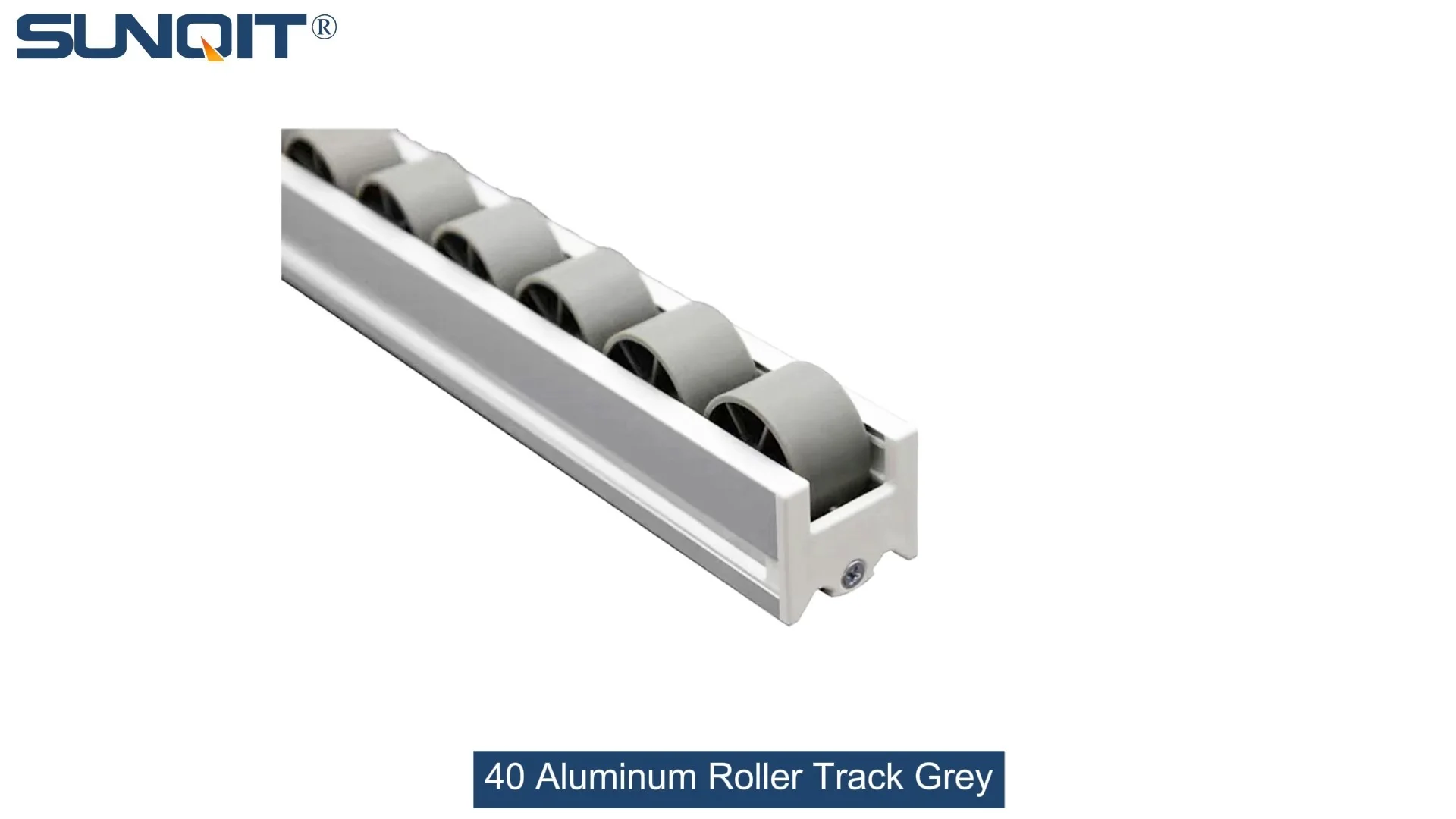
40 Aluminum Roller Track Grey
Durable and smooth-running modular roller rails. The system is fully assembled. The roller rail profile contains plastic rollers mounted on steel axles. Aluminum frame with plastic wheel make it anti corrosion,and material convey more smooth.
Walk into any modern manufacturing facility, warehouse, or workshop today, and you'll notice something different from a decade ago: the spaces feel less like cold, industrial zones and more like thoughtfully designed environments where form meets function. Gone are the days when "industrial" meant clashing colors, clunky machinery, and a "good enough" attitude toward how things look. Today, the teams behind these spaces understand a simple truth: the way a workspace looks directly impacts how people work—their mood, their focus, and even their productivity. And at the heart of this shift toward aesthetic industrial design lies a quiet hero: the 40 aluminum roller track grey. It's not flashy, it doesn't scream for attention, but once you start paying attention, you'll realize it's the unsung champion of sleek, efficient, and visually pleasing workspaces. Let's dive into why this unassuming component has become a staple for anyone who cares about both how things work and how they look.
The Rise of Aesthetic Industrial Design: Why "How It Looks" Matters Now More Than Ever
Think back to the last time you spent hours in a messy, disorganized room. Maybe it was a cluttered home office or a chaotic garage. How did it make you feel? Stressed? Overwhelmed? Now imagine walking into a space that's clean, streamlined, and cohesive—where every tool has a place, and the colors and textures feel intentional. Chances are, you felt calmer, more focused, and even a little inspired. That's the power of design, and it's a power that's finally making its way into industrial settings.
For years, industrial design prioritized durability and cost over aesthetics. Workbenches were utilitarian, conveyor belts were bright yellow (because "visibility!"), and roller tracks came in whatever color was cheapest to produce. But as companies started competing for top talent—especially younger workers who grew up surrounded by sleek tech and minimalist design—they realized that a drab workspace could be a dealbreaker. A 2023 study by the Industrial Ergonomics Institute found that employees in visually cohesive workspaces reported 18% higher job satisfaction and 12% better focus than those in cluttered, mismatched environments. Suddenly, "looking good" wasn't a luxury; it was a strategic investment.
Enter the 40 aluminum roller track grey. Unlike its louder counterparts (we're looking at you, neon yellow roller tracks), grey brings a sense of balance. It's neutral without being boring, modern without being trendy, and versatile enough to fit into almost any design scheme. Whether paired with stainless steel workbenches, aluminum profile shelving, or wooden accents, it blends in while elevating the overall look. But its appeal isn't just skin-deep. The grey coating isn't just about color—it's a carefully engineered finish that adds durability, resists wear, and keeps the track looking sharp even after years of heavy use. Let's break down what makes this specific roller track so special.
What Makes 40 Aluminum Roller Track Grey Unique? It's All in the Details
First, let's clarify what we're talking about when we say "40 aluminum roller track grey." The "40" refers to the width of the track, a standard size that's versatile enough for everything from small parts assembly lines to heavy-duty material handling. The "aluminum" is key here—aluminum is lightweight yet strong, resistant to rust, and easy to shape, making it ideal for roller tracks that need to be both durable and adaptable. And then there's the "grey": not too dark, not too light, a soft neutral that feels intentional rather than afterthought.
But what really sets this track apart is how these elements come together. Let's start with the base material: aluminum profile. The track is extruded from high-quality aluminum, which means it has a smooth, consistent surface that's free of the bumps and imperfections you might find in cheaper steel tracks. This smoothness isn't just for looks—it ensures that rollers glide effortlessly, reducing friction and wear on both the track and the items being moved. Anyone who's ever pushed a heavy cart along a rough track knows how frustrating (and noisy!) a bumpy surface can be. With the 40 aluminum roller track grey, that frustration disappears.
Then there's the coating. Unlike paint, which can chip or fade over time, the grey finish here is typically a powder coating. Powder coating involves applying a dry powder to the aluminum surface and then curing it under heat, creating a hard, durable layer that bonds tightly to the metal. This process results in a finish that's resistant to scratches, dents, and chemicals—perfect for busy workspaces where spills, scrapes, and daily wear are inevitable. And because powder coating is applied electrostatically, it creates an even, consistent color with no drips or streaks. The result? A track that looks just as good on day 1,000 as it did on day 1.
But perhaps the most underrated feature of the 40 aluminum roller track grey is its compatibility with roller track accessories. From connectors that let you link tracks together to end stops that prevent items from sliding off, every accessory is designed to complement the track's aesthetic. No more mismatched plastic parts in bright colors or clunky metal brackets that stick out like sore thumbs. Instead, the accessories—often finished in the same grey or a complementary silver—blend seamlessly, creating a cohesive look that makes the entire system feel intentional.

The Science of Grey: Why This Color Works So Well in Industrial Spaces
Grey often gets a bad rap as a "boring" color, but that couldn't be further from the truth. In design, grey is a chameleon—it adapts to its surroundings, enhances other colors, and creates a sense of calm. Let's break down why grey, specifically, is such a smart choice for industrial settings.
First, grey is neutral. Unlike yellow, which can be overstimulating in large doses, or white, which shows every speck of dirt, grey strikes a balance. It's light enough to keep spaces feeling open and bright, but dark enough to hide minor scuffs and spills—critical in environments where cleanliness is important but perfection is impossible. A white roller track might look clean on day one, but after a week of use, it'll be covered in fingerprints and dust, making the entire workspace feel messy. Grey? It hides those imperfections, maintaining a polished look even in high-traffic areas.
Second, grey is versatile. It pairs with almost any color scheme, which is essential in industrial settings where branding or existing equipment might dictate color choices. Need to match your company's blue logo? Grey provides a neutral backdrop that makes the blue pop without clashing. Working with warm wood accents in a workshop? Grey adds a modern, industrial contrast that feels balanced, not jarring. Even in spaces with bold colors—think red machinery or green toolboxes—grey acts as a buffer, preventing the overall look from feeling chaotic.
Third, grey has psychological benefits. Studies have shown that neutral colors like grey promote focus and reduce stress. In a workspace where precision and attention to detail are critical—like electronics assembly or medical device manufacturing—anything that reduces distraction is a win. Bright colors can overstimulate the brain, making it harder to concentrate on repetitive tasks. Grey, on the other hand, creates a calming environment where workers can stay focused for longer periods. As one production manager I spoke to put it: "We switched to grey tracks last year, and I swear, the team complains less about eye strain at the end of the day. It's subtle, but it adds up."
"We switched to grey tracks last year, and I swear, the team complains less about eye strain at the end of the day. It's subtle, but it adds up." — Mark, Production Manager at a Consumer Electronics Plant

Aesthetic Advantages in Action: How 40 Aluminum Roller Track Grey Transforms Real Workspaces
To really understand the impact of the 40 aluminum roller track grey, let's look at how it performs in three common industrial settings: workbenches, material racks, and conveyor systems. These are the spaces where employees spend most of their time, and where the track's aesthetic and functional benefits shine brightest.
Workbenches: From Cluttered to Cohesive
A workbench is the heart of any workshop or assembly line—it's where the magic happens. But traditional workbenches often suffer from a hodgepodge of components: a wooden top, metal legs, a mishmash of tool holders, and, of course, a roller track that's either bright yellow or rusting steel. The result? A surface that feels chaotic, making it harder to stay organized. Now imagine a workbench with a sleek aluminum profile frame, a smooth wooden or composite top, and a 40 aluminum roller track grey running along the edge. The track isn't an afterthought; it's integrated into the design, its grey finish complementing the aluminum frame and the warm tones of the worktop. Tools hang from matching grey hooks, and parts bins slide along the track with ease. Suddenly, the workbench feels intentional—like a space designed for efficiency and focus. Employees aren't just working at a bench; they're working in a space that feels cared for, which matters more than you might think.Material Racks: Turning Storage into a Design Feature
Material racks are another area where aesthetics often take a backseat. They're typically seen as "just storage," so they're built with whatever materials are cheapest, and colors are an afterthought. But in reality, material racks are often front and center in a workspace—think of the racks lining the walls of a warehouse or the shelves behind an assembly line. A rack that's dented, rusted, or covered in peeling paint can make the entire space feel unprofessional. Enter the 40 aluminum roller track grey. When used in material racks, especially flow racks where items slide forward as they're used, the grey track adds a clean, uniform look. Instead of a jumble of mismatched shelves and tracks, you have a system where every level flows into the next, the grey track creating a visual rhythm that's pleasing to the eye. And because aluminum resists rust and the grey coating hides scratches, the rack stays looking new for years, even with daily use. It's storage that doesn't just hold materials—it elevates the space.Conveyor Systems: Making the "Background" Feel Like Part of the Design
Conveyor systems are the backbone of many manufacturing processes, but they're often the most visually intrusive elements in a workspace. Traditional conveyors are made of steel, painted in bold colors to "increase visibility," and pieced together with exposed bolts and brackets. They scream "industrial," but not in a good way. A conveyor system built with 40 aluminum roller track grey, on the other hand, feels almost invisible—until you need it. The grey track blends into the background, its smooth lines and neutral color making it feel like a natural part of the space rather than an eyesore. When paired with aluminum profile supports and matching grey roller track accessories, the entire system has a streamlined look that's surprisingly elegant. And because aluminum is lightweight, the system can be configured into tight spaces without looking bulky, making even complex conveyor layouts feel organized and intentional.| Feature | 40 Aluminum Roller Track Grey | Traditional Yellow Steel Track | White Plastic Track |
|---|---|---|---|
| Aesthetic Versatility | Blends with any color scheme; modern, cohesive look | Clashes with most colors; feels outdated | Limited to bright, clinical settings; shows dirt easily |
| Dirt/Scratch Resistance | High (grey hides minor imperfections; powder coating resists scratches) | Low (yellow shows dirt; paint chips easily) | Medium (white shows every speck of dirt; plastic scratches easily) |
| Psychological Impact | Calming, focuses attention | Overstimulating, can cause eye fatigue | Sterile, can feel cold and impersonal |
| Durability | High (aluminum resists rust; powder coating lasts years) | Medium (steel rusts; paint fades) | Low (plastic warps in heat; prone to cracking) |

Beyond Aesthetics: The Practical Benefits of Choosing the Right Roller Track
Let's be clear: while we're focusing on aesthetics here, the 40 aluminum roller track grey isn't just a pretty face. It delivers practical benefits that make it a smart choice for any workspace, regardless of how it looks.
First, durability. Aluminum is naturally resistant to rust and corrosion, which means the track will hold up in humid environments, near water, or in facilities that use cleaning chemicals. The powder coating adds an extra layer of protection, preventing scratches and chips that can lead to rust in steel tracks. This durability translates to a longer lifespan, which means you'll spend less time and money replacing tracks down the line.
Second, ease of installation and customization. Aluminum is lightweight, so the track is easy to handle and install, even in tight spaces. And because it's compatible with a wide range of roller track accessories—connectors, end stops, brackets—you can configure it to fit almost any need. Need a curved track? No problem. Want to add a side guide to keep items from sliding off? There's an accessory for that, and it'll match the grey finish. This flexibility means you're not stuck with a one-size-fits-all solution; you can design a track system that works for your specific workflow.
Third, low maintenance. Unlike steel tracks, which need to be painted or treated to prevent rust, the 40 aluminum roller track grey requires almost no upkeep. A quick wipe with a damp cloth is usually enough to keep it clean, and because the powder coating is so durable, you won't have to worry about repainting or refinishing. This low maintenance is a huge plus in busy workspaces where time is money.
And finally, compatibility with lean systems. Lean manufacturing is all about eliminating waste, streamlining processes, and creating efficient workflows. The 40 aluminum roller track grey fits perfectly into this philosophy. Its smooth operation reduces friction, making it easier to move items with less effort (eliminating waste in motion). Its modular design means you can reconfigure it as your needs change (eliminating waste in space). And its aesthetic appeal? That's part of lean too—creating a workspace that's visually organized makes it easier to spot inefficiencies and keep things running smoothly.
Why Choosing a Reliable Lean System Supplier Matters for Aesthetics and Performance
Okay, so you're sold on the 40 aluminum roller track grey. Now, where do you get it? This is where choosing the right lean system supplier becomes critical. Not all suppliers are created equal, and the quality of the track—from the aluminum profile to the powder coating—can vary dramatically between brands.
A reputable lean system supplier will prioritize both performance and aesthetics. They'll use high-grade aluminum for the track, ensuring it's strong enough to handle your needs without being overly heavy. They'll invest in a high-quality powder coating process, ensuring the grey finish is even, consistent, and long-lasting. And they'll offer a full range of matching accessories, so you don't have to mix and match from different brands (and end up with a track that looks like a patchwork quilt).
On the flip side, a low-quality supplier might cut corners: using thin aluminum that bends easily, skipping the powder coating in favor of cheap paint that chips, or offering accessories that don't quite fit, leading to a clunky, uneven look. The track might be grey, but it'll look dull and cheap, and it won't hold up to daily use. In the end, you'll end up replacing it sooner, costing you more in the long run.
So how do you spot a reliable supplier? Look for companies that specialize in lean system components, not just general industrial supplies. Check their reviews—do other customers mention the quality of the finish or the durability of the products? Ask about their manufacturing process—do they control the entire process, from extrusion to coating, or do they outsource to the lowest bidder? A good supplier will be transparent about their materials and processes, and they'll stand behind their products with warranties and responsive customer service.
Conclusion: The Quiet Impact of Aesthetic Industrial Design
The 40 aluminum roller track grey might seem like a small detail in the grand scheme of a workspace, but small details add up. They create environments that feel intentional, that respect the people who work in them, and that ultimately perform better. In a world where every efficiency matters, where employee satisfaction is key to retention, and where first impressions (even in industrial settings) count, the choice of roller track color and material isn't trivial.
Grey isn't just a color here—it's a statement. It says, "We care about how this space looks, because we care about how you work." It says, "We believe efficiency and aesthetics can go hand in hand." And it says, "We're invested in creating a workspace that works as hard as you do."
So the next time you're designing or upgrading a workspace, don't overlook the roller track. Choose one that's built to last, that fits your workflow, and yes—one that looks good. Choose the 40 aluminum roller track grey. Your team, your productivity, and your peace of mind will thank you.