- Company Articles
- Products and Technology
- Product knowledge
- Grey Finish Durability: How 40 Aluminum Roller Track Grey Resists Scratches & Wear

Grey Finish Durability: How 40 Aluminum Roller Track Grey Resists Scratches & Wear
Related Product
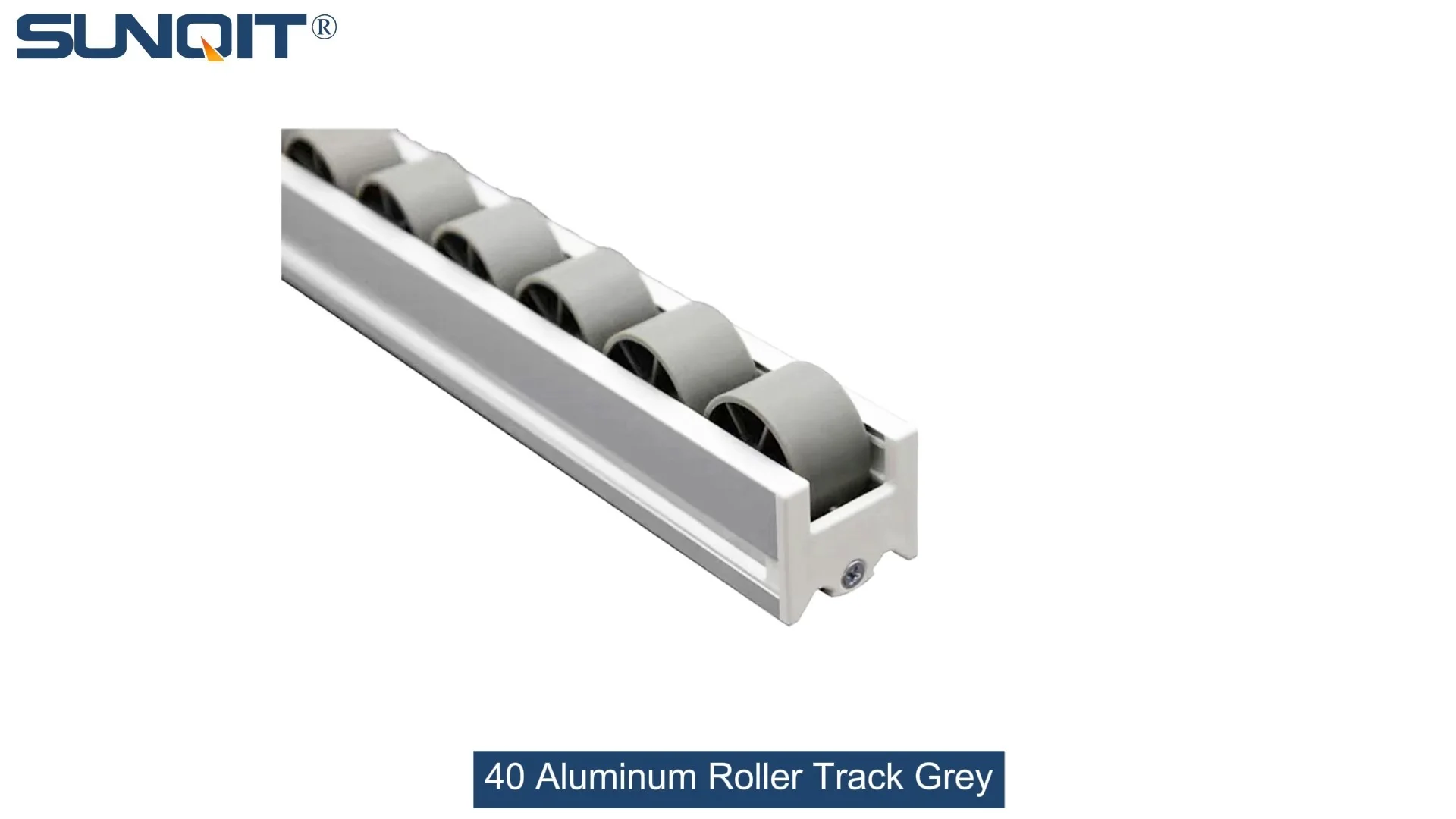
40 Aluminum Roller Track Grey
Durable and smooth-running modular roller rails. The system is fully assembled. The roller rail profile contains plastic rollers mounted on steel axles. Aluminum frame with plastic wheel make it anti corrosion,and material convey more smooth.
Walk into any busy manufacturing facility, warehouse, or assembly line, and you'll notice a silent hero hard at work: the conveyor systems and roller tracks that keep materials moving. These unassuming components are the backbone of efficiency, but they're also under constant attack. Day in and day out, they endure the scrape of metal parts, the weight of heavy boxes, and the relentless friction of products sliding across their surfaces. Over time, even the sturdiest equipment starts to show signs of battle—scratches mar the finish, wear thins the structure, and suddenly, what was once a smooth workflow becomes a source of delays and frustration.
This is where the 40 Aluminum Roller Track Grey steps in. It's not just another piece of hardware; it's a solution born from the need to stand up to the chaos of real-world industrial environments. In this article, we're going to dive deep into what makes this specific roller track so special, focusing on its grey finish and how it resists scratches and wear better than many alternatives. Whether you're a plant manager tired of replacing worn-out tracks, a small business owner looking to upgrade your material handling, or just curious about the engineering behind durable industrial tools, let's unpack why the 40 Aluminum Roller Track Grey has become a go-to choice for teams who refuse to slow down.
First Things First: What Exactly Is the 40 Aluminum Roller Track Grey?
Before we get into the nitty-gritty of its durability, let's make sure we're all on the same page about what this product is. The 40 Aluminum Roller Track Grey is a type of material handling component designed to facilitate the smooth movement of goods—think bins, parts, boxes, or even small assemblies—along a production line, warehouse aisle, or workbench. The "40" in its name refers to its width (typically 40mm), which makes it versatile enough for medium to heavy-duty applications without being overly bulky. The "aluminum" tells us the core material, and "grey" is the color of its protective finish.
At first glance, it might look like a simple length of track with rollers, but there's more to it. The track itself is built from high-grade aluminum profile , a material prized in industrial settings for its strength-to-weight ratio. Attached to this profile are precision-engineered rollers, usually made from a combination of aluminum and high-impact plastic, which reduce friction and allow items to glide with minimal effort. What really sets it apart, though, is the grey finish—a specialized coating applied to the aluminum surface to enhance its resistance to scratches, corrosion, and everyday wear. It's this finish that turns a basic aluminum track into a long-lasting workhorse.
The Grey Finish: More Than Just a Color
Let's talk about that grey finish. You might be thinking, "Why grey? Why not black, or silver, or some other color?" The truth is, the color is secondary to the function here. The grey hue is a byproduct of the coating process, which is designed first and foremost to protect the aluminum underneath. But make no mistake—this isn't just paint slathered on top. The finish is typically a type of anodized coating, a process where the aluminum surface is treated with an electrolytic solution to create a hard, durable oxide layer. Unlike paint, which can chip or peel, anodized finishes are integrated with the metal itself, forming a bond that's almost impossible to separate.
So, what makes this anodized grey finish so good at resisting scratches? Let's break it down. Aluminum, on its own, is relatively soft compared to steel. While it's lightweight and corrosion-resistant, it can scratch easily if not protected. Anodization changes that by increasing the surface hardness. The oxide layer created during anodization is significantly harder than the base aluminum, acting like a shield against sharp edges, dropped tools, or rough contact with other materials. Think of it like adding a layer of armor to a knight's armor—it doesn't make the armor indestructible, but it takes a lot more force to leave a mark.
But the finish isn't just about hardness. It's also designed to be low-friction, which might sound counterintuitive when we're talking about a track that's supposed to let things slide. Wait—low friction for the products moving on top, but high durability for the track itself. The anodized surface is smooth but tough, so even when boxes or parts rub against it repeatedly, the finish doesn't wear down quickly. It's a delicate balance, and the 40 Aluminum Roller Track Grey nails it.

Scratch Resistance: Putting It to the Test
Words are one thing—real-world performance is another. Let's imagine a typical day in a busy electronics assembly plant. Workers are handling small, metal components, some with sharp edges. They slide trays of these components along the 40 Aluminum Roller Track Grey, loading them onto workbenches for assembly. Accidents happen: a tray slips, a corner hits the track with a sharp clang. If that track had a cheap paint finish, you'd likely see a bright, silver scratch where the paint was chipped off, exposing the raw aluminum underneath. Over time, those scratches would accumulate, making the track look worn and potentially catching on products as they slide by.
With the 40 Aluminum Roller Track Grey's anodized finish, though, that scenario plays out differently. The same sharp corner hits the track, but instead of a deep scratch, you might see a faint mark—if anything. The anodized layer absorbs the impact, and because it's bonded to the aluminum, there's no chipping or peeling. Even repeated contact with metal parts or tools is less likely to leave permanent damage. This isn't just conjecture; many manufacturers test their anodized products using a "scratch test," where a weighted stylus is dragged across the surface to measure how much force is needed to create a visible scratch. The 40 Aluminum Roller Track Grey consistently scores high in these tests, requiring significantly more force than non-anodized aluminum or plastic tracks.
Another scenario: a warehouse where the track is installed on a workbench used for packing. Employees are constantly sliding heavy boxes (some with tape, staples, or rough edges) across the track. Over weeks and months, the track is subjected to hundreds of these interactions. A plastic track might start to show grooves where the boxes have worn it down; a steel track, while strong, might rust if the finish is compromised by scratches. The 40 Aluminum Roller Track Grey? It stays smooth, the grey finish intact, and the rollers continue to spin freely without catching on rough spots. That's the difference scratch resistance makes in daily operations.

Wear Resistance: When "Good Enough" Just Isn't Enough
Scratches are visible, but wear is often a quieter enemy. Wear happens gradually, as friction and pressure slowly erode the material. Over time, a track that's not wear-resistant might start to bend, warp, or develop uneven surfaces, which can cause products to get stuck or tilt as they move. This isn't just an aesthetic issue—it directly impacts efficiency and safety. A warped track could lead to jams, which mean downtime. Uneven surfaces could cause products to fall, leading to damage or injury. So, how does the 40 Aluminum Roller Track Grey fight back against wear?
First, let's talk about the aluminum profile itself. The track isn't made from thin, flimsy aluminum. It's constructed from a robust extrusion—meaning the aluminum is shaped under high pressure to create a consistent, strong cross-section. This extrusion process ensures that the track has uniform thickness and structural integrity, so it can handle heavy loads without bending. But even the strongest profile needs support, which is where components like the roller track placon mount come into play. These mounts are the brackets that attach the track to the workbench, rack, or conveyor frame. They're designed to distribute the weight of the track and the products moving on it evenly, preventing stress points that could lead to premature wear.
The placon mounts might not get as much attention as the track itself, but they're critical to the system's longevity. A cheap mount might loosen over time, causing the track to wobble. When the track wobbles, the load isn't distributed evenly, and certain areas of the track take more abuse than others. The 40 Aluminum Roller Track Grey uses high-quality, precision-engineered placon mounts (often made from the same durable aluminum or reinforced plastic) that stay secure even under constant vibration and movement. This stability ensures that the track wears evenly, if at all, over its lifespan.
Then there are the rollers. The 40 Aluminum Roller Track Grey's rollers are designed to spin smoothly, reducing friction between the track and the products. Less friction means less heat, and less heat means less wear on both the rollers and the track. Many of these rollers are also made with a hard, wear-resistant plastic coating on the aluminum core, which adds another layer of protection. Even if the plastic wears slightly over time, the aluminum core ensures the roller doesn't collapse, maintaining functionality until the roller can be replaced (which, with proper maintenance, might not be for years).

How Does It Compare to Other Materials? Let's Break It Down
To really understand why the 40 Aluminum Roller Track Grey stands out, it helps to compare it to other common materials used for roller tracks. Let's look at three popular alternatives: steel, plastic, and non-anodized aluminum.
| Material | Scratch Resistance | Wear Resistance | Weight | Corrosion Resistance | Cost (Relative) |
|---|---|---|---|---|---|
| 40 Aluminum Roller Track Grey (Anodized) | High – Anodized finish resists sharp impacts | High – Robust profile + placon mounts prevent warping | Lightweight (Easy to install/move) | Excellent – Anodized layer + aluminum's natural corrosion resistance | Moderate – Higher than plastic, lower than stainless steel |
| Steel (Painted) | Moderate – Paint chips easily; steel scratches visible | High – Strong, but prone to rust if scratched | Heavy (Harder to install, requires stronger supports) | Low – Rusts without constant maintenance | Low – Inexpensive upfront, but high long-term costs |
| Plastic (PVC/Polypropylene) | Low – Soft material scratches easily | Low – Bends/wears quickly under heavy loads | Lightest – But flimsy for industrial use | High – Resists corrosion, but UV sensitive | Lowest – Cheap upfront, but needs frequent replacement |
| Non-Anodized Aluminum | Low – Soft surface scratches with minimal force | Moderate – Strong profile, but surface wears faster | Lightweight | Moderate – Corrodes slowly, but scratches accelerate it | Moderate – Similar to anodized, but shorter lifespan |
As the table shows, the 40 Aluminum Roller Track Grey hits a sweet spot between durability, weight, and cost. Steel might be strong, but its weight and rust issues make it a hassle in many settings. Plastic is cheap, but it's a temporary fix at best. Non-anodized aluminum lacks the scratch resistance needed for busy environments. The anodized grey finish, combined with the sturdy aluminum profile and reliable placon mounts, makes this track a long-term investment rather than a short-term expense.
Beyond Scratches and Wear: Why Else Does This Track Stand Out?
Durability is the star here, but the 40 Aluminum Roller Track Grey has other tricks up its sleeve that make it a favorite among industrial teams. Let's touch on a few:
1. Compatibility with Lean Systems
Many modern facilities follow lean pipe principles—focusing on minimizing waste, maximizing efficiency, and keeping workflows flexible. The 40 Aluminum Roller Track Grey fits seamlessly into these systems. Its modular design means it can be easily adjusted, extended, or reconfigured as production needs change. Unlike fixed steel tracks, which require welding or heavy tools to modify, this aluminum track can be cut to length, connected with standard accessories, and even moved to different workstations if needed. For teams that value adaptability, this is a game-changer.
2. Easy Installation and Maintenance
Let's be honest: no one wants to spend days installing a new track system. The 40 Aluminum Roller Track Grey is lightweight, so even a small team can handle installation without specialized equipment. The roller track placon mounts are designed to attach to standard aluminum profiles or workbench frames, using simple bolts or clips. No welding, no drilling into concrete—just secure the mounts, snap the track into place, and you're ready to go. And when it comes to maintenance? A quick wipe with a damp cloth is usually all it takes to keep the track clean. The anodized finish resists dirt and grime, so you won't spend hours scrubbing or repainting.
3. Safety First
In industrial settings, safety is non-negotiable. The 40 Aluminum Roller Track Grey is designed with this in mind. The smooth, anodized surface reduces the risk of splinters or sharp edges that could cut workers. The rollers are enclosed in a way that prevents fingers from getting caught, and the track itself is stable, so there's less risk of tipping or collapse under load. Even the color plays a small role here—grey is neutral and non-reflective, which reduces eye strain for workers who spend hours near the track.
Real-World Stories: When Durability Matters Most
To bring this all to life, let's hear from a few hypothetical (but realistic) users who've made the switch to the 40 Aluminum Roller Track Grey:
Maria, Plant Manager at a Small Automotive Parts Supplier: "Before we switched, we were replacing our plastic roller tracks every 6 months. The constant scratches from metal parts made the tracks rough, and products would get stuck all the time. We'd lose 2-3 hours a week just unjamming the line. Now, with the 40 Aluminum Grey tracks, we've had them for over 2 years, and they still look almost new. The scratches are minimal, and the line runs so smoothly, we've cut downtime by 90%. Best decision we made for our production floor."
Jake, Warehouse Supervisor at an E-Commerce Fulfillment Center: "Our packing stations take a beating. Boxes of all sizes, some heavy, some with rough edges, sliding across the tracks all day. We tried steel tracks first, but they were so heavy, we couldn't reconfigure the workbenches when our needs changed. The aluminum tracks are light enough to move, and the grey finish doesn't show every little scuff, which keeps the area looking professional. Plus, we don't have to worry about rust in our humid warehouse—huge win."
Sarah, Owner of a Custom Furniture Workshop: "We work with wood, metal, and even glass. Our old tracks would scratch the glass panels when we moved them, which was a disaster for customer orders. The 40 Aluminum Roller Track Grey is gentle enough for glass but tough enough for metal frames. The finish doesn't leave marks, and the rollers are smooth, so we can handle delicate items without stress. It's not just about durability—it's about protecting our products, too."
Caring for Your 40 Aluminum Roller Track Grey: Maintenance Tips
Even the most durable equipment needs a little love to stay in top shape. Here are some simple maintenance tips to ensure your 40 Aluminum Roller Track Grey lasts for years:
- Keep it clean: Wipe down the track weekly with a soft cloth and mild detergent to remove dust, grease, or debris. Avoid abrasive cleaners or steel wool, which could scratch the anodized finish.
- Lubricate the rollers: Every few months, apply a small amount of silicone-based lubricant to the roller axles. This keeps them spinning freely and reduces friction-related wear.
- Check the placon mounts: Tighten any loose bolts or brackets regularly, especially if the track is in a high-vibration area. Loose mounts can cause the track to wobble, leading to uneven wear.
- Inspect for damage: Every so often, walk the length of the track and look for signs of bending, cracks, or deep scratches. Catching small issues early can prevent them from turning into big problems.
- Avoid overloading: The track is strong, but it has limits. Check the manufacturer's weight capacity and stick to it—overloading can warp the profile over time.
Final Thoughts: Is the 40 Aluminum Roller Track Grey Right for You?
At the end of the day, the 40 Aluminum Roller Track Grey isn't a one-size-fits-all solution—but it comes pretty close. If your facility deals with frequent material handling, values durability and low maintenance, and needs a track that can keep up with the chaos of daily operations, this is a product worth considering. Its grey anodized finish isn't just about looks; it's a shield against scratches, a barrier against wear, and a promise that your track will keep working as hard as your team does.
Think about all the time and money you spend replacing worn-out equipment, fixing jams, or repainting scratched surfaces. Now imagine redirecting that time into improving your products, training your team, or growing your business. That's the value of investing in durable tools like the 40 Aluminum Roller Track Grey. It's not just a track—it's a way to keep your workflow smooth, your team productive, and your focus where it belongs: on moving forward.
So, the next time you're standing in front of a worn, scratched roller track, wondering how to make it last longer, remember: sometimes, the best solution is the one that's built to resist the chaos from the start. And that's exactly what the 40 Aluminum Roller Track Grey brings to the table.