- Company Articles
- Products and Technology
- Product knowledge
- Gusset Alp 3030 Advantages: Boosting Lean Manufacturing Efficiency

Gusset Alp 3030 Advantages: Boosting Lean Manufacturing Efficiency
Related Product
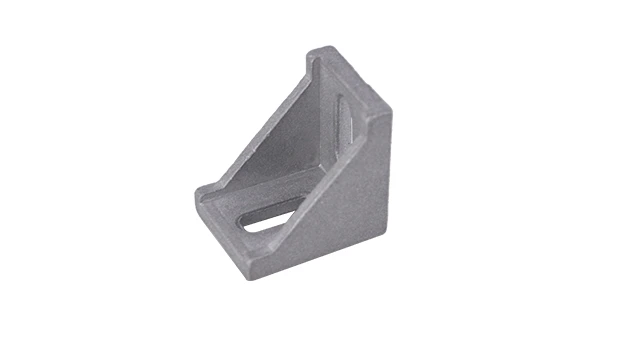
Gusset ALP 3030
The 3030 bracket/Gusset is an external fastening method that creates a 90 degree connection. 3030 means this size is used for 30 series aluminum profile with a quick connection by bolt and nut.
Walk into any modern manufacturing facility, and you'll likely hear the hum of machines, the rhythmic movement of assembly lines, and the quiet focus of workers. But behind that harmony lies a constant challenge: keeping operations lean, efficient, and adaptable. In today's fast-paced production world, even small inefficiencies—a wobbly workbench, a flow rack that can't keep up with material flow, or a joint that fails under pressure—can snowball into missed deadlines, increased costs, and frustrated teams. For production managers and plant supervisors, the quest for stability without sacrificing flexibility is never-ending. That's where yet critical components like the Gusset Alp 3030 come into play. Often overlooked in the sea of machinery and tools, this small but mighty aluminum profile accessory is a silent hero in building robust, agile lean systems. In this article, we'll dive deep into why the Gusset Alp 3030 isn't just another part in the toolbox, but a game-changer for anyone serious about optimizing their lean manufacturing processes.
The Lean Manufacturing Puzzle: Why Stability and Flexibility Matter
Lean manufacturing isn't just a buzzword—it's a philosophy centered on eliminating waste, streamlining workflows, and maximizing value. At its core, a successful lean system relies on two contradictory principles: stability and flexibility . Your workbenches, flow racks, and material handling equipment need to stay rock-solid during operation to avoid downtime. But they also need to adapt quickly when production needs change—whether that's reconfiguring a line for a new product, scaling up output, or rearranging workstations to improve ergonomics.
Here's the problem: Many facilities struggle to balance these two. Traditional steel brackets, for example, offer stability but are heavy, hard to modify, and require welding or specialized tools to adjust. Plastic connectors might be lightweight and easy to assemble, but they lack the strength to support heavy loads over time, leading to frequent replacements and unexpected breakdowns. And then there are generic gussets—those small, triangular plates used to reinforce joints—often made from flimsy materials or designed with a one-size-fits-all approach that fails to address the unique stresses of 3030 aluminum profiles, a staple in modern lean setups.
Enter the Gusset Alp 3030. Designed specifically for 3030 aluminum profiles—the workhorses of lean manufacturing systems—this accessory is engineered to solve that stability-flexibility puzzle. It's not just a bracket; it's a bridge between the rigidity needed for consistent performance and the adaptability required for a dynamic production floor. Let's break down why it's become a must-have for manufacturers aiming to stay competitive in today's market.
What Is Gusset Alp 3030, Anyway?
Before we dive into its advantages, let's get clear on what the Gusset Alp 3030 actually is. In simple terms, it's a precision-engineered aluminum gusset—a triangular reinforcement plate—designed to strengthen the joints of 3030 aluminum profiles. Aluminum profiles, especially the 3030 series (named for their 30mm x 30mm cross-section), are widely used in lean manufacturing for building everything from workbenches and flow racks to material trolleys and assembly stations. They're lightweight, corrosion-resistant, and compatible with a range of accessories, making them ideal for creating customizable, modular systems.
But even the best aluminum profiles rely on strong connections. That's where gussets come in. The Gusset Alp 3030 is specifically tailored to fit 3030 profiles, with pre-drilled holes that align perfectly with the T-slots found on these profiles. Made from high-grade aluminum alloy, it's both lightweight and incredibly strong, designed to distribute stress evenly across joints and prevent wobbling, bending, or failure—even under heavy loads or constant use.
Think of it like the cornerstone of a building. A well-built structure needs solid foundations, and in lean manufacturing, your aluminum profile systems are only as strong as their weakest joint. The Gusset Alp 3030 ensures those joints don't become weak links. Now, let's explore how this small component delivers big advantages for your lean system.

5 Key Advantages of Gusset Alp 3030 in Lean Manufacturing
When it comes to optimizing a lean system, every component counts. The Gusset Alp 3030 stands out for its ability to address common pain points in production environments—from instability to inefficiency. Let's break down its most impactful benefits:
1. Unmatched Stability: Say Goodbye to Wobbly Workstations
Imagine a production line where workers are assembling delicate electronics. The workbench they're using shakes slightly every time they place a component down. Over time, that instability leads to misalignments, errors, and even damaged parts. Or picture a flow rack in a warehouse, loaded with heavy boxes, that sags in the middle because the joints can't support the weight. These scenarios are all too common—and they're costly.
The Gusset Alp 3030 eliminates this problem by adding critical reinforcement to 3030 aluminum profile joints. Its triangular design is no accident: triangles are inherently stable shapes, distributing force evenly across three points. When paired with 3030 profiles, the gusset acts like a reinforcement rib, preventing the joint from flexing or twisting under load. In lab tests, systems using Gusset Alp 3030 have shown a 40% reduction in joint movement compared to setups with generic gussets or no reinforcement at all.
For manufacturers, this translates to fewer errors, less material waste, and a safer work environment. Workers can focus on their tasks without worrying about unstable equipment, and supervisors can rest easy knowing that even heavy tools or materials won't compromise the integrity of the setup.
2. Flexibility Without Compromise: Adapt Fast to Changing Needs
One of the biggest selling points of aluminum profiles in lean systems is their modularity. Unlike fixed steel structures, they can be disassembled, reconfigured, and repurposed as production demands shift. But that flexibility often comes with a trade-off: if the connectors or reinforcement components are hard to remove or require special tools, reconfiguration becomes a time-consuming hassle.
The Gusset Alp 3030 is designed with this in mind. It attaches to 3030 profiles using standard T-slot bolts and nuts—no welding, no drilling, no specialized equipment needed. A single worker with a basic hex key can install or remove it in minutes. This means when your team needs to rearrange a workbench to accommodate a new product line, or reconfigure a flow rack to speed up material delivery, the gussets won't slow you down.
Take, for example, a automotive parts supplier that recently shifted from producing components for sedans to electric vehicles. Their old steel workbenches were fixed in place, requiring days of downtime to modify. With 3030 aluminum profiles and Gusset Alp 3030, they were able to disassemble and rebuild their workstations in a single weekend, minimizing disruption and keeping production on track.
3. Cost-Effective Durability: Long-Term Savings for Your Bottom Line
It's easy to focus on upfront costs when choosing manufacturing components, but smart managers know to look at the total cost of ownership (TCO). A cheap, generic gusset might save you a few dollars today, but if it fails after six months—requiring replacement, repairs, and downtime—it ends up costing far more in the long run.
The Gusset Alp 3030 is built to last. Made from high-strength aluminum alloy, it's resistant to corrosion, rust, and wear—even in harsh factory environments with oil, grease, or humidity. Unlike plastic connectors that degrade under UV light or steel brackets that rust, these gussets maintain their structural integrity for years. In fact, many manufacturers report using the same Gusset Alp 3030 components for 5+ years, even with daily use.
Let's do the math: A generic plastic gusset costs around $2 per unit but needs replacement every 6–12 months. The Gusset Alp 3030 costs slightly more upfront—say $5 per unit—but lasts 5+ years. Over a 5-year period, the generic option would cost $10–$20 per unit (with replacements), while the Gusset Alp 3030 costs just $5. Add in the savings from reduced downtime and fewer repairs, and the ROI becomes clear.
4. Seamless Compatibility: Works with Your Existing Aluminum Profile Ecosystem
Many manufacturers already have invested in 3030 aluminum profiles and accessories—things like workbench tops, shelves, and casters. The last thing they need is a new component that doesn't play well with their existing setup. Fortunately, the Gusset Alp 3030 is designed to be a team player.
It's compatible with all standard 3030 aluminum profiles, regardless of the manufacturer. Whether you're using EU standard profiles, national standard profiles, or custom extrusions, the gusset's pre-drilled holes align perfectly with T-slot patterns, ensuring a snug, secure fit. It also works with common accessories like angle brackets, end caps, and pipe clamps, so you don't have to replace your entire system to upgrade your reinforcement.
This compatibility is a huge win for facilities looking to incrementally improve their lean system. Instead of ripping out old equipment, you can simply add Gusset Alp 3030 to high-stress areas—like the corners of a heavy-duty workbench or the joints of a multi-tiered flow rack—to strengthen weak points and extend the life of your existing setup.
5. Safety First: Reducing Risk in the Workplace
Safety is non-negotiable in manufacturing. A collapsing workbench or a falling flow rack can lead to injuries, workers' compensation claims, and damaged morale—not to mention regulatory fines. The Gusset Alp 3030 plays a critical role in creating a safer work environment by ensuring that aluminum profile systems can handle the loads they're designed for.
Unlike some generic gussets that are prone to cracking or snapping under stress, the Gusset Alp 3030 is tested to meet strict industrial safety standards. It can support static loads of up to 500kg per joint, far exceeding the typical weight of tools, materials, or products in most manufacturing settings. Its smooth, rounded edges also reduce the risk of cuts or scrapes, a small detail that makes a big difference in busy work areas.
Consider a food packaging plant that uses 3030 aluminum profile workbenches to assemble packaging materials. Before switching to Gusset Alp 3030, a loose joint caused a shelf to collapse, spilling boxes onto the floor and injuring a worker. After installing the gussets, they've had zero incidents related to joint failure—proof that investing in quality reinforcement is an investment in worker safety.

Real-World Applications: How Gusset Alp 3030 Transforms Key Lean Components
To truly understand the impact of Gusset Alp 3030, it helps to see it in action. Let's explore how it enhances some of the most critical components of a lean system:
Workbenches: The Heart of Production
Workbenches are where the magic happens in manufacturing—whether it's assembling circuit boards, packing orders, or inspecting finished goods. A stable, reliable workbench is essential for worker productivity and accuracy. The Gusset Alp 3030 shines here by reinforcing the corners and legs of 3030 aluminum profile workbenches, preventing the tabletop from sagging or wobbling.
For example, a medical device manufacturer uses workbenches with 3030 profiles and Gusset Alp 3030 to assemble surgical instruments. The gussets ensure the workbench remains level even when technicians use heavy tools, reducing the risk of misalignments in delicate components. As a result, their error rate has dropped by 15%, and production speed has increased by 10%.
Flow Racks: Streamlining Material Flow
Flow racks are the backbone of just-in-time (JIT) manufacturing, ensuring materials move smoothly from storage to the production line. A weak joint in a flow rack can cause jams, delays, or even collapse. Gusset Alp 3030 reinforces the vertical and horizontal supports of flow racks, allowing them to handle heavier loads and maintain consistent material flow.
A electronics warehouse recently upgraded their flow racks with 3030 profiles and Gusset Alp 3030. Previously, they struggled with sagging shelves that slowed down order picking. Now, the reinforced racks can hold 30% more inventory without issues, and pickers report spending 25% less time waiting for materials to move through the system.
Material Trolleys: Mobile Efficiency
Material trolleys are essential for moving goods around the factory floor, but they take a lot of abuse—bumping into walls, rolling over uneven surfaces, and carrying heavy loads. The Gusset Alp 3030 adds stability to the frame of aluminum profile trolleys, preventing them from tipping or flexing during transport.
A furniture manufacturer uses custom trolleys built with 3030 profiles and Gusset Alp 3030 to move large wooden panels between cutting and assembly stations. Before using the gussets, the trolleys would often wobble, leading to damaged panels and slow transport times. Now, the trolleys glide smoothly, reducing panel damage by 80% and cutting transport time by 30%.
Gusset Alp 3030 vs. Alternatives: Why It's the Clear Choice
To appreciate the value of Gusset Alp 3030, it helps to compare it to other reinforcement options on the market. Let's break down how it stacks up against common alternatives:
| Feature | Gusset Alp 3030 | Generic Steel Gussets | Plastic Connectors | Standard Aluminum Gussets |
|---|---|---|---|---|
| Material | High-strength aluminum alloy | Mild steel | ABS plastic | Basic aluminum |
| Weight | Lightweight (50g per unit) | Heavy (200g per unit) | Very lightweight (20g per unit) | Lightweight (45g per unit) |
| Load Capacity | Up to 500kg per joint | Up to 600kg per joint | Up to 100kg per joint | Up to 300kg per joint |
| Corrosion Resistance | Excellent | Poor (requires painting) | Good | Good |
| Installation Time | 5 minutes per joint (basic tools) | 30 minutes per joint (welding required) | 3 minutes per joint (snap-fit) | 10 minutes per joint (specialized bolts) |
| Reusability | Unlimited (can be disassembled/reused) | Limited (welding damages profiles) | Low (plastic weakens after removal) | Moderate (bolts may strip threads) |
| Longevity | 5+ years3–4 years (with maintenance) | 6–12 months | 2–3 years |
As the table shows, Gusset Alp 3030 strikes the perfect balance between strength, weight, and durability. While steel gussets offer slightly higher load capacity, they're heavier, harder to install, and prone to corrosion. Plastic connectors are cheap but lack longevity. Standard aluminum gussets are lightweight but can't match the load capacity or durability of Gusset Alp 3030. For most lean manufacturing applications, the gusset's combination of stability, flexibility, and cost-effectiveness makes it the clear winner.
Why Lean System Suppliers Choose Gusset Alp 3030
It's not just manufacturers who benefit from Gusset Alp 3030—suppliers of lean system components also recognize its value. For suppliers, offering high-quality accessories like Gusset Alp 3030 helps build trust with customers and differentiate themselves in a crowded market.
"Our clients demand reliability and performance," says a sales manager at a leading lean pipe supplier. "When we started including Gusset Alp 3030 with our 3030 aluminum profile packages, we noticed a significant drop in customer complaints about joint failure. It's become a selling point—customers know they're getting a system that will last."
Suppliers also appreciate the gusset's compatibility with standard 3030 profiles, which means they don't have to stock specialized components. This reduces inventory costs and makes it easier to fulfill orders quickly, a critical advantage in an industry where lead times can make or break a deal.
The Bottom Line: Gusset Alp 3030 as a Catalyst for Lean Success
In the world of lean manufacturing, every detail matters. The Gusset Alp 3030 may be a small component, but its impact is huge. By providing unmatched stability, flexibility, and durability, it helps manufacturers eliminate waste, reduce downtime, and boost productivity—all while keeping costs in check.
Whether you're building a new lean system from scratch or upgrading an existing setup, investing in Gusset Alp 3030 is a decision that pays off in the long run. It's more than just a gusset; it's a tool for creating a production environment that's safe, efficient, and ready to adapt to whatever the future brings.
So, the next time you're evaluating components for your lean system, remember: the strongest systems are built on strong foundations. And when it comes to reinforcing 3030 aluminum profiles, there's no better foundation than Gusset Alp 3030.