- Company Articles
- Products and Technology
- Solution
- Gusset Alp 3030 & Modular Workbenches: Building Adaptable Lean Systems

Gusset Alp 3030 & Modular Workbenches: Building Adaptable Lean Systems
Related Product
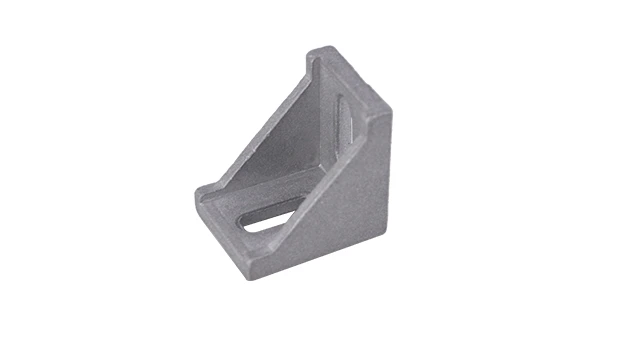
Gusset ALP 3030
The 3030 bracket/Gusset is an external fastening method that creates a 90 degree connection. 3030 means this size is used for 30 series aluminum profile with a quick connection by bolt and nut.
Walk into any thriving manufacturing facility today, and you'll notice a quiet revolution unfolding. The clunky, fixed workbenches of yesteryear—bolted to the floor, resistant to change—are making way for something smarter: modular workspaces that bend, not break, with shifting production needs. At the heart of this transformation lies a simple yet powerful idea: adaptability isn't just a buzzword; it's the backbone of a lean system. And when it comes to building these adaptable systems, two components stand out: the humble modular workbench and a unsung hero of structural integrity, the Gusset Alp 3030 . Paired with versatile aluminum profiles and efficient flow racks , these tools aren't just pieces of equipment—they're the building blocks of a workplace that grows with your business.
The Case for Adaptability: Why Lean Systems Can't Afford Rigidity
Let's start with the basics: what is a lean system , really? At its core, lean manufacturing is about eliminating waste—whether that's wasted time, space, or effort—while maximizing value for customers. But here's the catch: waste isn't static. A production line that runs like a well-oiled machine today might sputter tomorrow if a new product is introduced, a process is updated, or team sizes shift. That's where adaptability comes in. A truly lean system doesn't just optimize for the present; it's designed to evolve.
Consider this scenario: a small electronics manufacturer specializes in assembling smartphone chargers. Their factory floor has fixed workbenches, each bolted to the ground with custom tool holders and static shelving. Life is good—until a client orders a new, bulkier charger model. Suddenly, the workbenches are too narrow. The shelving can't hold the larger components. The team spends two weeks rearranging: unbolting benches, cutting new shelves, reconfiguring layouts. Downtime costs mount, and employee morale dips. Sound familiar? This is the cost of rigidity.
Now imagine the same scenario with a modular setup. The workbenches aren't bolted down—they're built with lightweight, sturdy materials that can be disassembled and reconfigured in hours, not weeks. Shelves adjust with a few twists of a wrench. Tool holders slide into place on T-slot rails. The team pivots quickly, meets the new order deadline, and avoids costly downtime. That's the power of adaptability. And it all starts with choosing the right building blocks.
Modular Workbenches: The Backbone of an Adaptable Workspace
If a lean system is a body, modular workbenches are its spine. They're where the magic happens—the assembly, the testing, the problem-solving. But not all workbenches are created equal. Traditional fixed workbenches are like concrete: strong, but impossible to reshape without breaking. Modular workbenches, by contrast, are more like Lego bricks: durable, versatile, and infinitely reconfigurable.
What makes a workbench "modular"? It starts with the frame. Instead of solid wood or welded steel, modular workbenches use lightweight but strong materials like aluminum or steel tubes, connected by joints that allow for easy disassembly. Add-ons—shelves, drawers, tool rails, lighting, even ESD (electrostatic discharge) mats for sensitive electronics—attach via slots or clamps, so they can be swapped out or repositioned in minutes. Need a longer bench for a larger team? Add an extension. Want to lower the height for ergonomic seating? Adjust the legs. Suddenly, the workspace bends to the task, not the other way around.
| Feature | Traditional Fixed Workbench | Modular Workbench |
|---|---|---|
| Reconfiguration Time | Weeks (requires tools, disassembly, and rebuilding) | Hours (no welding or cutting; uses standard tools) |
| Customization | Limited to initial design (hard to add/remove features) | Unlimited (add shelves, drawers, or accessories anytime) |
| Cost Over Time | High (requires replacement for new tasks; downtime costs) | Low (reusable components; minimal downtime) |
| Ergonomics | Static (one-size-fits-all height/ layout) | Adjustable (height, tool placement, and layout tailored to workers) |
But a modular workbench is only as strong as its weakest link. That's where the Gusset Alp 3030 enters the story. Think of it as the glue that holds the Lego bricks together—quietly ensuring everything stays stable, even when you're constantly rearranging.

Gusset Alp 3030: The Unsung Hero of Structural Integrity
If you've never heard of a Gusset Alp 3030 , you're not alone. It's not the flashiest component in a lean system, but it's one of the most critical. So, what is it? In simple terms, a gusset is a metal bracket used to reinforce joints—think of it as a cornerstone that adds strength to where two or more parts meet. The "Alp 3030" refers to its size and material: it's designed to work with 30x30mm aluminum profiles (a common size in modular systems) and is typically made from lightweight, corrosion-resistant aluminum.
Why does this matter? Imagine building a modular workbench with aluminum profiles. You connect the vertical and horizontal rails using standard joints, but when you place heavy equipment—say, a 50kg testing machine—on the bench, the joints start to flex. Over time, that flexing weakens the connection, leading to wobbling, squeaking, or even collapse. Enter the Gusset Alp 3030: bolt it to the inside or outside of the joint, and suddenly the connection is reinforced. It distributes the weight evenly, preventing flex and ensuring the bench stays stable, even under heavy loads.
But the Gusset Alp 3030 isn't just about strength—it's about compatibility. Most modular systems rely on standardized components, and this gusset is no exception. It's designed to fit seamlessly with 30x30mm aluminum profiles, using the same T-slot design that makes add-ons so easy to attach. That means you don't need special tools or custom parts to install it; just a hex key and a few minutes. And because it's made of aluminum, it's lightweight enough to not add unnecessary bulk, but durable enough to withstand the daily grind of a factory floor.
Let's put this in perspective. A small manufacturer installs 10 modular workbenches without gussets. Within six months, two benches start wobbling under the weight of assembly tools. They have to replace the joints, costing time and money. A competitor installs the same 10 benches but adds Gusset Alp 3030 brackets at key joints. Two years later, the benches are still rock-solid. The difference? A few dollars per joint, and a world of difference in longevity.

Aluminum Profiles: The Building Blocks of Flexibility
If modular workbenches are the spine of a lean system, aluminum profiles are the vertebrae. These extruded metal rails—hollow, with T-shaped slots running along their length—are the foundation upon which modular systems are built. They're lightweight, strong, corrosion-resistant, and, most importantly, infinitely customizable.
Aluminum profiles come in a range of sizes, from small 20x20mm rails for lightweight shelving to beefy 80x80mm beams for heavy-duty frames. The T-slots are the real genius: they allow accessories—shelves, brackets, lights, even the Gusset Alp 3030—to slide into place and lock with bolts or clips, no drilling or welding required. Need to move a shelf up by 6 inches? Loosen the bolts, slide, retighten. Done.
But aluminum profiles aren't just for workbenches. They're the backbone of flow racks, material carts, machine guards, and even temporary walls. In a lean system, this versatility is gold. A single type of profile can be used across multiple applications, reducing the need for specialized parts and simplifying inventory. And because they're made of aluminum, they're easy to transport and assemble—no heavy lifting equipment required.
Take, for example, a manufacturer that needs to build a flow rack for parts storage. Using 40x40mm aluminum profiles, they can assemble the frame in hours, adding roller tracks (another modular component) to let parts glide down to the assembly line via gravity. If they need to expand the rack later, they just add more profiles and connectors. No need to buy a whole new rack—just extend the existing one. That's the power of standardized, versatile building blocks.
Flow Racks: Streamlining Material Flow in Lean Systems
A lean system isn't just about the workbench—it's about the flow of materials. Parts need to move from storage to assembly to shipping smoothly, with minimal handling. That's where flow racks come in. These gravity-fed storage systems use inclined roller tracks to let materials slide down to the point of use, reducing the need for workers to bend, reach, or carry heavy items.
But like workbenches, flow racks benefit from modular design. Traditional flow racks are often fixed in size and layout, built from wood or welded steel. If you need to store taller boxes, you're out of luck. Modular flow racks, by contrast, use aluminum profiles for the frame and adjustable roller tracks, so you can tweak the height, width, or angle of the rollers to fit different materials. And because they're built with the same profiles and gussets as your workbenches, they integrate seamlessly into the overall system.
Imagine a production line where parts are stored in a modular flow rack adjacent to a modular workbench. The rack is inclined at a slight angle, so when the front bin is emptied, the next one slides forward automatically (a principle called "first in, first out," or FIFO, which reduces waste from expired or obsolete parts). The workbench, positioned directly in front of the rack, has a cutout where the roller track feeds into it, so parts land right where the assembler needs them. No walking, no reaching, no wasted motion. That's lean in action.
And when production needs change? The flow rack can be reconfigured to hold larger bins by adjusting the aluminum profile frame and swapping out the roller tracks. The workbench can be moved closer or farther, depending on the new part size. It's a ecosystem of adaptability, where every component works together to keep the workflow smooth.
Putting It All Together: A Real-World Example
Let's bring this to life with a hypothetical (but realistic) example. Meet "TechFlow," a mid-sized manufacturer of circuit boards. Two years ago, their factory floor was a maze of fixed workbenches, wooden shelving, and manual material carts. Production delays were common, and employees often complained about back pain from lifting heavy boards. Their lean system was more of a "lean in theory" system—until they decided to invest in modular tools.
First, they replaced their fixed workbenches with modular ones built from 30x30mm aluminum profiles. They added Gusset Alp 3030 brackets at the corners to reinforce the frames, ensuring stability even when workers leaned on the benches during assembly. Next, they installed ESD mats on the bench tops to protect sensitive components, attaching them via T-slot clamps so they could be replaced easily if worn. Shelves above the benches were made from the same aluminum profiles, with adjustable heights to accommodate different board sizes.
Then came the flow racks. TechFlow needed to store small electronic components—resistors, capacitors, chips—in bins, and larger circuit boards in trays. They built two types of flow racks: one with narrow roller tracks for the small bins, and another with wider tracks for the trays. Both racks used aluminum profiles for the frame, with Gusset Alp 3030 brackets reinforcing the joints where the tracks met the uprights. The racks were positioned adjacent to the workbenches, so parts slid directly into the assemblers' reach.
The results? Within six months, TechFlow saw a 25% reduction in setup time for new product runs, because they could reconfigure workbenches and racks in hours instead of days. Employee-reported back pain dropped by 40%, thanks to reduced lifting. And because the flow racks enforced FIFO, they cut waste from expired components by 15%. Most importantly, they could now take on custom orders with varying board sizes—something they'd previously turned down for fear of disrupting production. Adaptability, in this case, translated directly to growth.
Beyond the Factory Floor: The Ripple Effects of Adaptable Lean Systems
The benefits of modular workbenches, Gusset Alp 3030 brackets, aluminum profiles, and flow racks extend far beyond the factory floor. Let's start with cost savings. Yes, modular systems have a higher upfront cost than basic fixed workbenches, but they pay for themselves quickly. Reduced downtime during reconfigurations, lower replacement costs (since components can be reused), and fewer workplace injuries (thanks to better ergonomics) all add up. A study by the Manufacturing Extension Partnership found that small manufacturers who invested in modular lean tools saw an average ROI of 200% within two years.
Then there's employee morale. Workers notice when their employer invests in tools that make their jobs easier. A modular workbench that adjusts to their height, or a flow rack that eliminates bending, sends a message: "We value your comfort and efficiency." Happy employees are more productive, more engaged, and less likely to leave—reducing turnover costs.
And let's not forget scalability. As your business grows, your workspace needs to grow with it. Modular systems make scaling simple. Need to add a new production line? Buy a few more aluminum profiles, gussets, and roller tracks, and you're good to go. No need to redesign the entire floor plan or invest in all-new equipment. It's growth without the growing pains.
The Future of Lean: Adaptability as a Competitive Advantage
The manufacturing landscape isn't getting less complex—it's getting more so. Customer demands are shifting faster, product lifecycles are shorter, and global supply chains are more unpredictable than ever. In this environment, adaptability isn't just a nice-to-have; it's a competitive advantage. Companies that can pivot quickly, reduce waste, and keep their teams efficient will win out.
At the heart of that adaptability are tools like modular workbenches, Gusset Alp 3030 brackets, aluminum profiles, and flow racks. They're not just pieces of metal and plastic—they're enablers of innovation. They let manufacturers experiment with new processes, test new products, and respond to challenges without being held back by rigid infrastructure.
So, what's next? As technology advances, we'll likely see even more integration between modular systems and smart manufacturing tools—sensors that track material flow in flow racks, IoT-enabled workbenches that adjust height automatically based on the user, or AI-driven layout optimization that suggests reconfigurations based on production data. But no matter how fancy the tech gets, the core principle will remain: the best lean systems are the ones that can change.
Conclusion: Building a Lean System That Grows With You
In the end, a lean system is more than a set of tools—it's a mindset. It's about seeing change not as a disruption, but as an opportunity. And to seize that opportunity, you need the right building blocks. Modular workbenches provide the flexible foundation, Gusset Alp 3030 ensures they stay strong, aluminum profiles unlock endless configurations, and flow racks keep materials moving smoothly. Together, they create a workspace that doesn't just support your current needs—it evolves with them.
So, whether you're a small startup looking to scale or a large manufacturer aiming to stay agile, remember this: the most valuable asset in your lean system isn't the equipment—it's the ability to adapt. And with the right components, that adaptability is within reach.